Tuesday
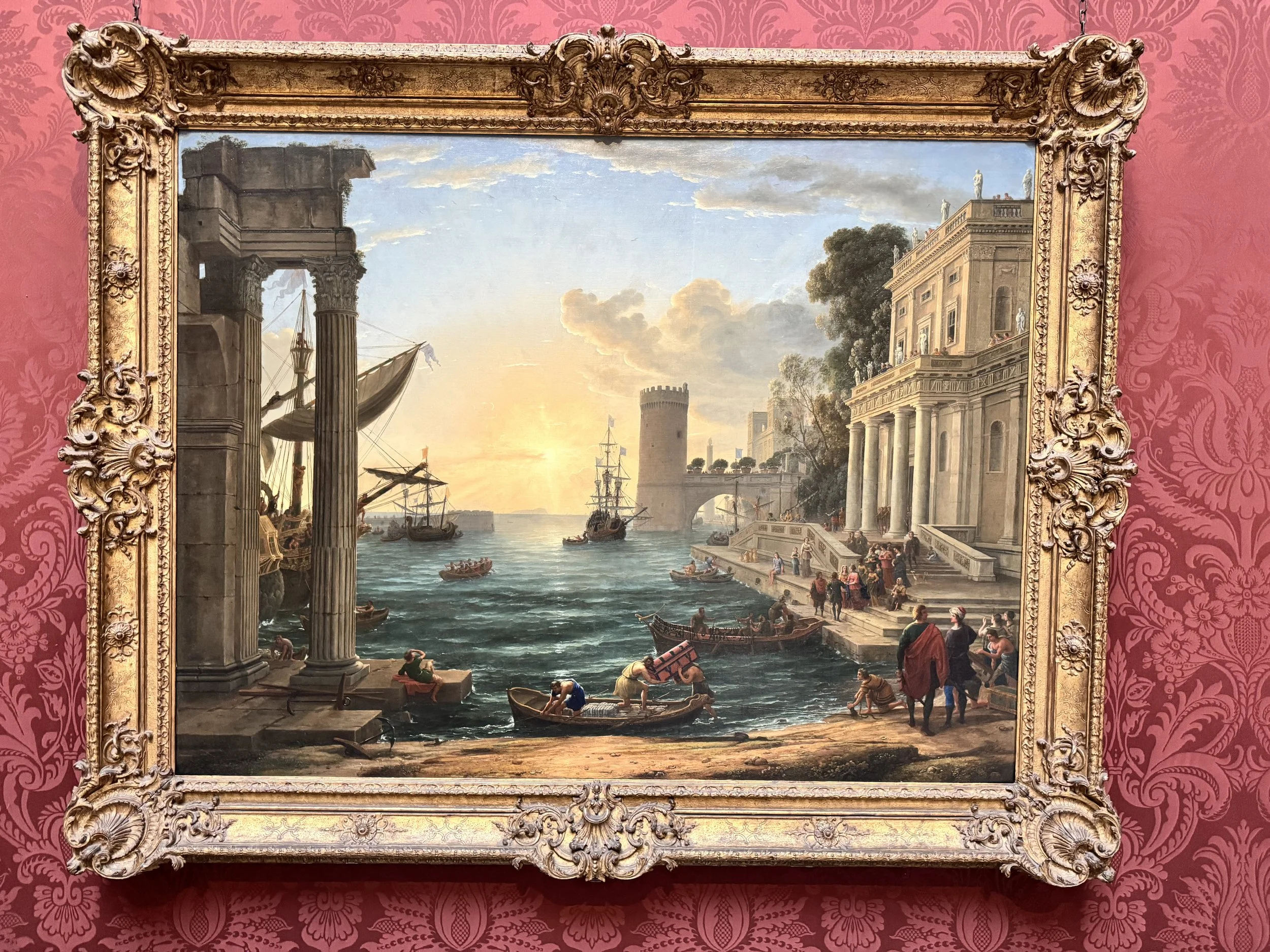
A while back we watched Season 1 of The Art Detectives on Amazon Prime where they uncovered a lost painting by J. M. W.Turner. The show highlighted this Claude Lorrain painting—Seaport with the Embarkation of the Queen of Sheba (1648)—& his masterful use of light, which inspired Turner.
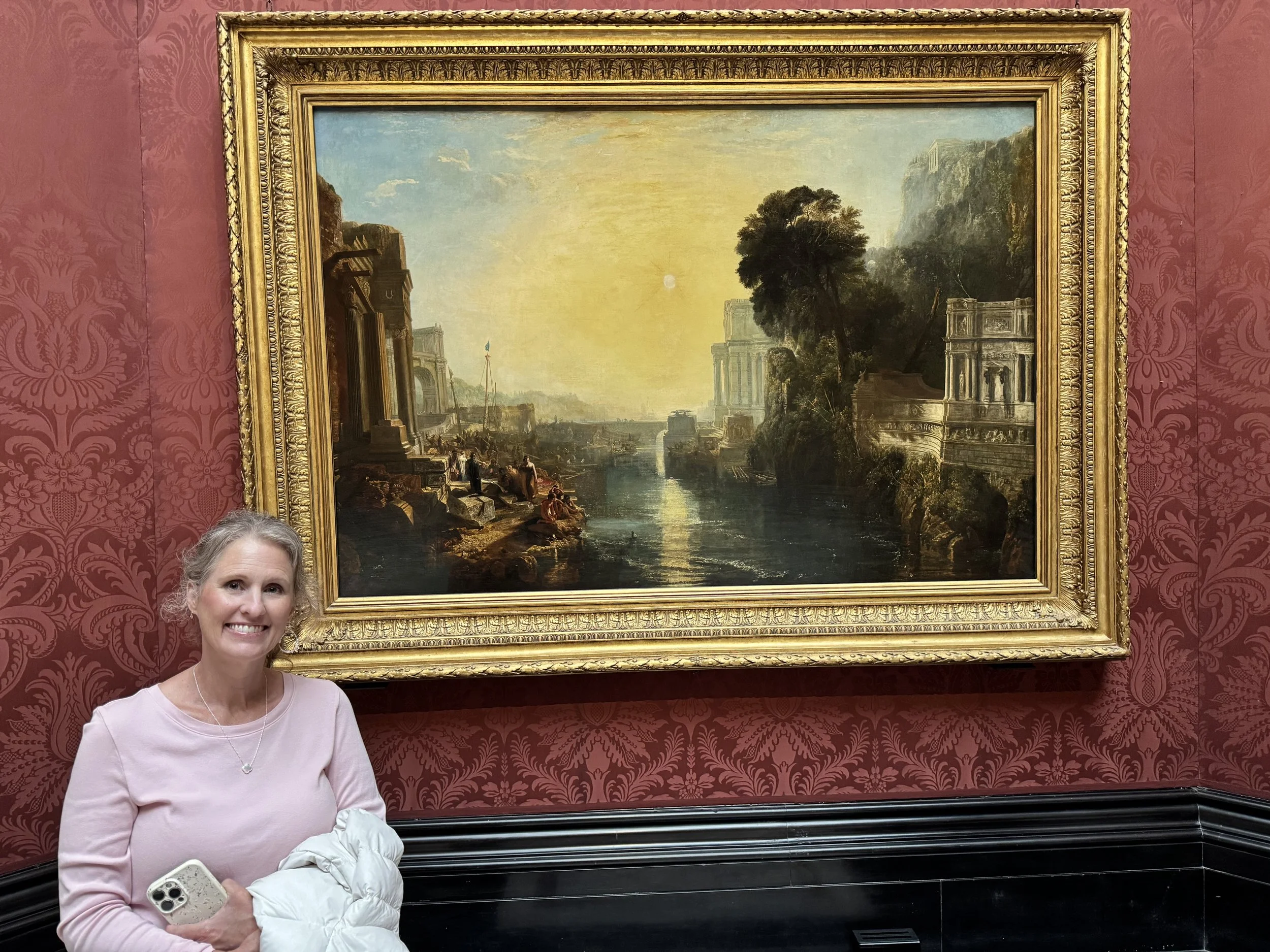
Turner’s Dido building Carthage (1815) showing his fascination, like Claude, with landscape & subtle, shifting light effects.
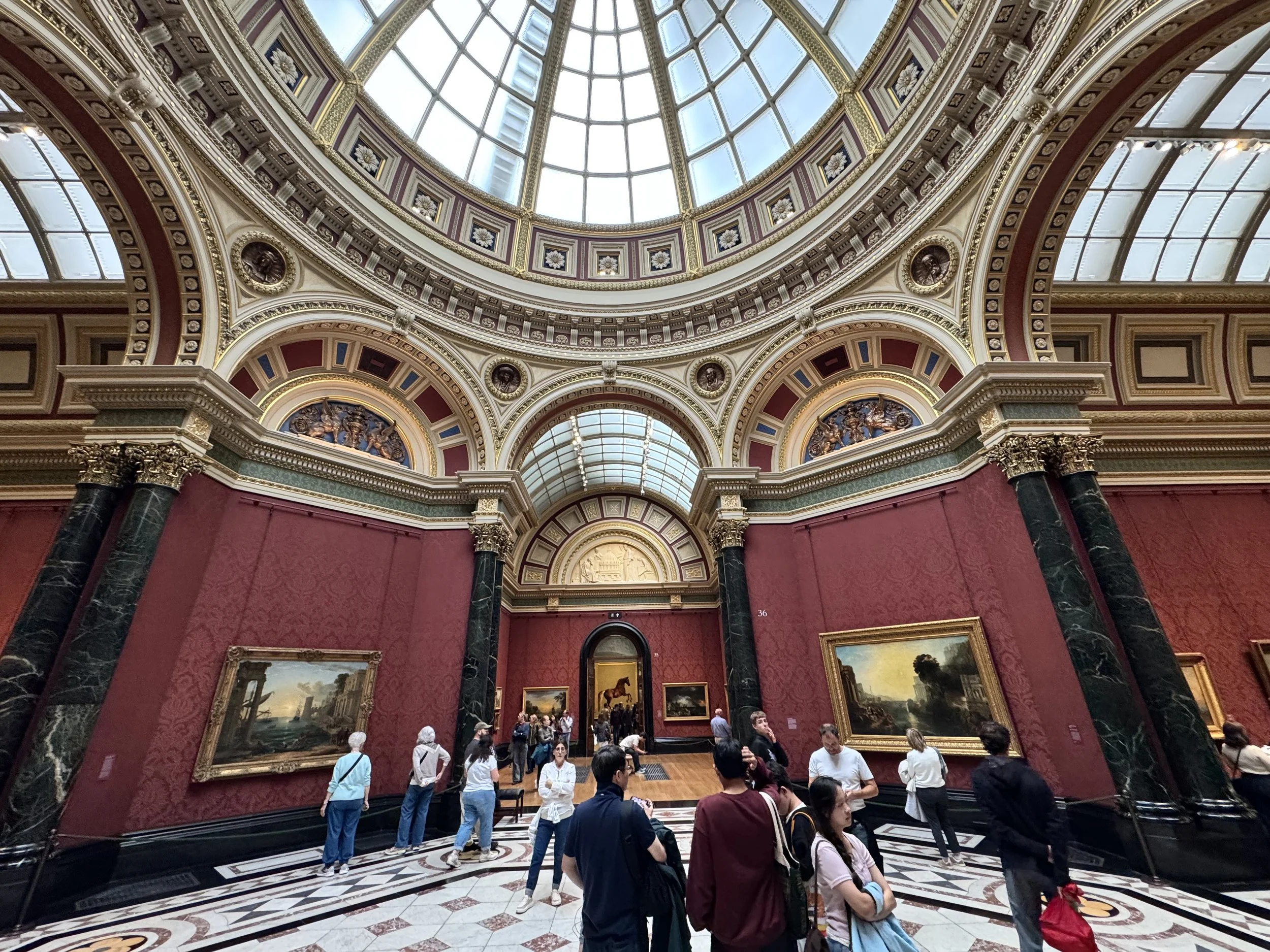
Turner gave his painting (right) to the National Gallery on the condition that it would be displayed beside the Claude (left), whom Turner deeply admired.
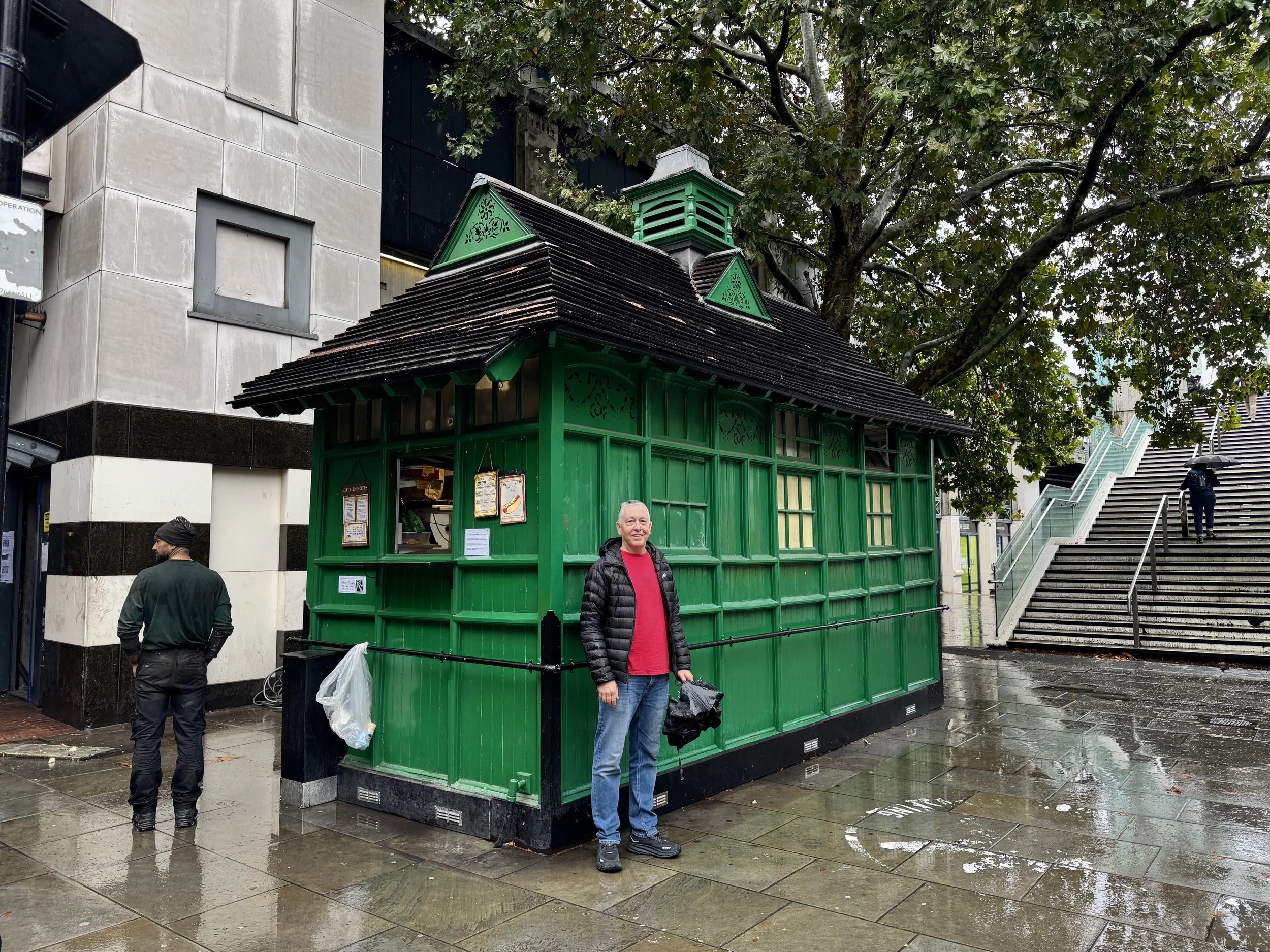
Between 1875-1914, 61 of these buildings were built around London. Most were staffed by an attendant who sold food & (non-alcoholic) drink to cabbies. The green huts were not allowed to be larger than a horse & cart.
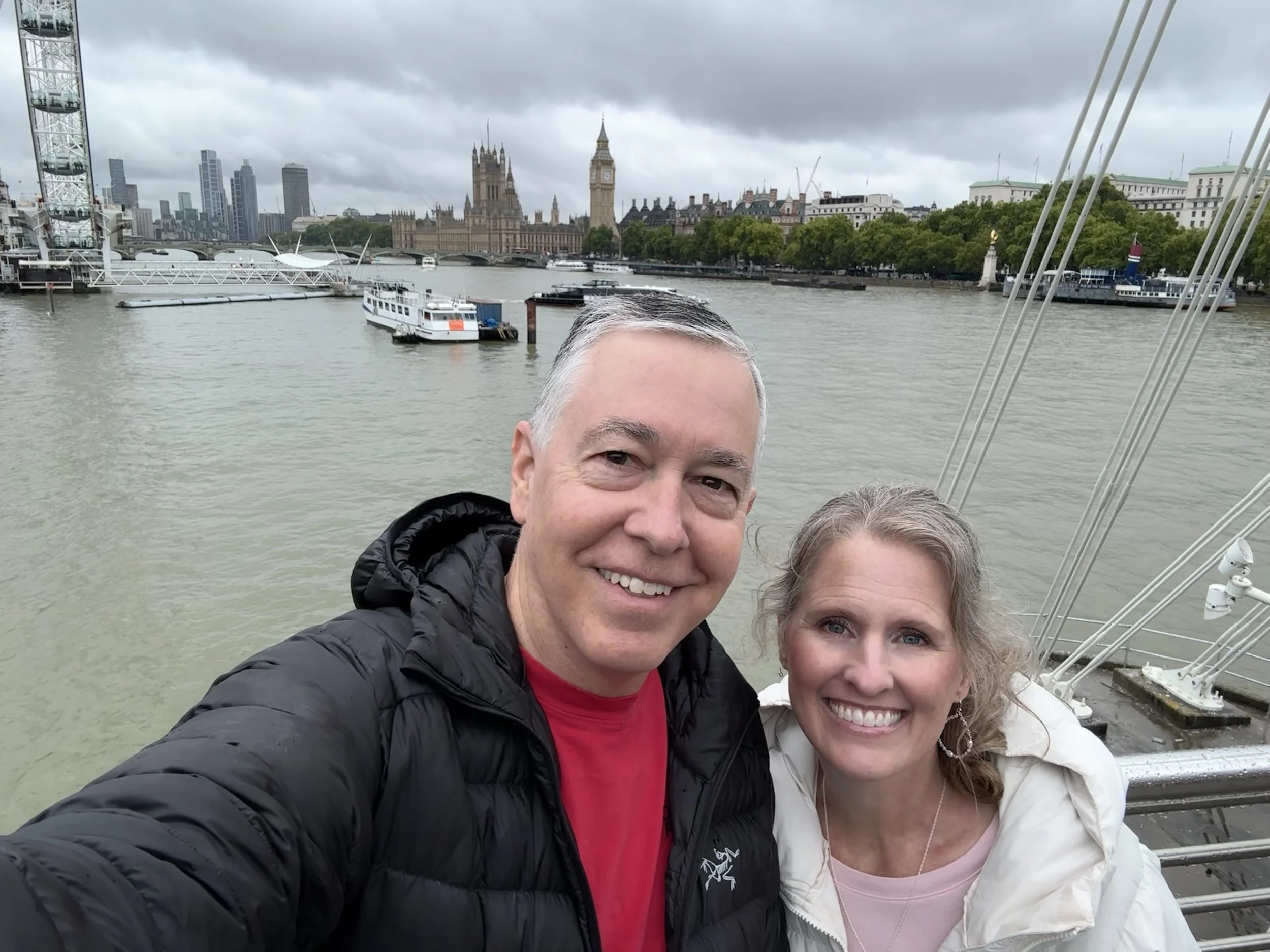
On the Golden Jubilee (pedestrian) Bridge looking south toward Big Ben.
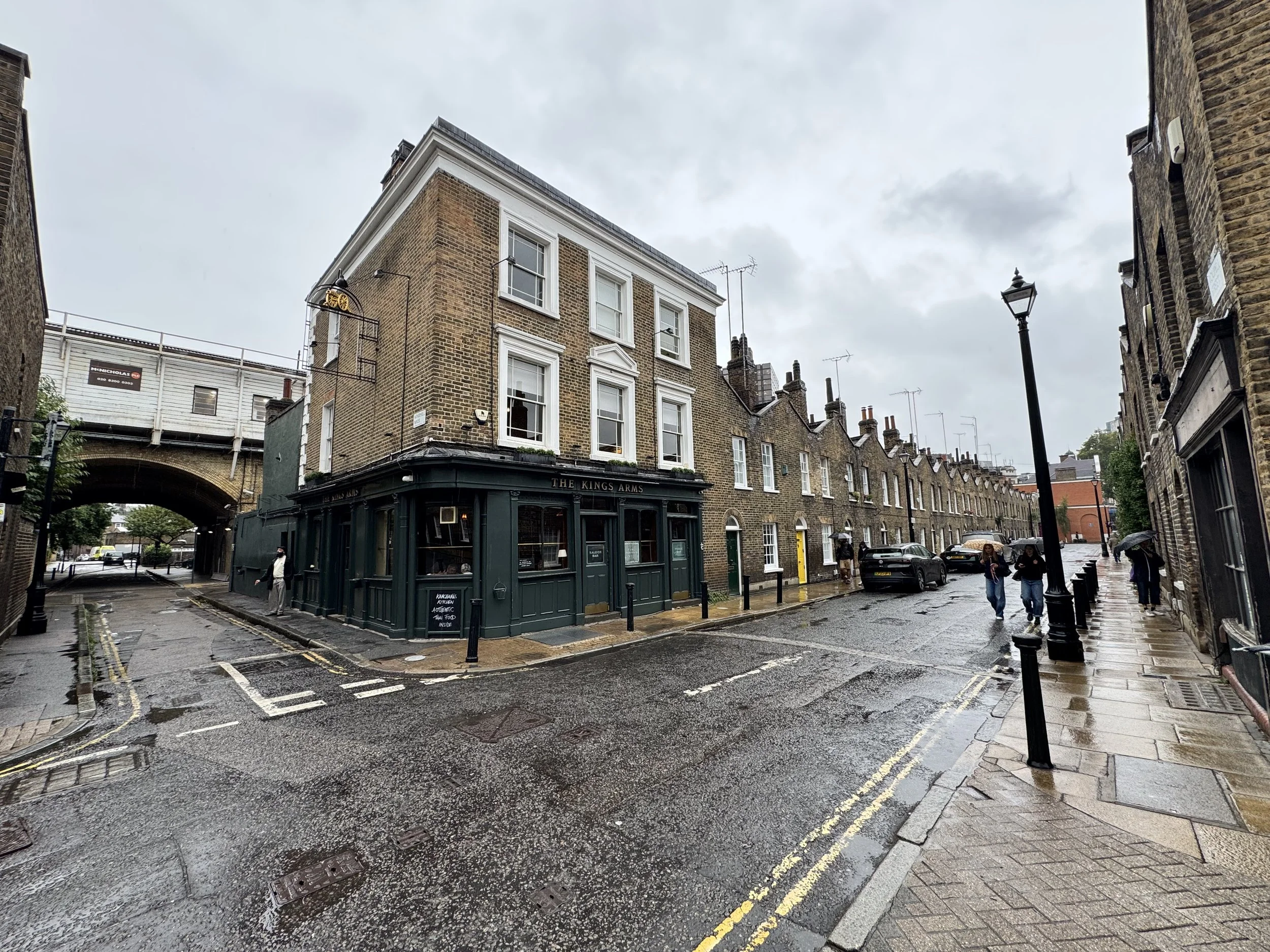
The King’s Arms pub on Roupell St in Waterloo. Built around 1830, the area features rare
Georgian/Victorian architecture that lacks modern clutter. The pristine terraces are frequently used to double for working-class northern towns in past decades.
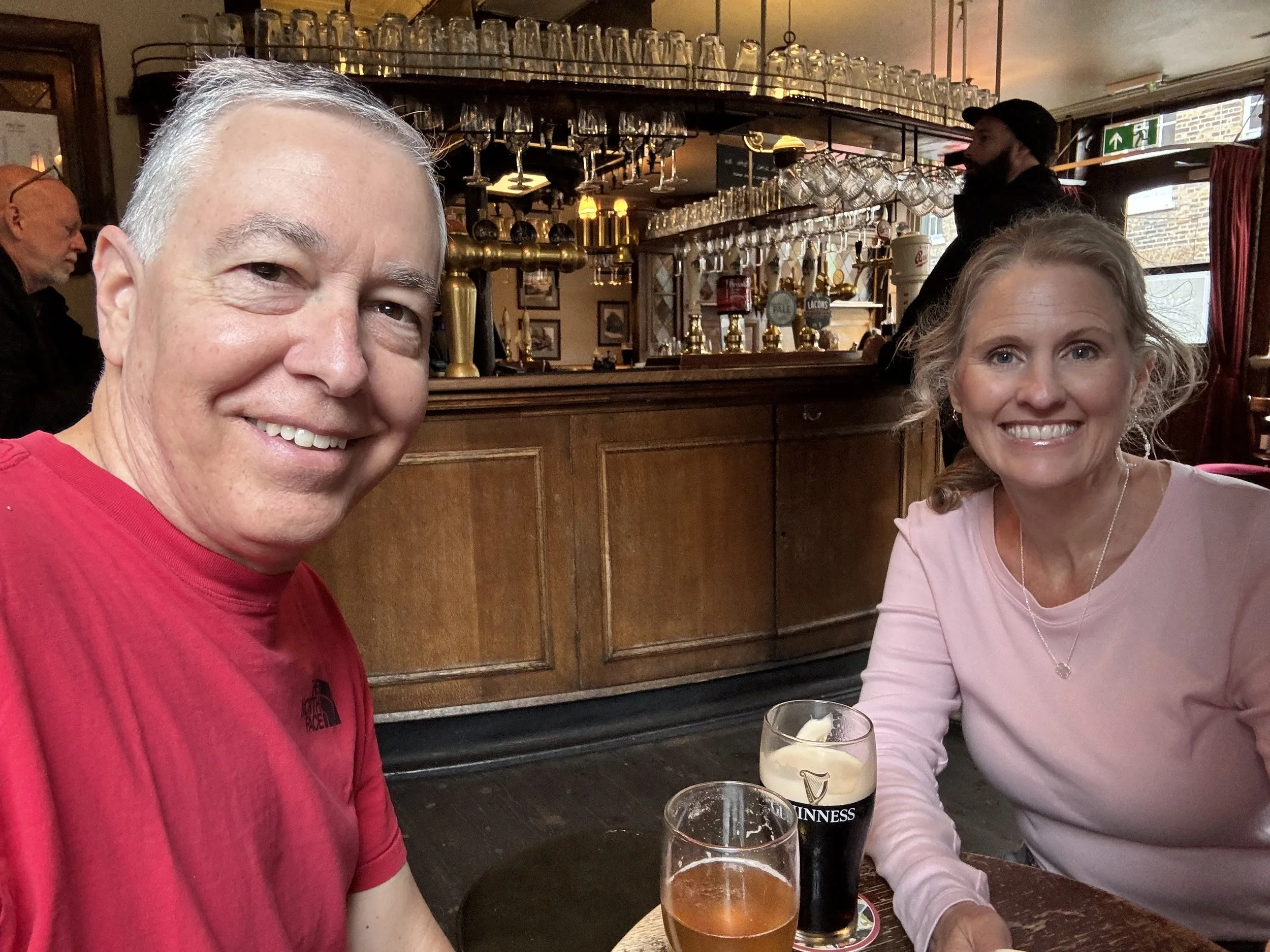
The pub retains a rare horseshoe-shaped bar with a partitioned public and saloon layout, and features a back room. Mrs. Harris Goes to Paris, Legend, No Time To Die, Call the Midwife, Slow Horses, Silent Witness, Bridget Jones's Diary, Pennyworth, & EastEnders have all set scenes on the street and/or inside the pub.
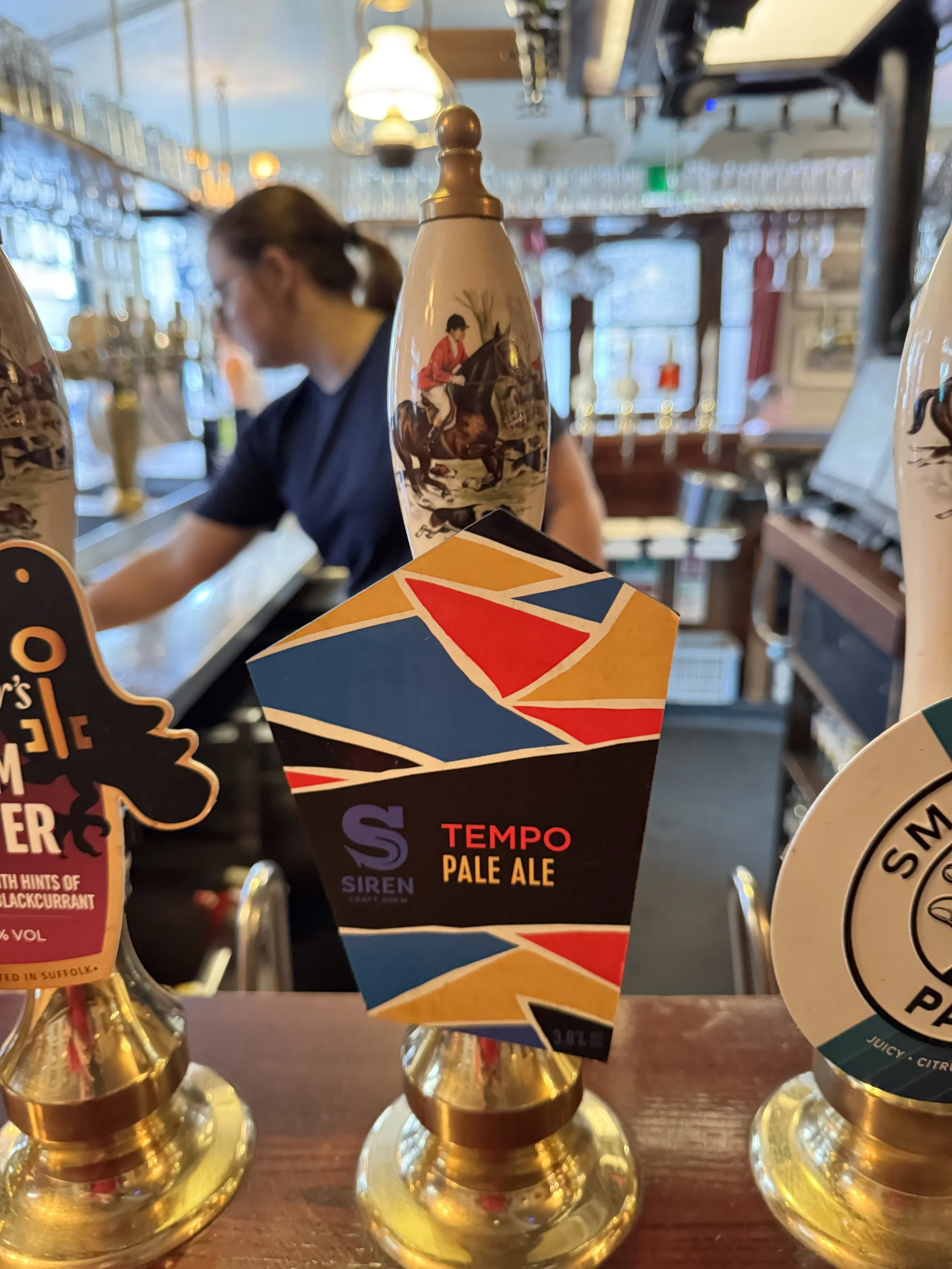
Finally! God bless the Brits for their real cask ales!
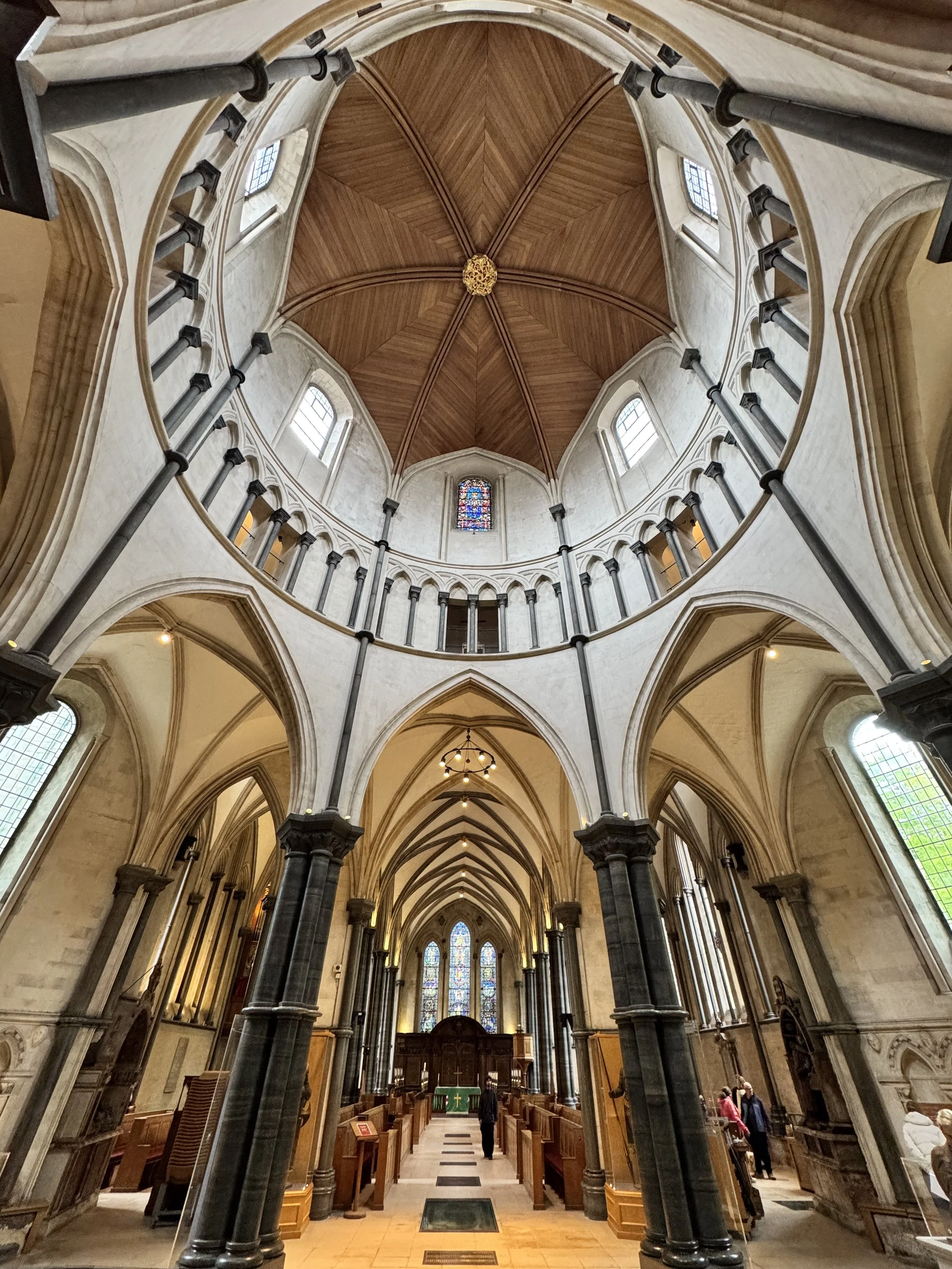
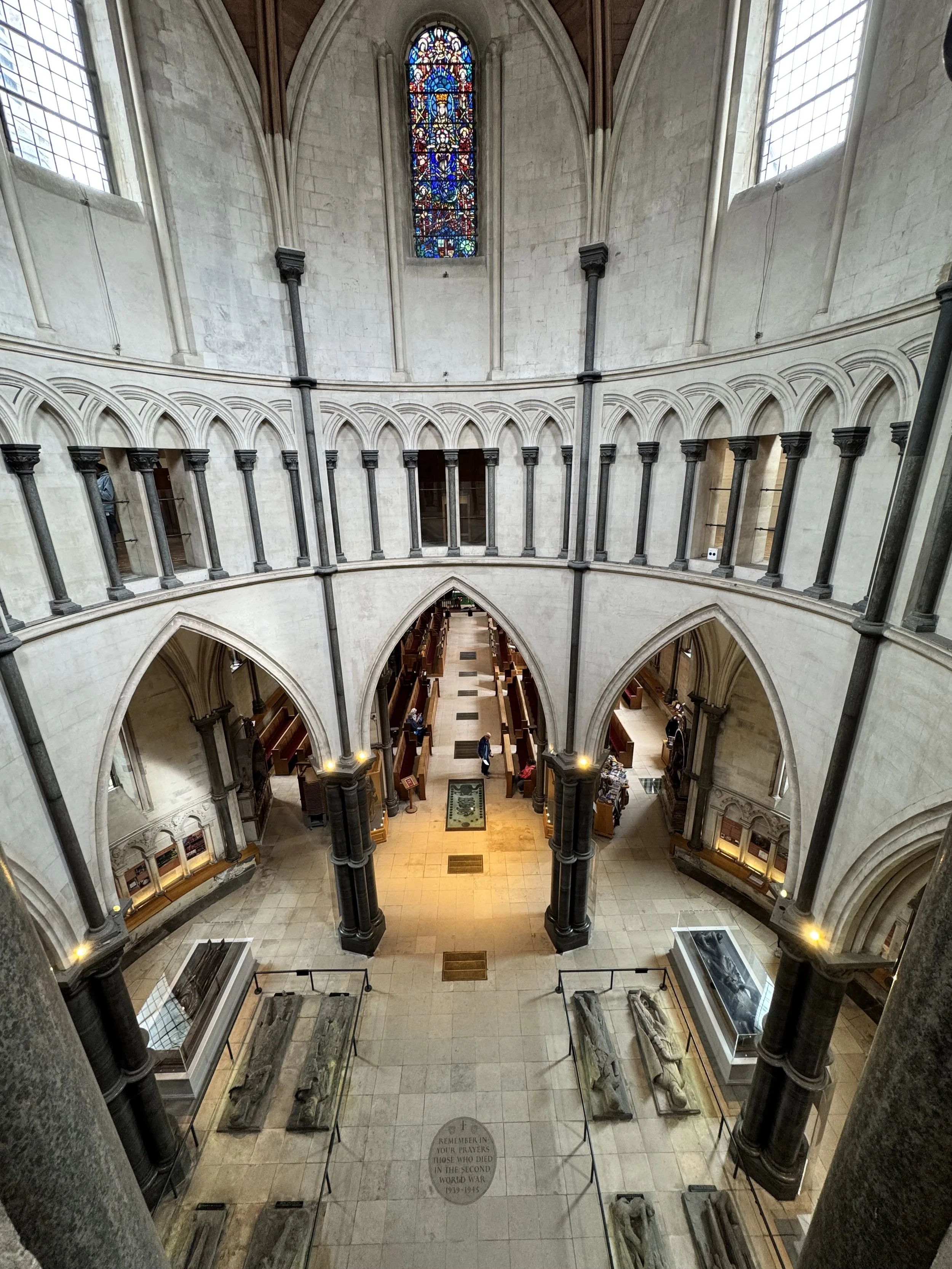
From The Kings Arms we took a red double-decker bus to Temple Church. On our last trip the church was closed for Easter services, so it was great to finally see inside.
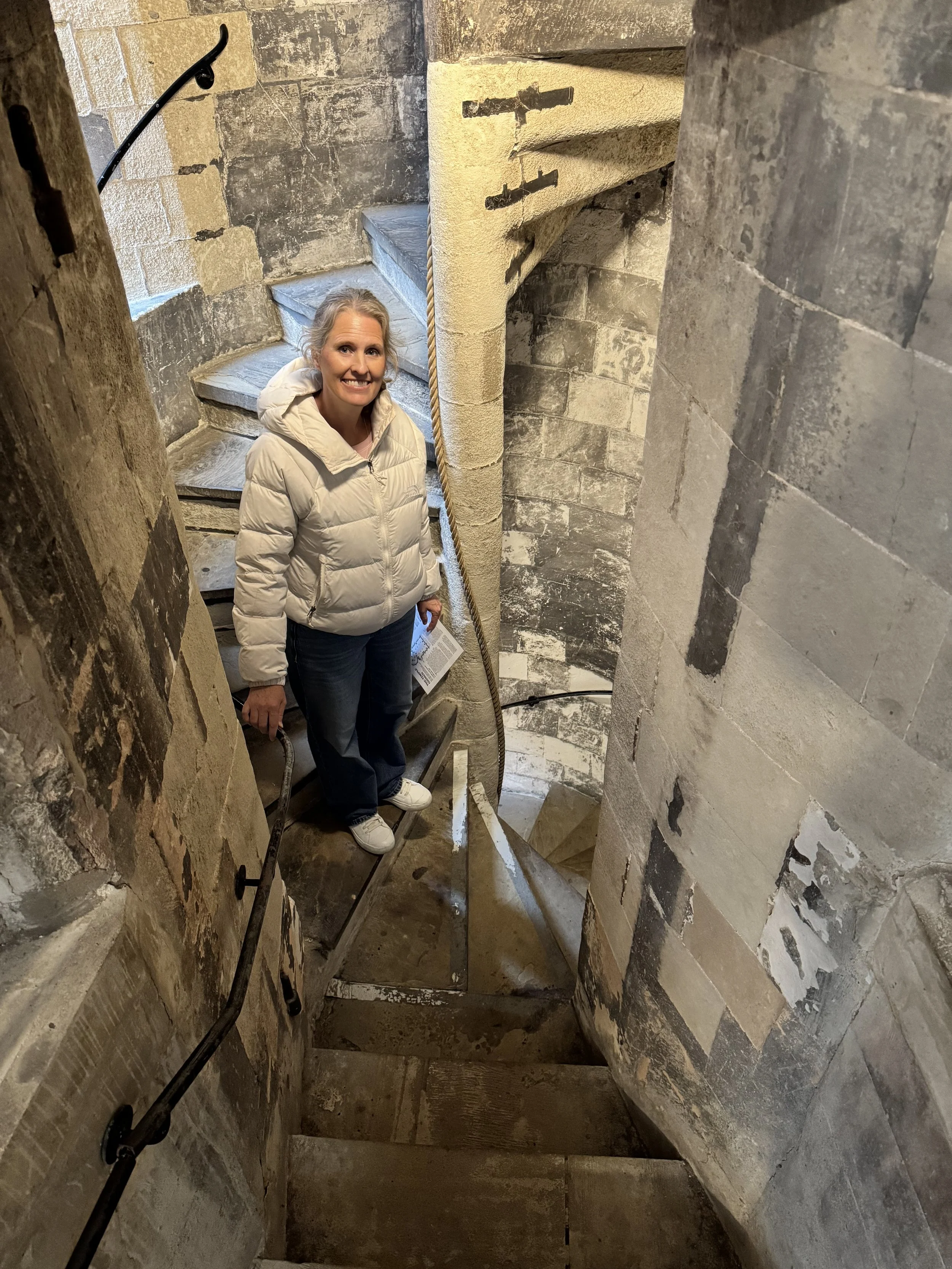
These ancient spiral stairwells seem to carry inspiration in every turn.
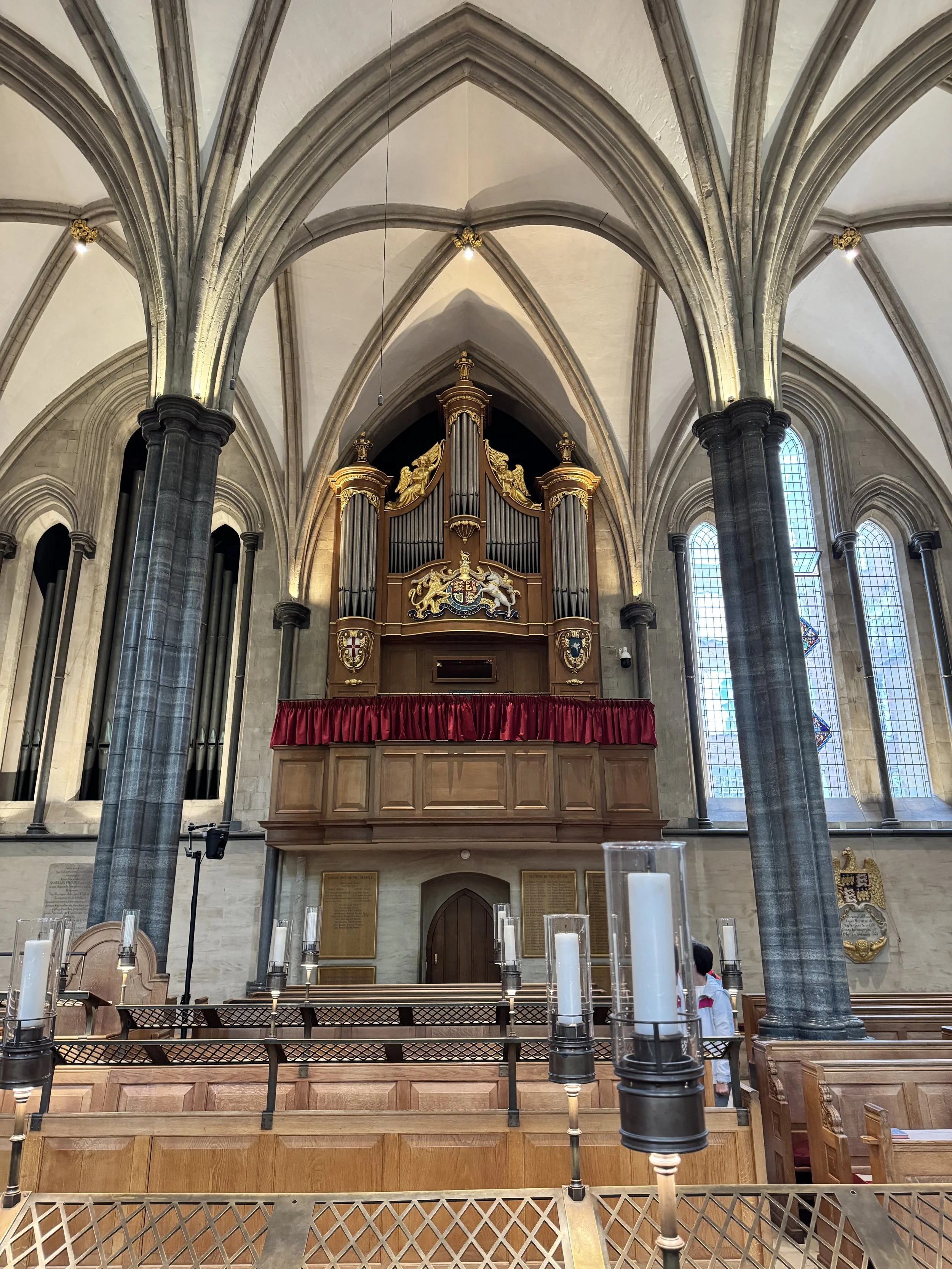
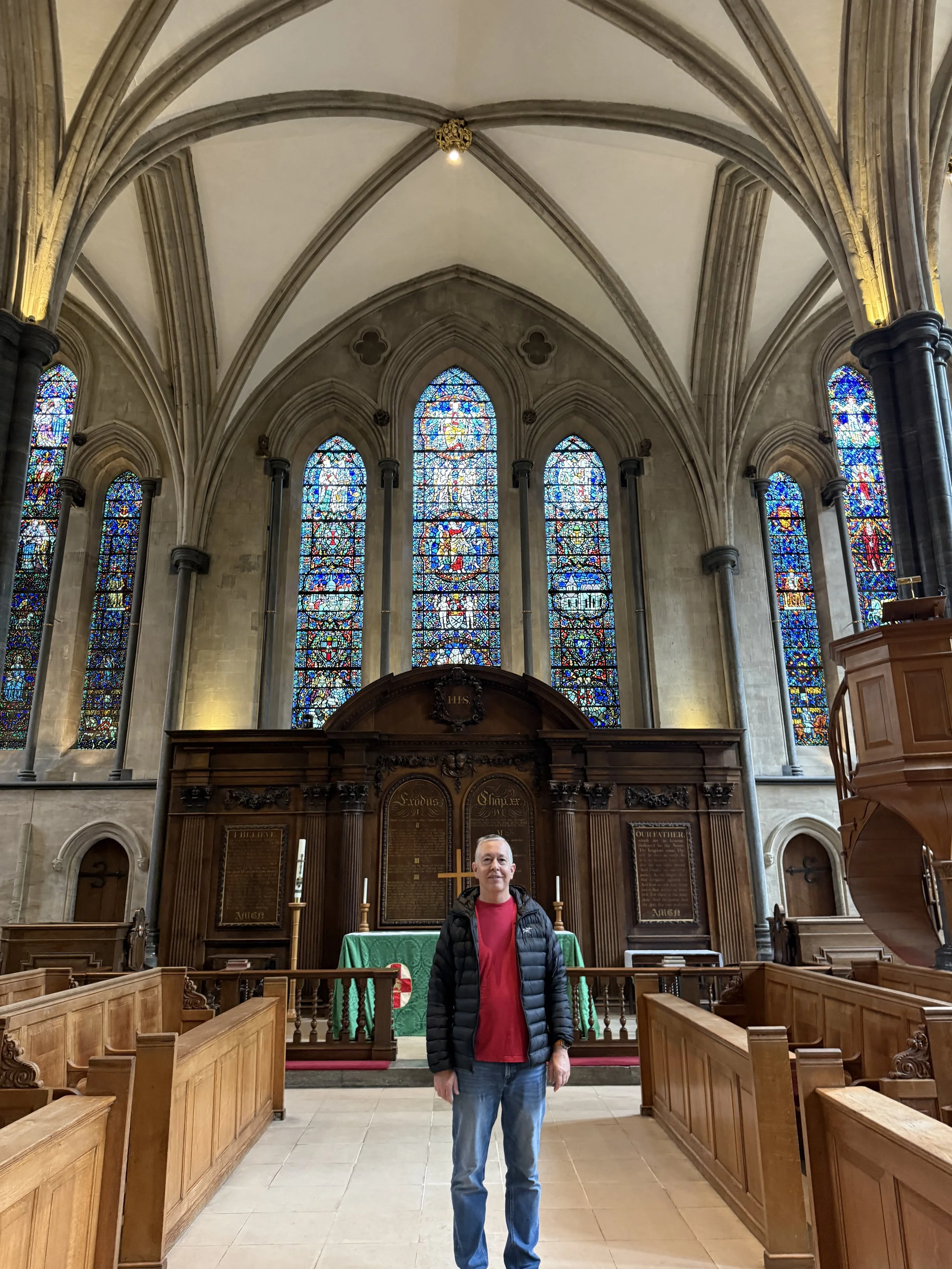
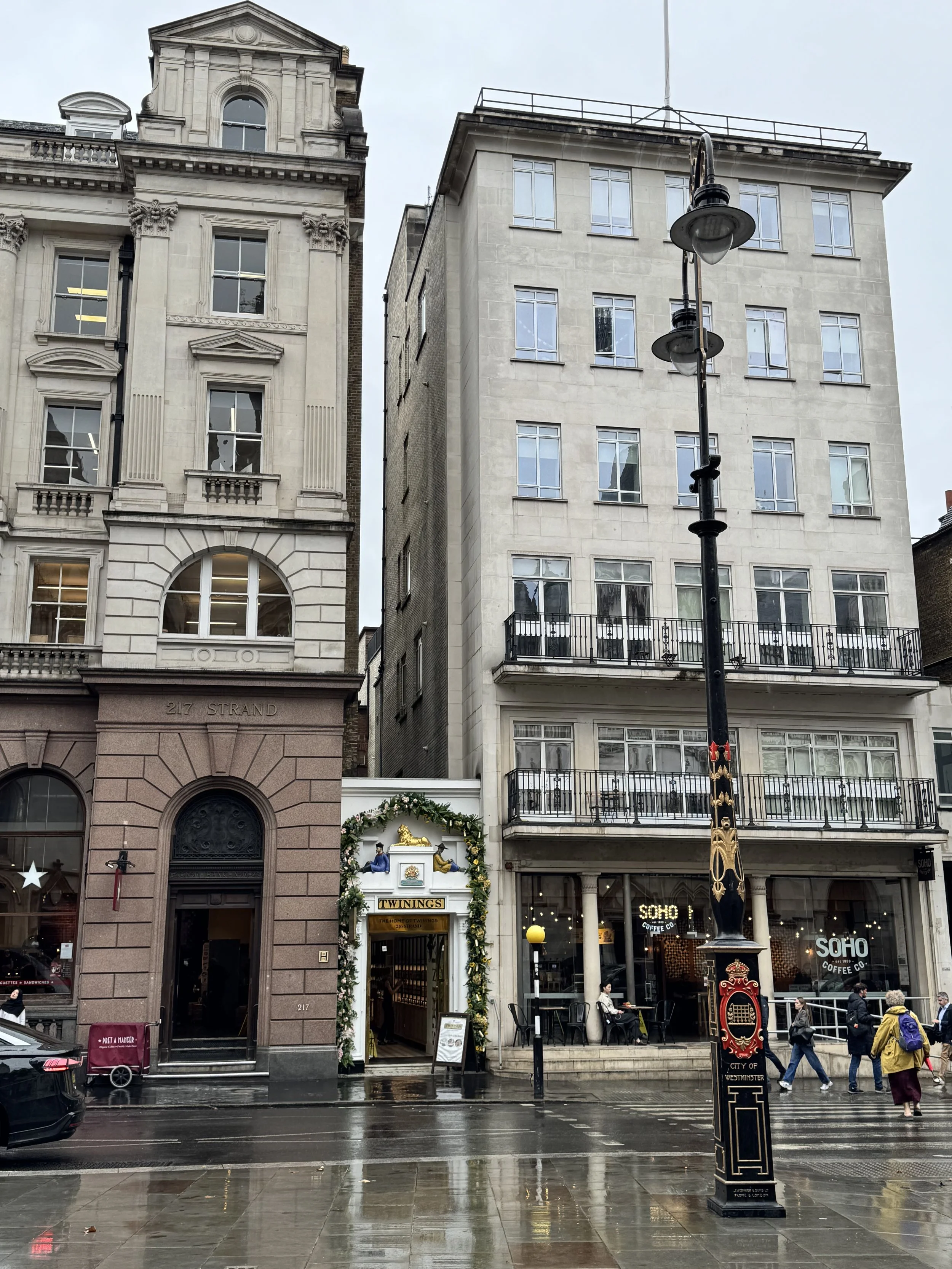
Twinings was a short walk from Temple Church.
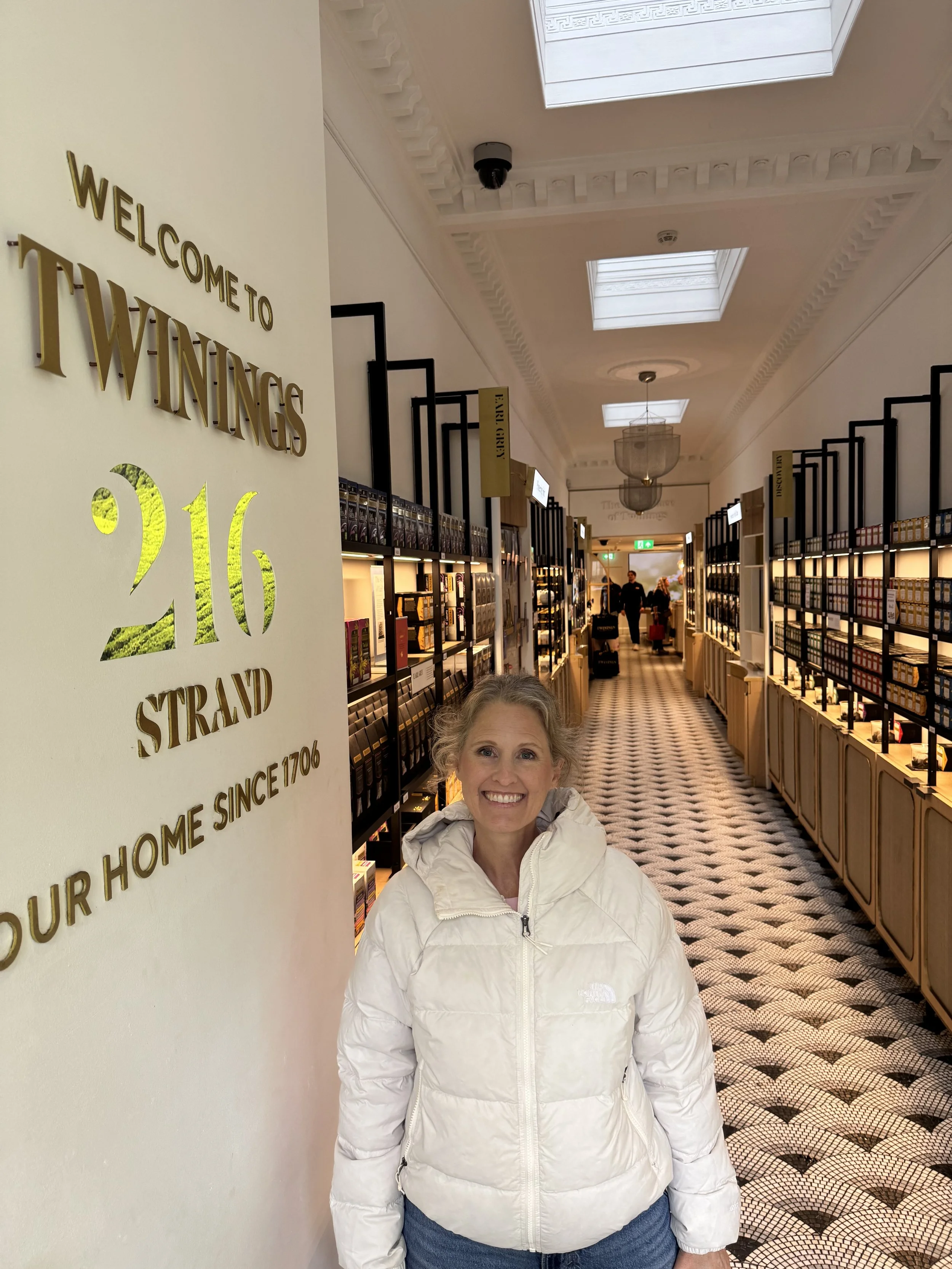
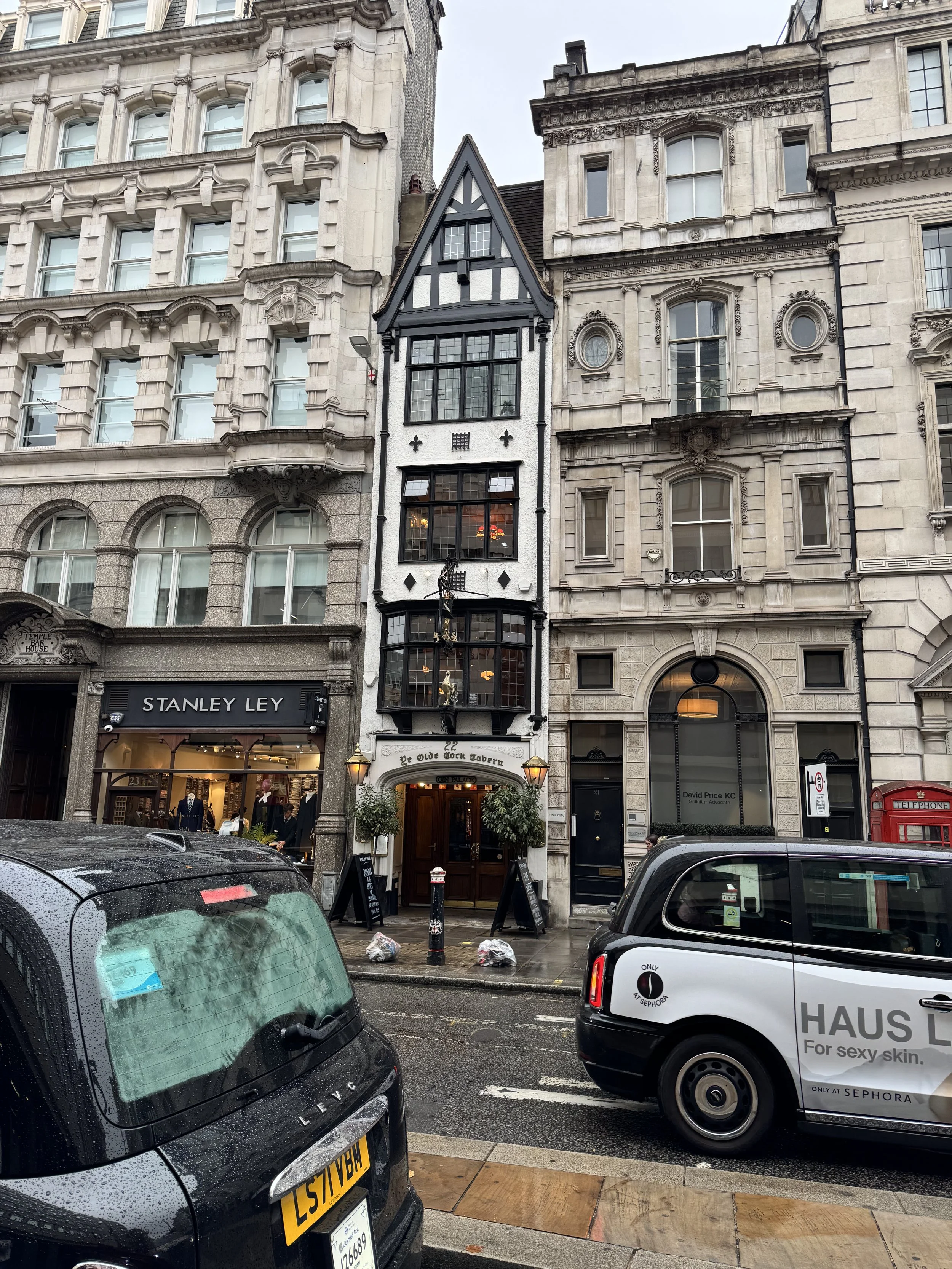
We so love London’s remarkable layering of old upon older, where centuries seem to sit comfortably beside one another.
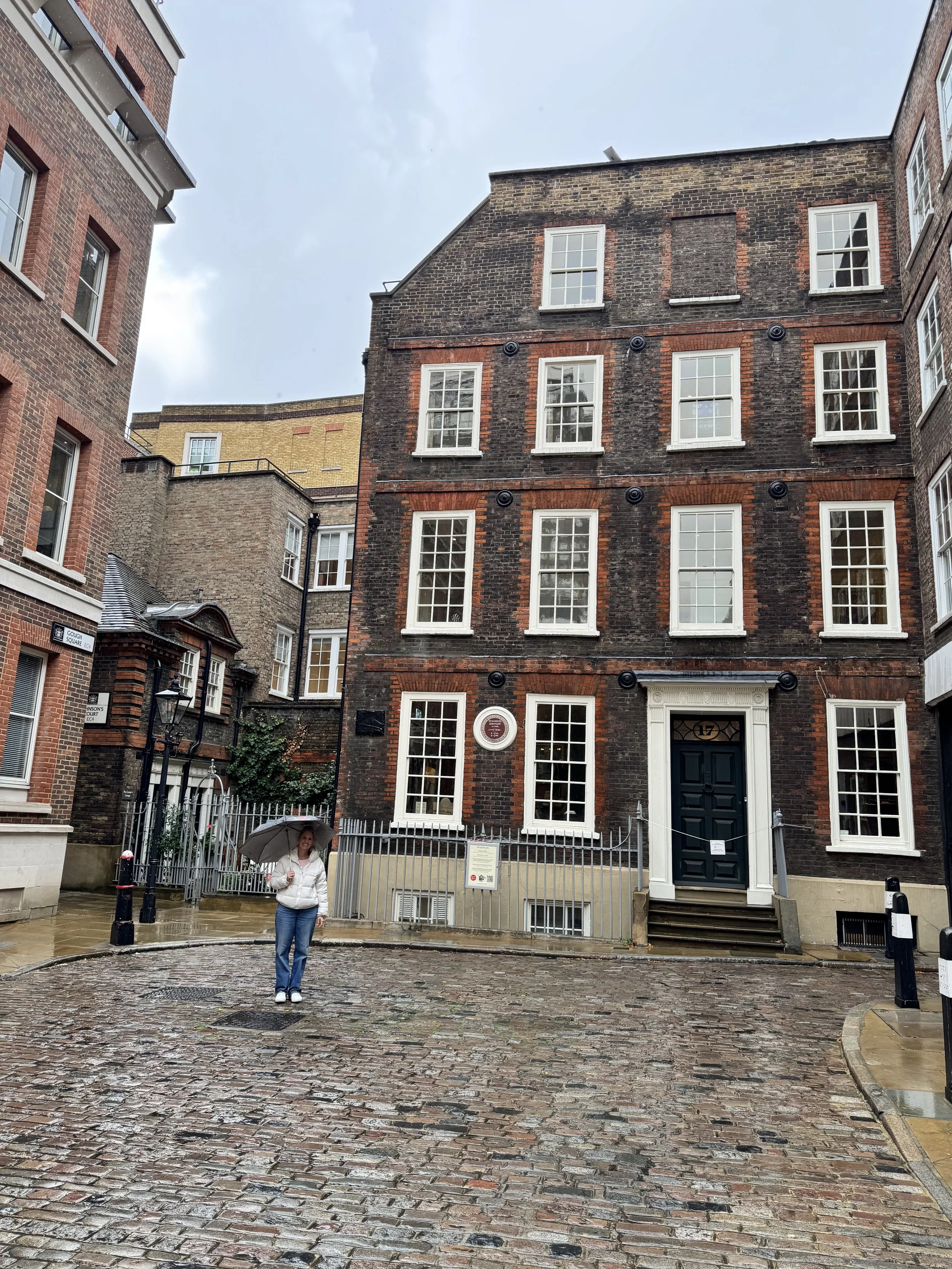
Next, we visited the home of Samual Johnson (1709–1784) who was an English writer, critic, & lexicographer, best known for compiling the hugely influential Dictionary of the English Language (1755), one of the most important English dictionaries of its era.
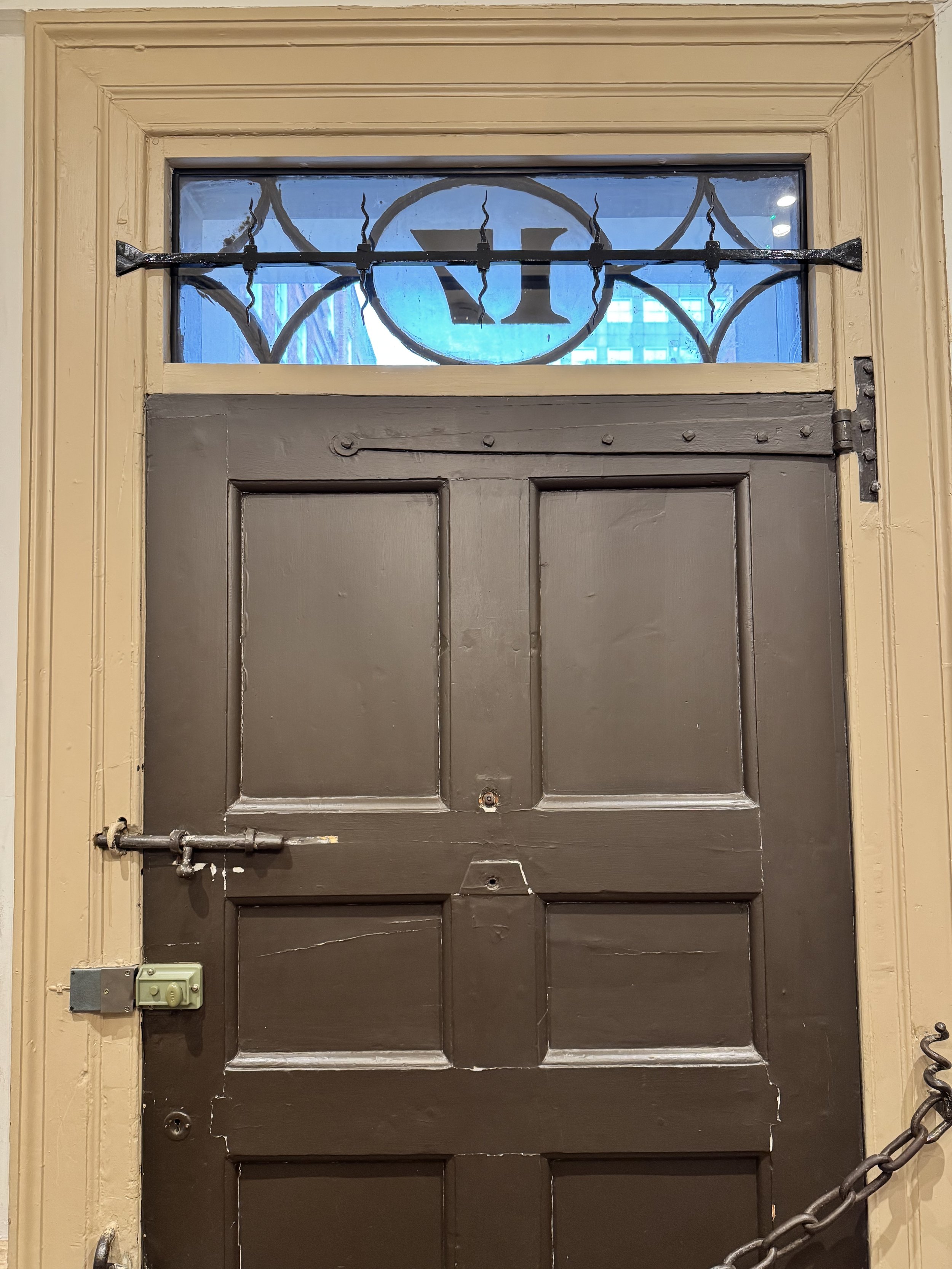
The household's only entrance had to be secure. The spiked iron bar above the door stopped burglars lowering children in through the window & the chain is hung on a corkscrew latch so that it can't be lifted up by a hook from outside.
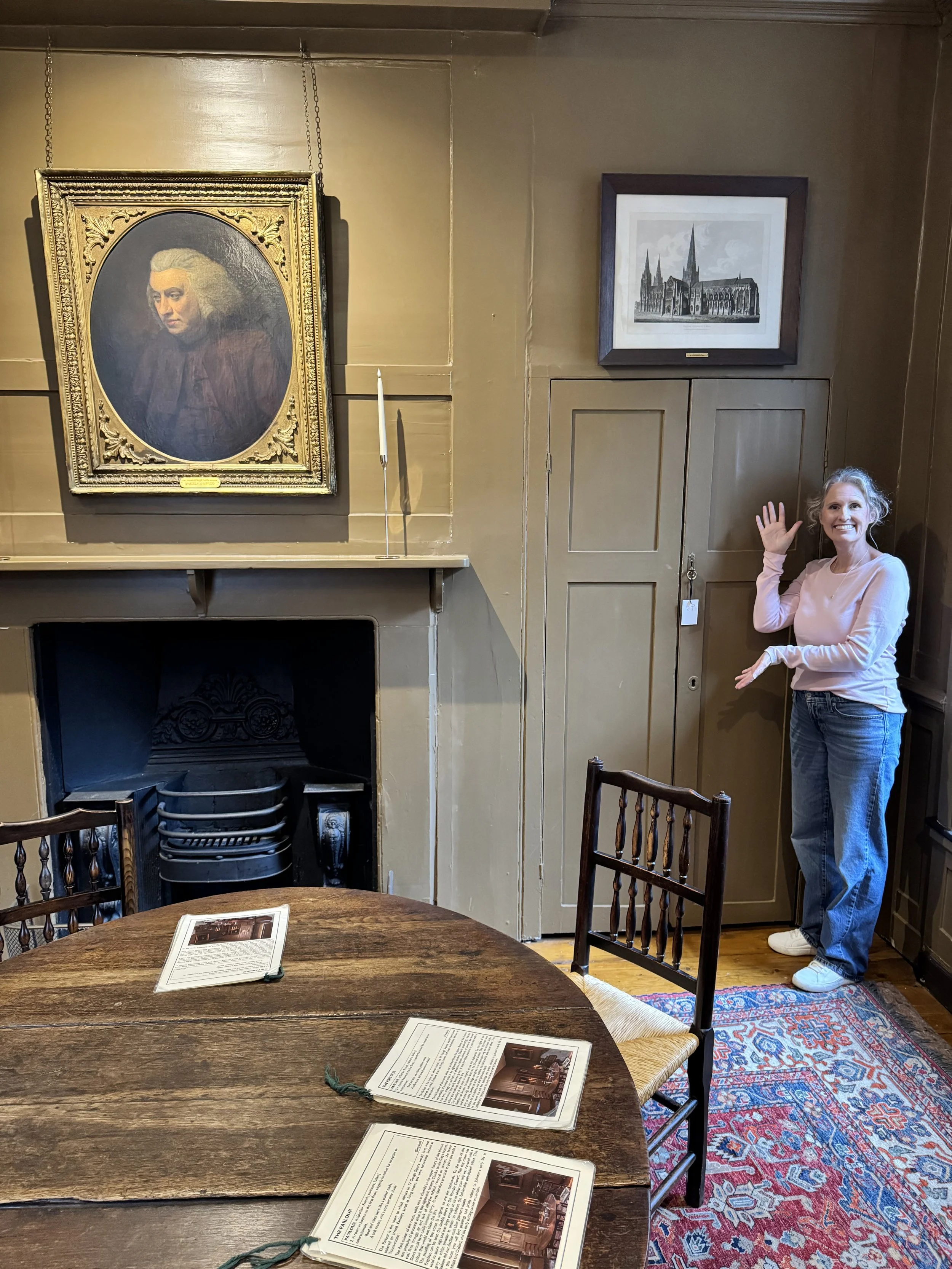
Amanda in front of the wig cupboard, originally used to store wigs.
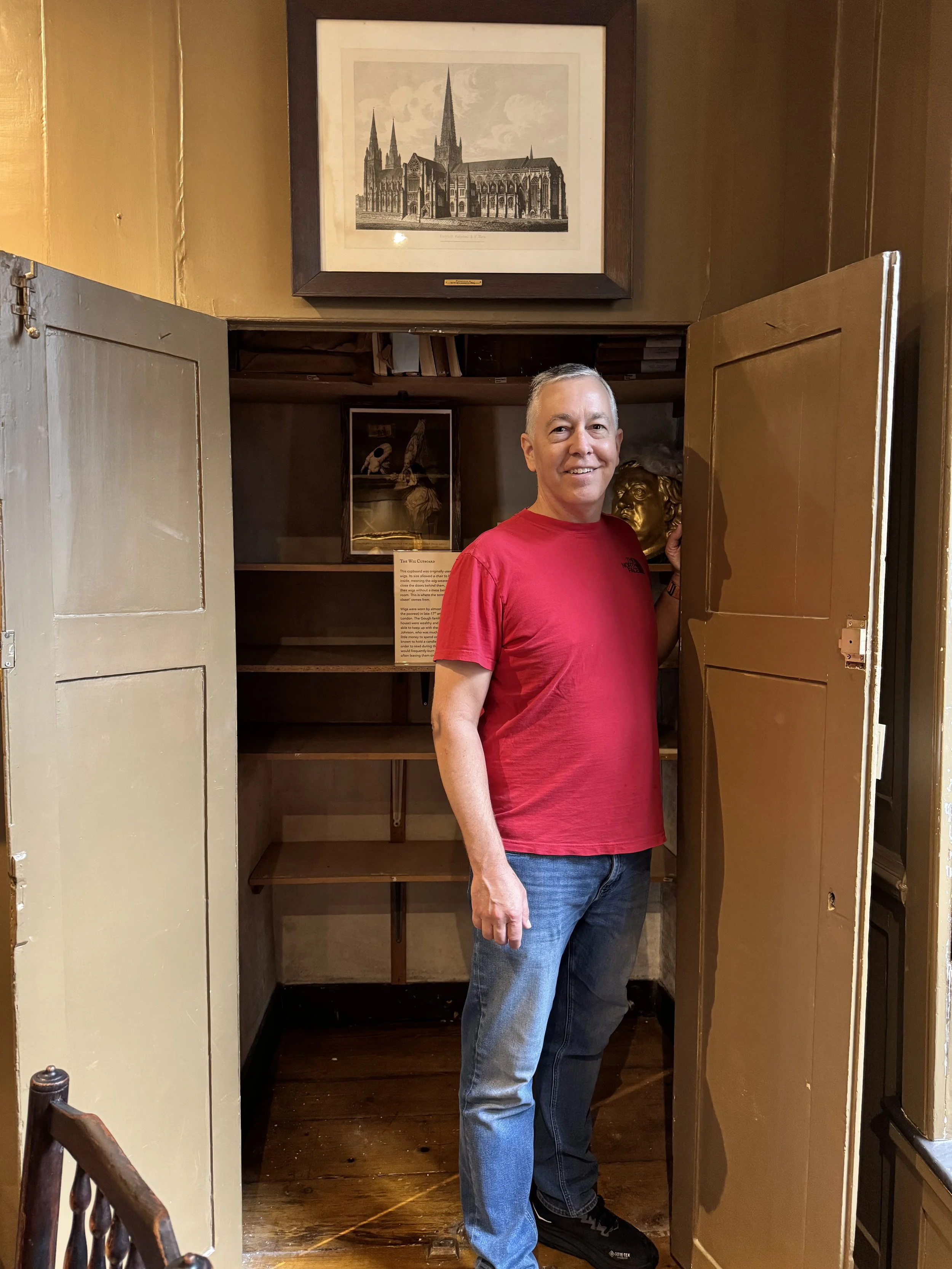
Its size allowed a chair to be placed inside, meaning the wig-wearer could sit, close the doors behind them, and powder their wigs without a mess being made in the room. This is where the term powder closet (now powder room) comes from.
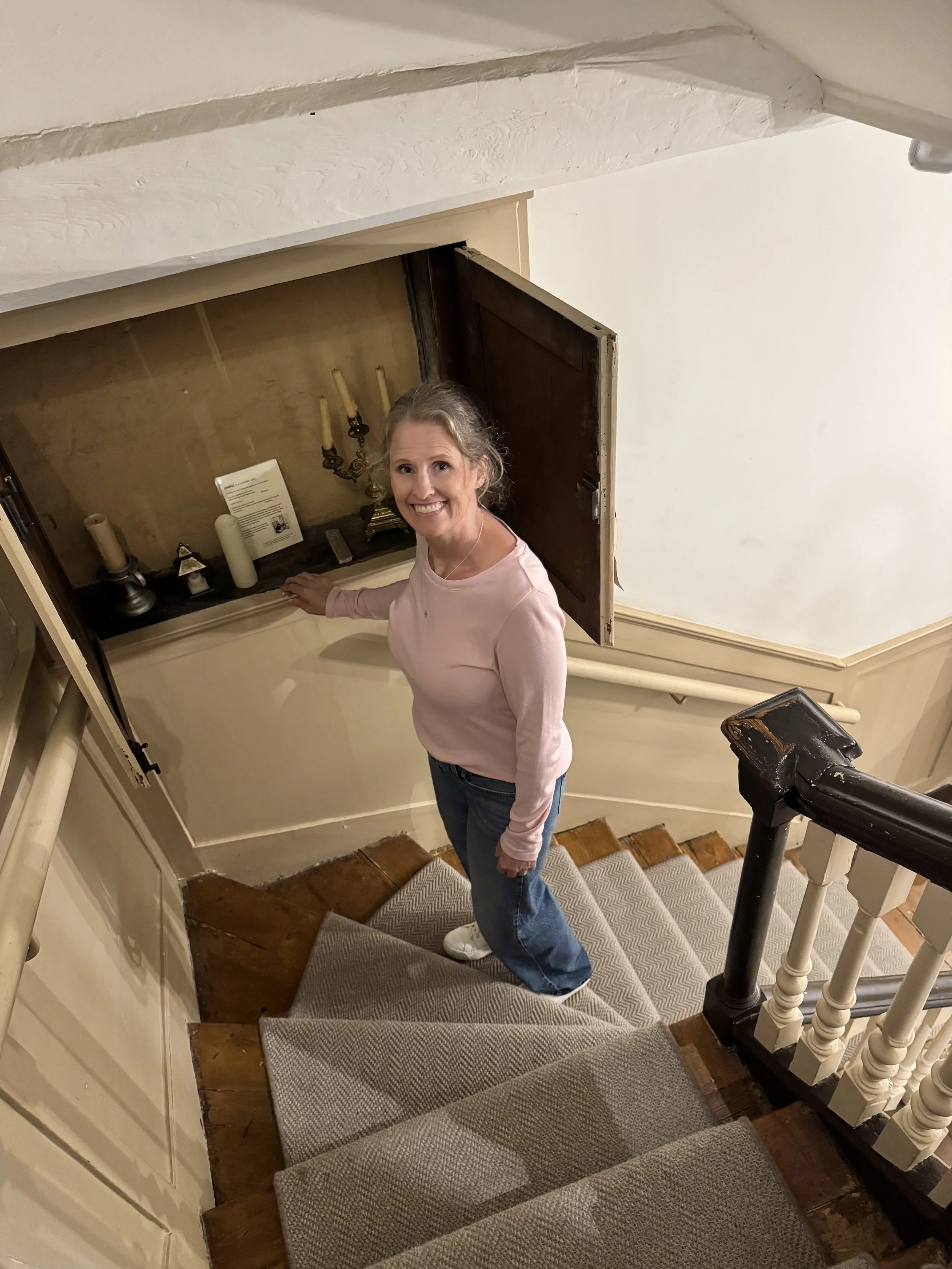
This little cupboard was used to store candles & candlesticks which could be lit downstairs before lighting the way up to bed. Such a neat old house!
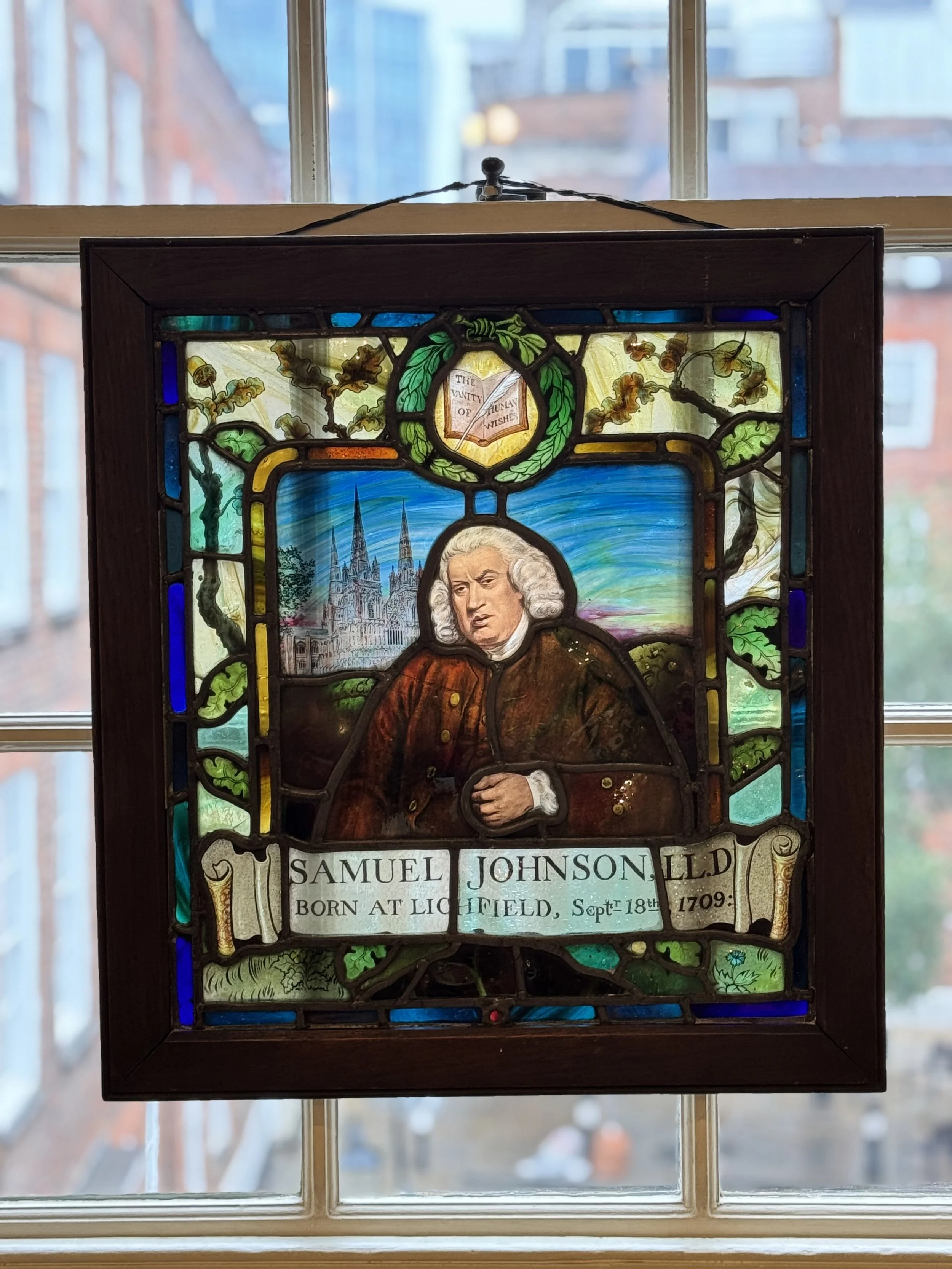
“When a man is tired of London, he is tired of life.” Samuel Johnson
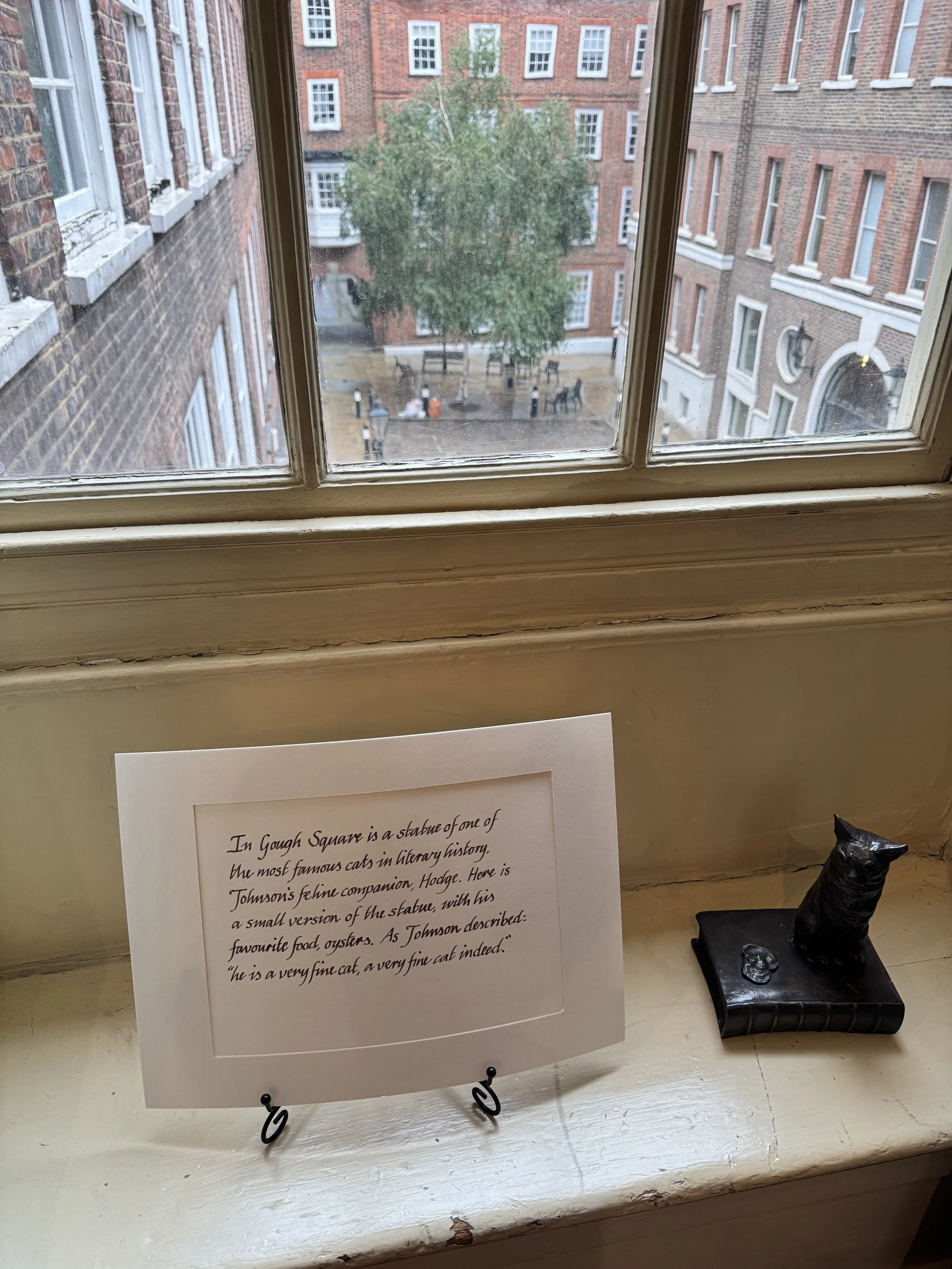
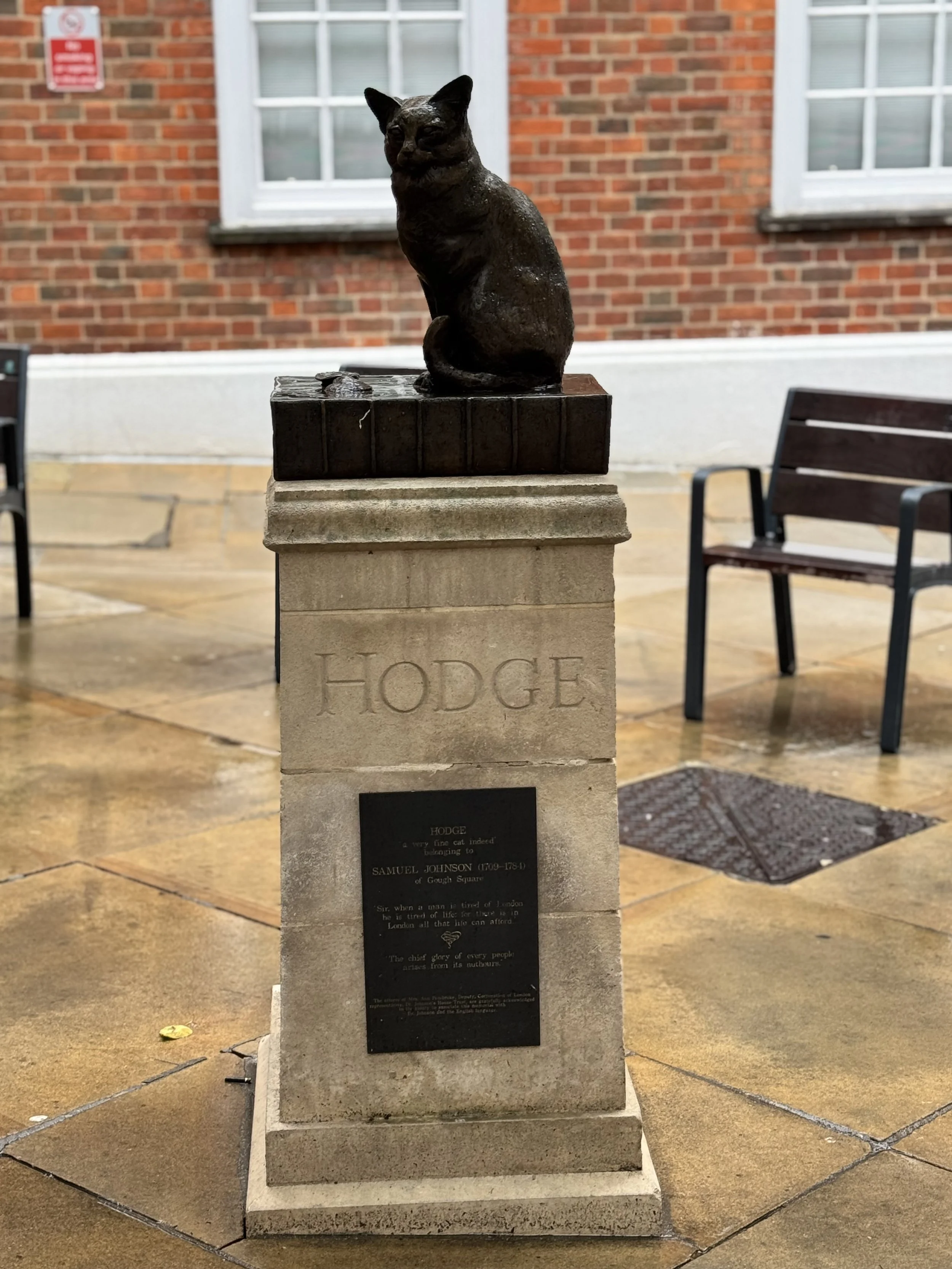
In Gough Square below is a statue of one of the most famous cats in literary history: Johnson's feline companion Hodge.
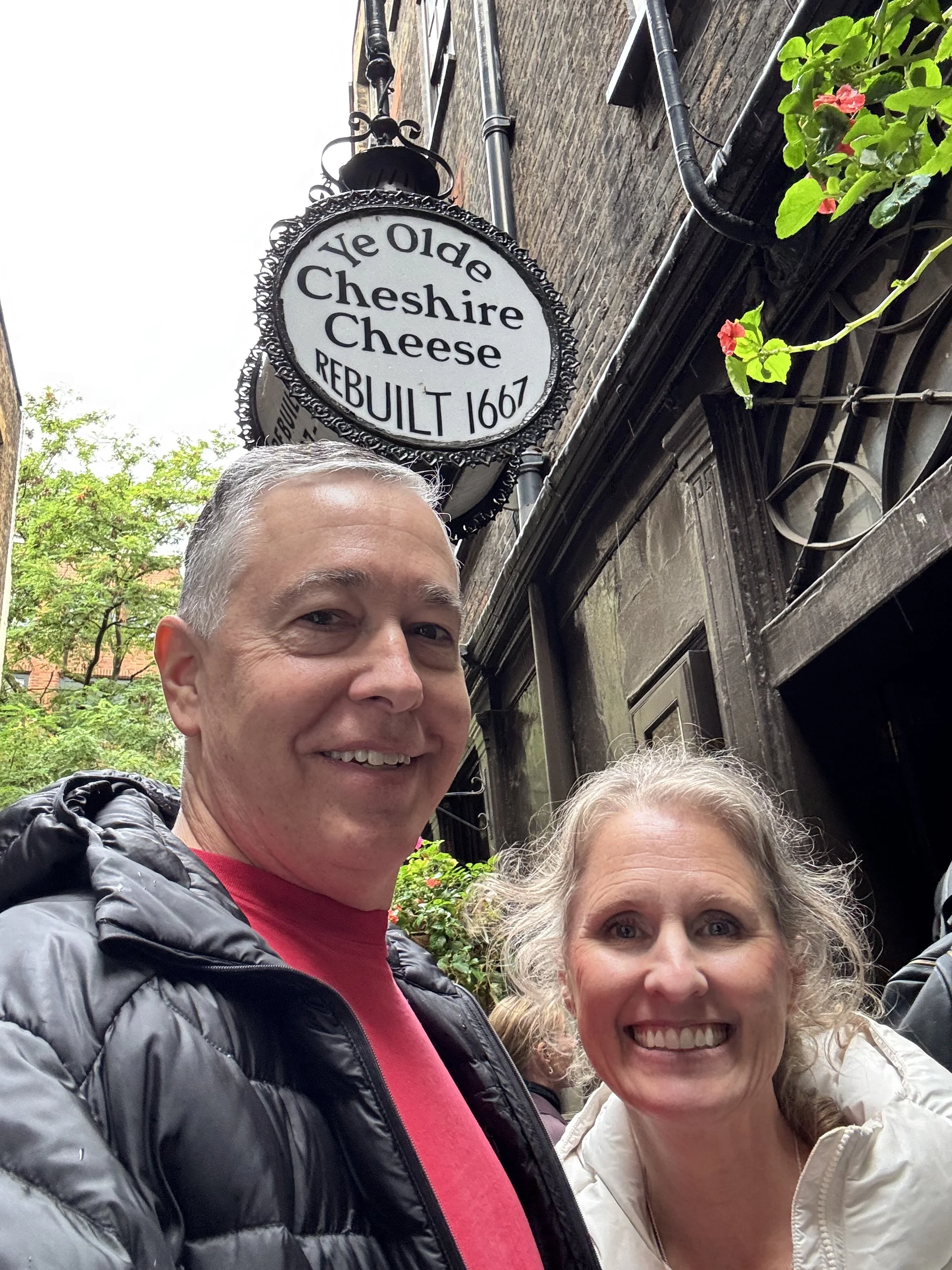
Just blocks from Johnson’s home is one of London’s oldest & most iconic pubs, rebuilt after the Great Fire of London, which began on Sept 2, 1666, in a bakery on Pudding Ln & burned for four days, destroying much of the medieval City of London. Our visit on Sept 8, 2026, was nearly exactly 360 years after the fire broke out.
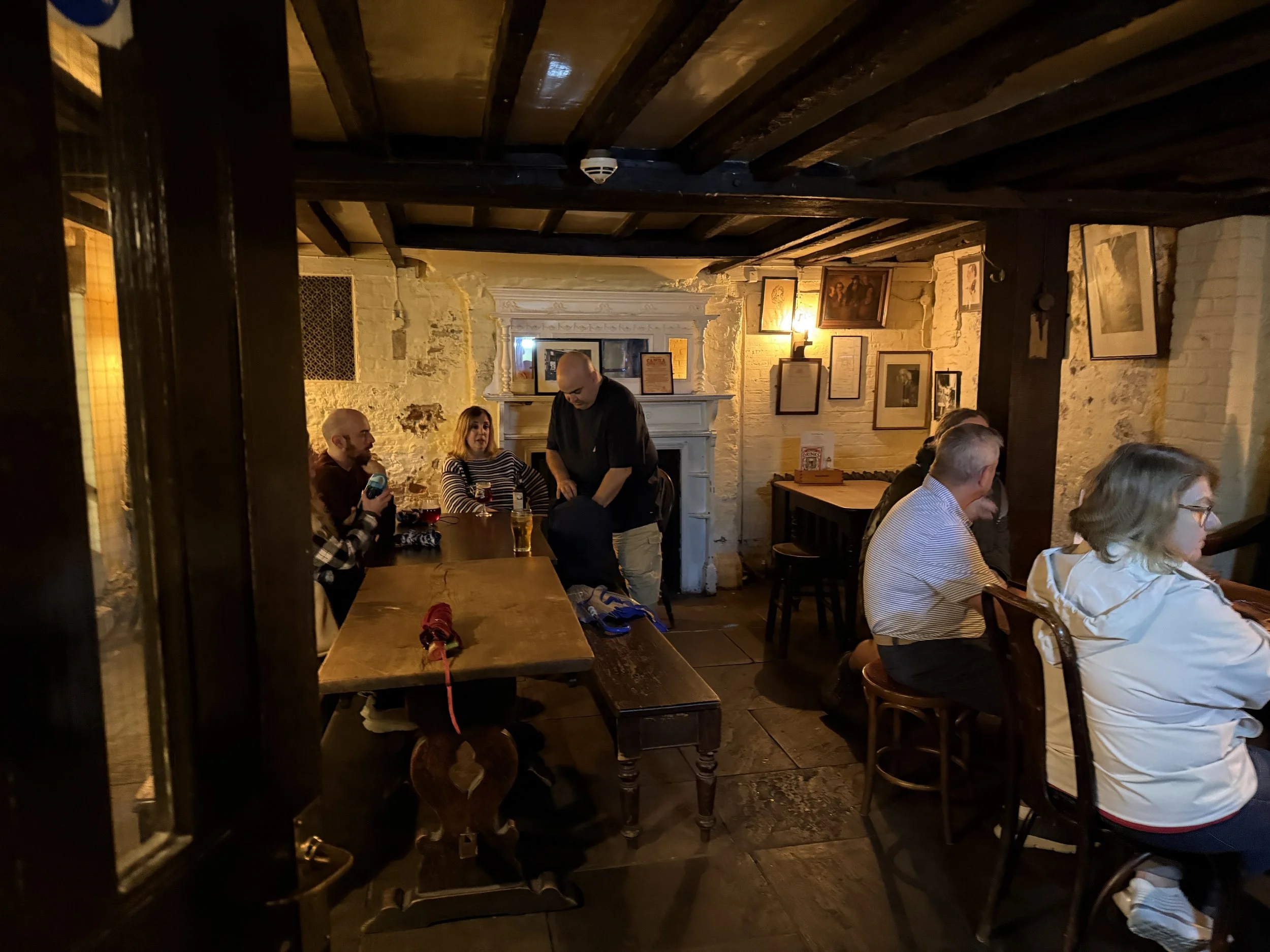
A pub has stood on the site of Ye Olde Cheshire Cheese since 1538, prior to which the site formed part of the guest house of the 13th century Carmelite Monastery. The Chop Room is the traditional dining room, centered around a long oaken table where, over the years, Dr. Johnson, Charles Dickens, Oliver Goldsmith, and many other celebrated figures once sat and dined.
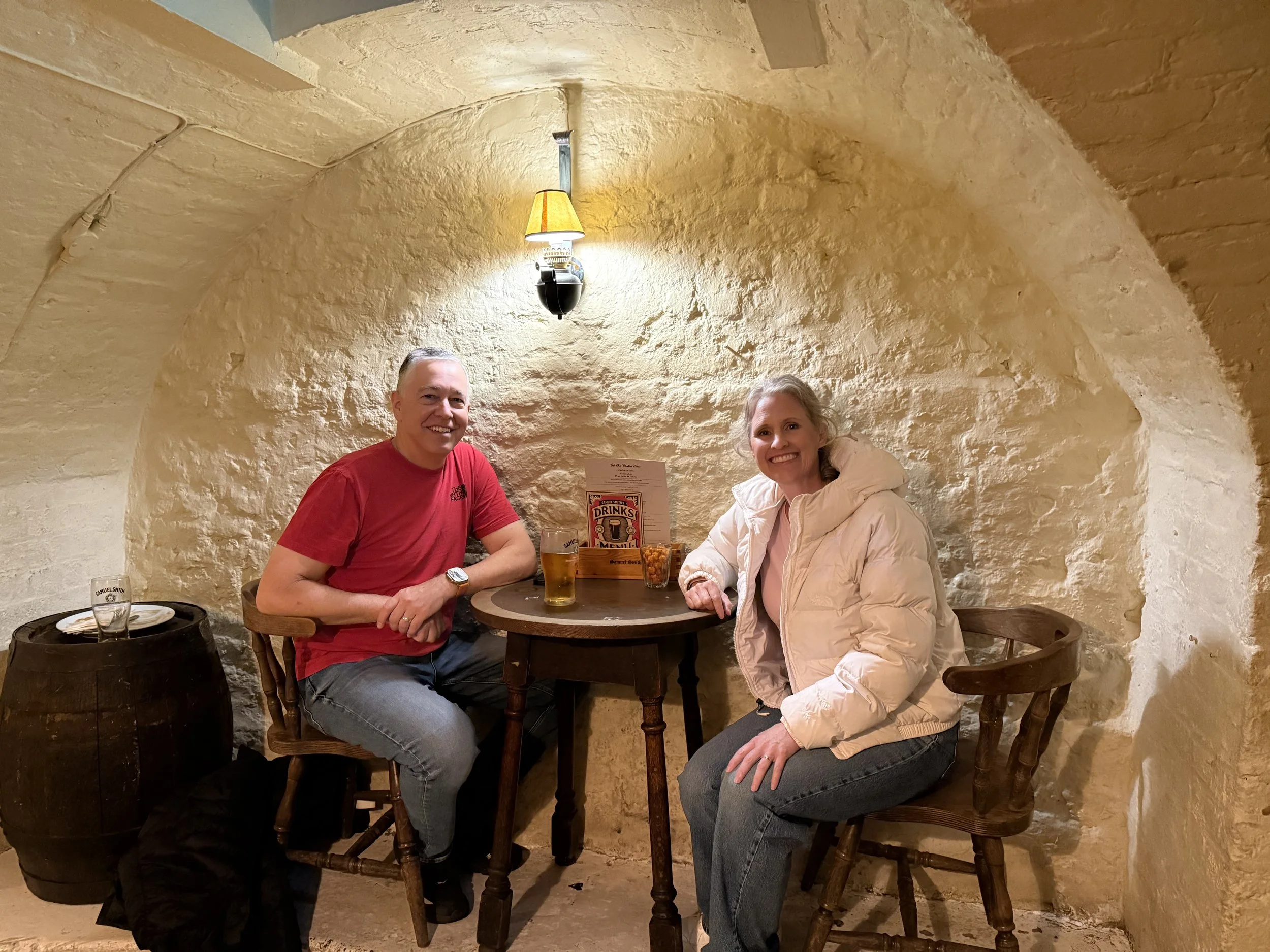
The pub is a wonderful warren of rooms & crooked passageways. We discovered this little alcove one level down, where even ducking wasn’t quite enough to save my head from the old stairwell. We then descended another level into the ancient cellar to order our drinks. What an experience!
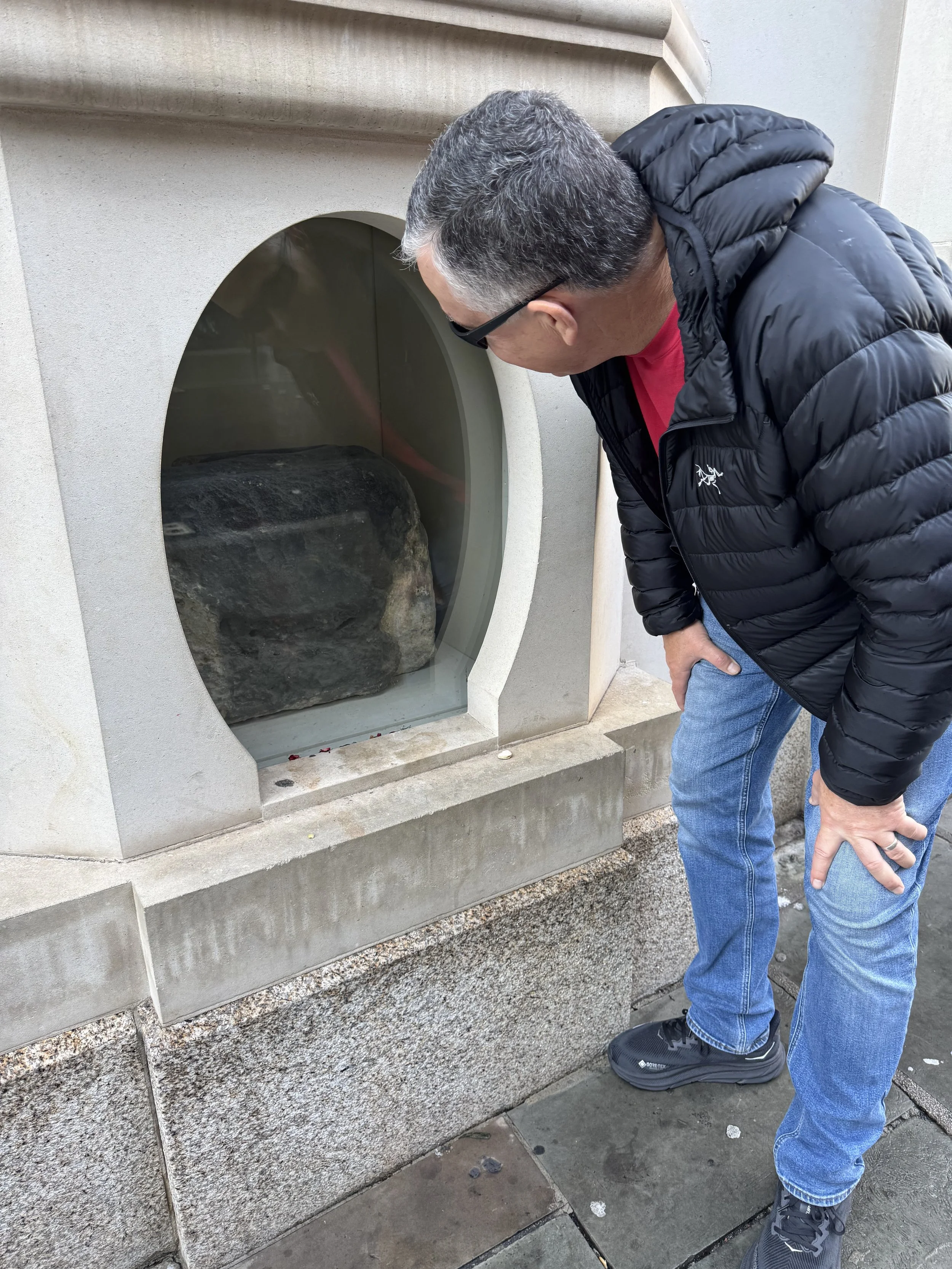
The remaining part of London Stone. Its original purpose is unknown, although it may be Roman & related to once nearby Roman buildings. It originally stood in the middle of Cannon St & was later set in an alcove in the wall of St Swithin's church on this site. The church was bombed during WW II & later demolished. London Stone was placed in this alcove in 2018.
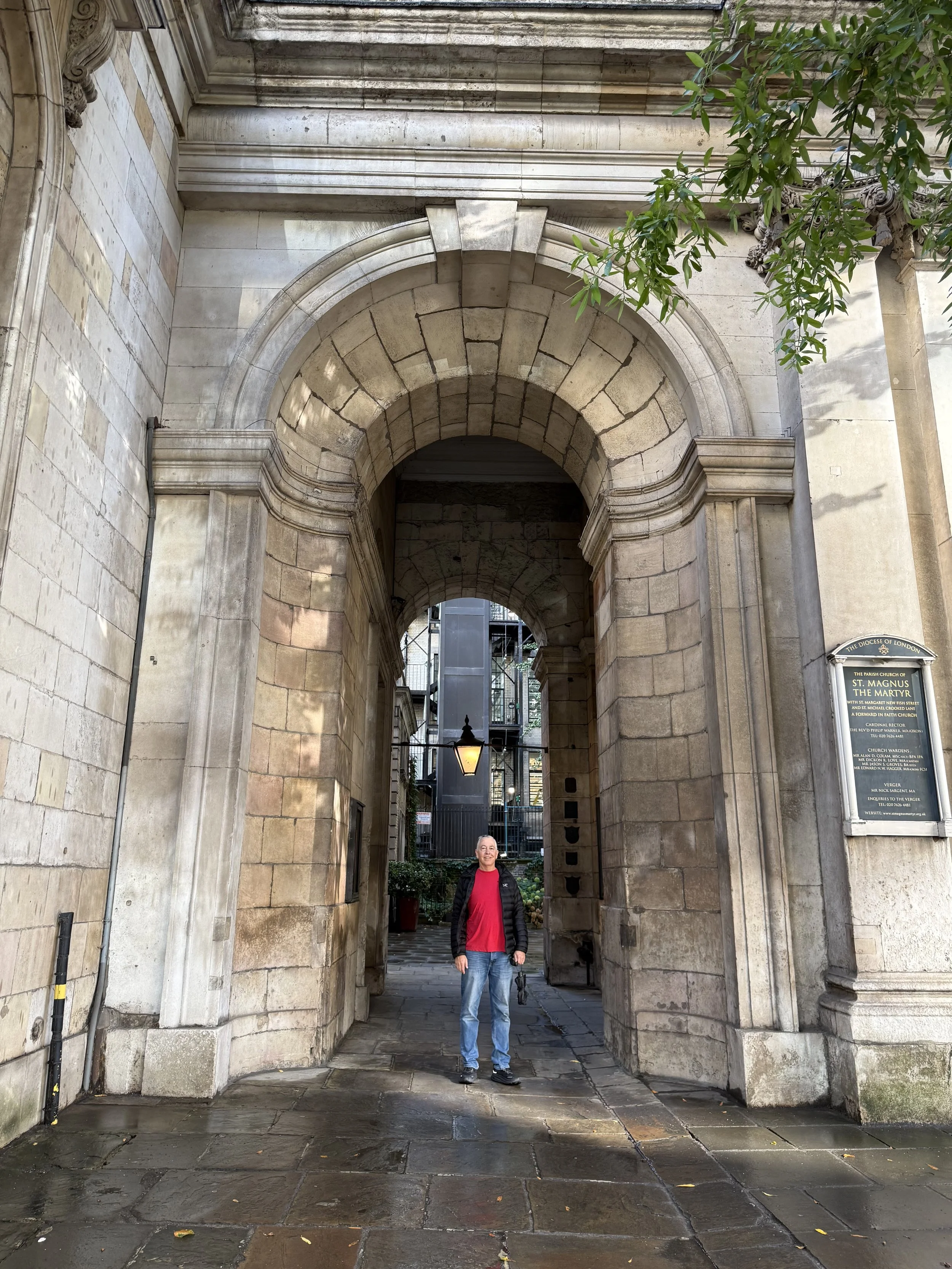
The first timber crossings over the River Thames were built by the Romans. Many such bridges were destroyed and rebuilt between c. 50–400 CE.
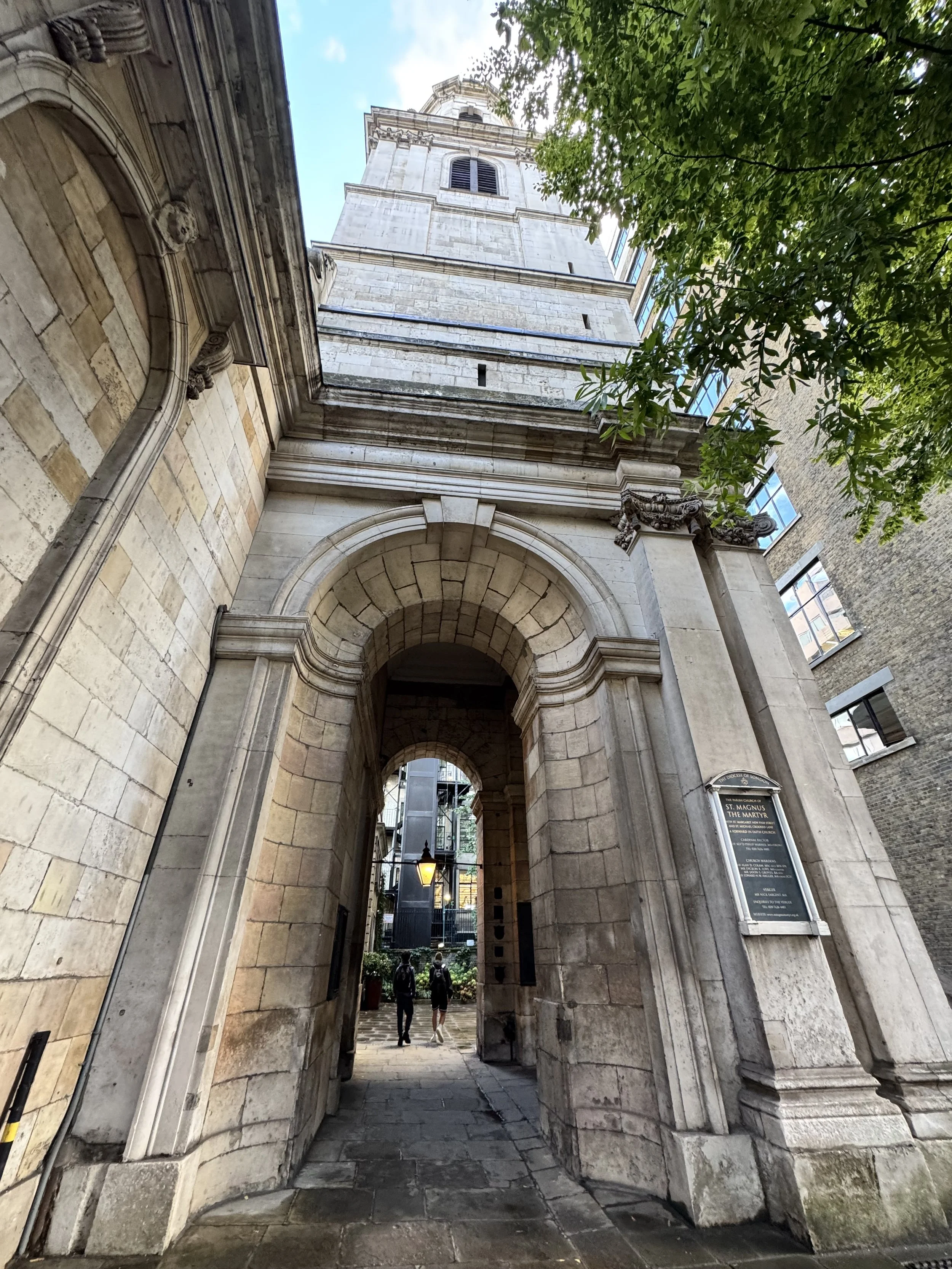
The Old London Bridge was the famous medieval stone bridge built almost exactly over the Roman alignment, featuring houses & shops on top. It stood for over 600 years from 1209–1831. This was once the passageway on the north bank that pedestrians passed through. Carts and animals passed on the wider section to the right. This remains part of Church of St Magnus-the-Martyr. There is a model of the bridge inside, but we arrived too late to see it. We’ll return on Thurs.
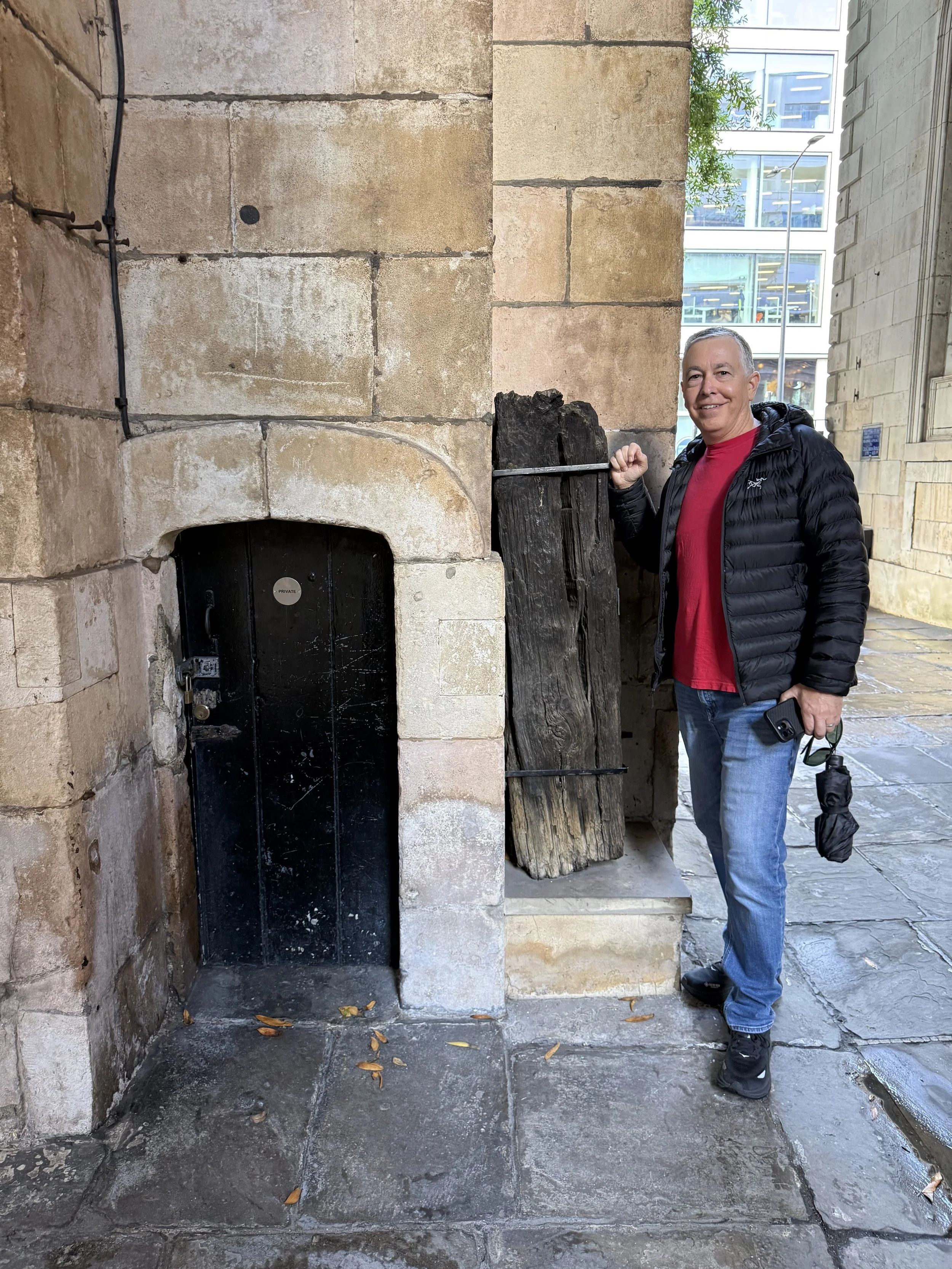
A piece of an old Roman wharf dating from c. 75 CE. This was found on the nearby Fish Street Hill in 1931, illustrating just how far the banks of the Thames have moved over the space of 2,000 years.
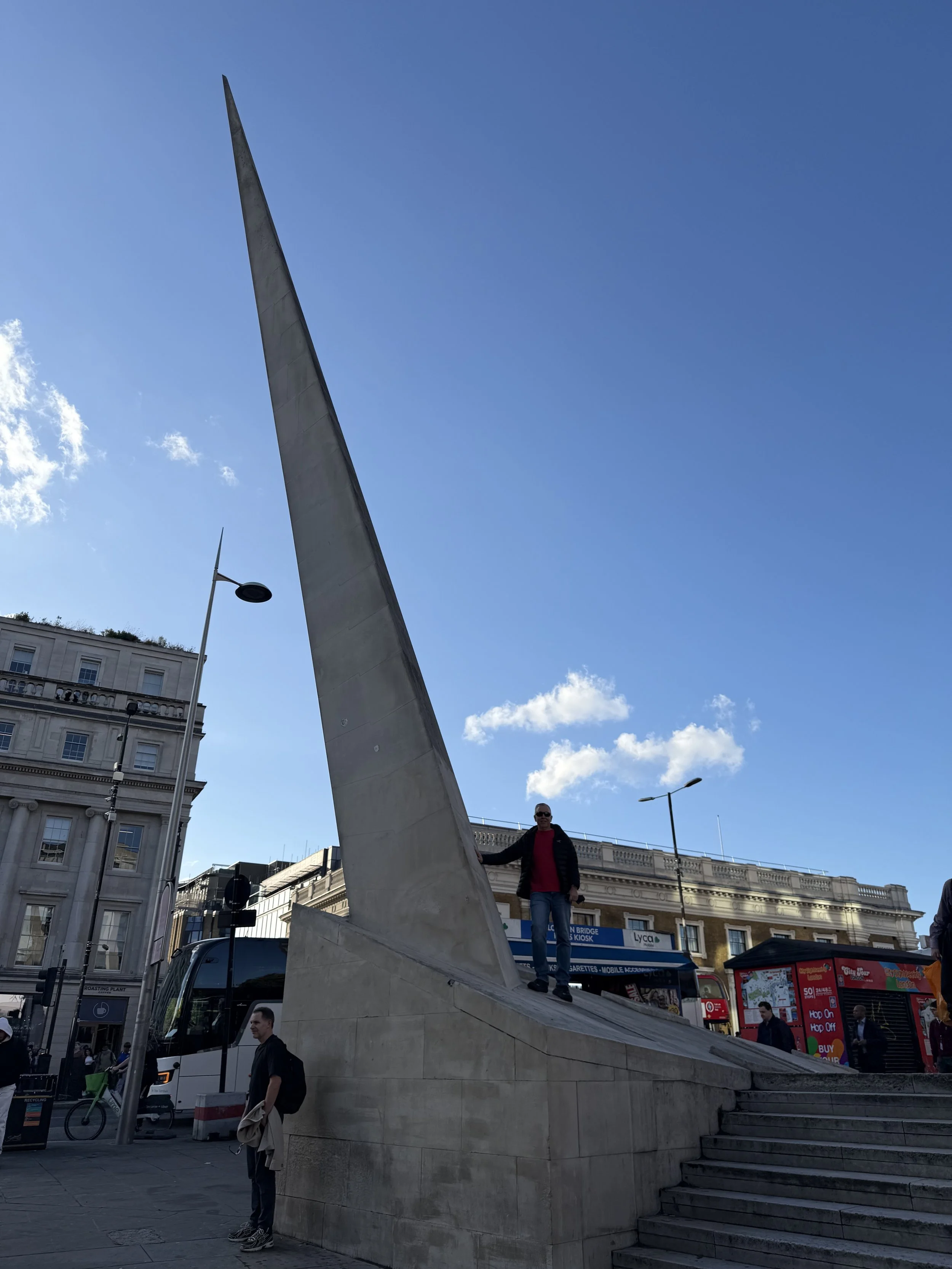
The Southwark Gateway Needle stands on the bank opposite & points toward Church of St Magnus-the-Martyr. This was once the south entrance onto the medieval London Bridge & the only way into the city other than by boat.
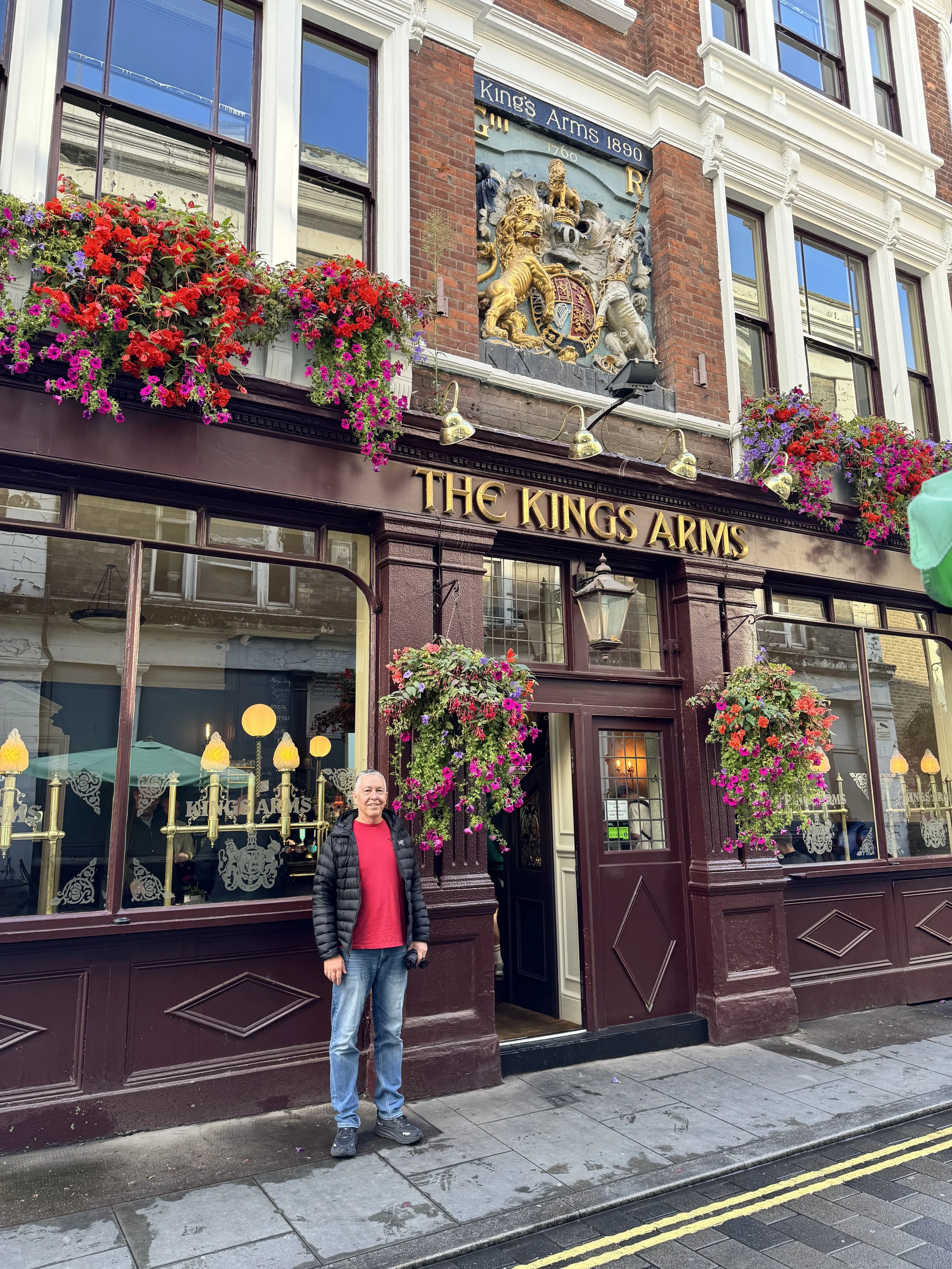
The King’s Arms, a Victorian pub on Newcomen St in Southwark. The fine stone coat of arms used to say GIIR, for George II, and was fixed on Stonegate in 1728, the entrance to Old London Bridge from the Southwark side. When the gate was demolished in 1760, it was removed, the inscription changed to 1760 & GIIIR for the current king, & put up on this tavern. Walking London is to walk through living history!
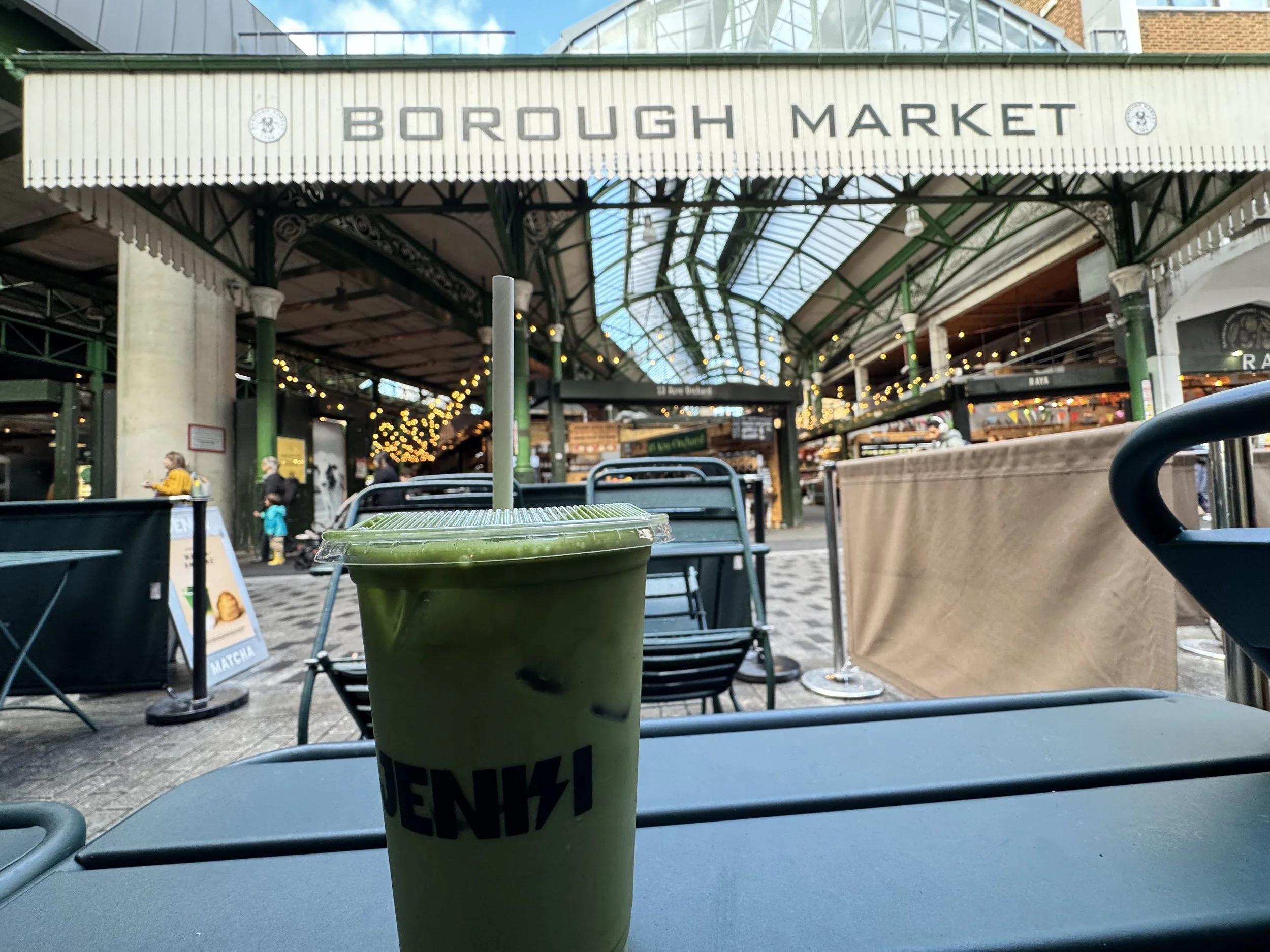
Borough Market, one of London’s oldest food markets, unfolds beneath a beautiful canopy of Victorian ironwork, glass, & modern structures, sheltering a lively maze of stalls beneath the railway arches.
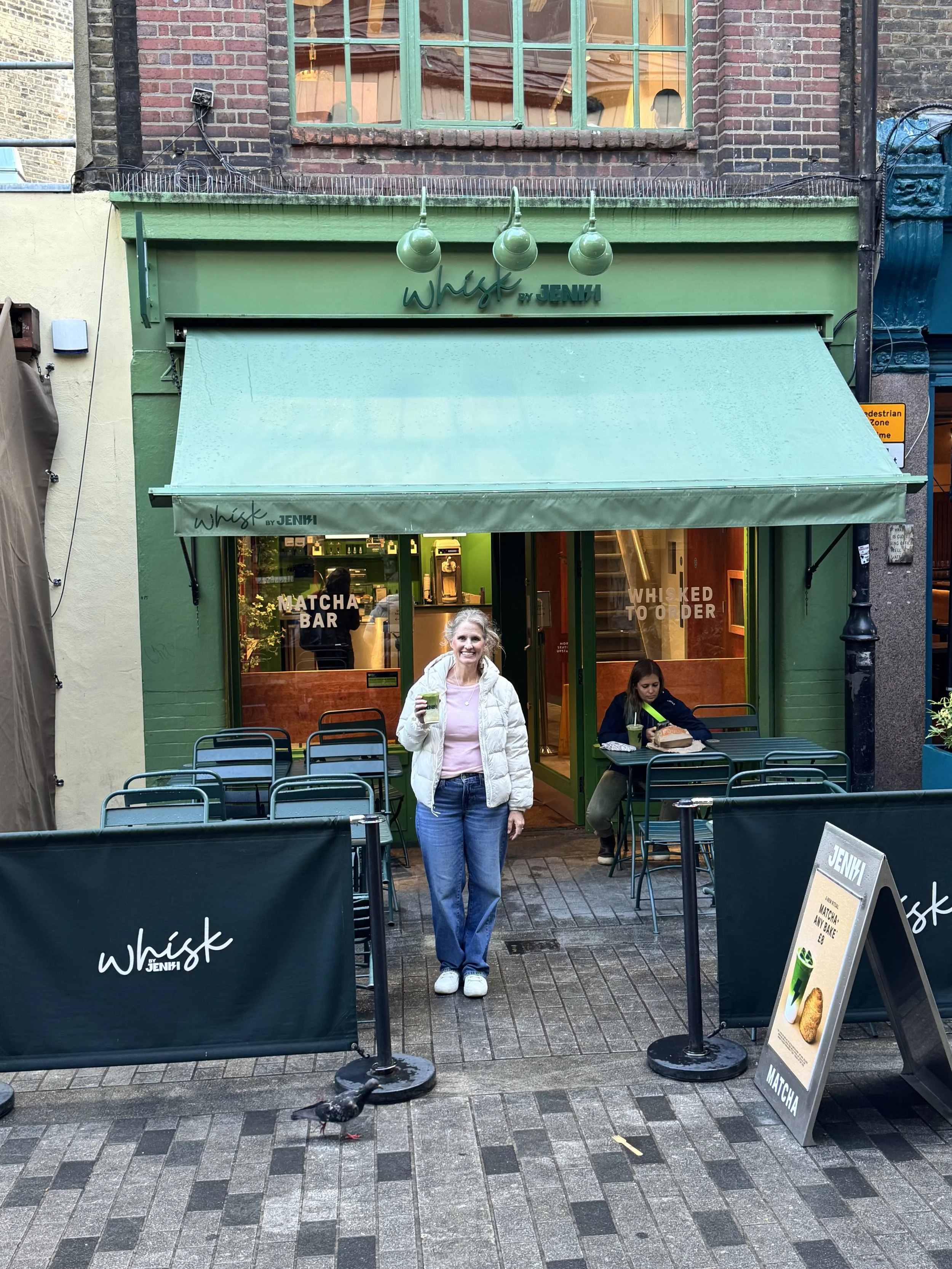
Here is where we found Whisk by Jenki—yet another winner! Amanda did research London’s best matcha offerings, so it should come as no surprise that we’ve enjoyed them all.
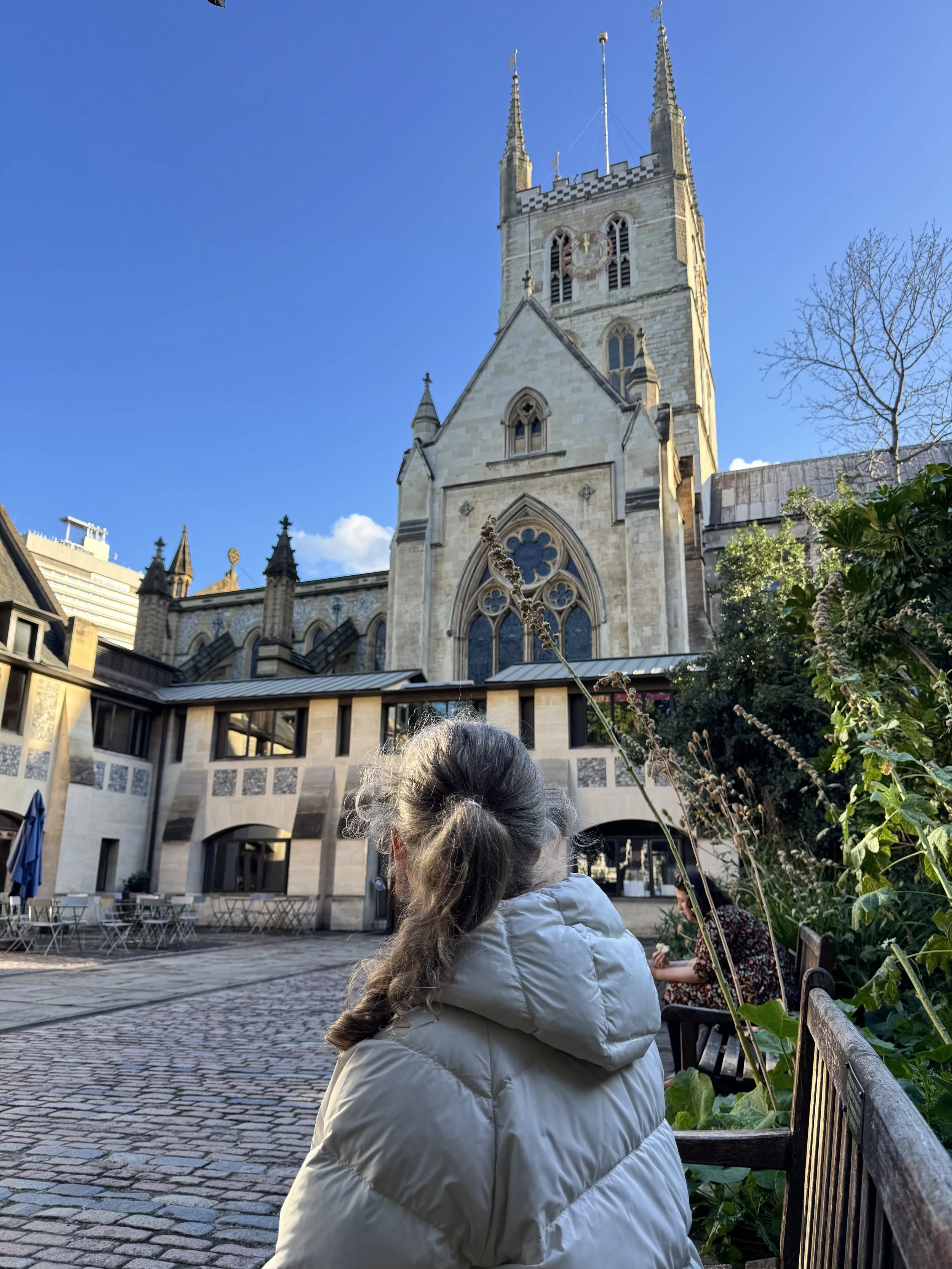
“Mary and I sat on a bench near the Southwark Cathedral this afternoon, eating sandwiches and boiled eggs prepared by Agnes.” Emma M. Lion
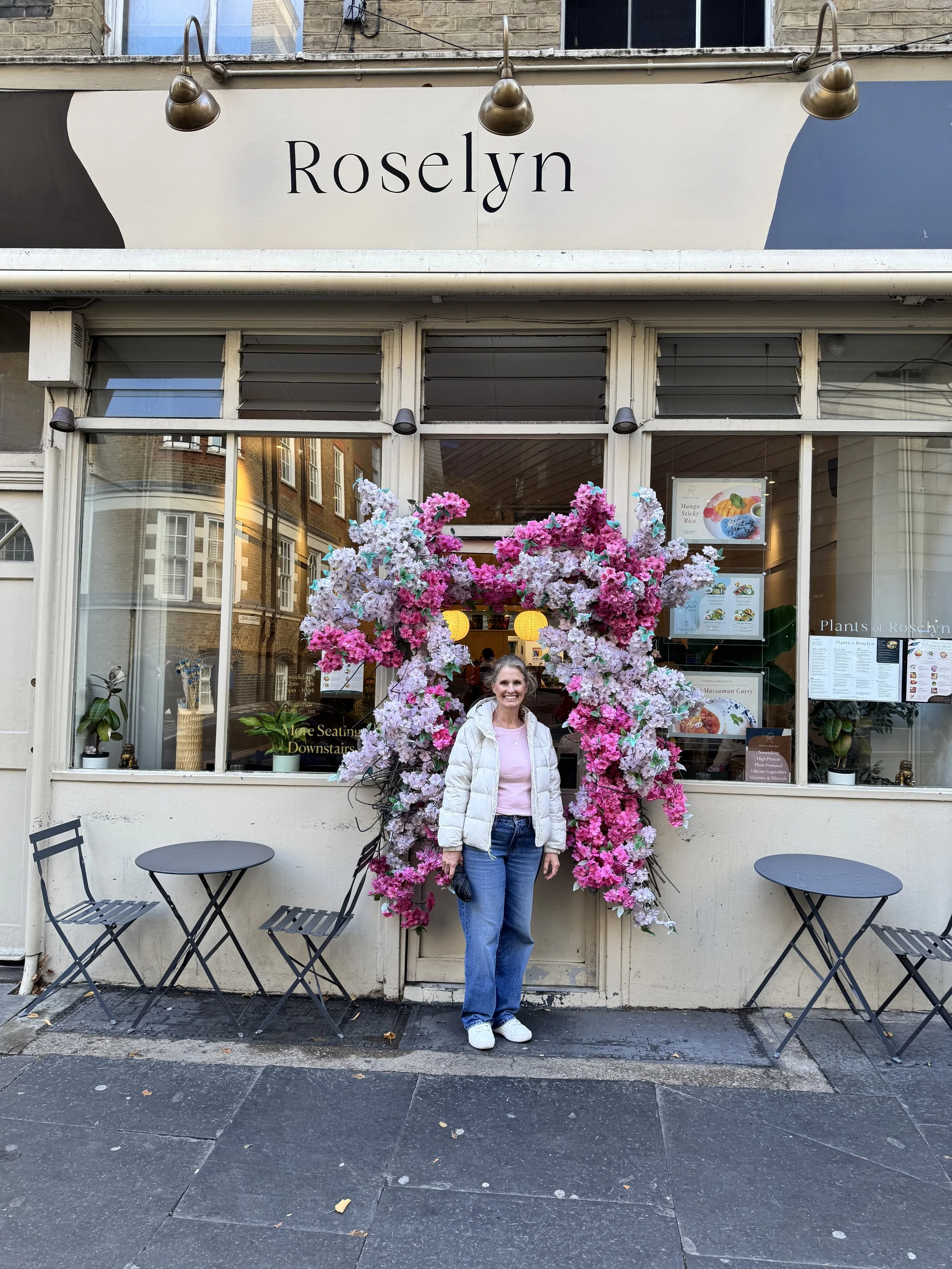
For Tuesday night’s dinner we made a booking at Plants of Roslyn, located on the South Bank between London and Tower Bridges.
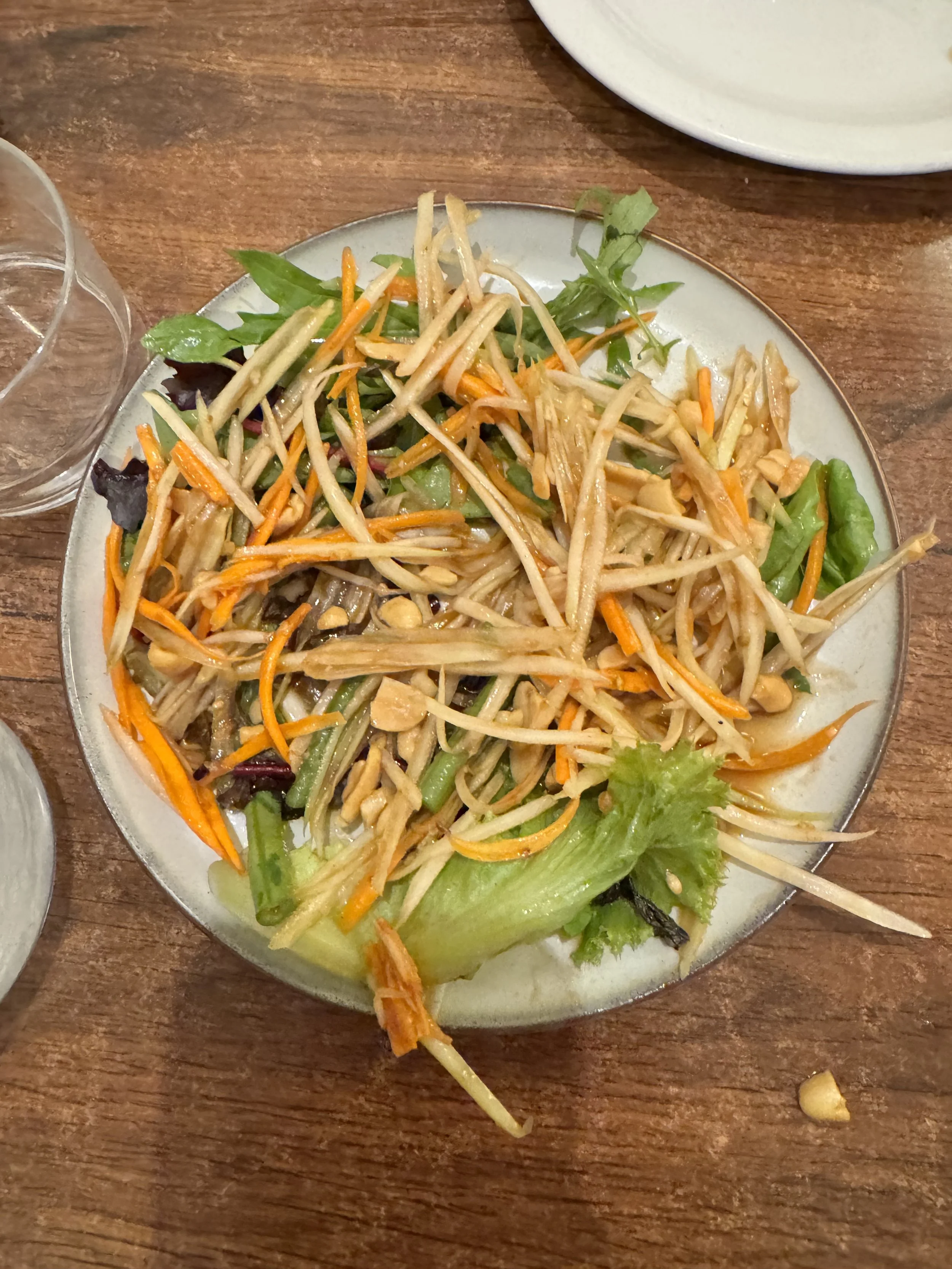
We shared the Som Tum Papaya Salad.
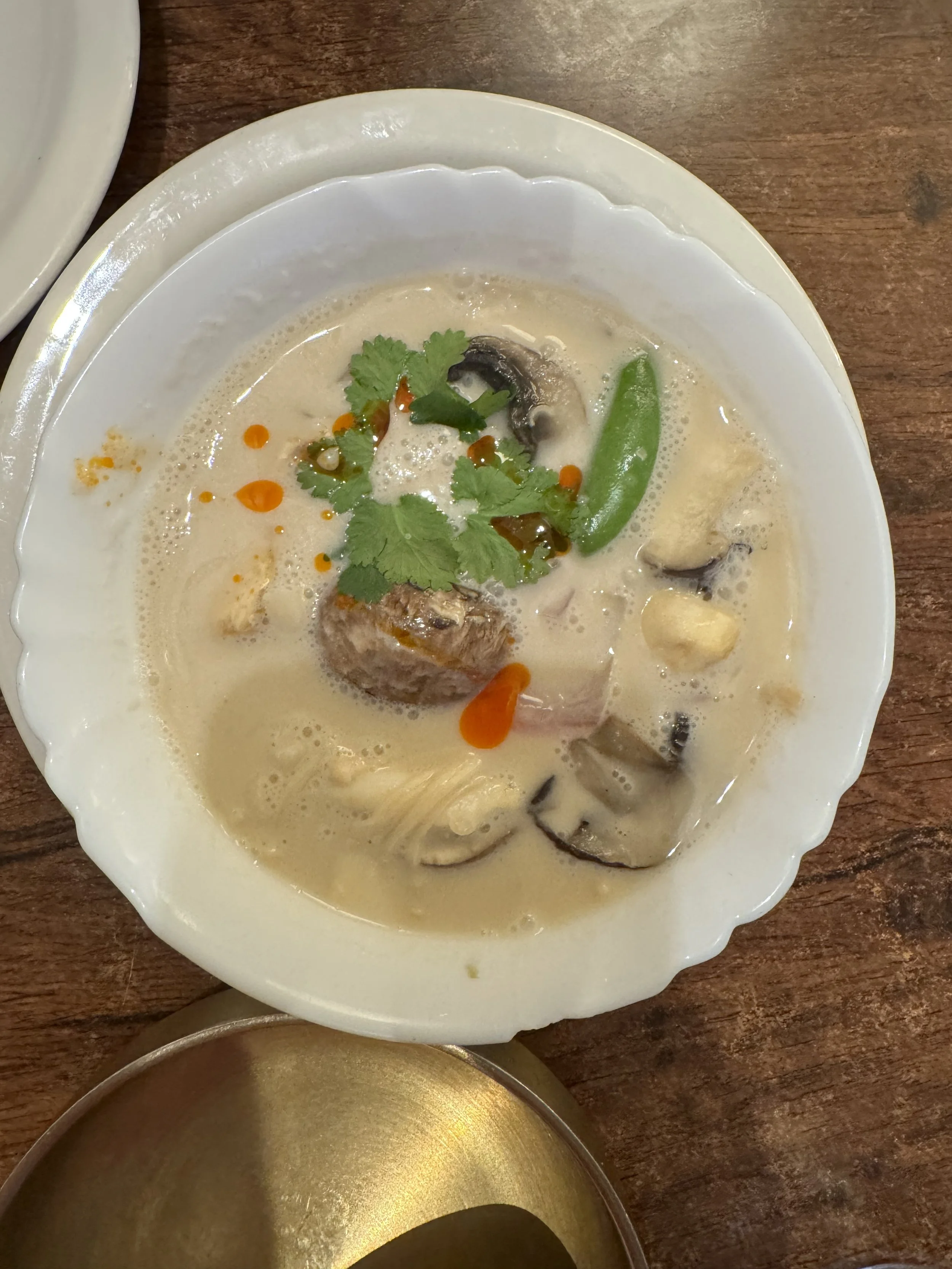
And shared the Tom Kha Coconut Soup.
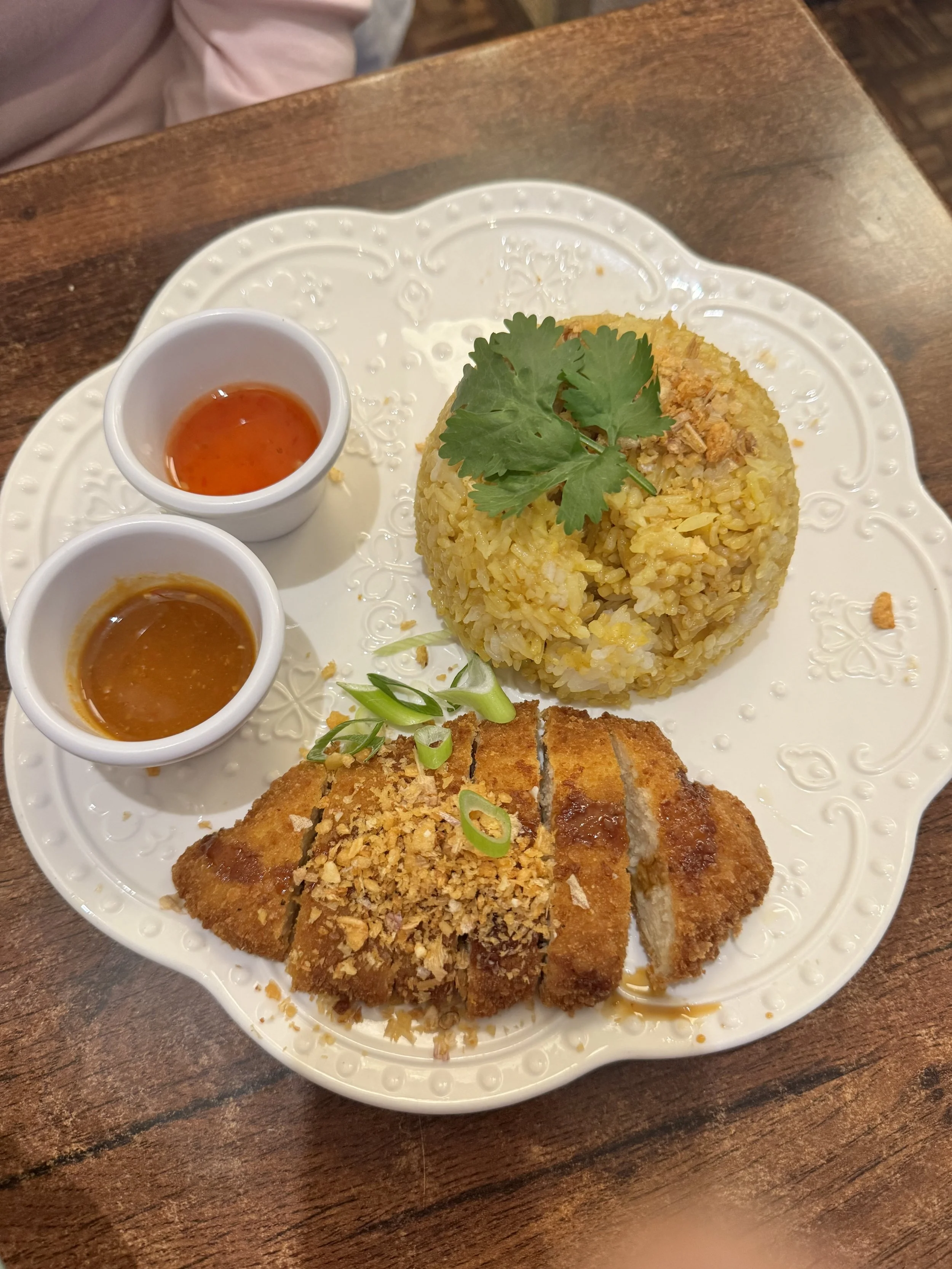
Amanda’s Hainanese Chicke’n Rice
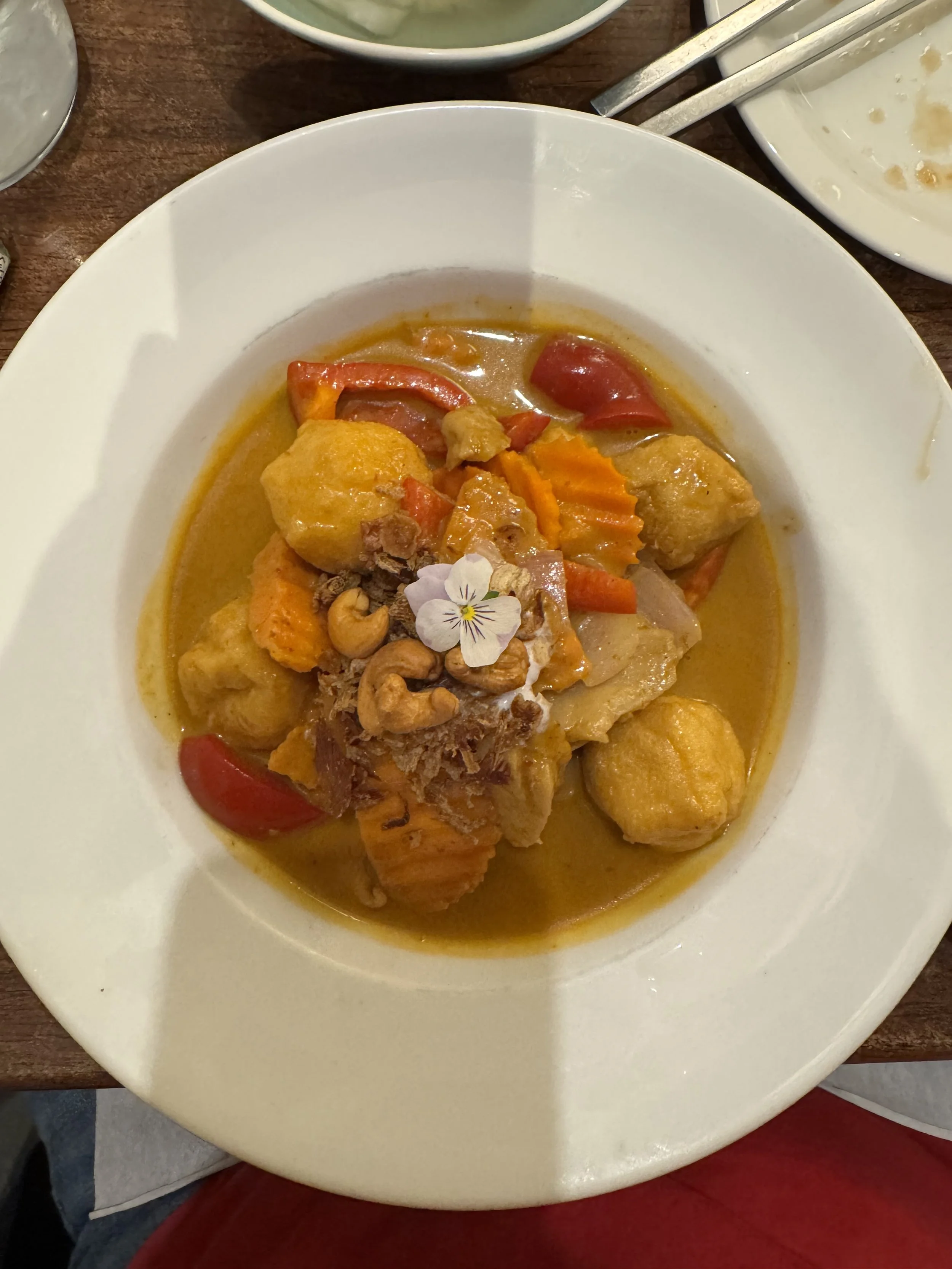
I had the Ayurvedic Tofu Massaman Curry. We’ve enjoyed a lot of truly delicious food this week, but this one takes the top prize! “…I did enjoy my walk across London. The city was full of movement and the sort of noise that makes a day stand on its own two feet.” Emma M. Lion