Lecce & Home
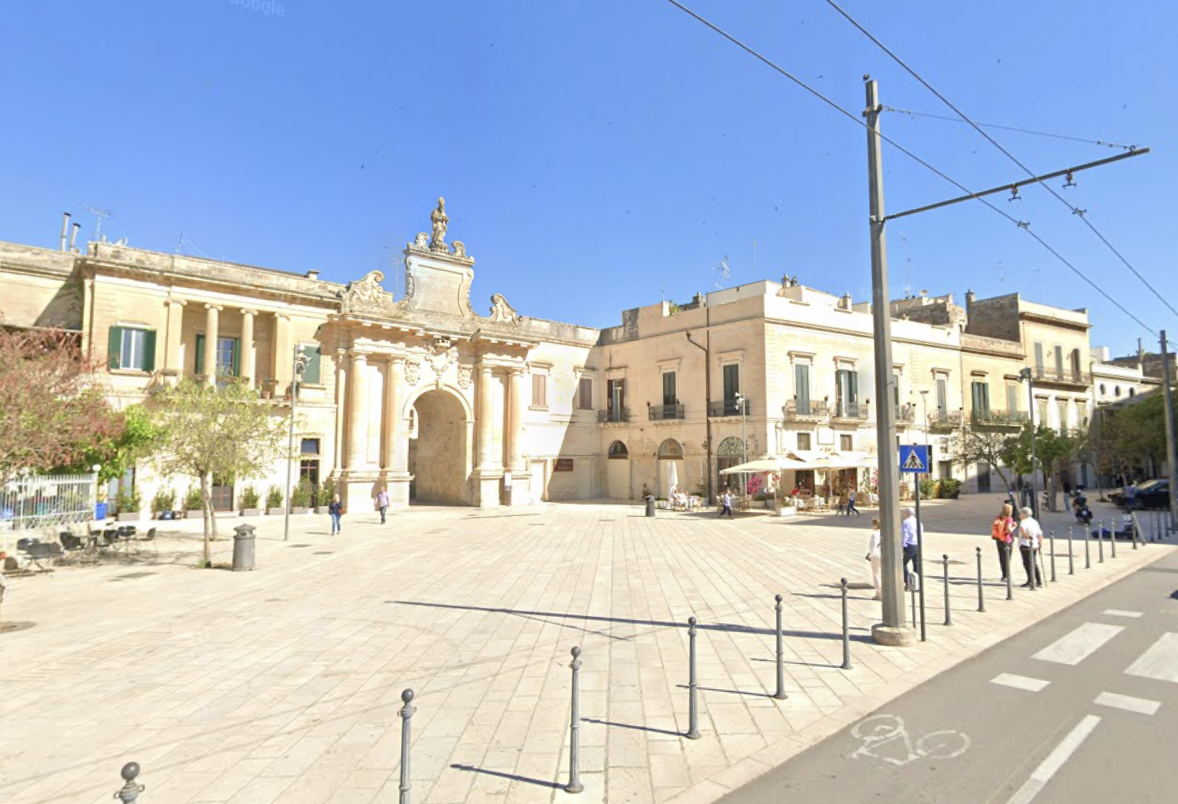
We spent our final full day in Italy deep in the heel of Italy’s boot, touring Lecce. After a 1.5 hour train ride, we enjoyed pastries and cappuccinos at Pinti Patisserie (umbrellas to the right) overlooking the impressive Porta San Biagio, a historic city gate.
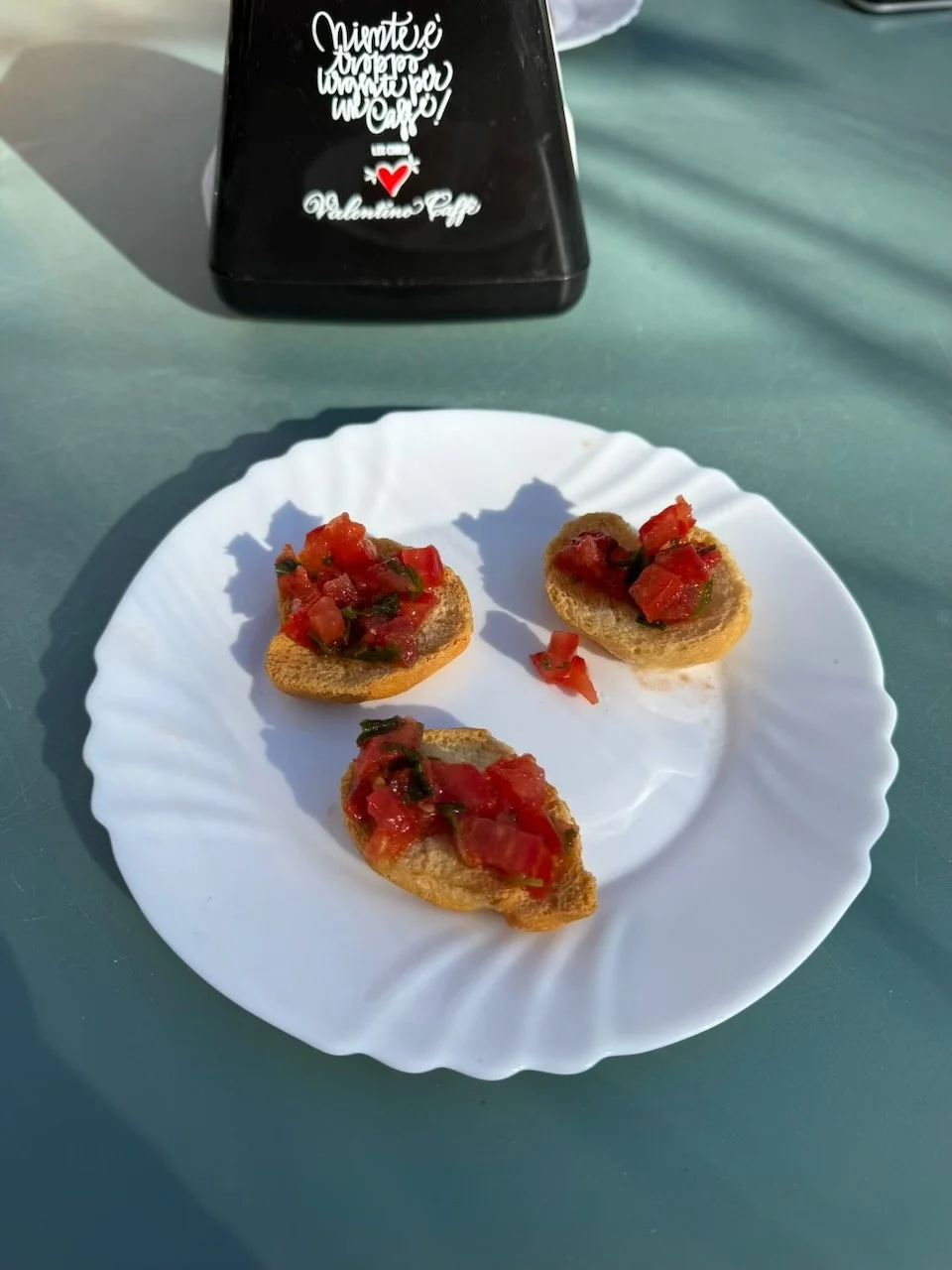
This was a food tour and our first stop was on the other side of the piazza at Bar Astoria where we were served Friselle, a type of twice-baked bread from Puglia. The smallish ring shaped dough is baked until almost done. It’s then taken out, split in half, and baked again until rock hard. The friselle are briefly soaked in water, drained, and then served with fresh tomatoes, olive oil, and salt. Deliziosa!!
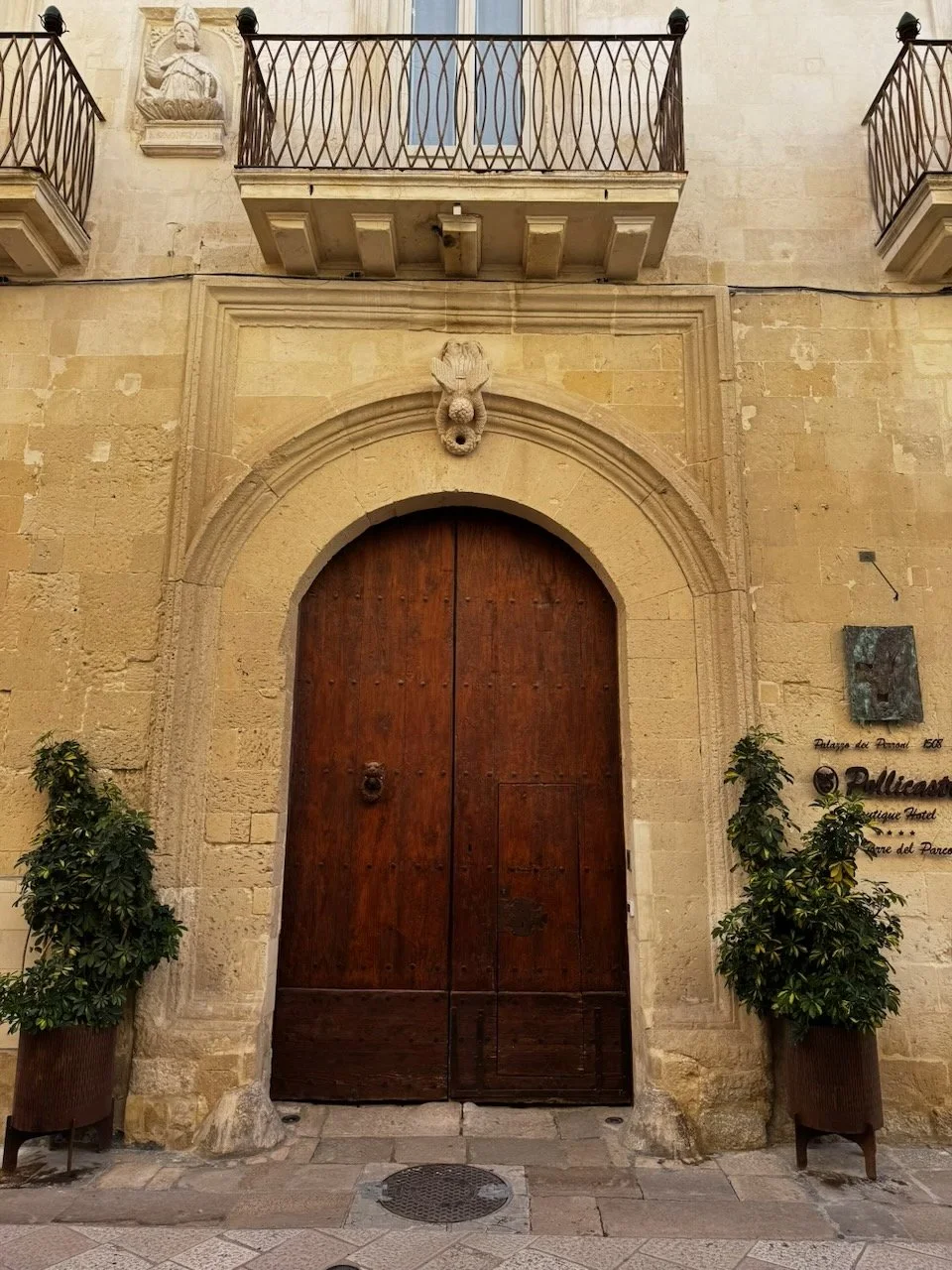
Inside the city walls, along Via dei Perroni, we passed homes of the wealthy. While the homes were immodest, the owners tried to show their piety, such as this house that includes an angel descending from heaven with a roll of bread. In the Catholic tradition, St Francis was hungry and knocked on doors for food. When no one answered, the angel fed him bread.
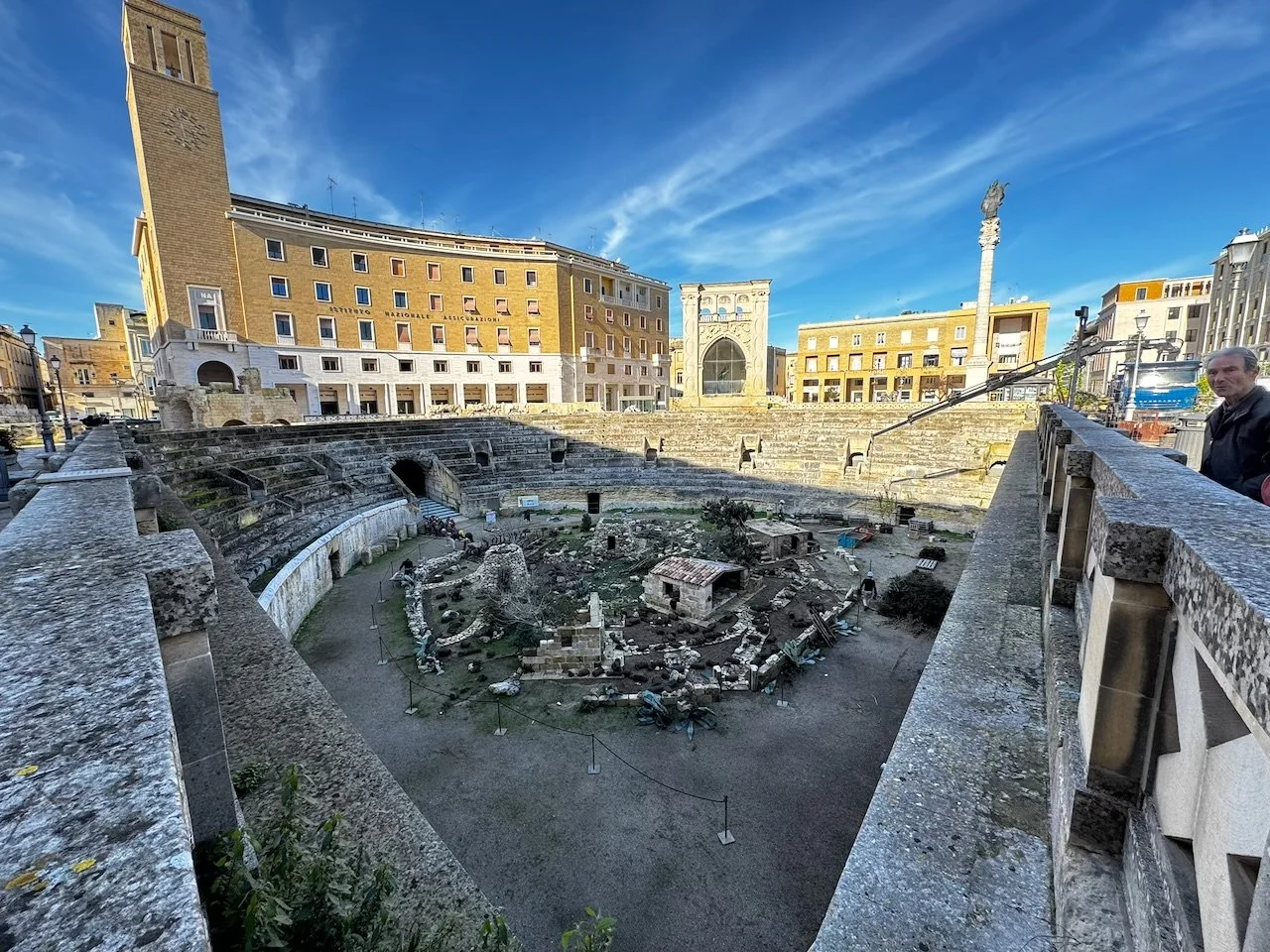
The partially excavated Roman Amphitheater of Lecce from the 2nd century CE.
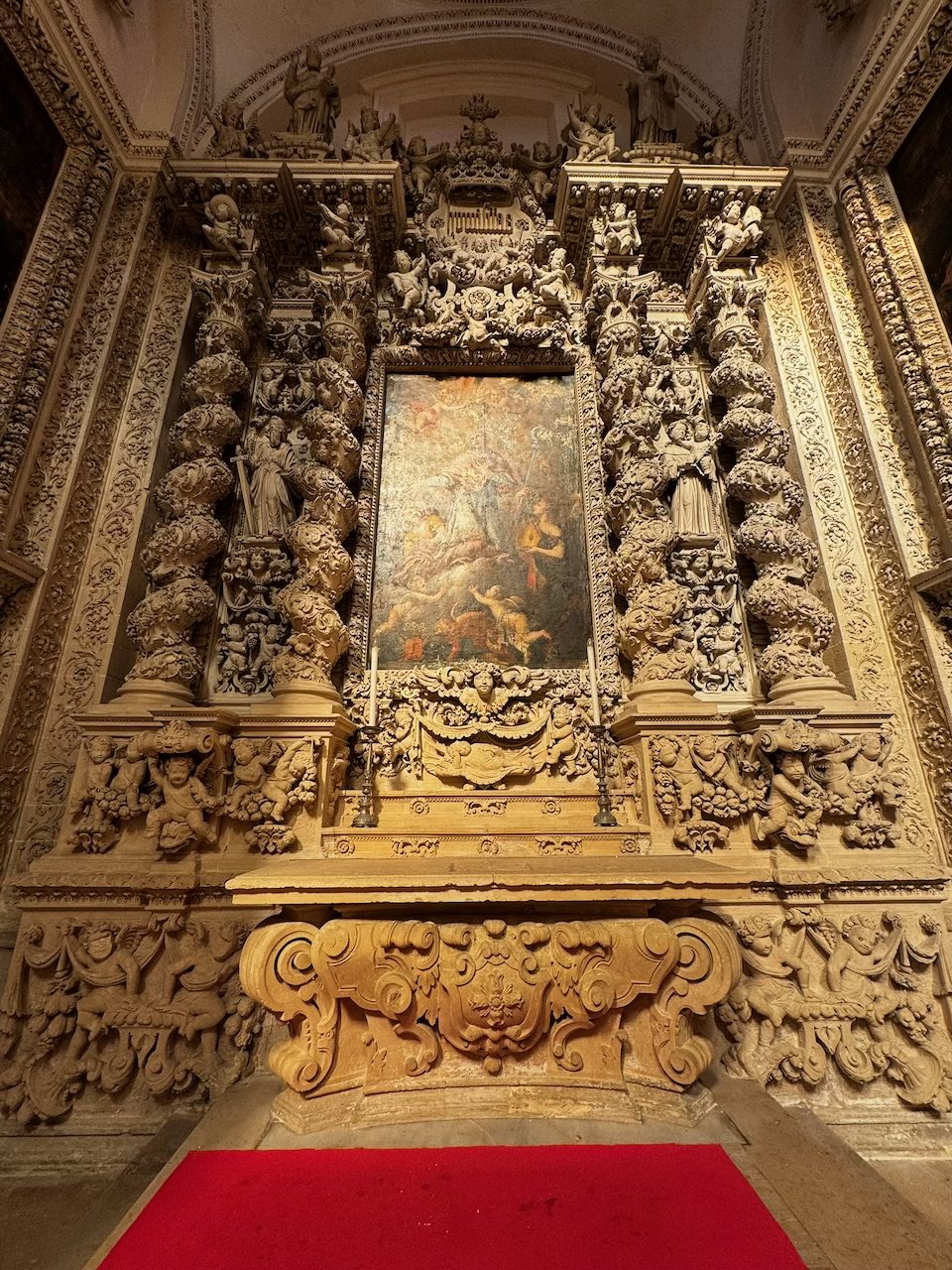
The Church of Saint Irene, built between 1591 and 1639, is heavily influenced by Spanish Baroque. The columns are "Solomonic," a style featuring twisted, helical shafts similar to those traditionally thought to have been in the Temple of Solomon in Jerusalem.
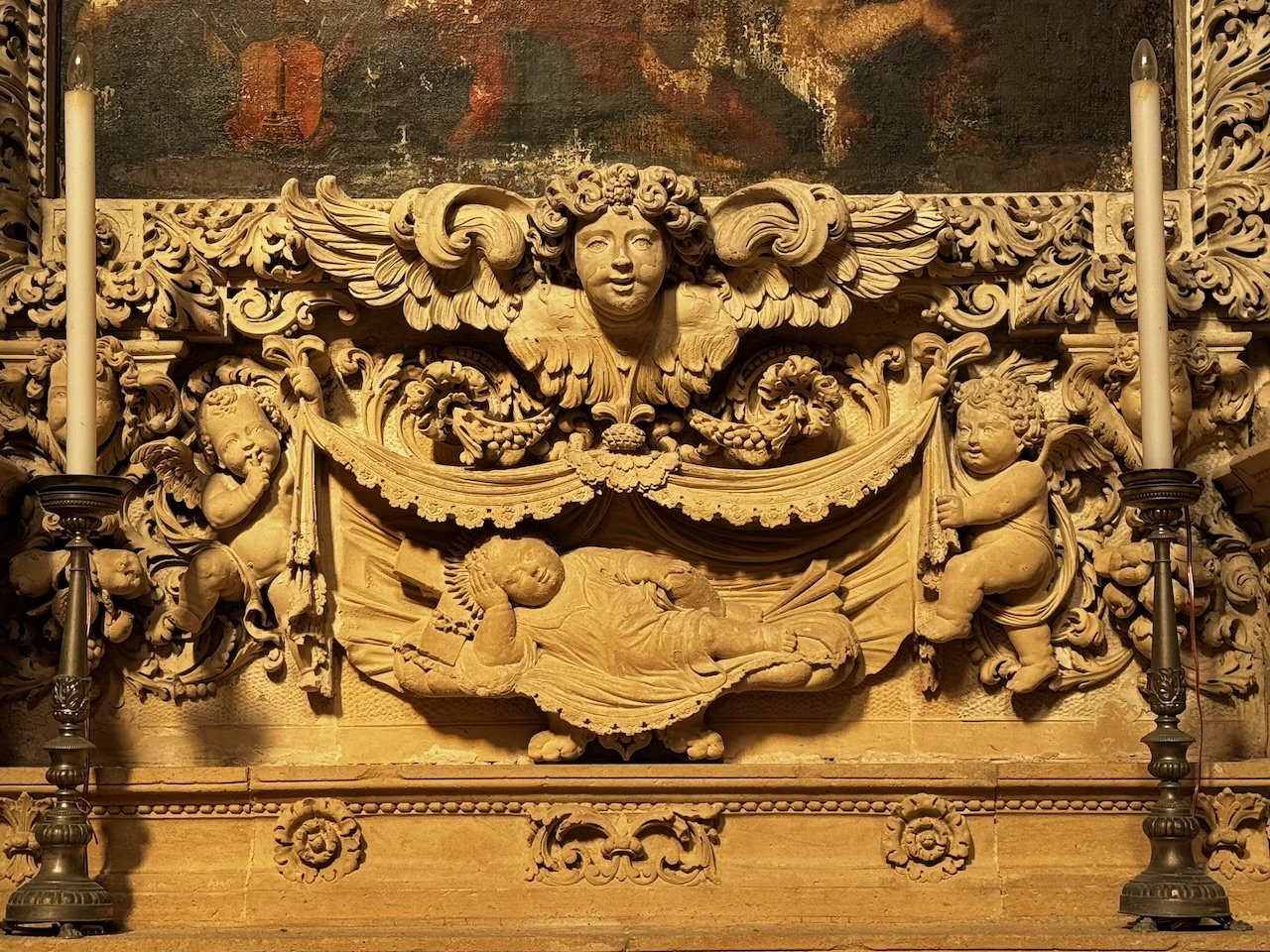
A reclining baby Jesus is sleeping and the angel on the left is reminding us to not disturb his rest.
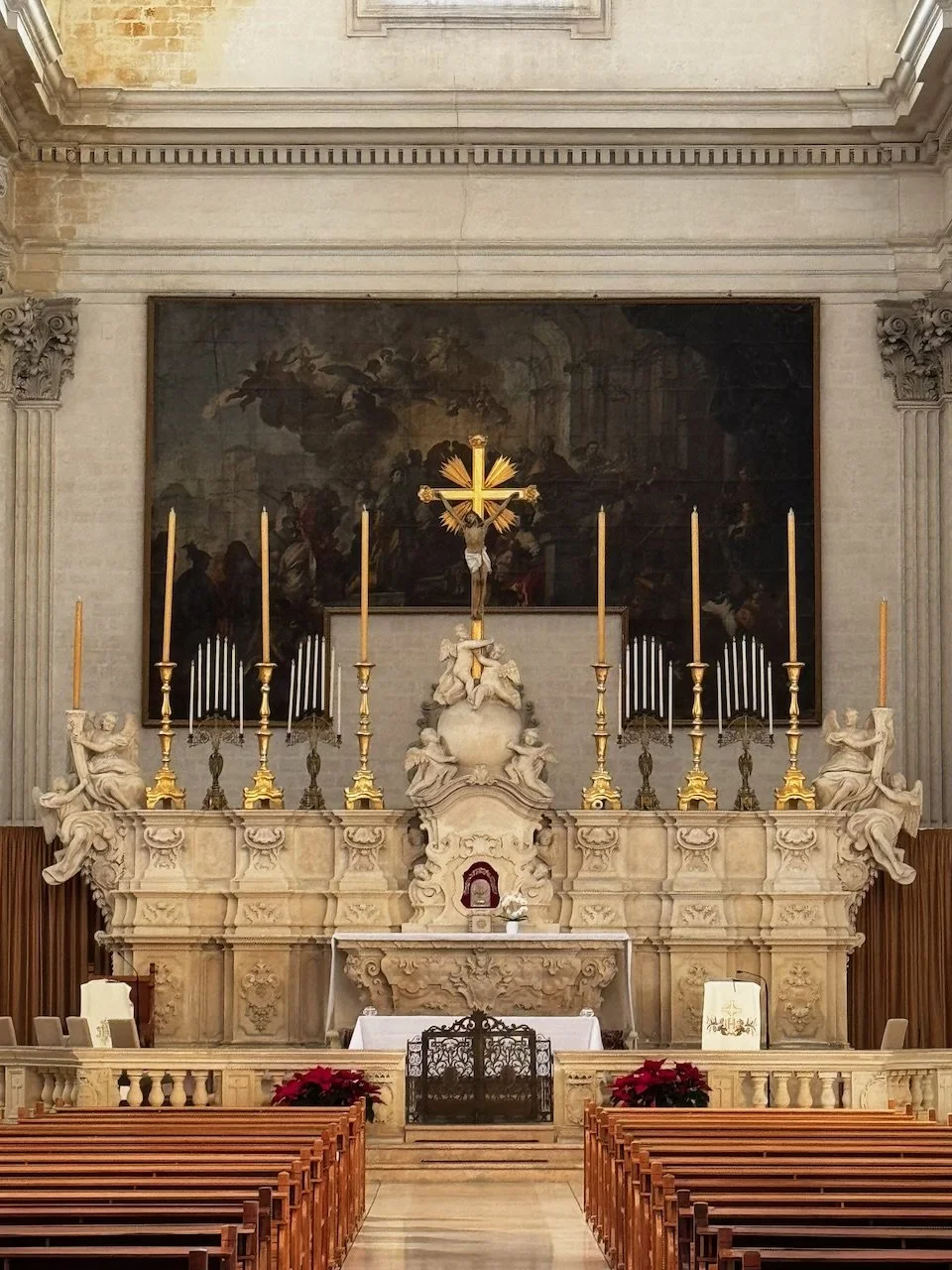
The internet says the main altar in the apse is generally considered to be in the Baroque style; however, our tour guide claimed it was Rococo—not sure which is correct.
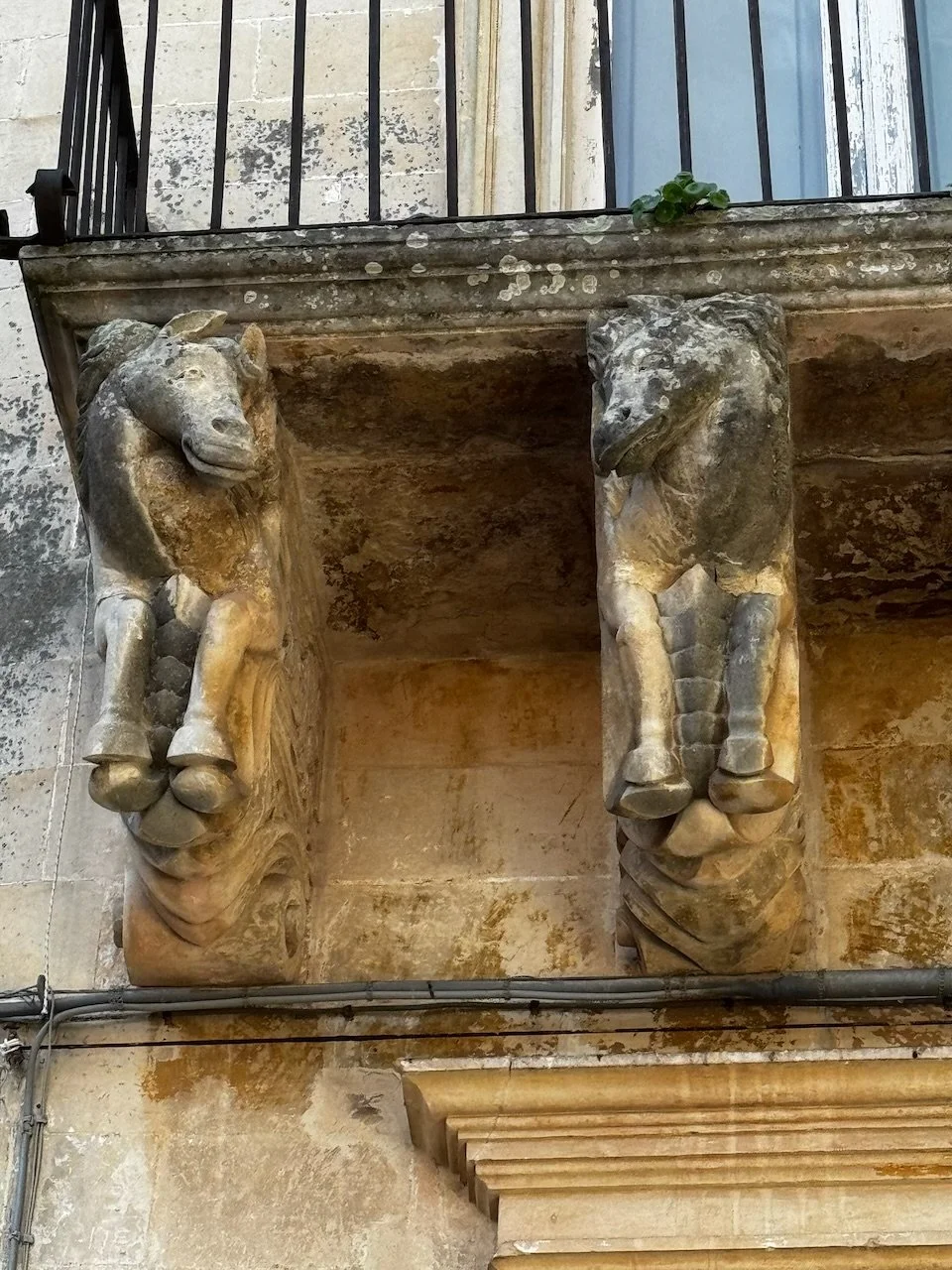
Always look up in old cities; you never know what you’ll see.
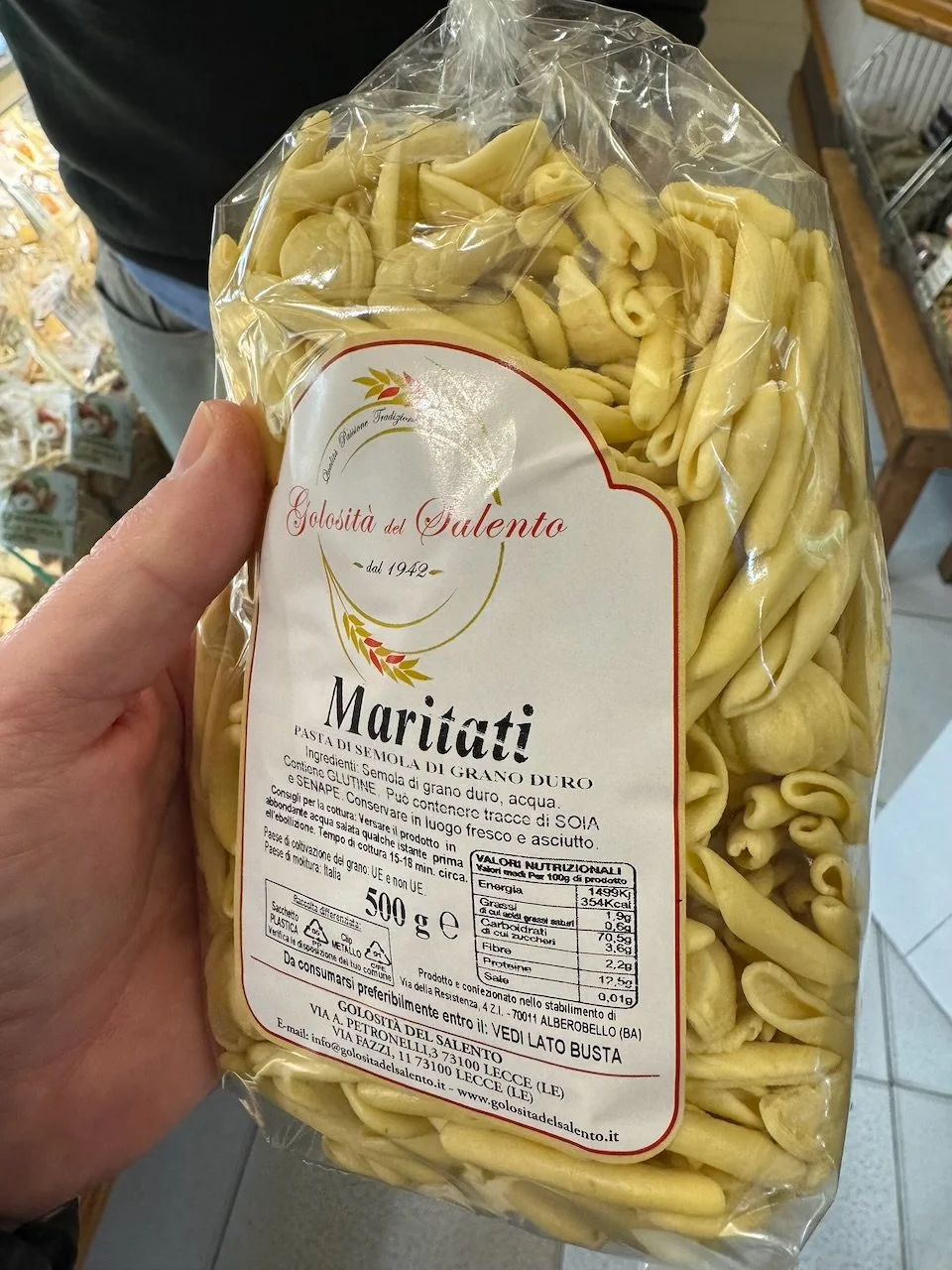
Our next food stop was in a pasta shop. This maritati pasta translates to "married" in Italian, symbolizing the union of two distinct pasta shapes—orecchiette and maccheroni—the orecchiette symbolizing the "female" shape and the maccheroni symbolizing the "male" shape.
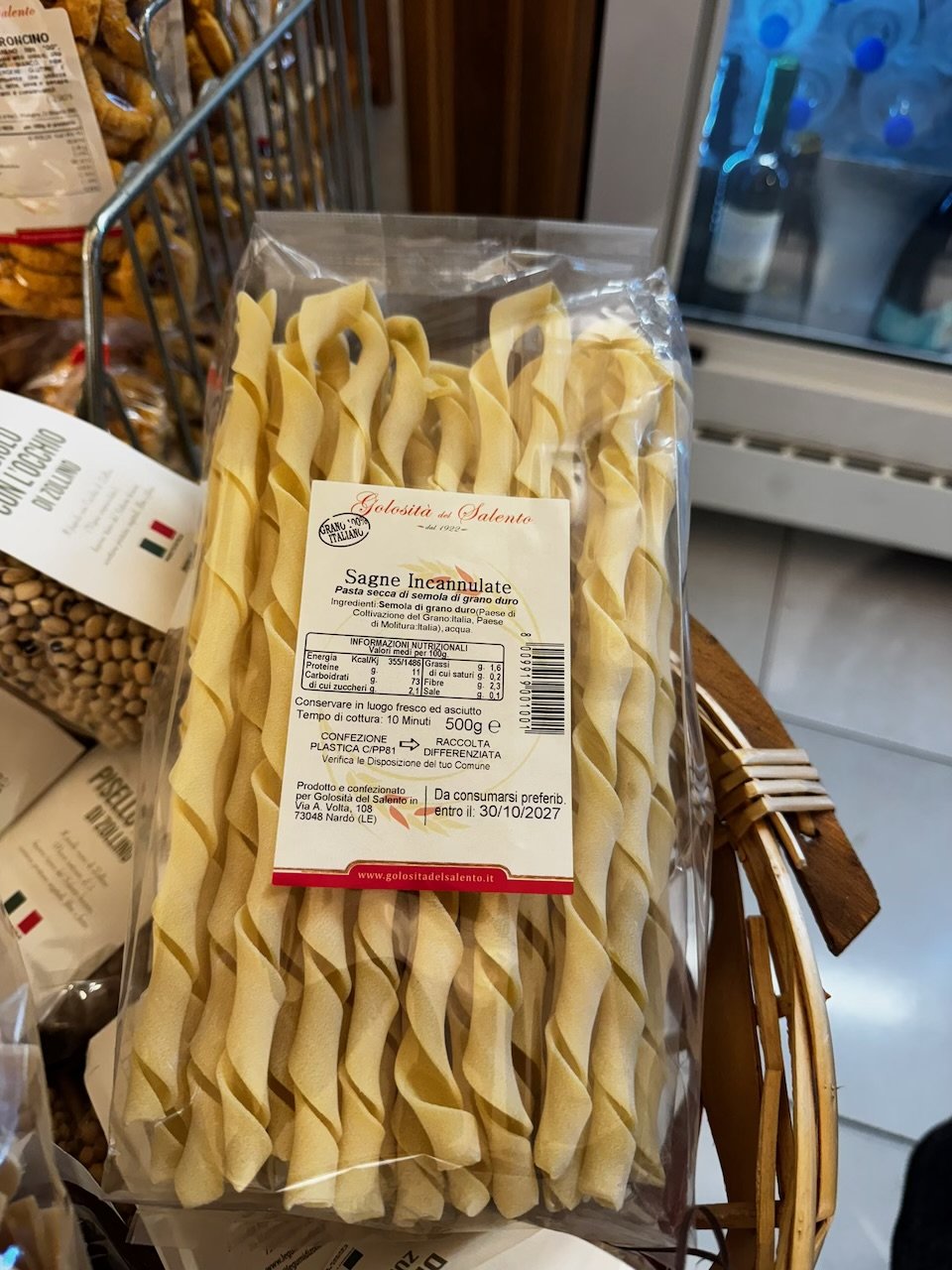
Sagne 'ncannulate is a traditional, hand-twisted pasta from the Salento region of Puglia, Italy. It is a quintessential dish of southern Italian cucina povera (peasant cooking), typically made without eggs using only durum wheat semolina and water.
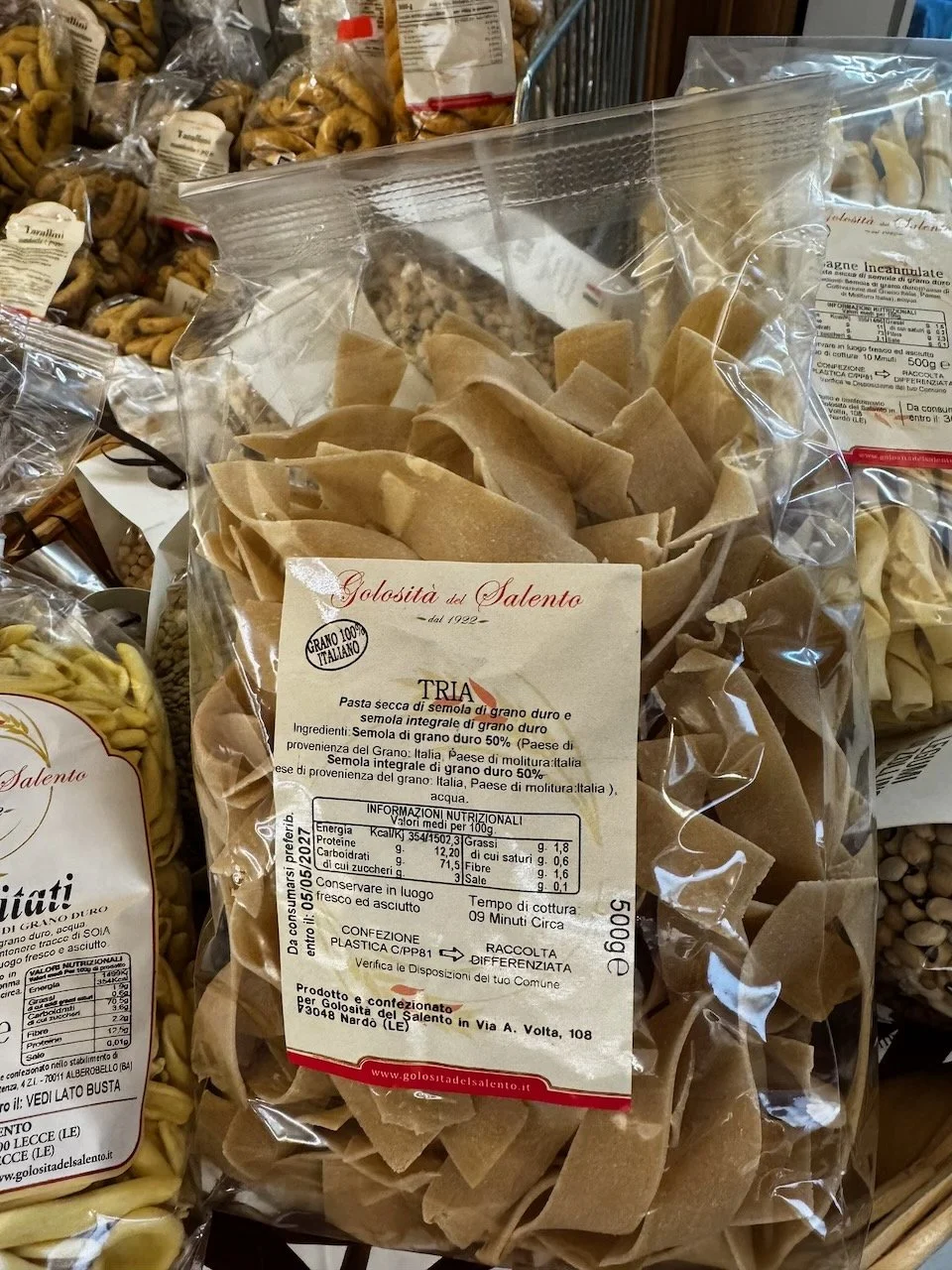
Finally, Tria is the name for a local ribbon-shaped pasta, much less known than orecchiette or cavatelli but equally treasured by the Pugliesi. Made from semolina flour and water, tria is often translated as “tagliatelle,” but they are actually quite different. You make them without eggs and cut them into ribbons rather thicker, wider, and shorter than tagliatelle. In a word, tria is more “rustic”, with a chewier and more substantial mouthfeel and a pleasantly nutty flavor.
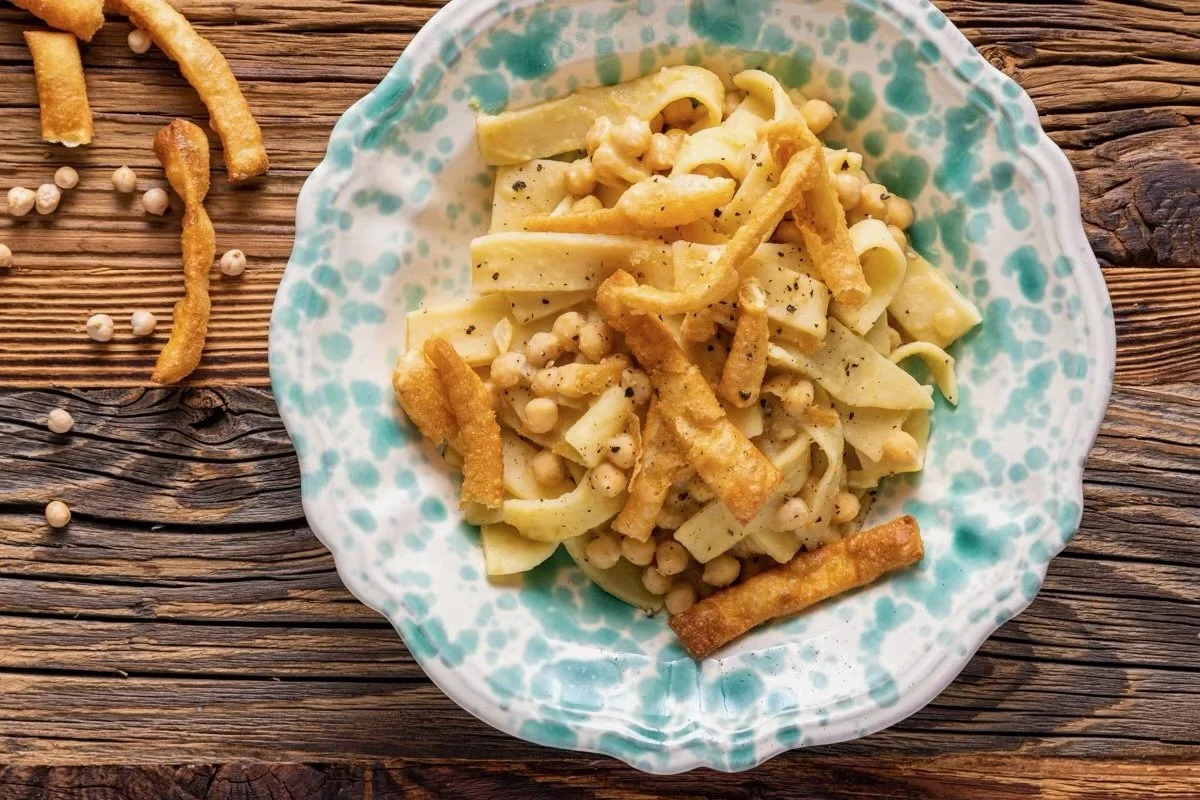
Ciceri e tria (Pasta and Chickpeas) is a pasta dish unique to Salento, Puglia, and one I wish I could have tried. The tria pasta is split. The first portion is fried in oil until crisp, tan, and crunchy. The remaining half is simmered in a pot, along with the starchy liquid from the can of chickpeas, some water, and a little salt and pepper to create the sauce. Then the chickpeas are added along with a couple of bay leaves. Once the second portion is softened, the crispy pasta returns to the pot, and everything simmers together until the sauce lightly clings. Looks and sounds amazing!
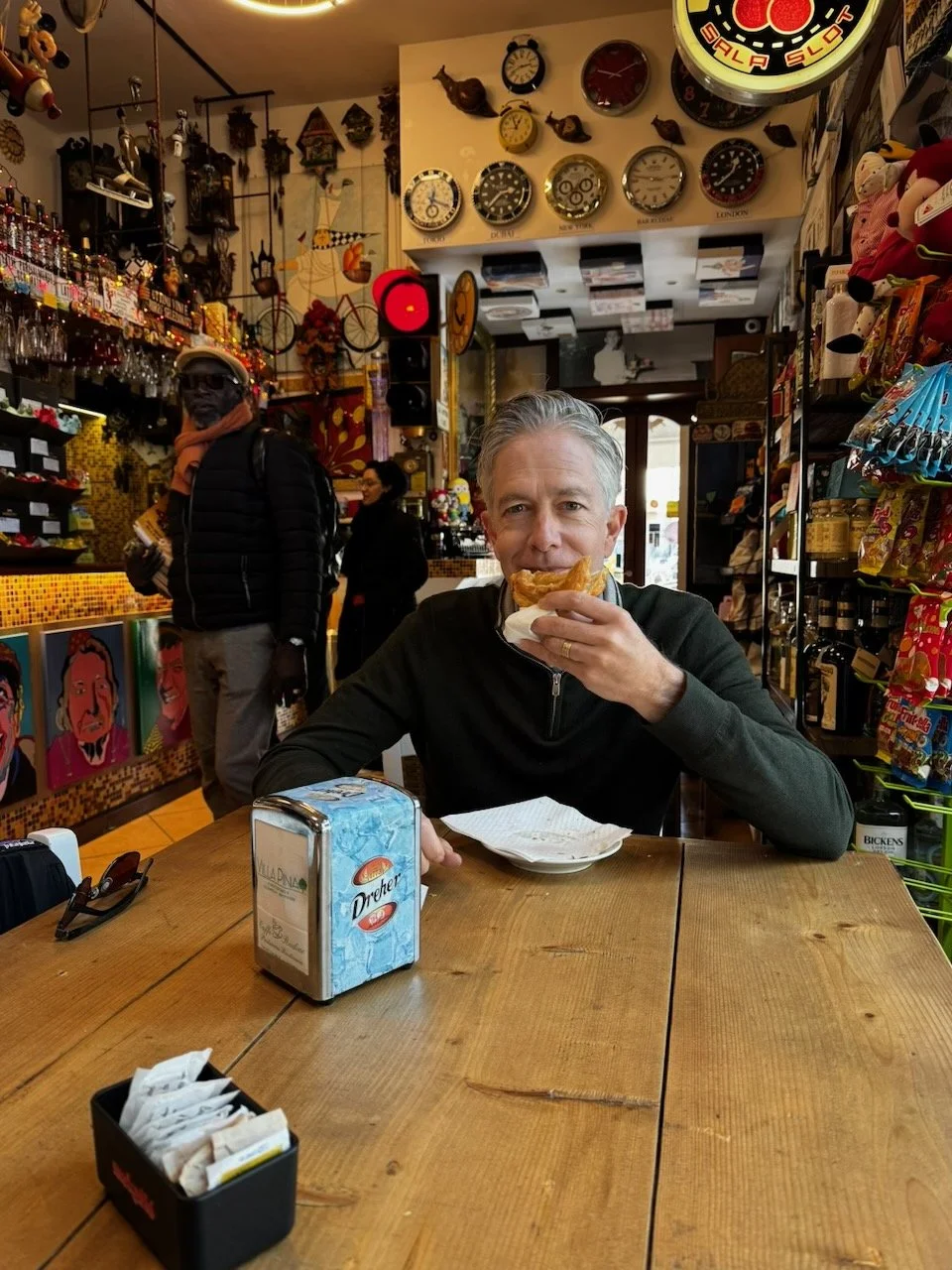
Next stop was Lecce Food Market to try rustici leccesi.
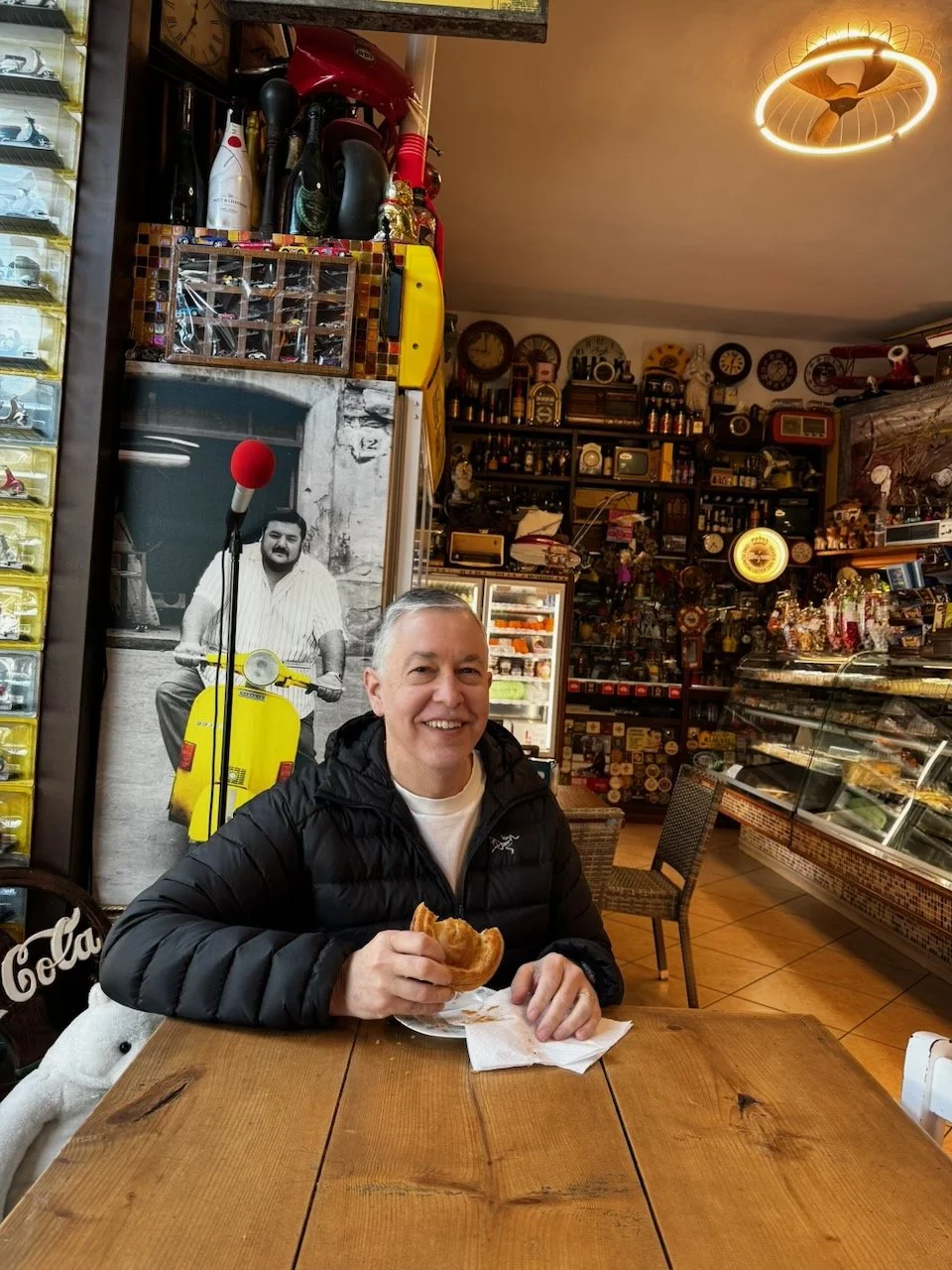
Rustici leccesi are savory Apulian puff pastry discs filled with creamy béchamel, tomato purée, mozzarella, and white pepper. Not a very vegan-proud moment, but “when in Lecce…” and you don’t want to offend your host.
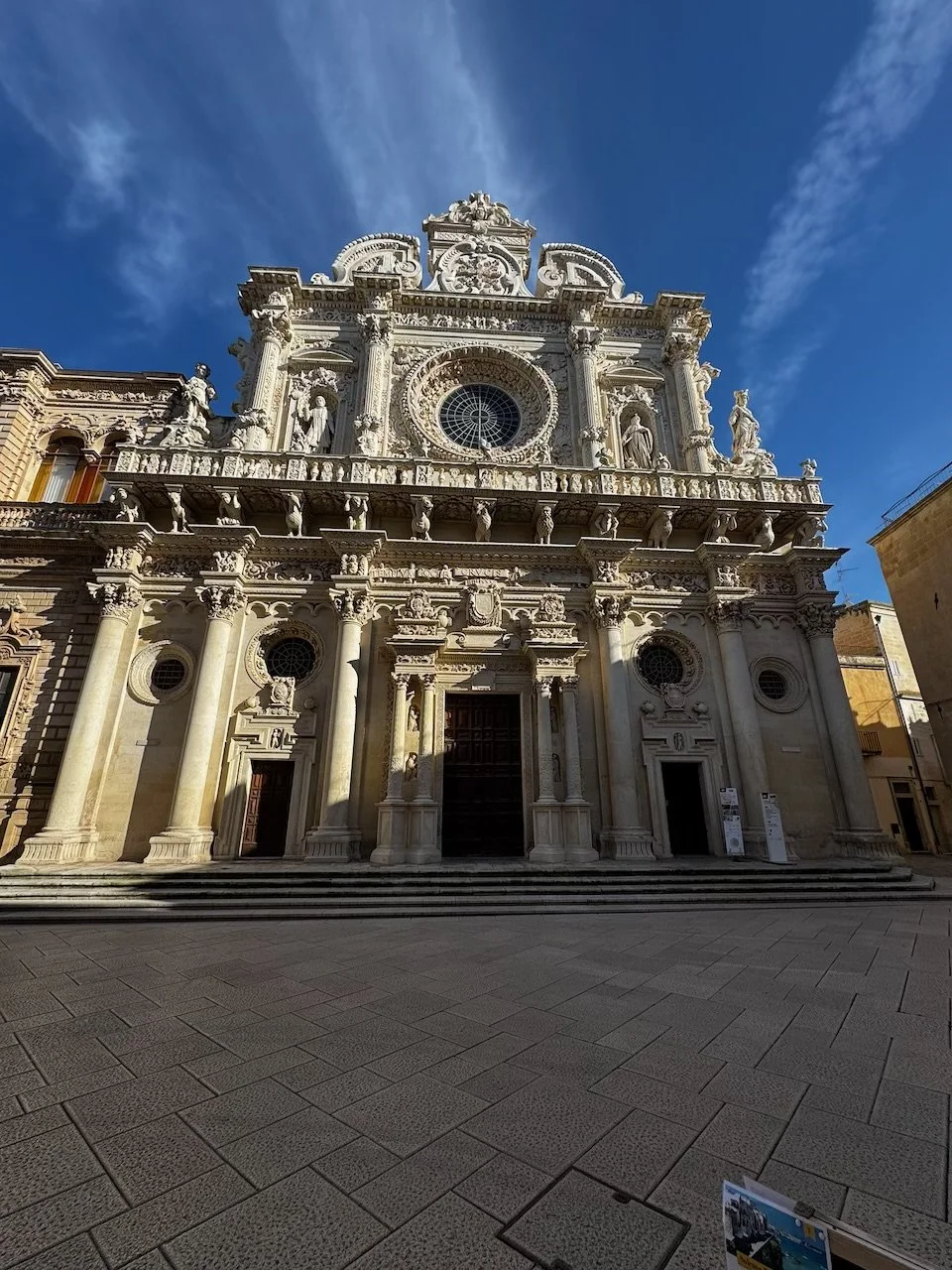
The façade of Basilica di Santa Croce (Church of the Holy Cross) is considered a triumph of Lecce Baroque. The original church was built in the 14th century to house the relics of the True Cross, near the Castle of Lecce.
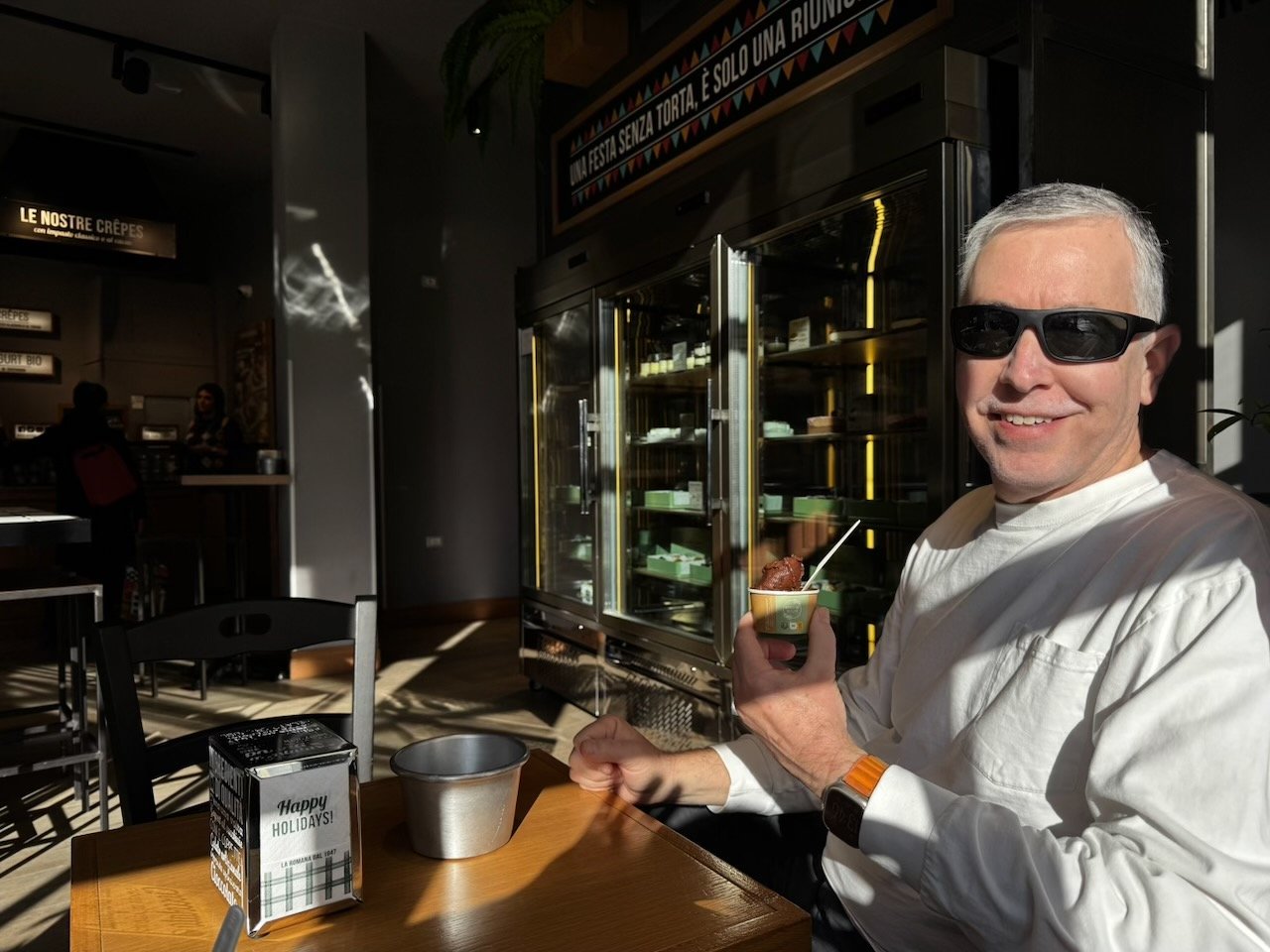
Our final food stop was thankfully vegan-friendly—a single origin dark chocolate from Ecuador gelato from the artisan Galateria la Romana dal 1947. Best gelato ever!
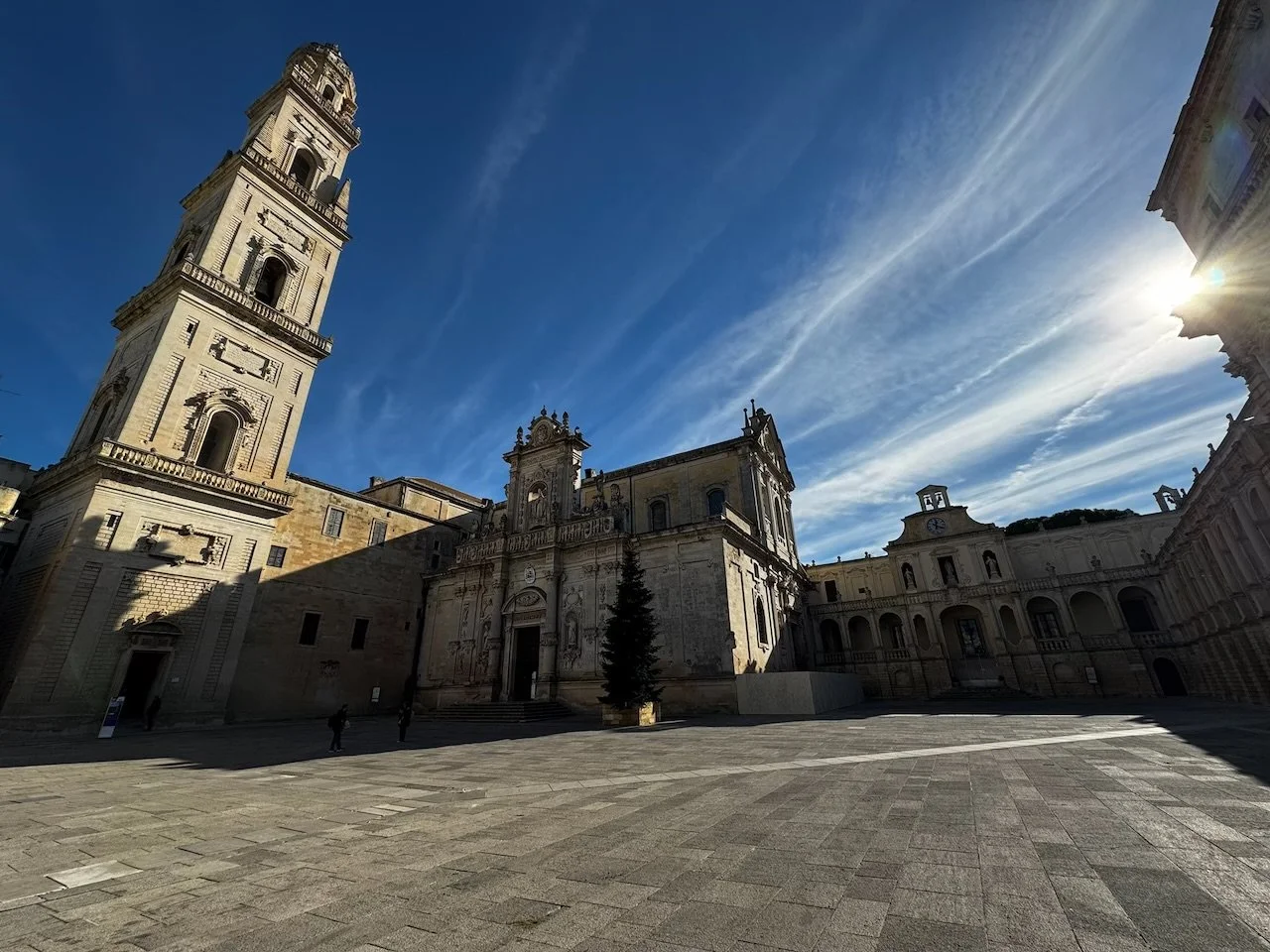
After the tour, we returned to the Piazza del Duomo, surrounded by the cathedral, Bishop's Palace, Seminary Palace, and the campanile del duomo (bell tower).
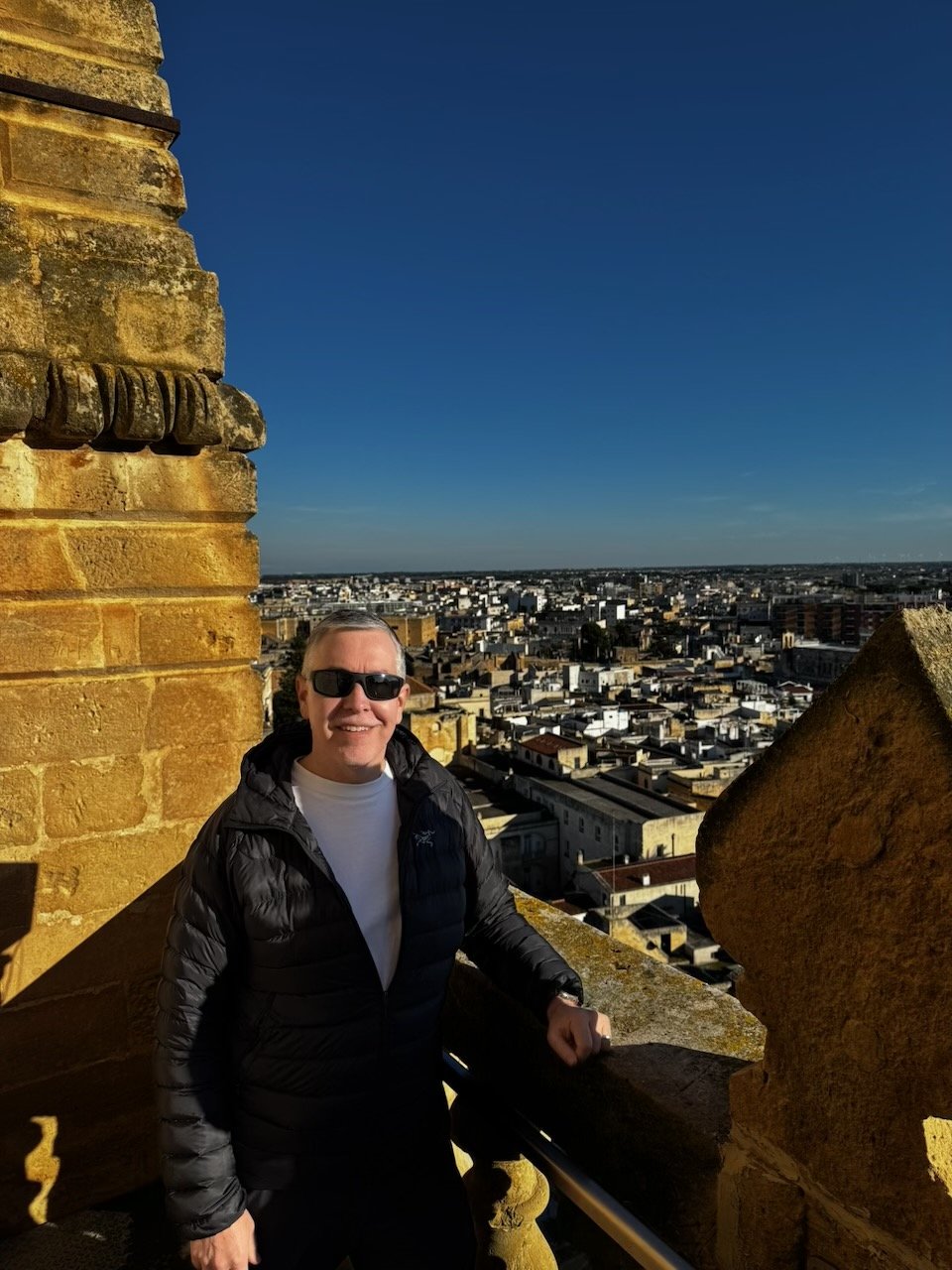
An elevator took us near the top of the tower (the final bit of stairway was closed) for a rather uninspiring view of Lecce. As it was such a clear day, we should have been able to see Albania across the Adriatic Sea. We may have, but we couldn’t really be sure if it was land or dark clouds we were seeing. Oh well!
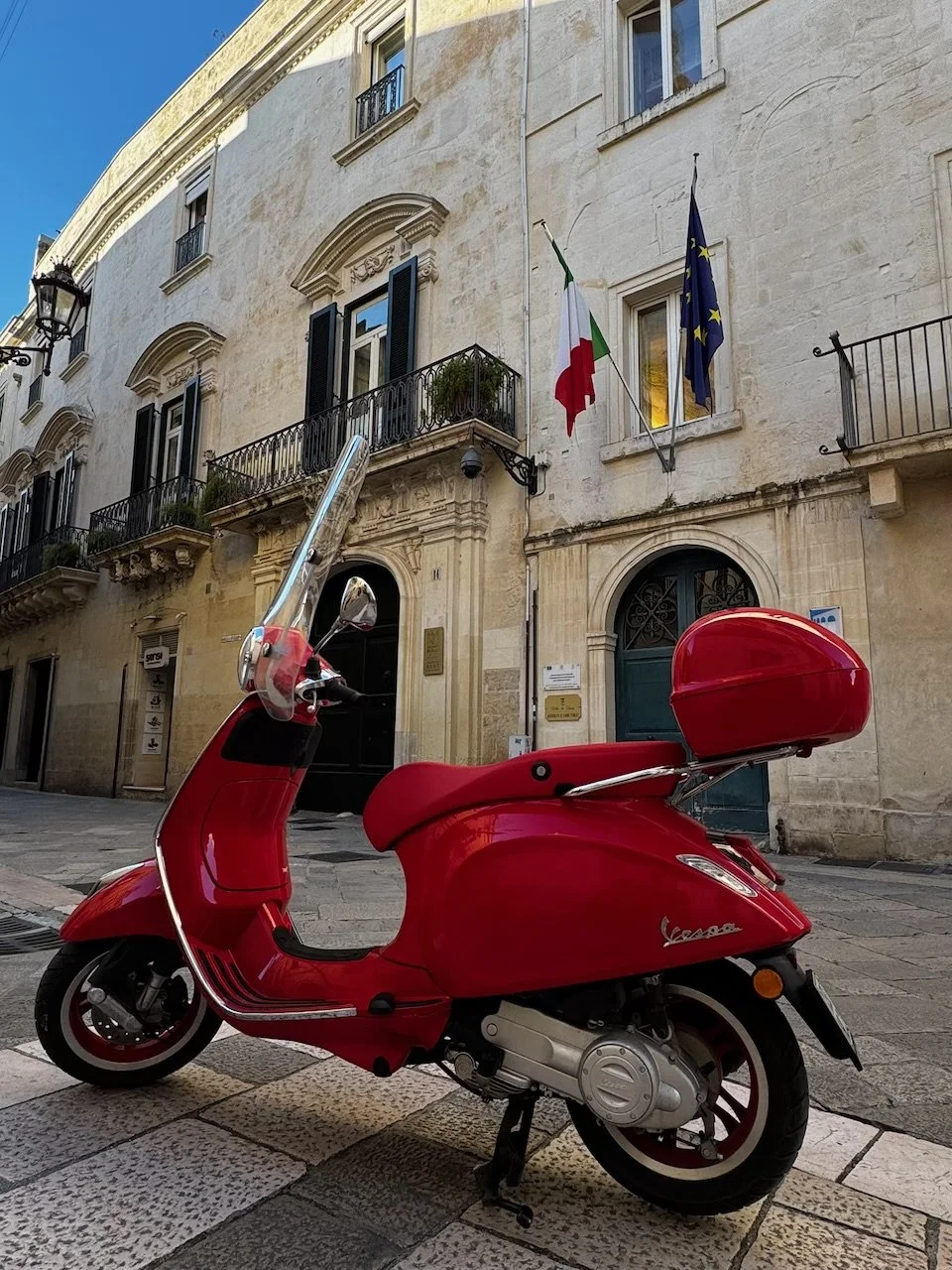
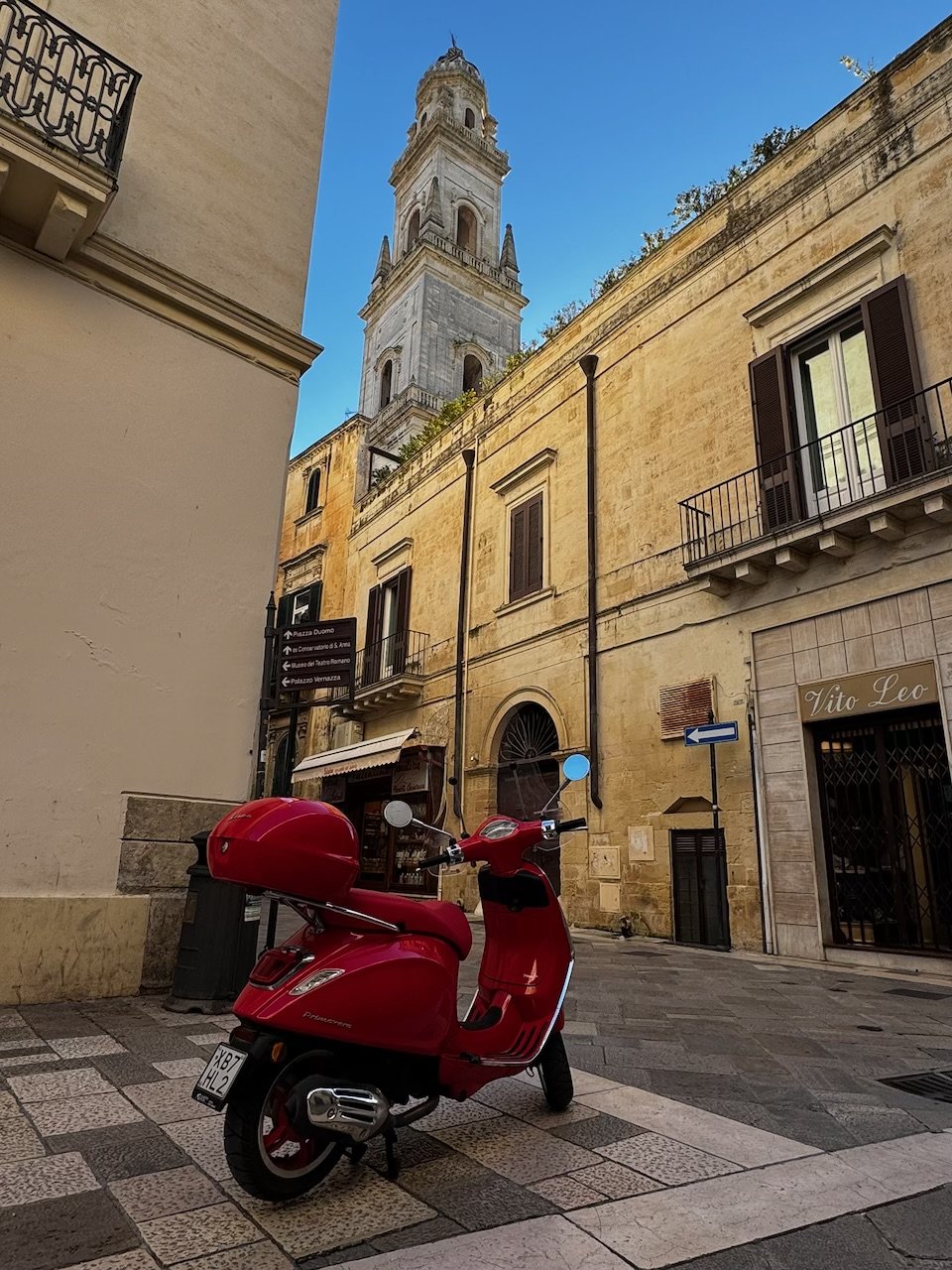
A quintessentially Italian mode of transportation on a quintessentially Italian street.
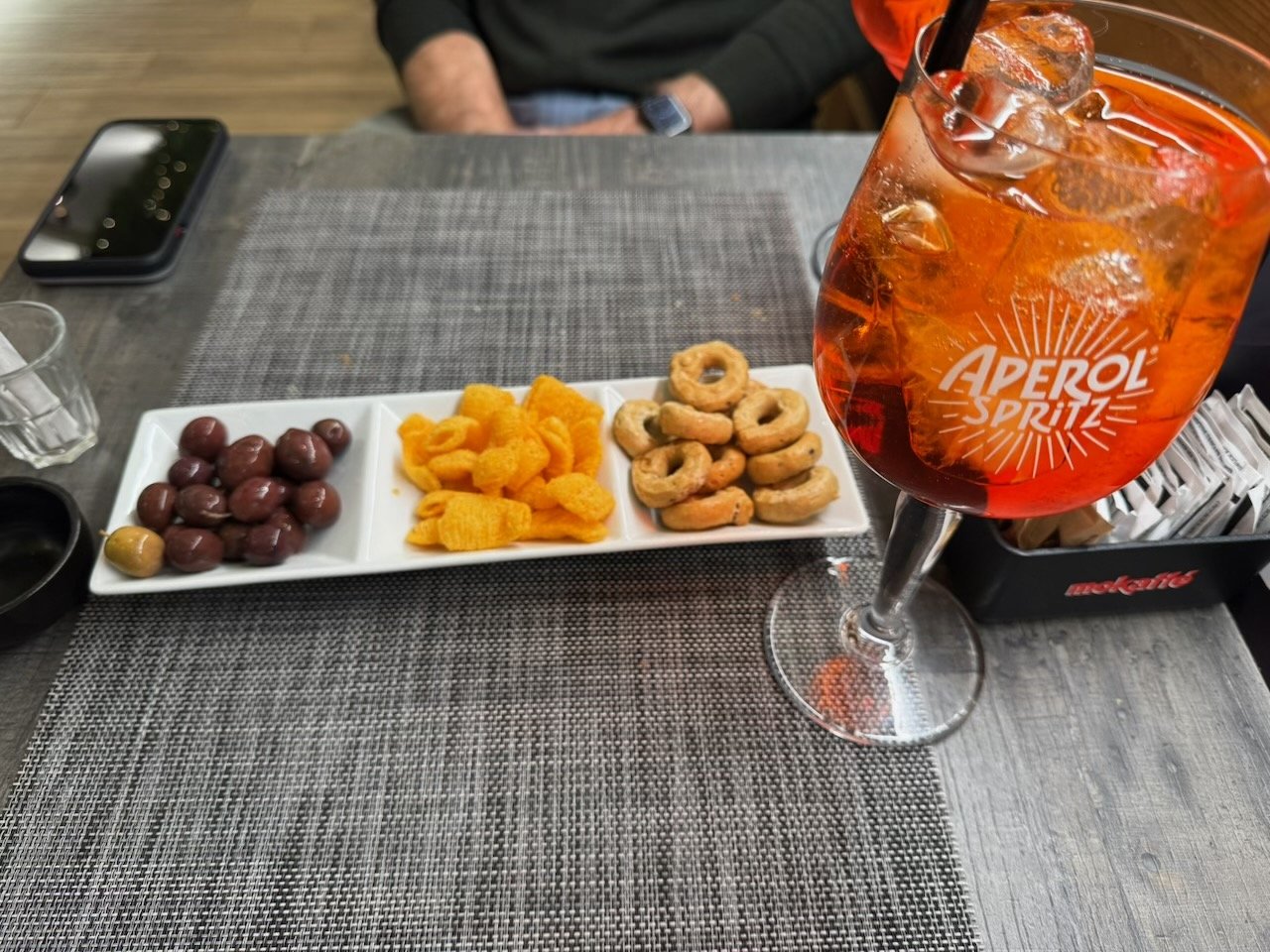
With our train not departing for over an hour, we were drawn into Caffè della Lupa by their promise of Aperol Spritz and cicchetti. Cicchetti (chi-KET-tee) are small, savory snacks to balance the cocktail's bittersweet flavor. These included olives, savory corn crackers, and taralli crackers—traditional, ring-shaped snacks from Puglia.
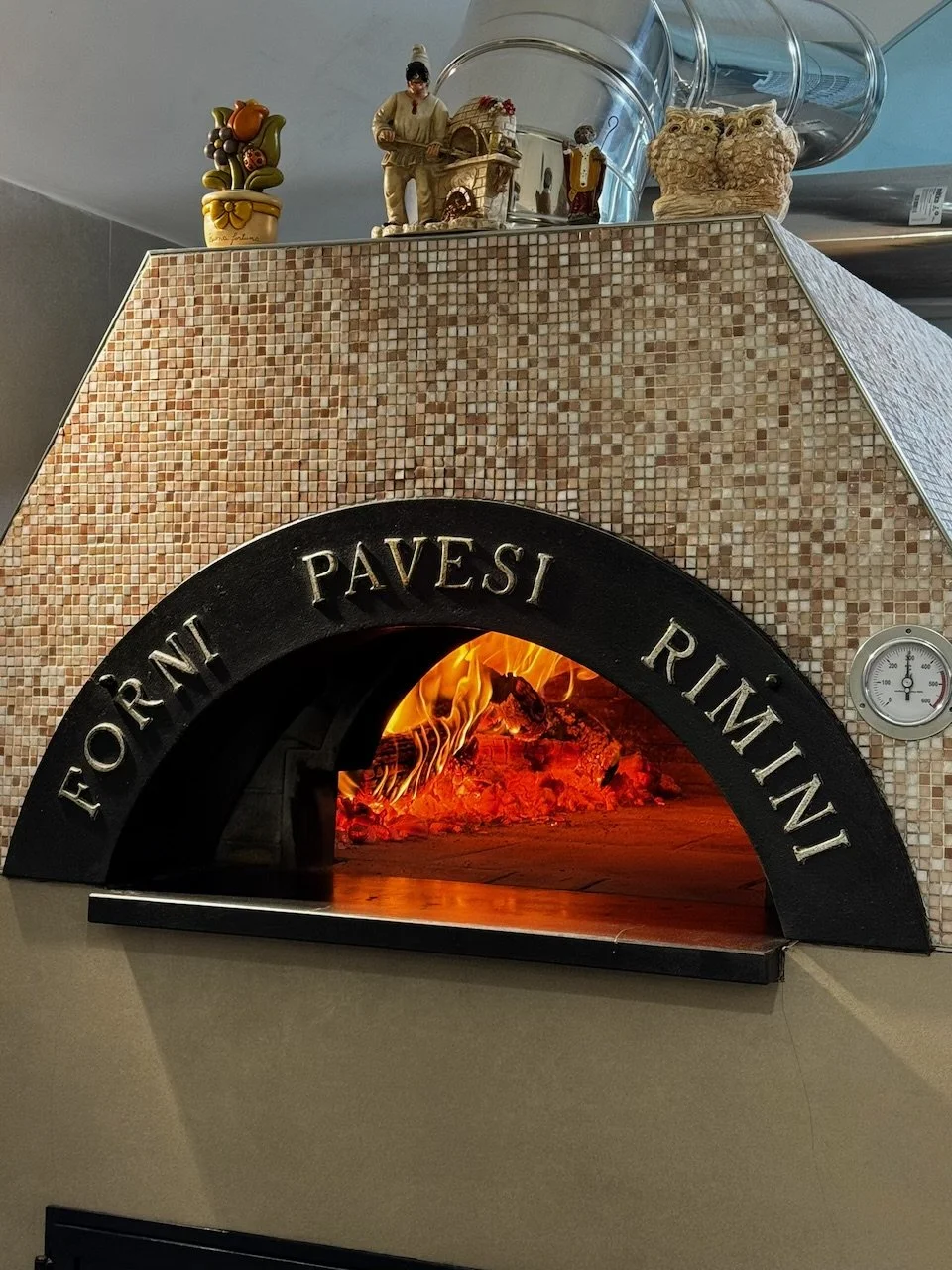
Somehow Dave had booked Business Class tickets on a Frecciarossa (Red Arrow) 1000 high-speed train back to Bari, which shortened our travel time nicely and we did so in style. We shared a final pizza at Pizzeria de Cosimo, then packed our bags for an early-morning departure.
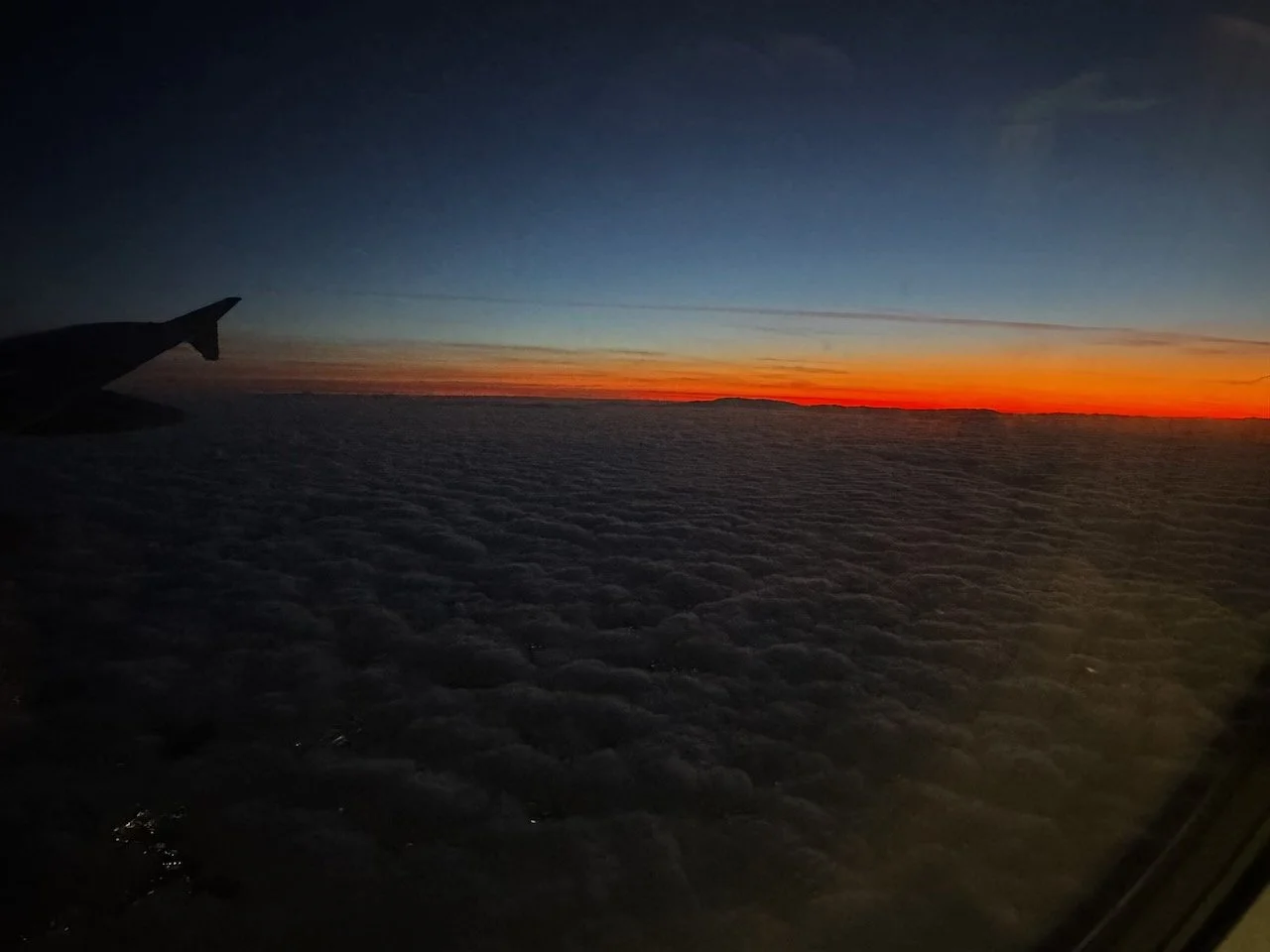
The taxi ordered by our Airbnb host was on Italian Time, so we ordered an Uber to Bari Airport instead, where we caught our 6:20 am ITA Airways flight to Rome. This is the view of the sun rising over a layer of billowy clouds as we begin our descent into Rome. Perhaps that is Croatia on the distant horizon.
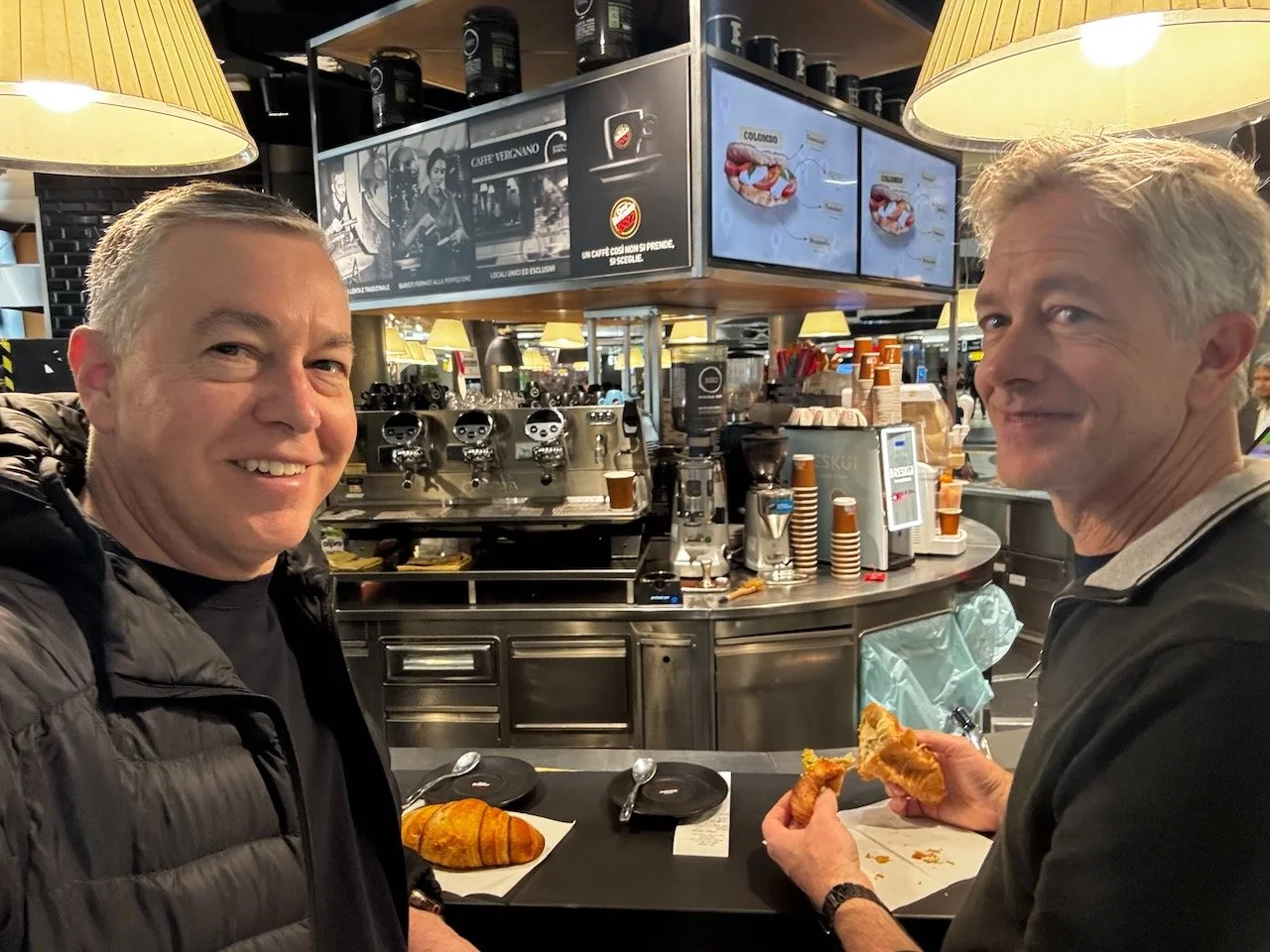
One last time standing at a cappuccino bar in Rome’s international terminal. Our 9:10 am ITA Airways flight left an hour late but still managed to arrive at LAX 30 minutes early—go figure! Thanks for inviting me Dave—it was a wonderful trip that has filled us with many great memories!