Bari Vecchia
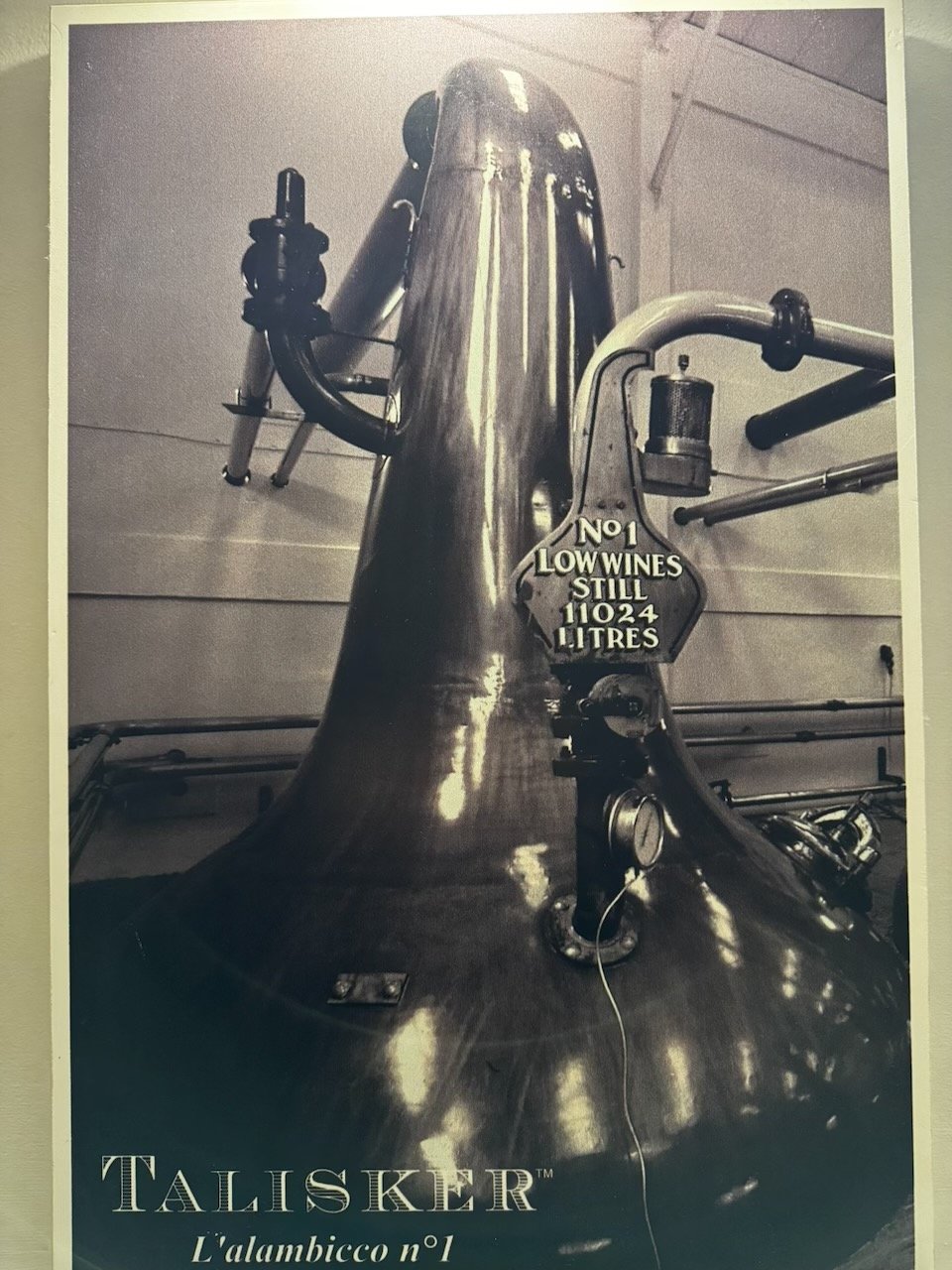
On Monday morning we returned to Il Caffettaio for our morning pastries and cappuccinos (we also stopped in before our bus left for Alberobello and Matera on Saturday morning). The shop name translates roughly to The Little Coffee Maker or The Coffee Guy. That guy happened to be quite friendly, and he and Dave agreed that Dave could practice his Italian, so long as the owner could practice his English. In a rather surprising coincidence, there was a Talisker distillery poster in the shop’s bathroom.
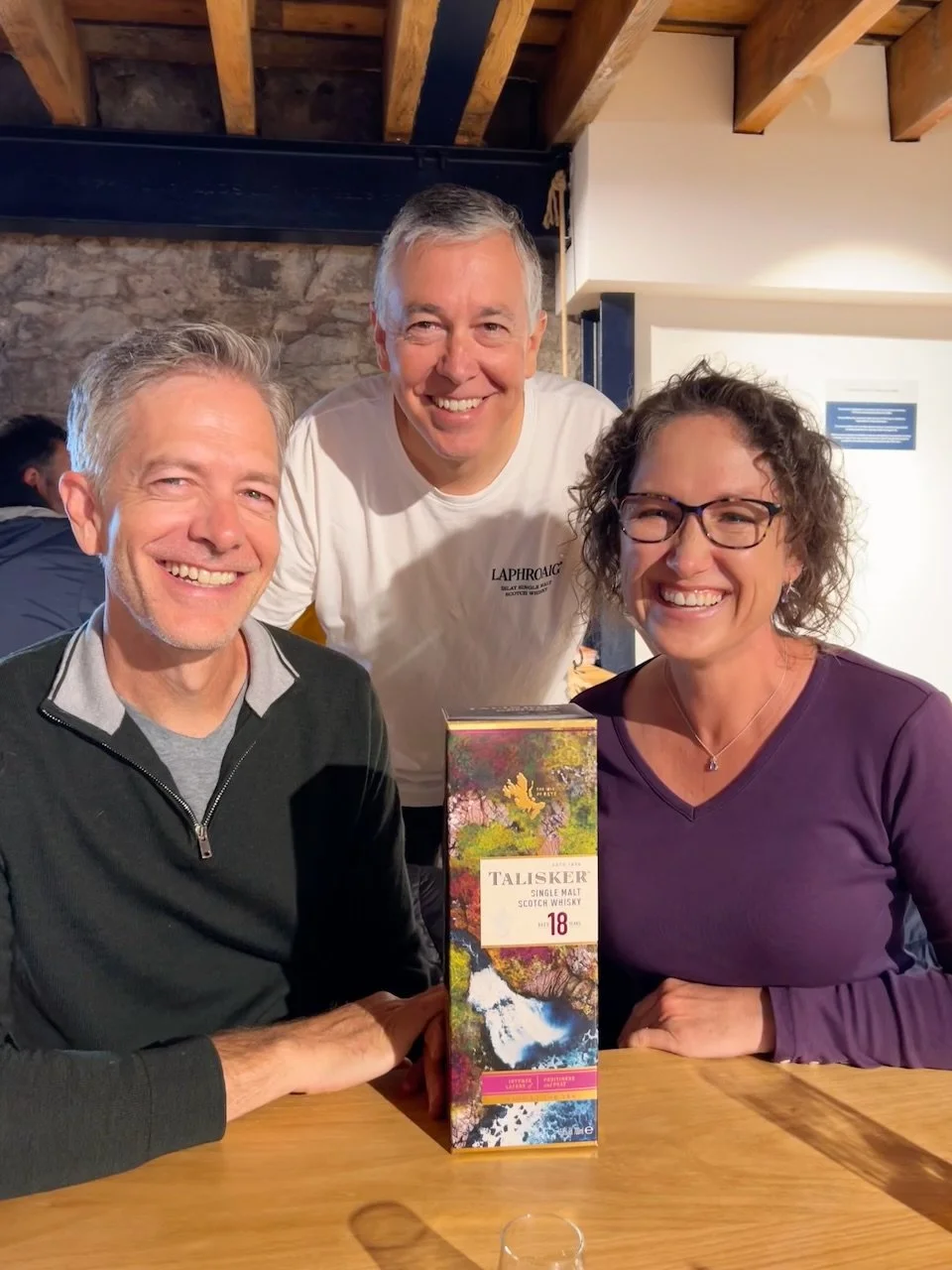
When Dave and Christa visited with Amanda and me in Scotland, we purchased this bottle of whisky to celebrate my retirement.
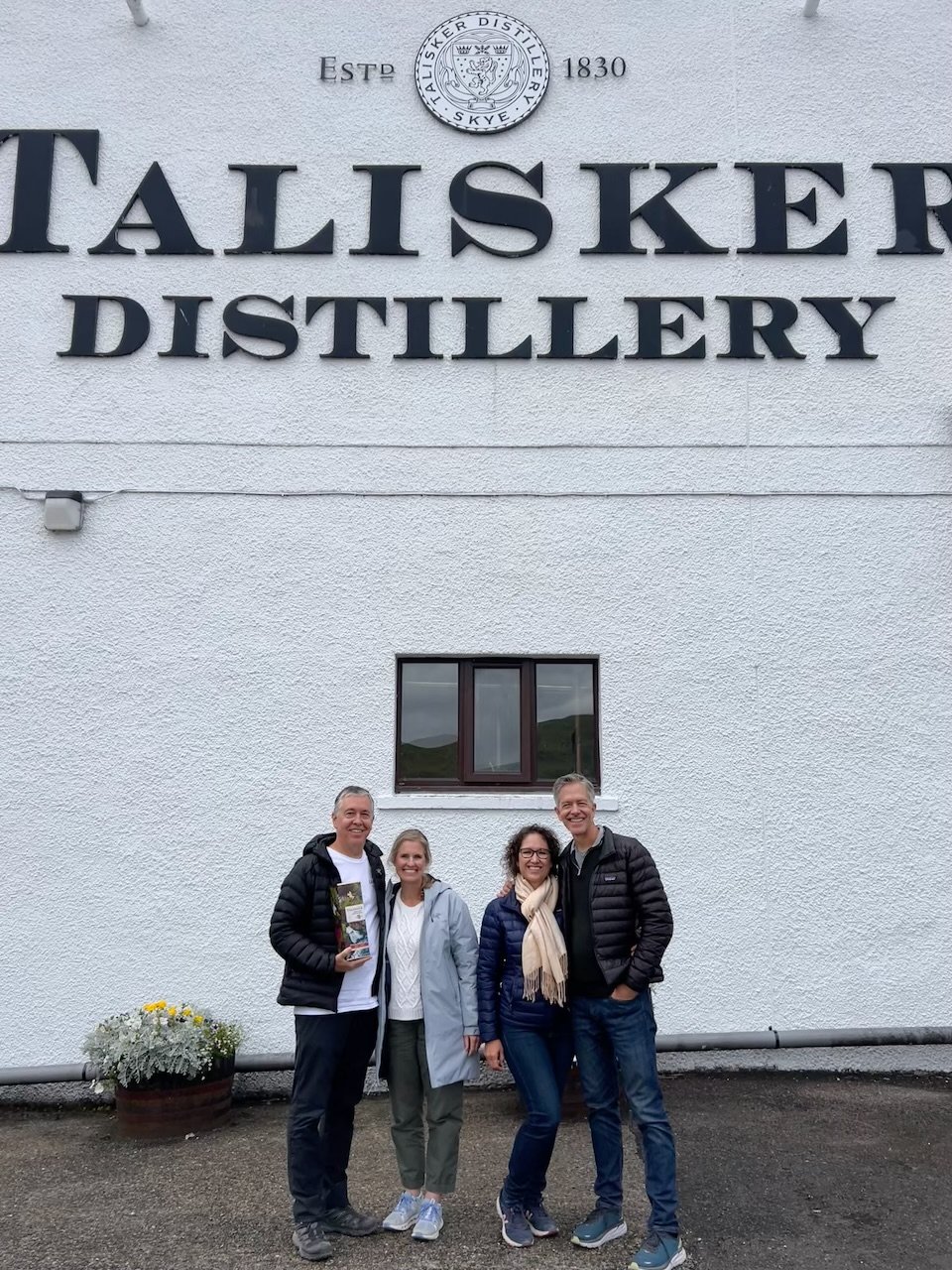
Here we are at Talisker Distillery on Isle of Skye on July 24, 2023—such a crazy coincidence!
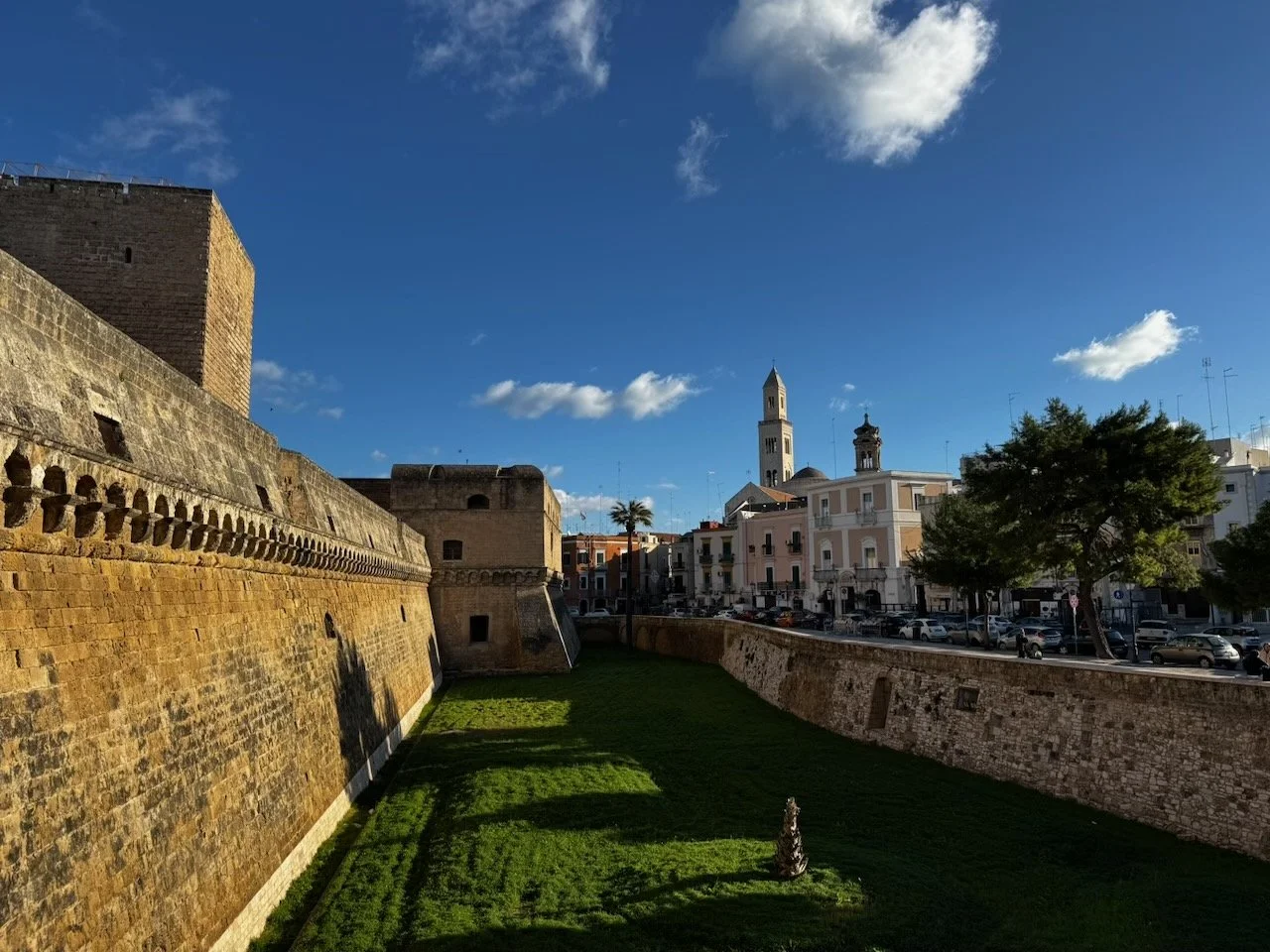
Though we had been living in Bari for three days, we booked a formal walking tour of Bari Vecchia (old Bari) for Monday morning. The tour stared at Castello Svevo di Bari (Bari Swabian Castle). Roger the Norman originally built this castle in the 12th century over the ruins of a Byzantine structure. Later, Frederick Il of Swabia (Germany) built over the existing castle—the castle’s name owing to its most recent builder.
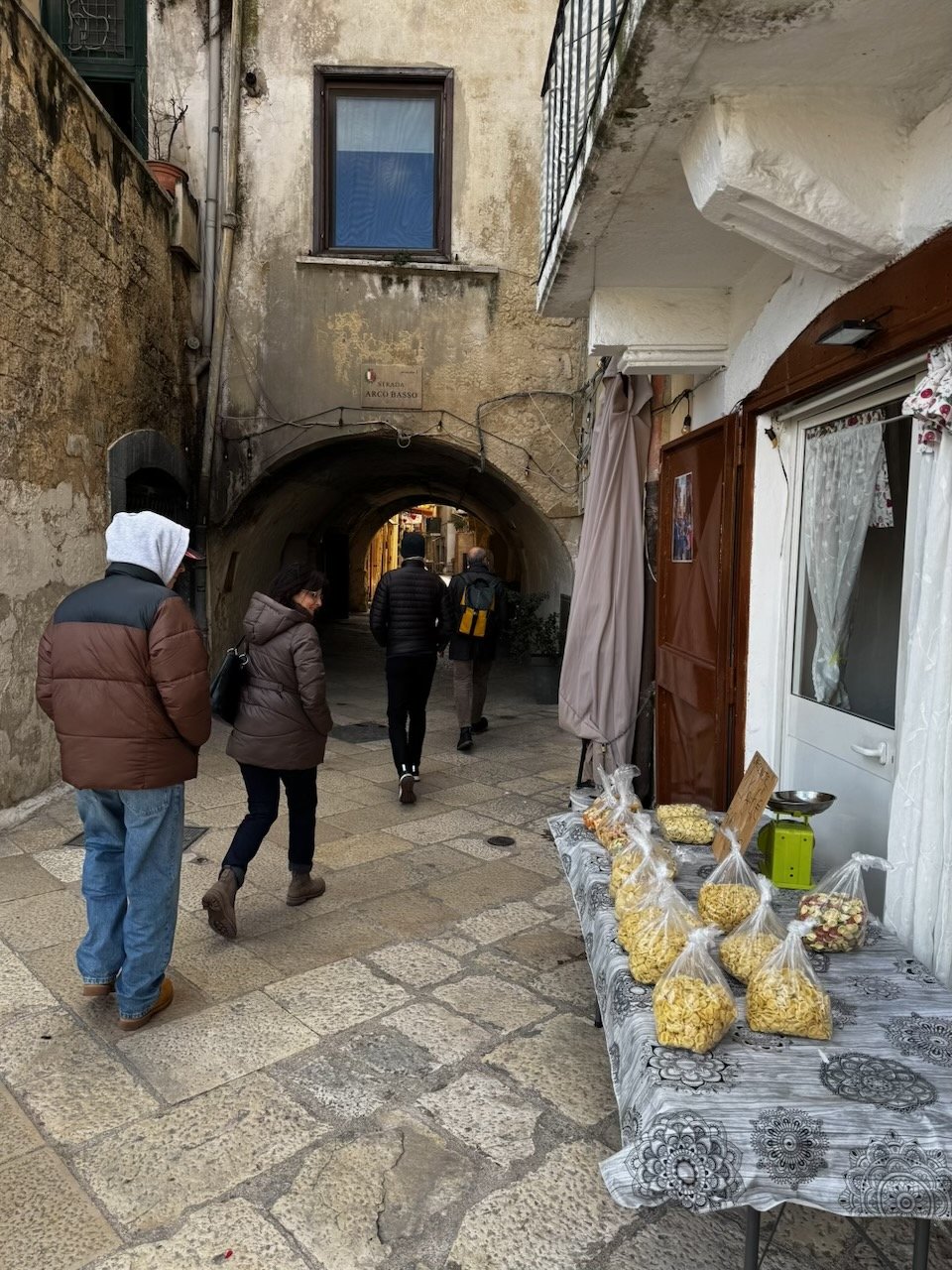
The tour then entered the old city traveling down what is sometimes informally referred to as “Orecchiette Street” because of its high concentration of pasta grannies literally rolling out fresh orecchiette for sale each day.
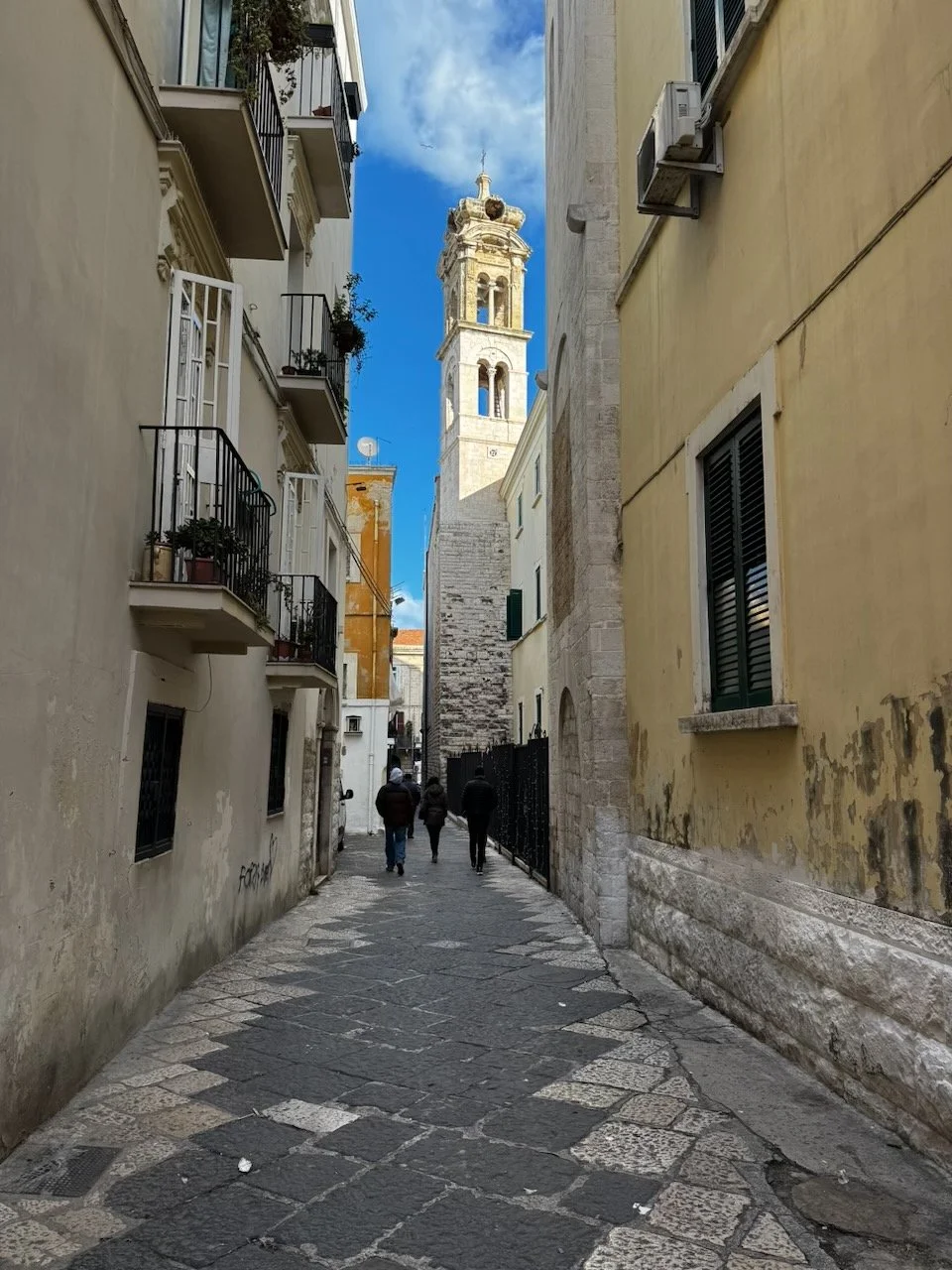
Black street stones (or pavers) in Bari Vecchia, known locally as chianche, are historically significant for guiding visitors and merchants unfamiliar with the often confusing, maze-like layout of the old town toward the exit. While the main paving stones are white or cream-colored, these black, contrasting stones once served as a navigation tool.
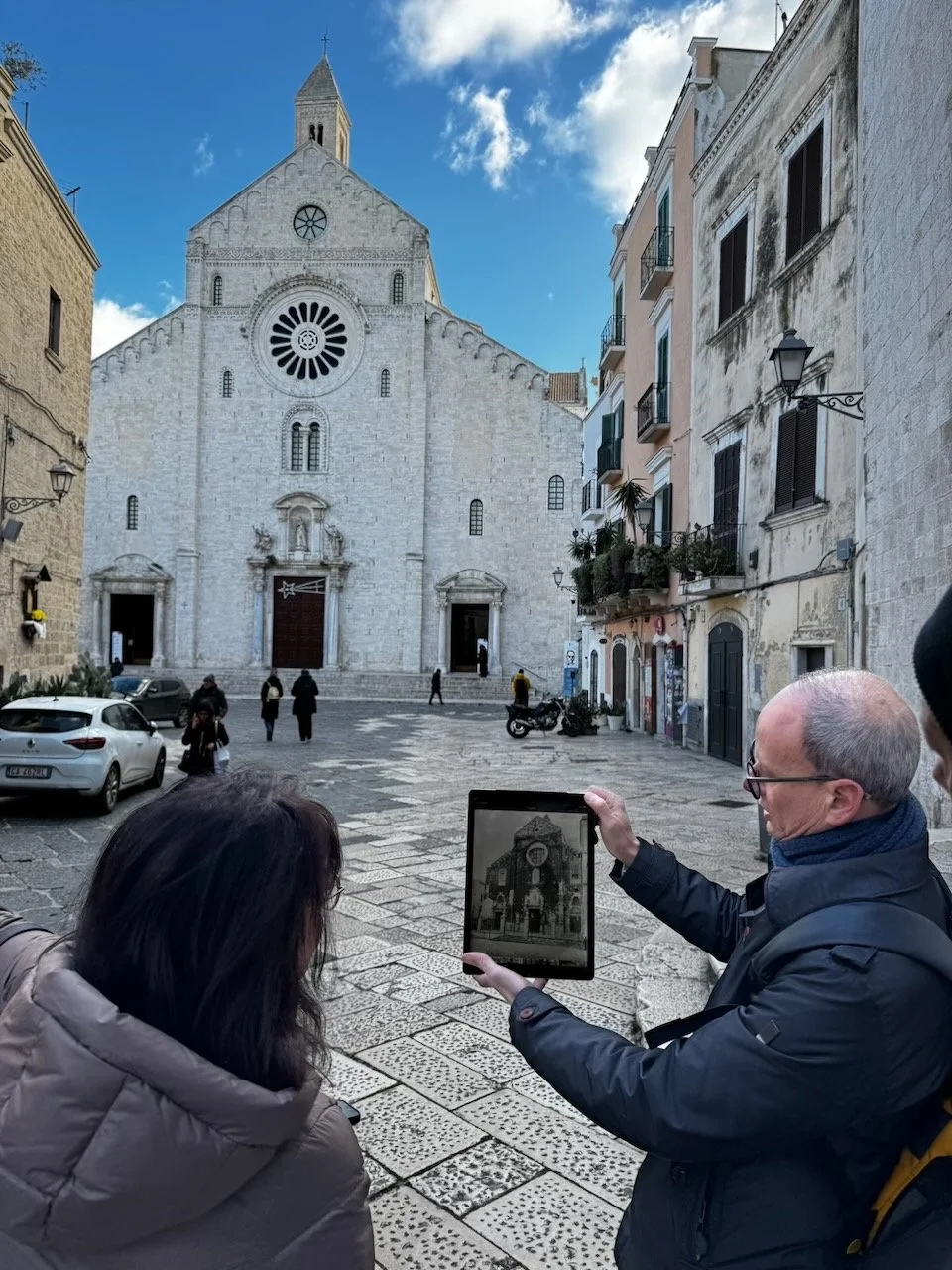
Our tour guide showing the restoration of the 13th century Romanesque Cathedral of Saint Sabinus (Basilica Cattedrale Metropolitana Primaziale San Sabino).
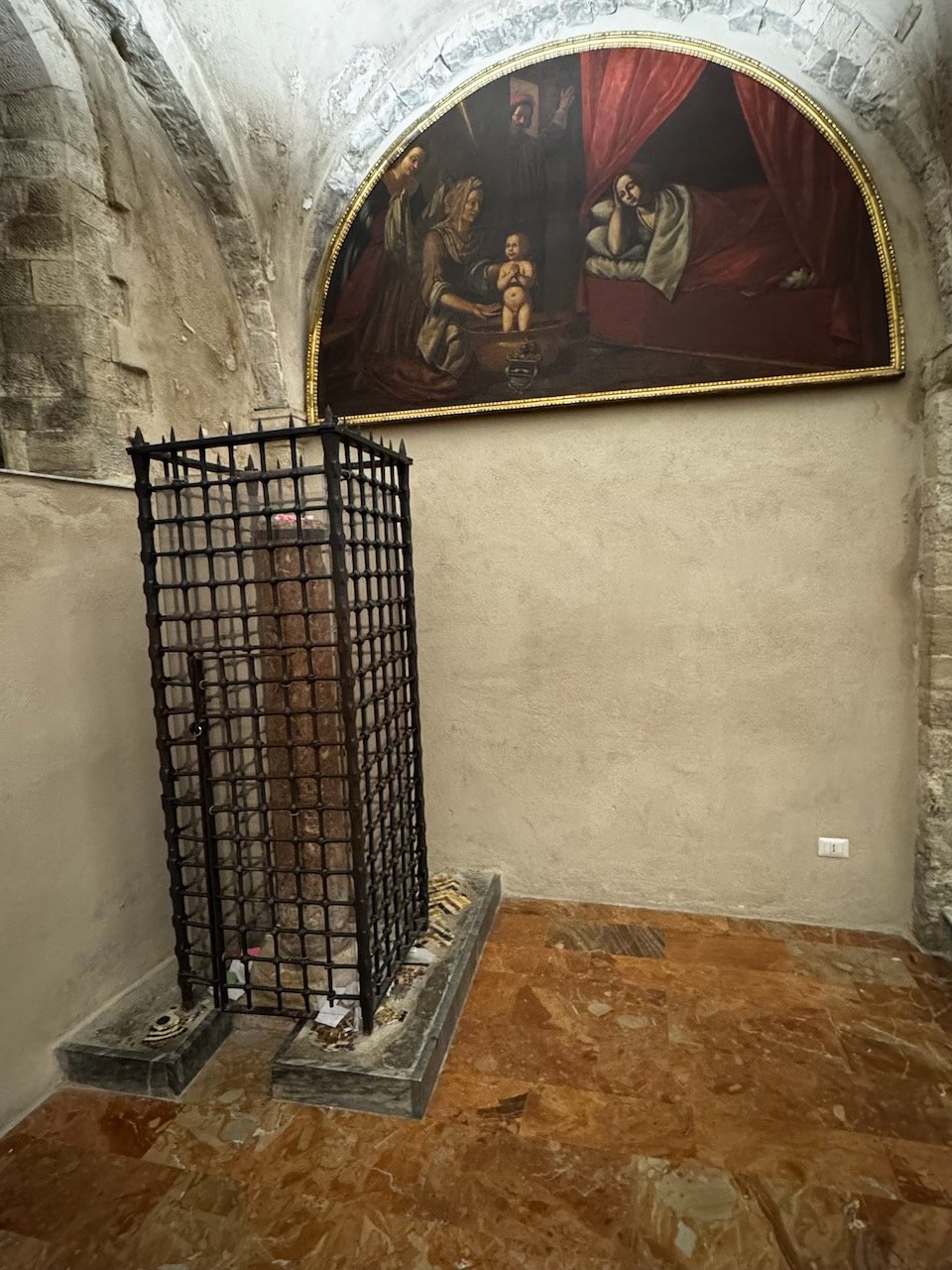
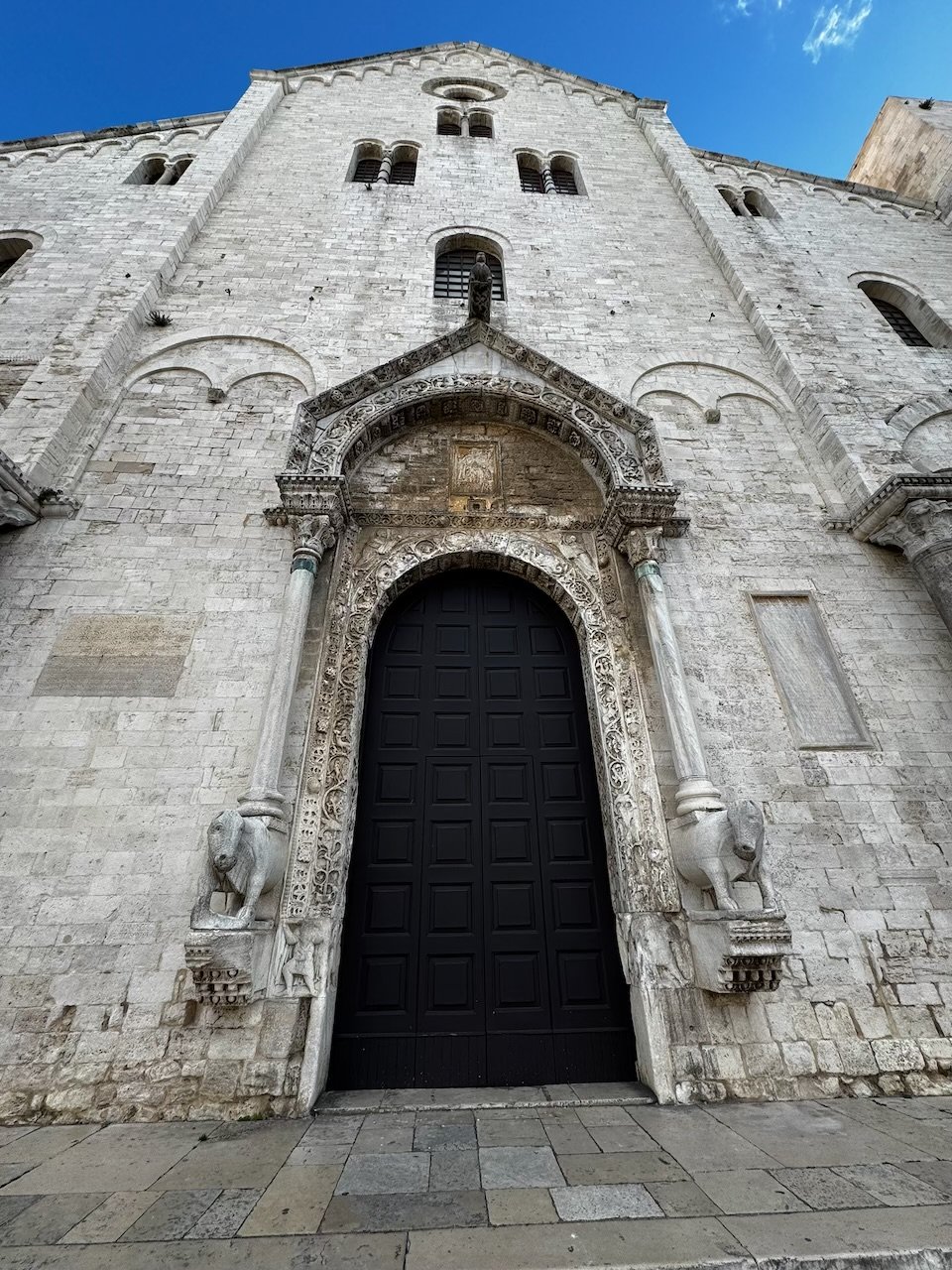
According to legend, when the Church of St Nicholas (adjacent our apartment) was being built to house St Nicholas’s relics after they were brought to Bari in 1087, the construction lacked one final column. The legend tells that on the night between September 30 and October 1, 1089, St Nicholas himself appeared, escorted by two angels, and placed this reddish column into the crypt.
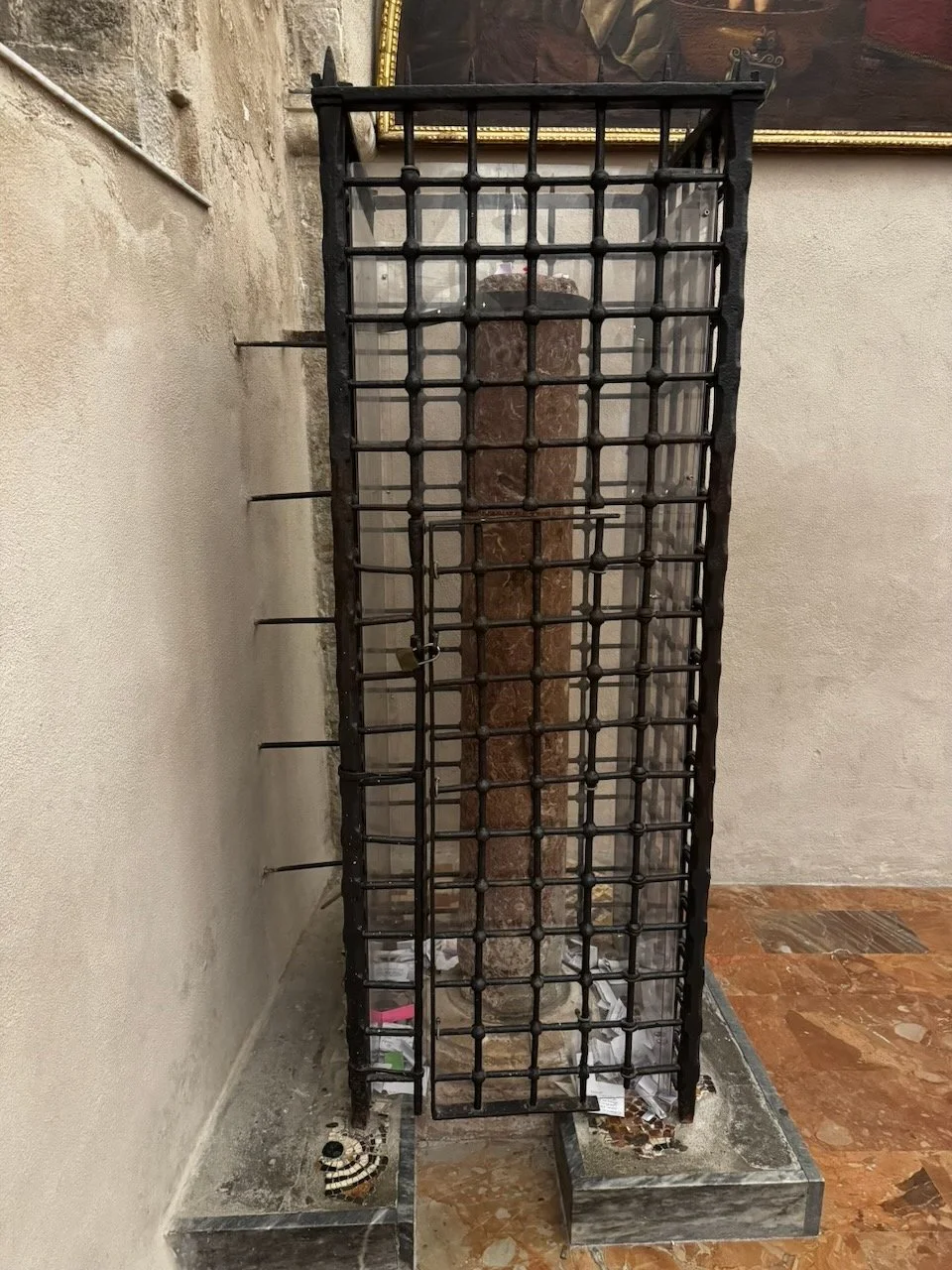
For centuries, the pillar has been considered miraculous. Traditionally, young unmarried women (nubili) would walk around the pillar three times, touching or praying to it, and would quickly find a husband.. The column was originally part of the colonnade surrounding the tomb but was moved to this corner in the 19th century. Because of its popularity and the damage caused by pilgrims touching it—as well as some small pieces breaking off—the pillar is now protected by a grate.
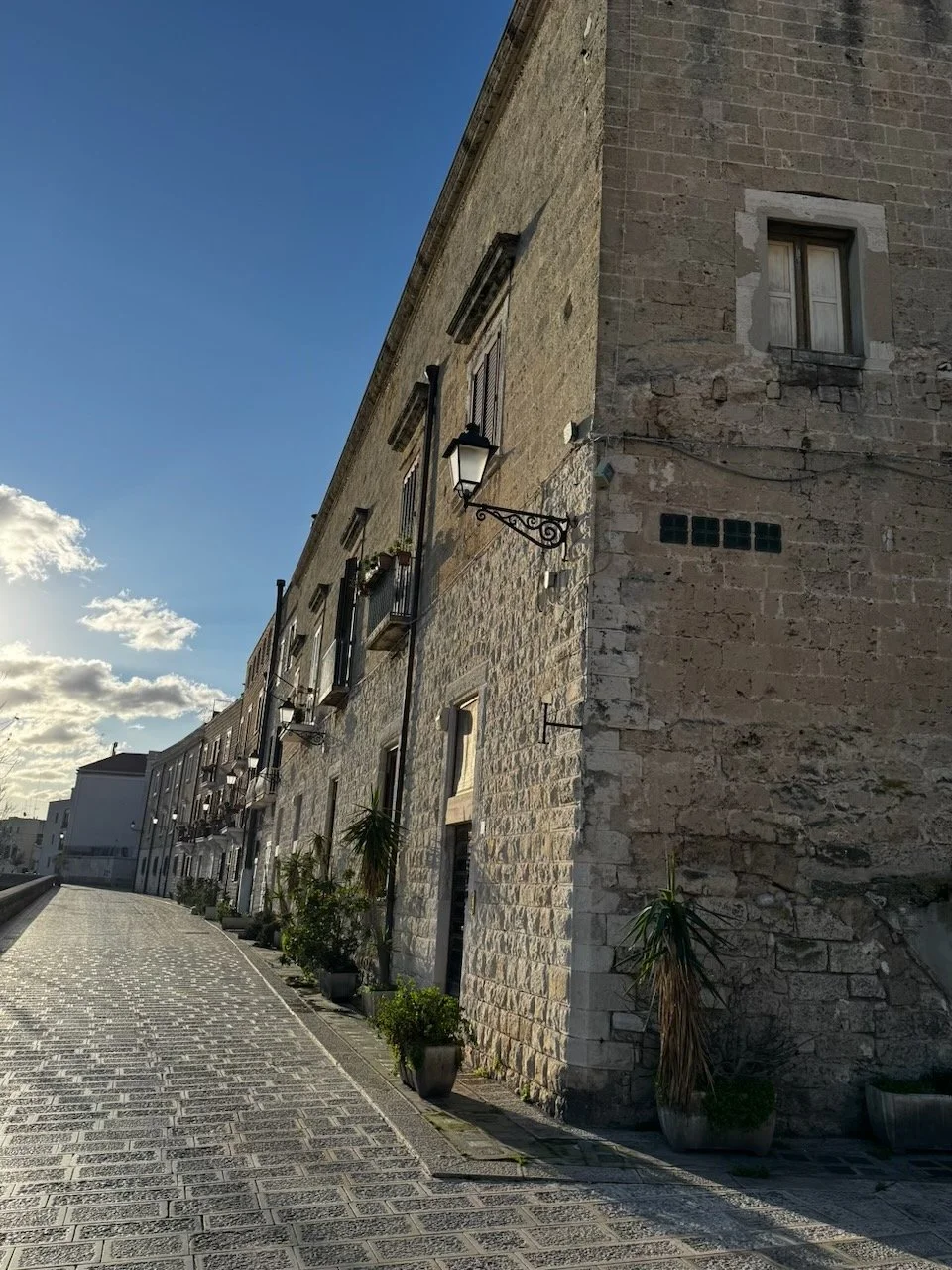
This beautiful paved walkway on top of the old city wall was valuable ocean-front property. However, all the doors and windows are small and simple because of the constant exposure to the sea. Interestingly, the servants lived on this side while the wealthy owners lived opposite, on the protected side of the building.
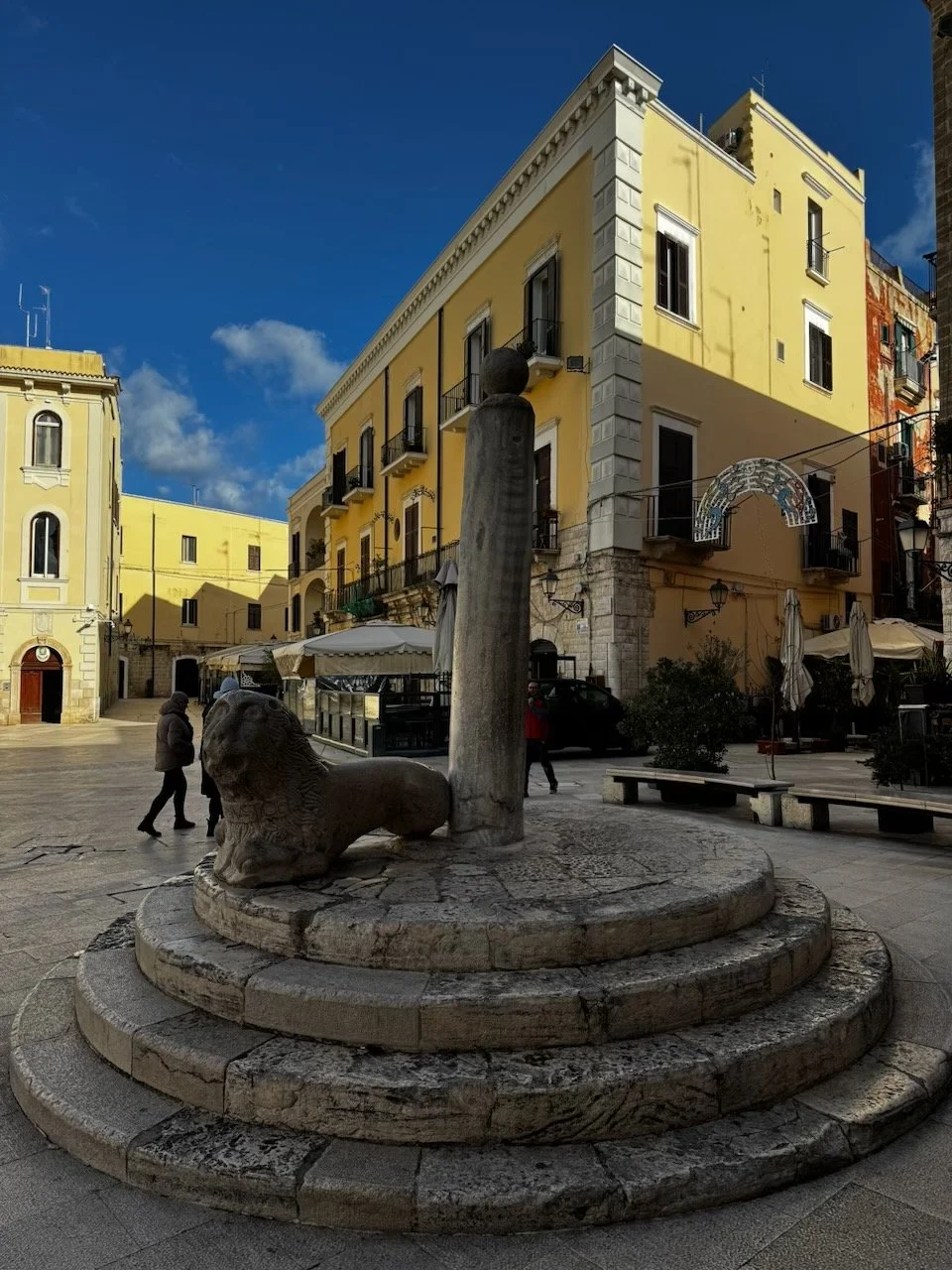
The Colonnadella Giustizia (Column of Justice), also known as the Colonna Infame (Column of Shame), located in the bustling Piazza Mercantile, was erected in the 16th century so that debtors and minor offenders could be publicly humiliated. The white marble column features a crouching stone lion at its base.
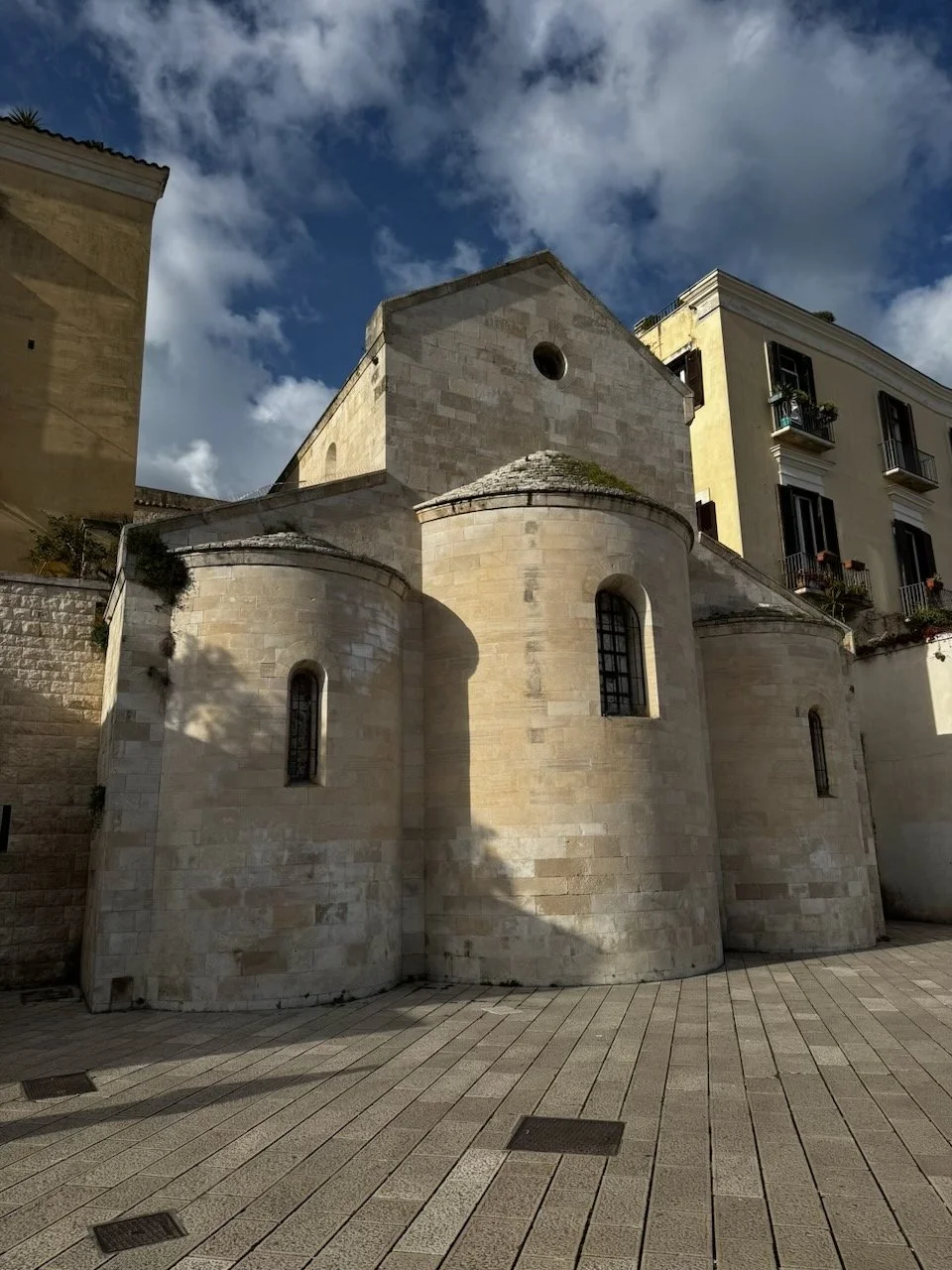
This beautiful, small Romanesque basilica of Chiesa della Vallisa was built in the 11th century. It sits in Piazza Del Ferrarese next to an exposed section of Via Appia Traiana, completed around 109 CE.
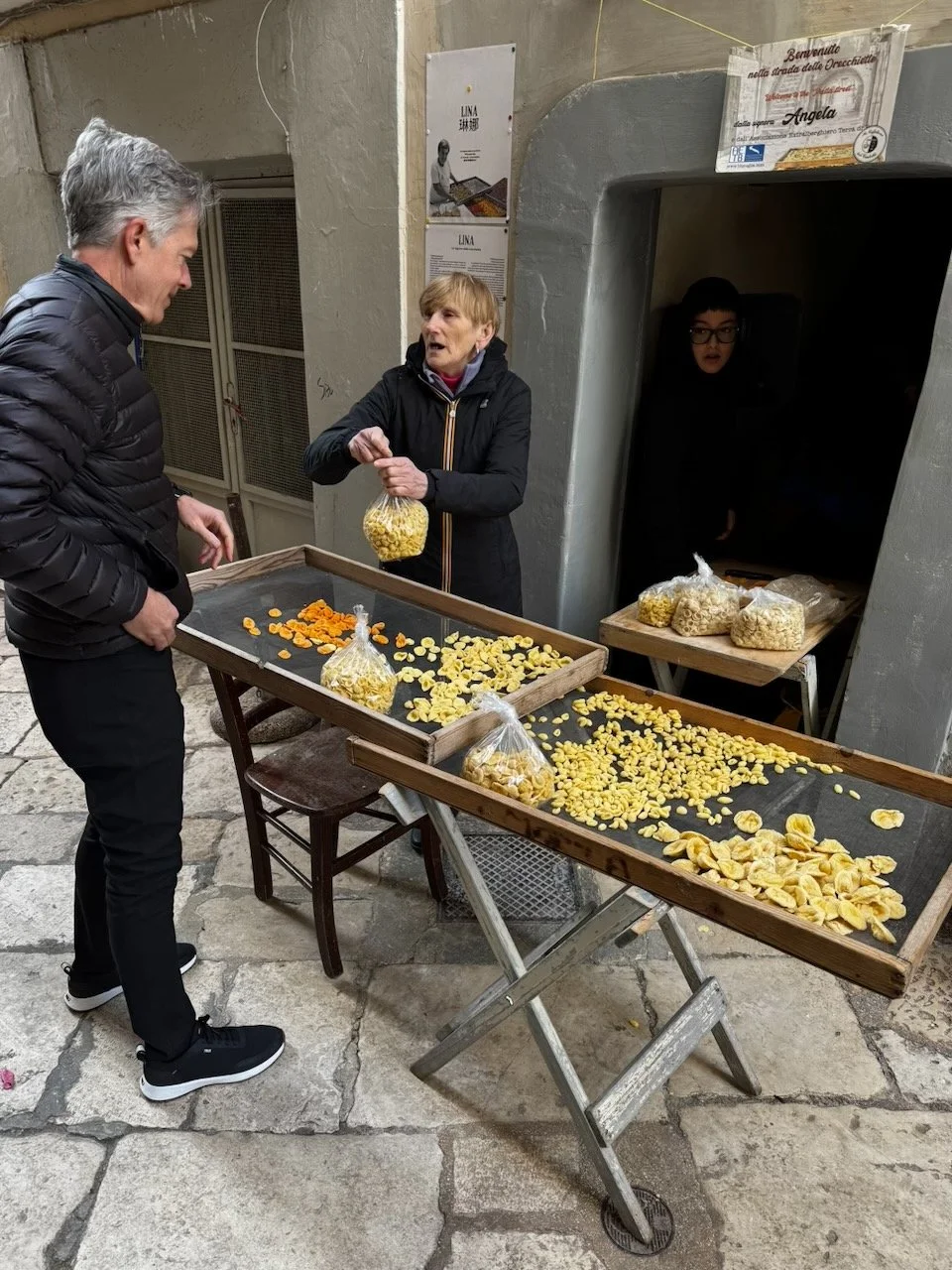
Dave purchasing freshly-handmade orecchiette from pasta granny Angela in Bari Vecchia. Angela is just out of view in the doorway here, but we watched her earlier roll out dough, cut off small bits, and then roll the knife blade over the cut bits to produce the orecchiette, which are then dried on these racks.
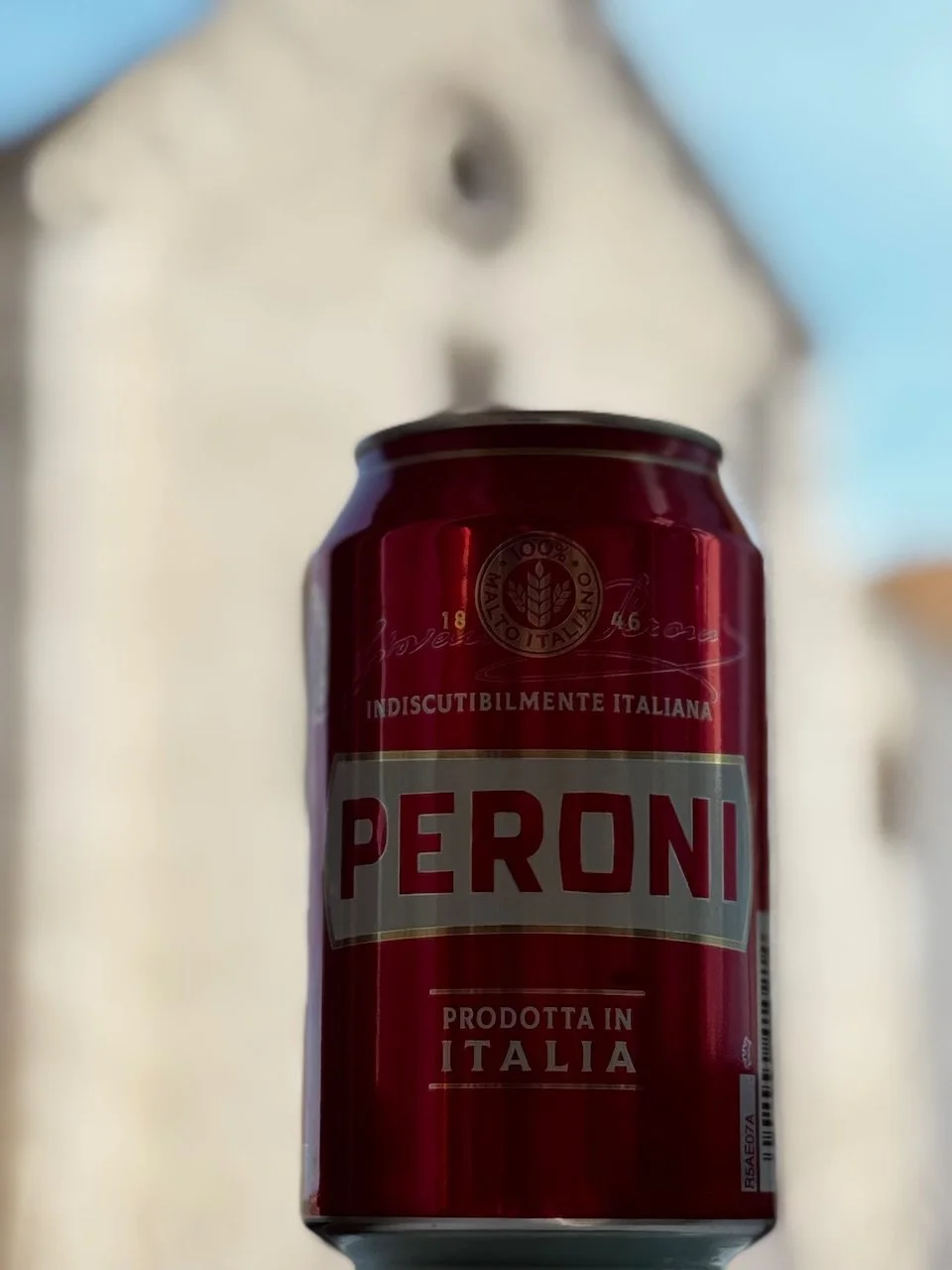
We learned on our tour that Peroni beer is bottled in Rome, Padua, and right here in Bari. That was enough inspiration to return to our rental and enjoy the Peroni beers the owner had placed in the refrigerator for us.
Meanwhile, Dave made a lunch booking at the popular Urban Assassineria restaurant in Bari. Instead of traditional boiling, spaghetti all'assassina (assassin's spaghetti) or spaghetti bruciati (burnt spaghetti) is cooked directly in the pan—traditionally cast iron. A broth typically made of tomato sauce diluted with water is gradually added to the pan and the pasta absorbs it, similar to a risotto. As the spaghetti absorbs the sauce, it cooks directly on the pan surface, developing significant browning and a distinctive and uniquely crispy texture.
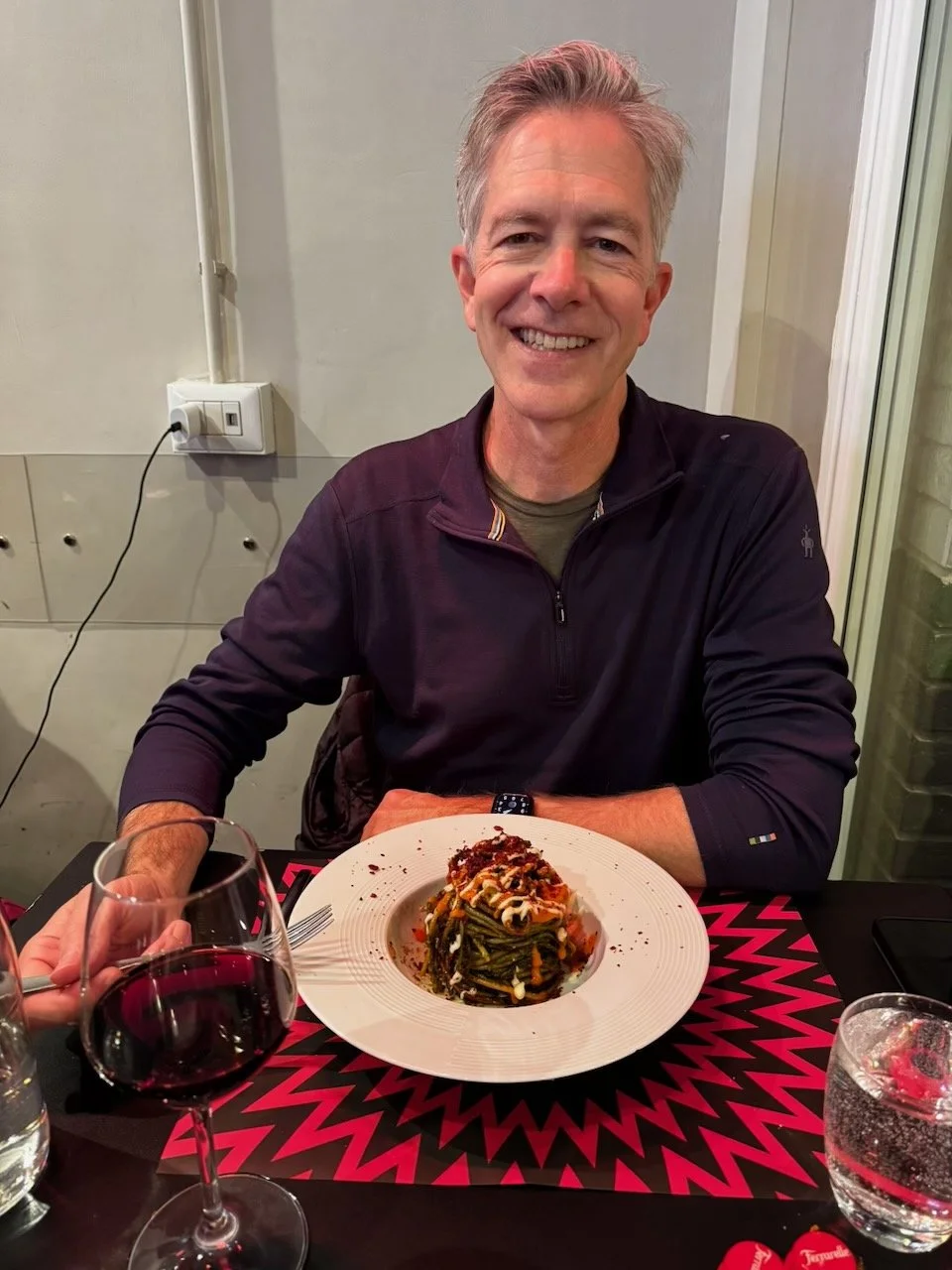
Dave had the La Crusca version—Spaghetti Assassina, garlic, chili pepper with creamy broccoli rabe, smoked red pepper sauce, hard canestrato cheese fondue, and peperone crusco
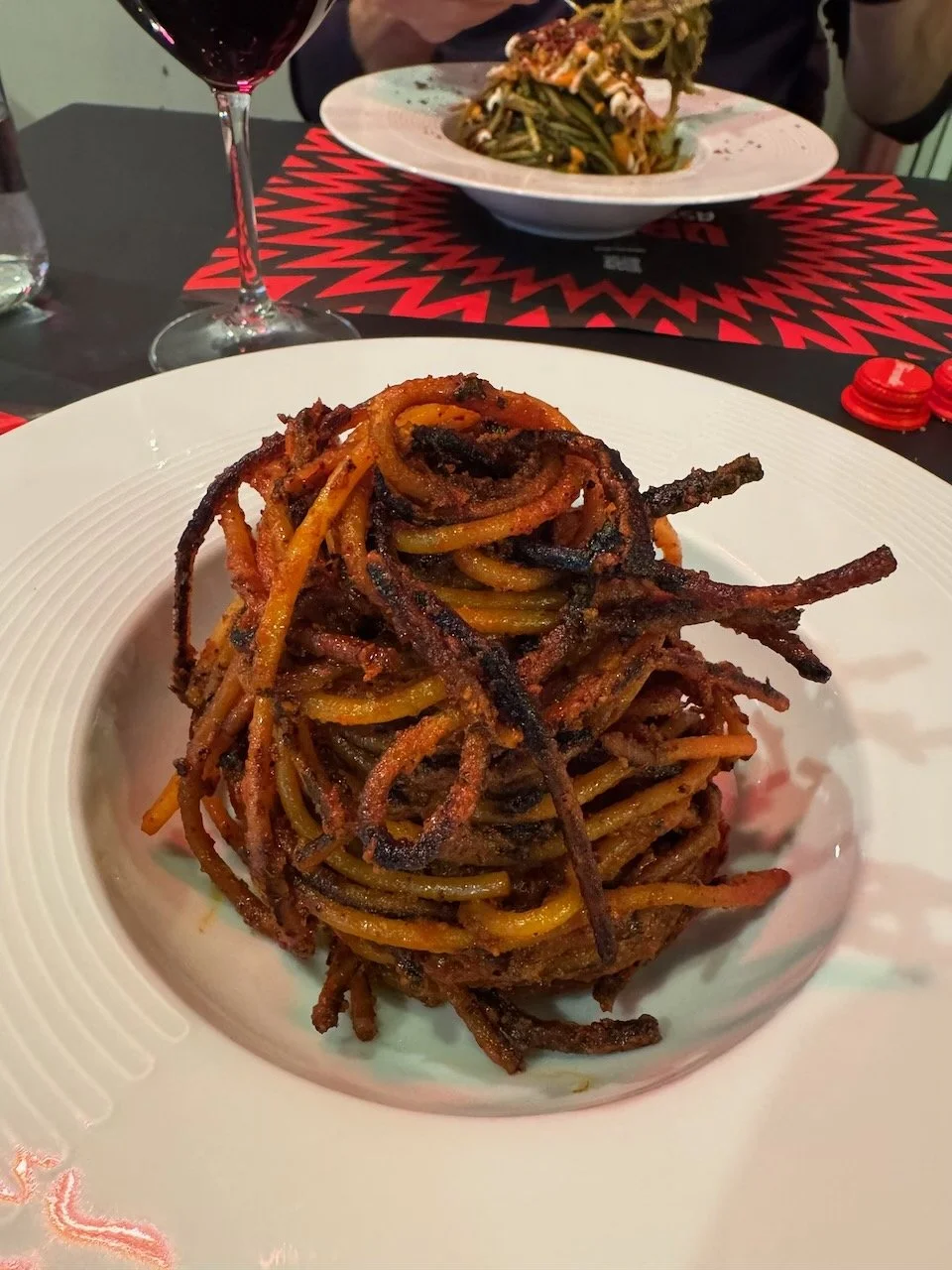
I had the Classici—Granoro spaghettone Urban-approved, tomato puree, garlic, & chilli pepper. It was so exceptional, my mouth is watering again just writing about it!
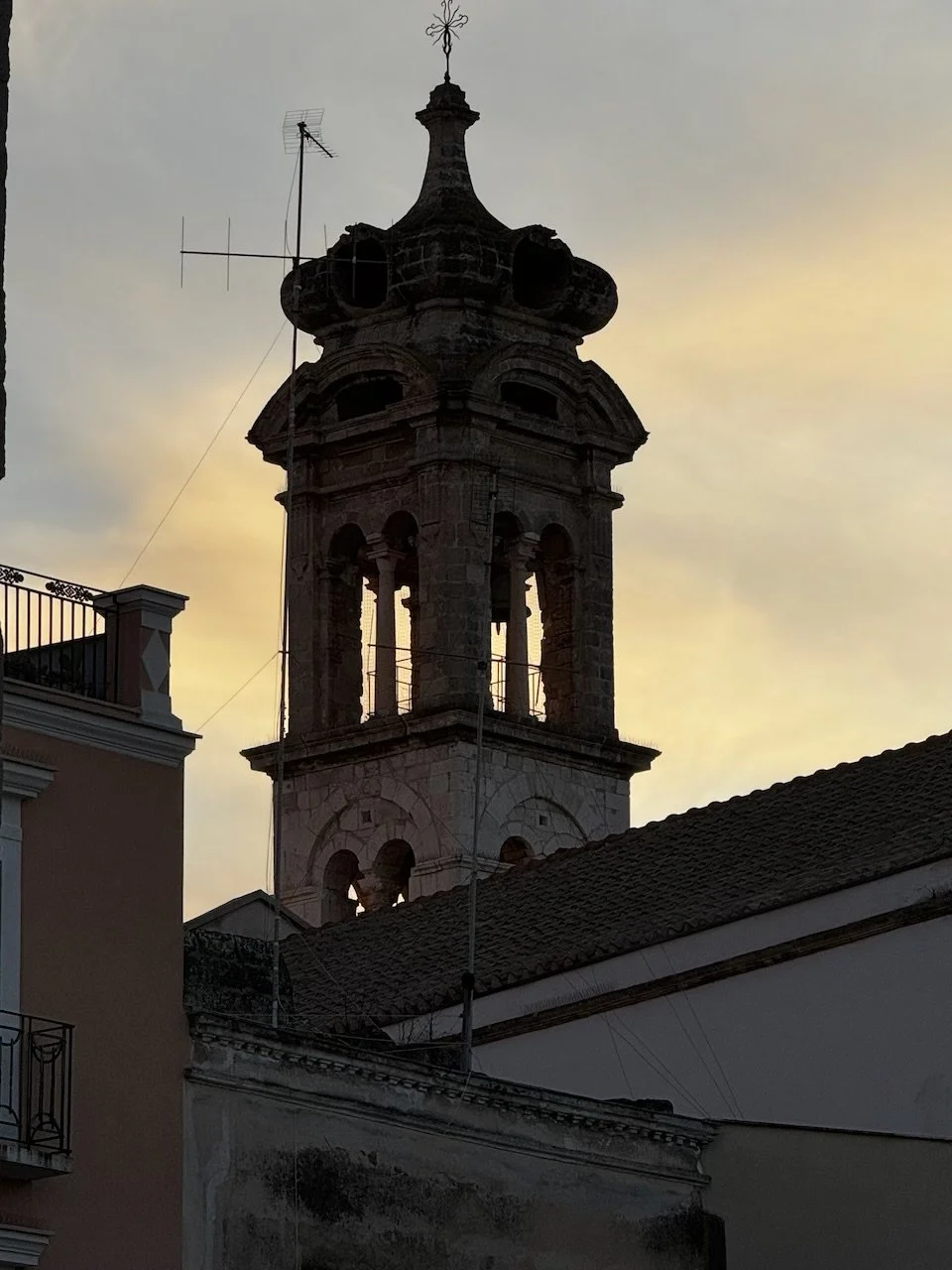
As the sunset, we walked over to the Episcopio and the Museo Diocesano di Bari to view the Exultet parchment scrolls.
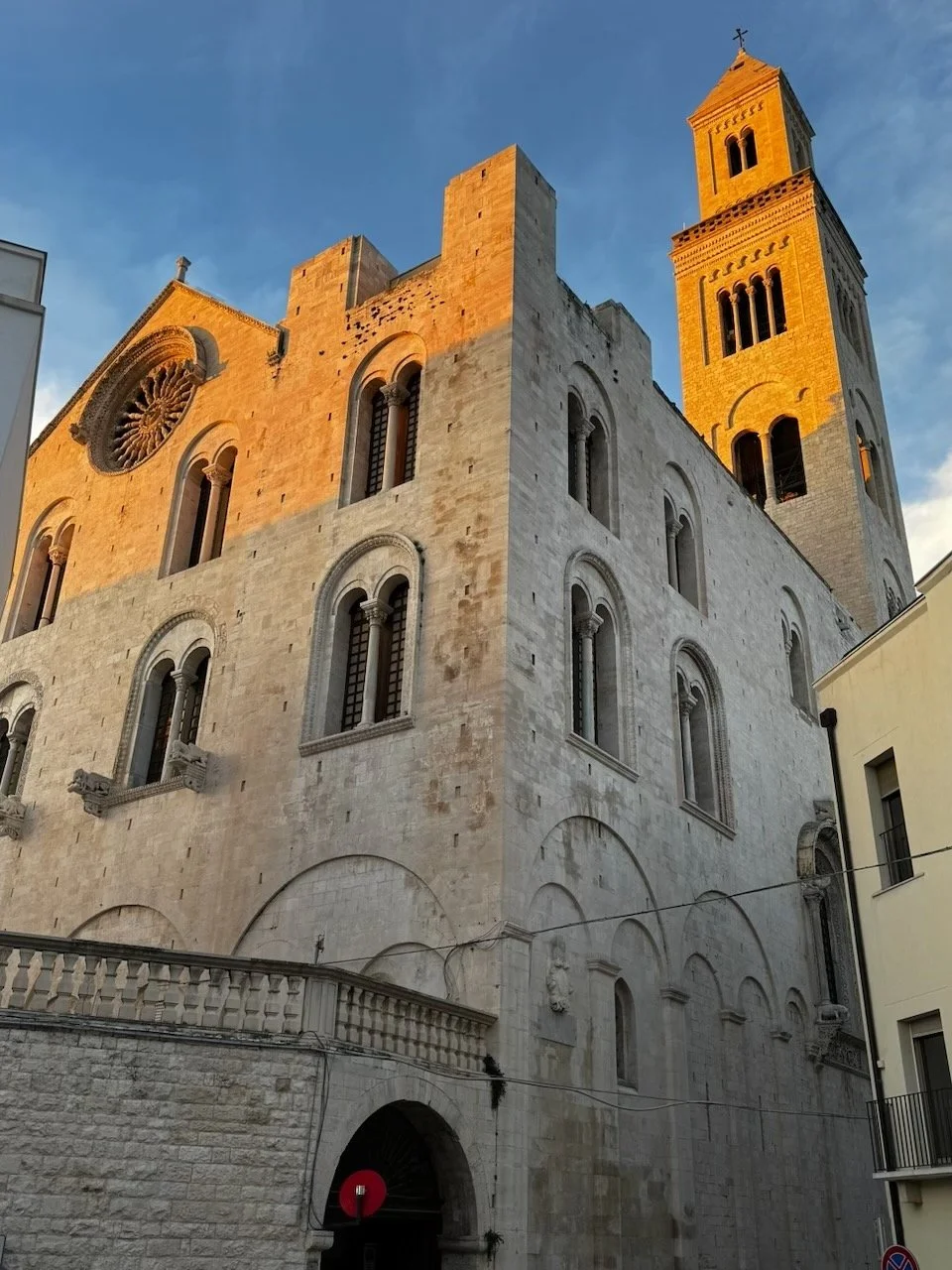
The Golden Hour settles on Bari as we make our way to the museum.
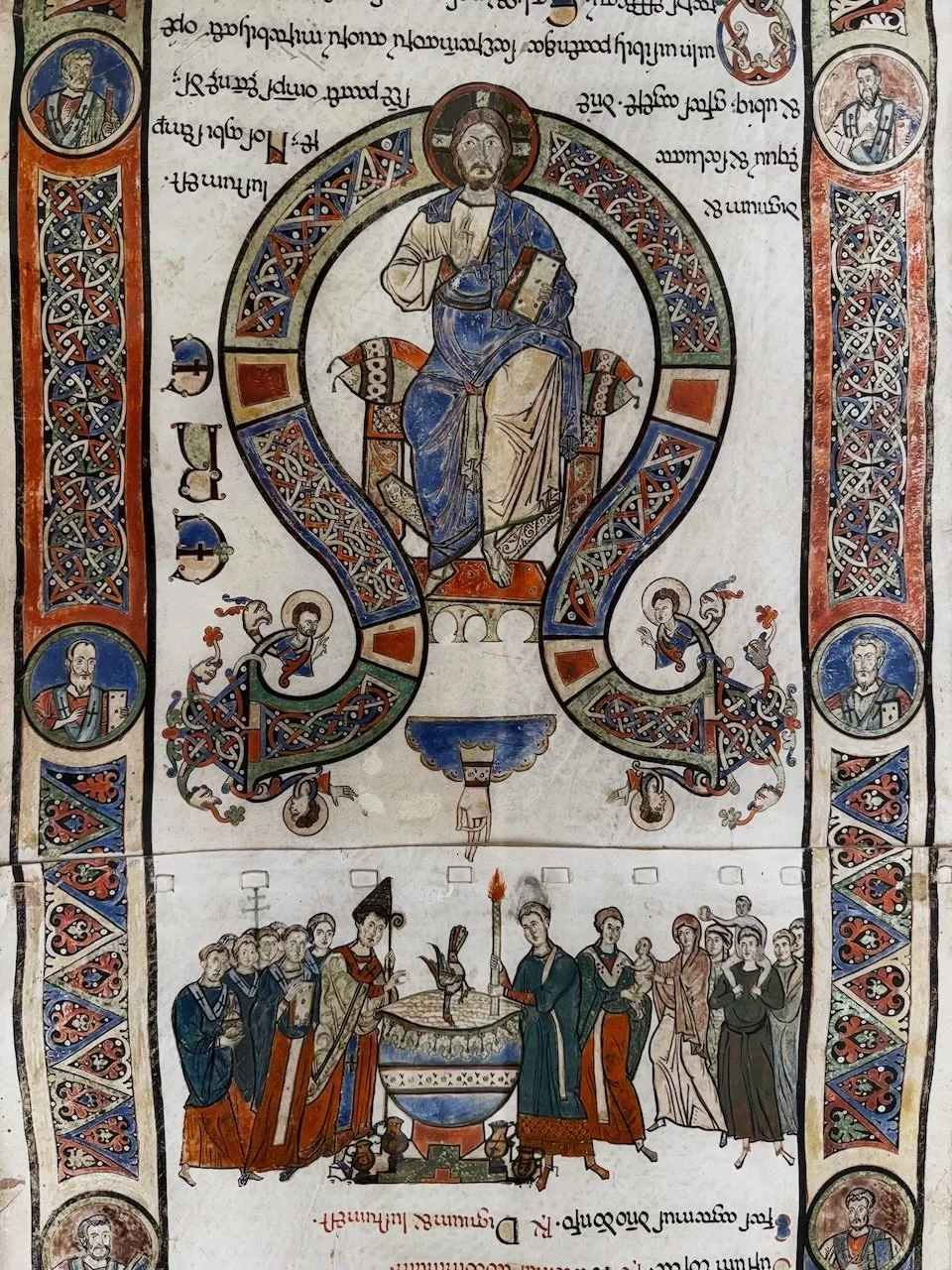
Parchment is the untanned skins of sheep, calves, or goats. The longest Exultet scroll in Bari came from the Monastery of San Benedetto and measures about 17 feet in length. You can see the stitching where the eight rectangular sheepskin folios were sewn together. It is thought that just 28 Exultet still exist today, and 3 of these are preserved in Bari.
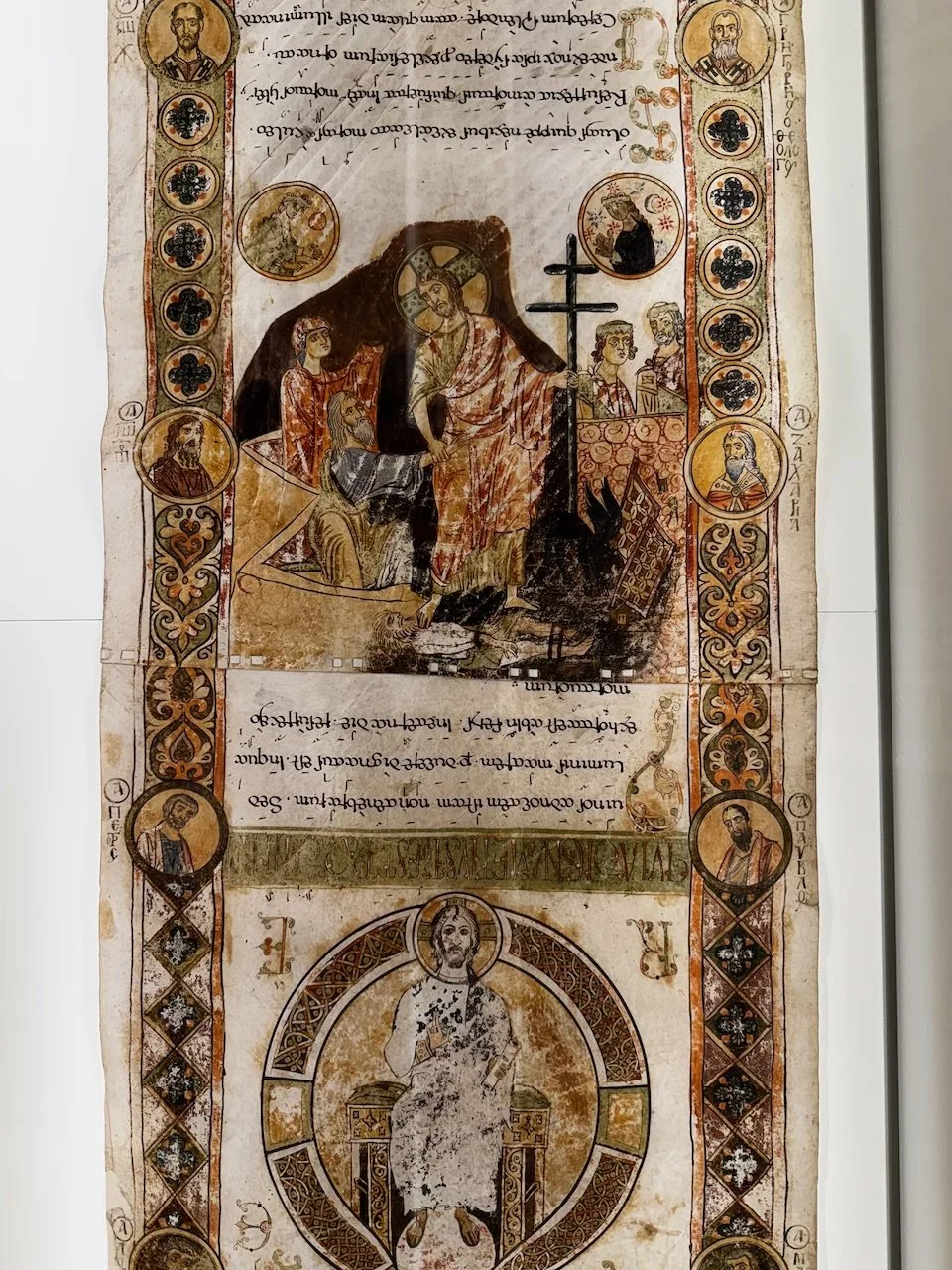
The scrolls are referred to as “illuminated” because they are decorated with hand-drawn embellishments. These images are inverted to allow the congregation to view them as the deacon reads the music and intones the liturgical chant during the Easter Vigil. Each liturgical scroll is an exquisitely detailed work of Southern Italian Medieval art, made between the 10th and 12th century CE.
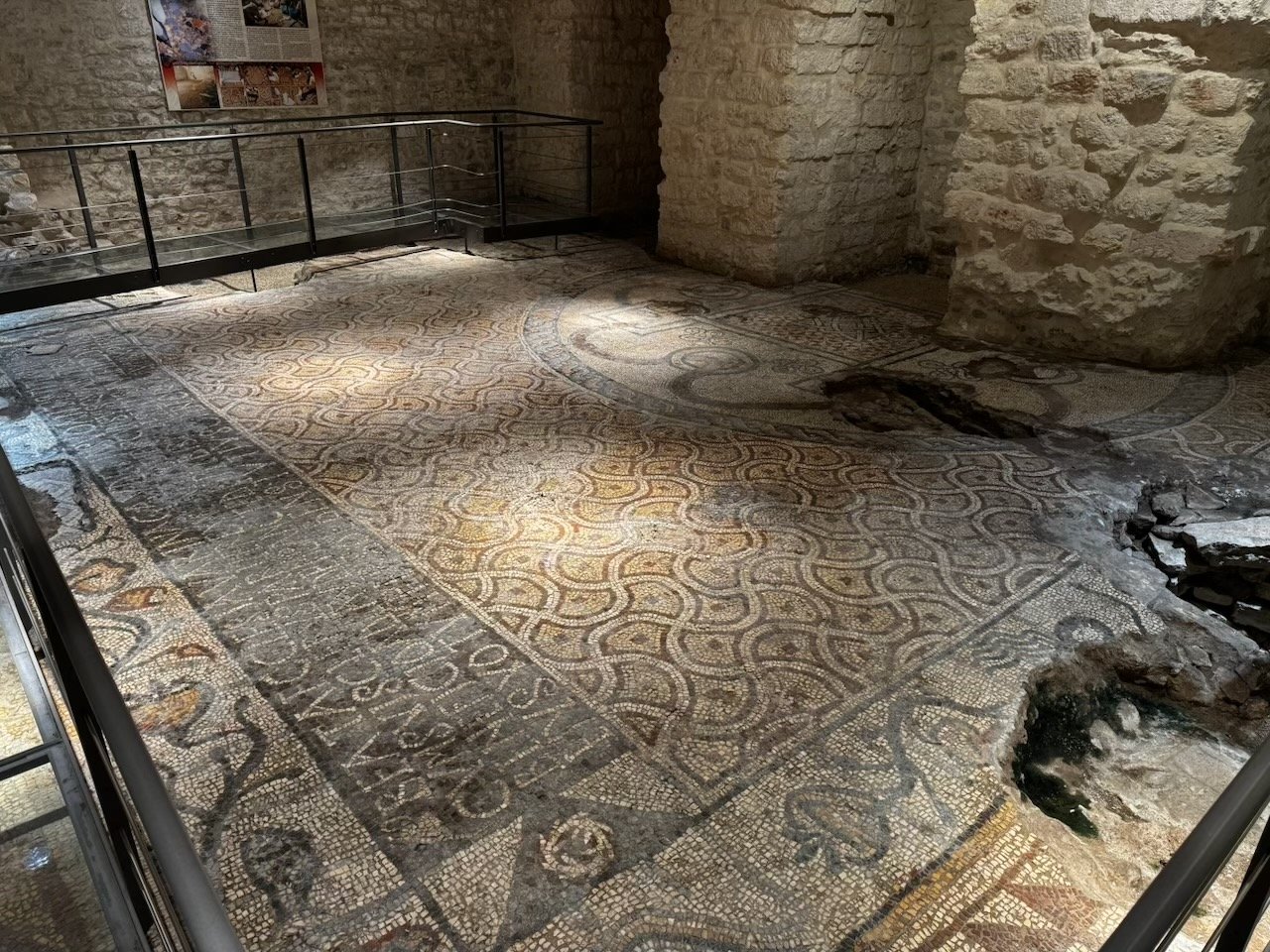
Under the museum is an archeological stroll through history that includes remains from a 5th- to 6th-century paleo-Christian basilica (which includes this impressive "Timoteo's mosaic"), a 9th-century church, tombs from different periods, and a section of Roman road surface. That night we made our fresh orecchiette for dinner in our apartment.