Polignano a Mare
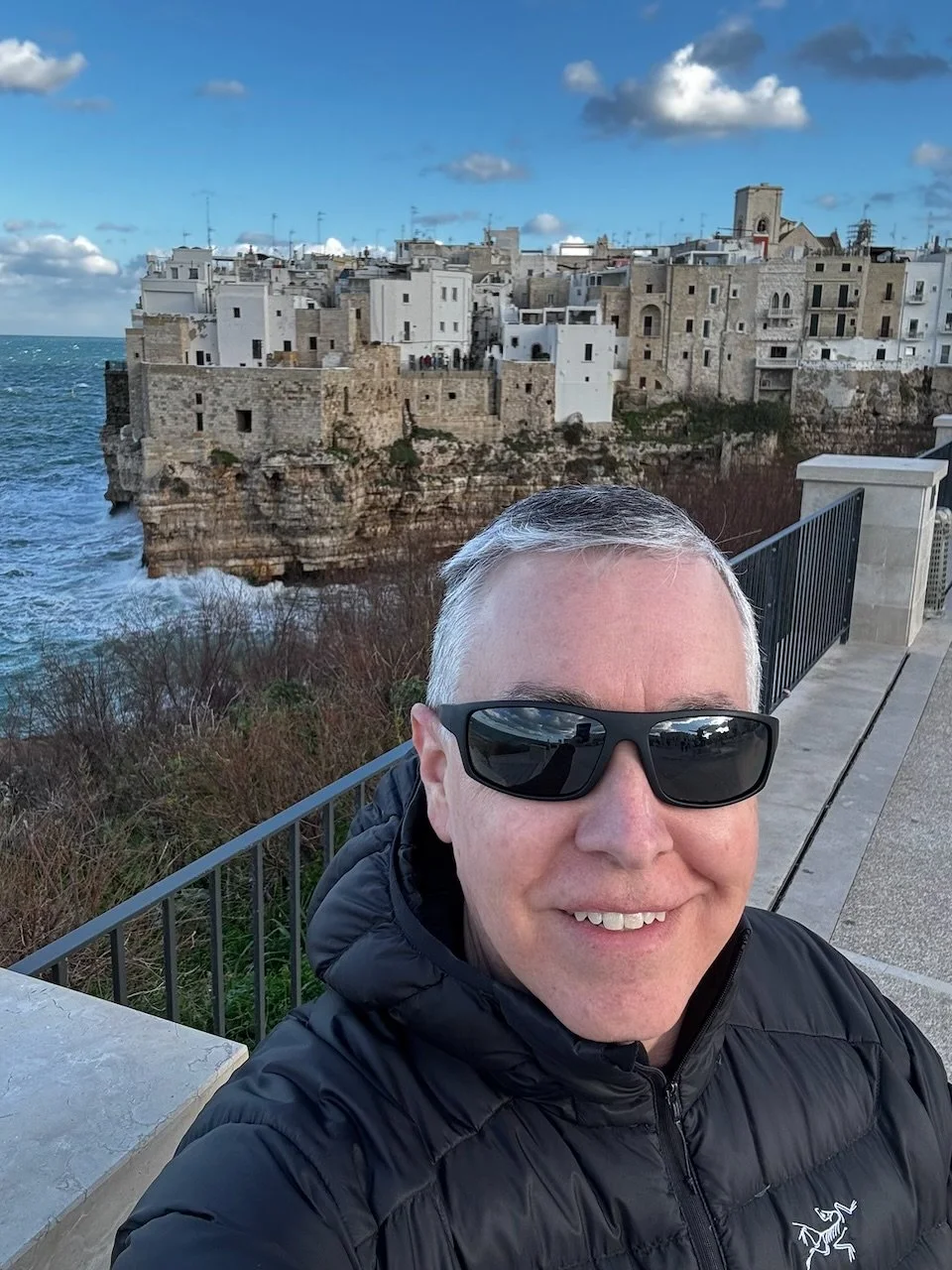
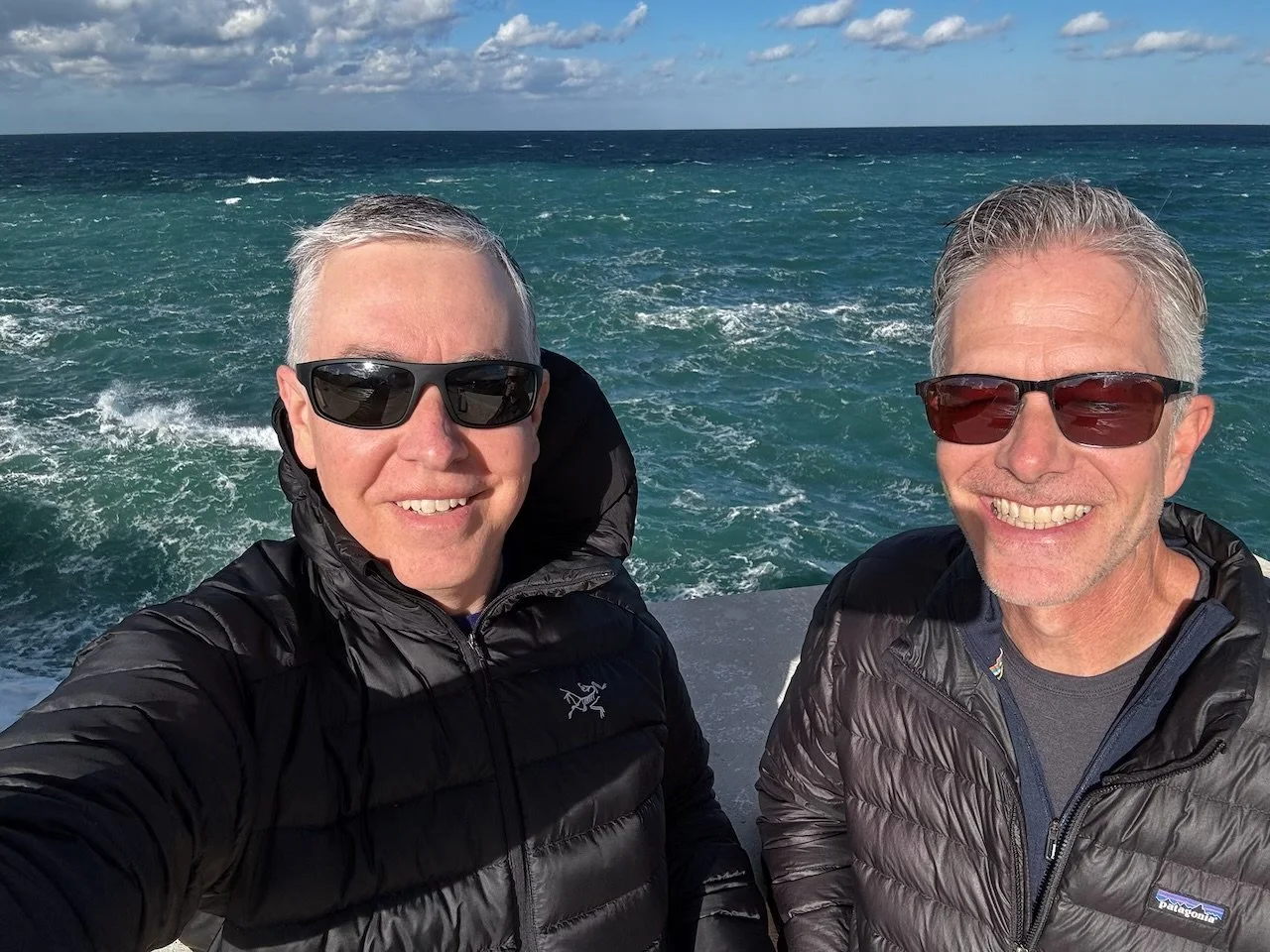
On Sunday, we made a 35-minute train ride south along the coast to the town of Polignano a Mare. Perched on the Adriatic, it’s famed for its white-pebble beaches—though they shine a lot more on a warm summer day than they did today, with a chilly wind whipping in off the water.
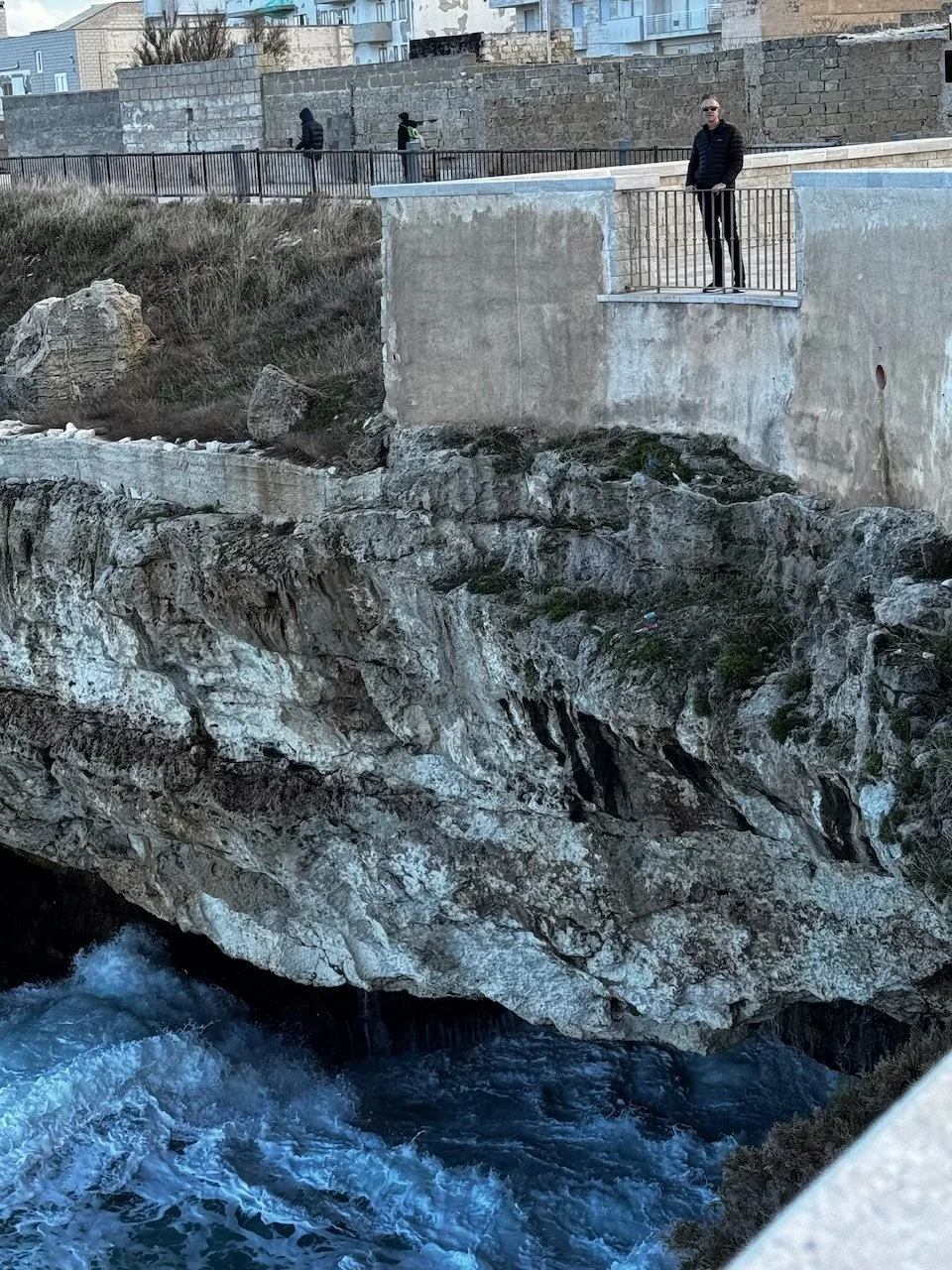
Polignano is also well known for its many sea caves.
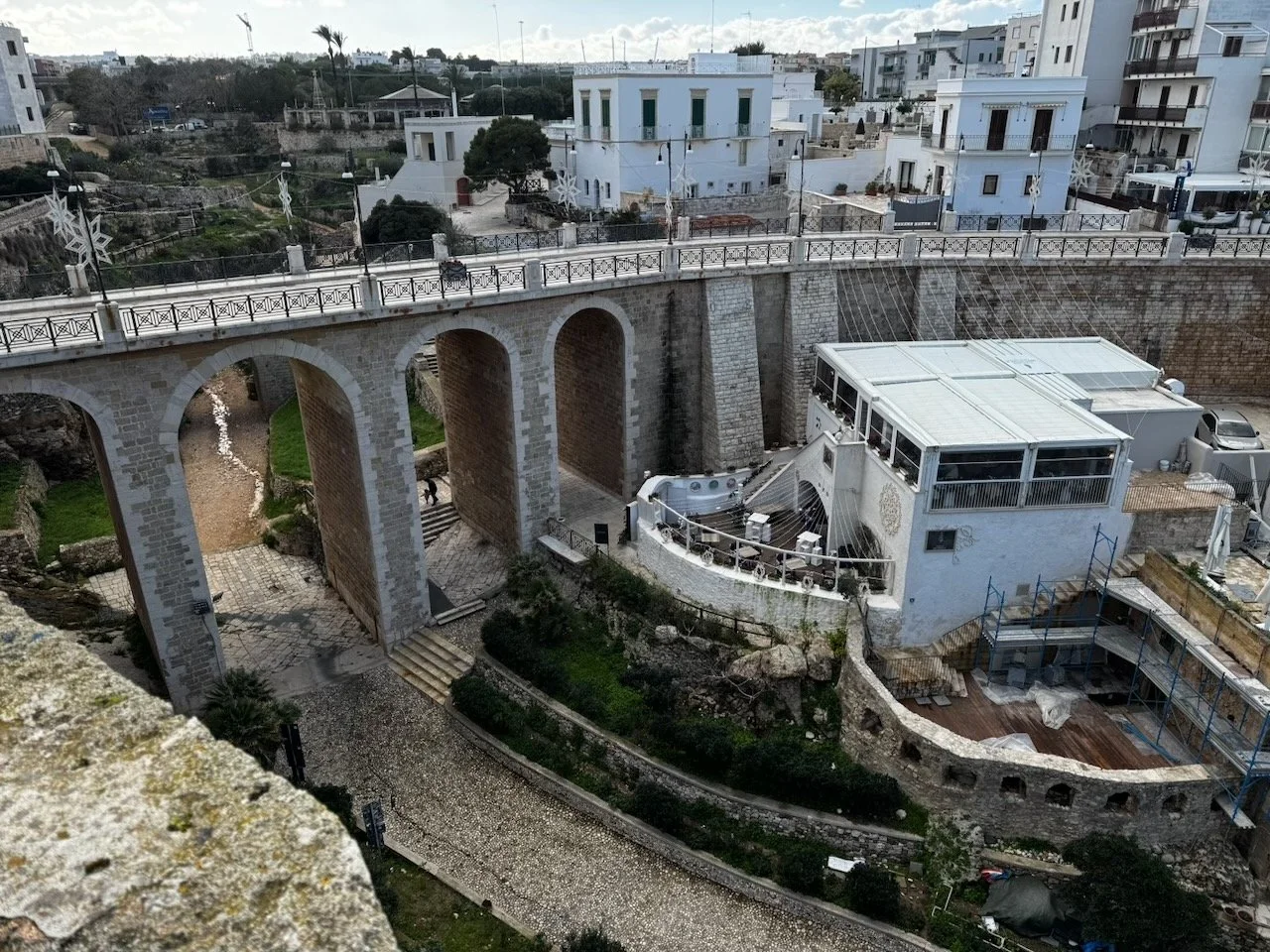
Polignano a Mare's iconic "Roman bridge" is actually the Ponte Borbonico (Bourbon Bridge). While it looks ancient, this bridge was built in the 1800s, but it stands directly over the original Roman bridge that was part of the Via Traiana, an ancient Roman road built by Emperor Trajan (109 CE). We ate lunch in the low, covered patio near the top right of the image.
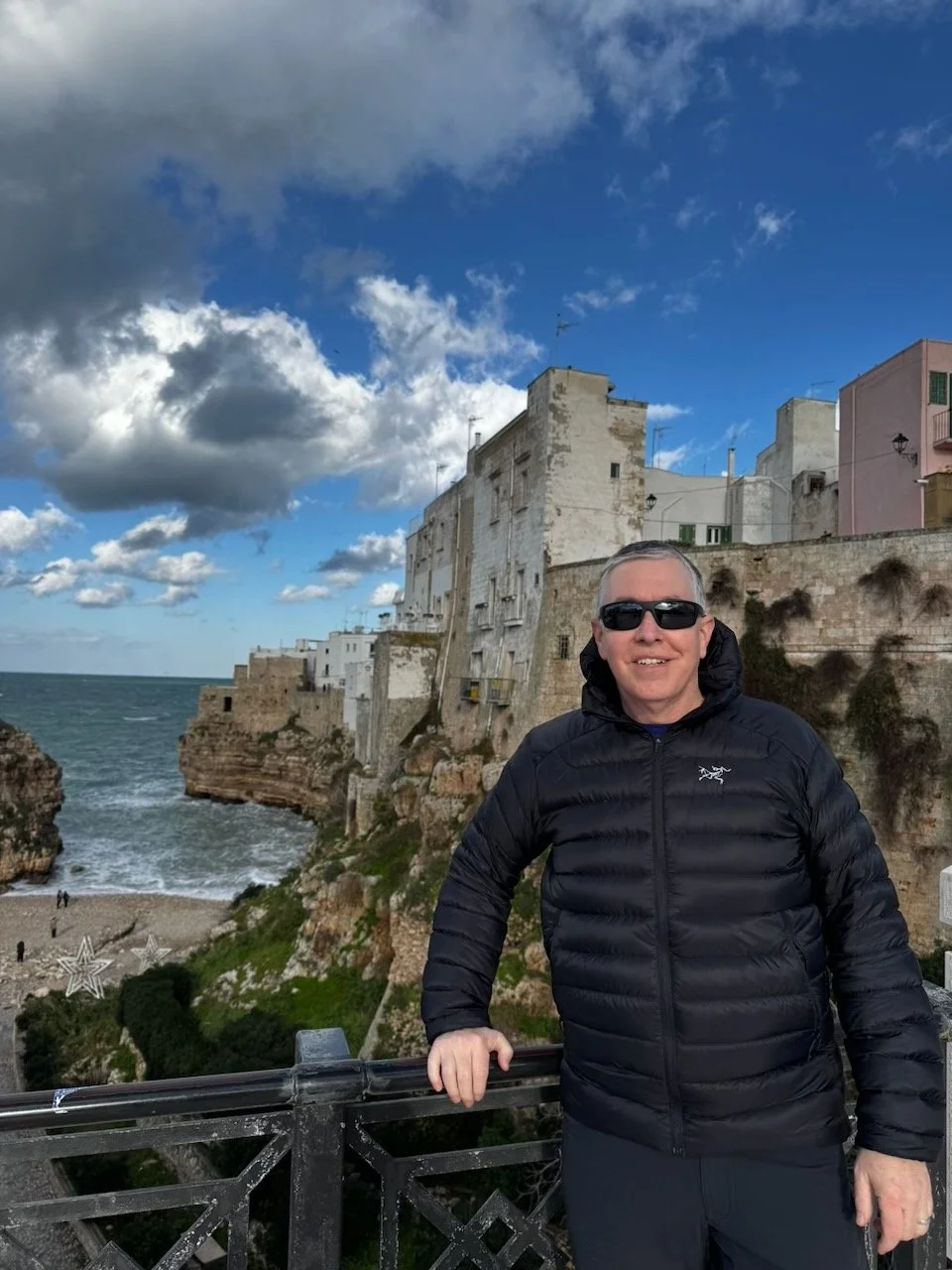
Standing on the bridge with the famous Lama Monachile (aka Cala Porto) beach below.
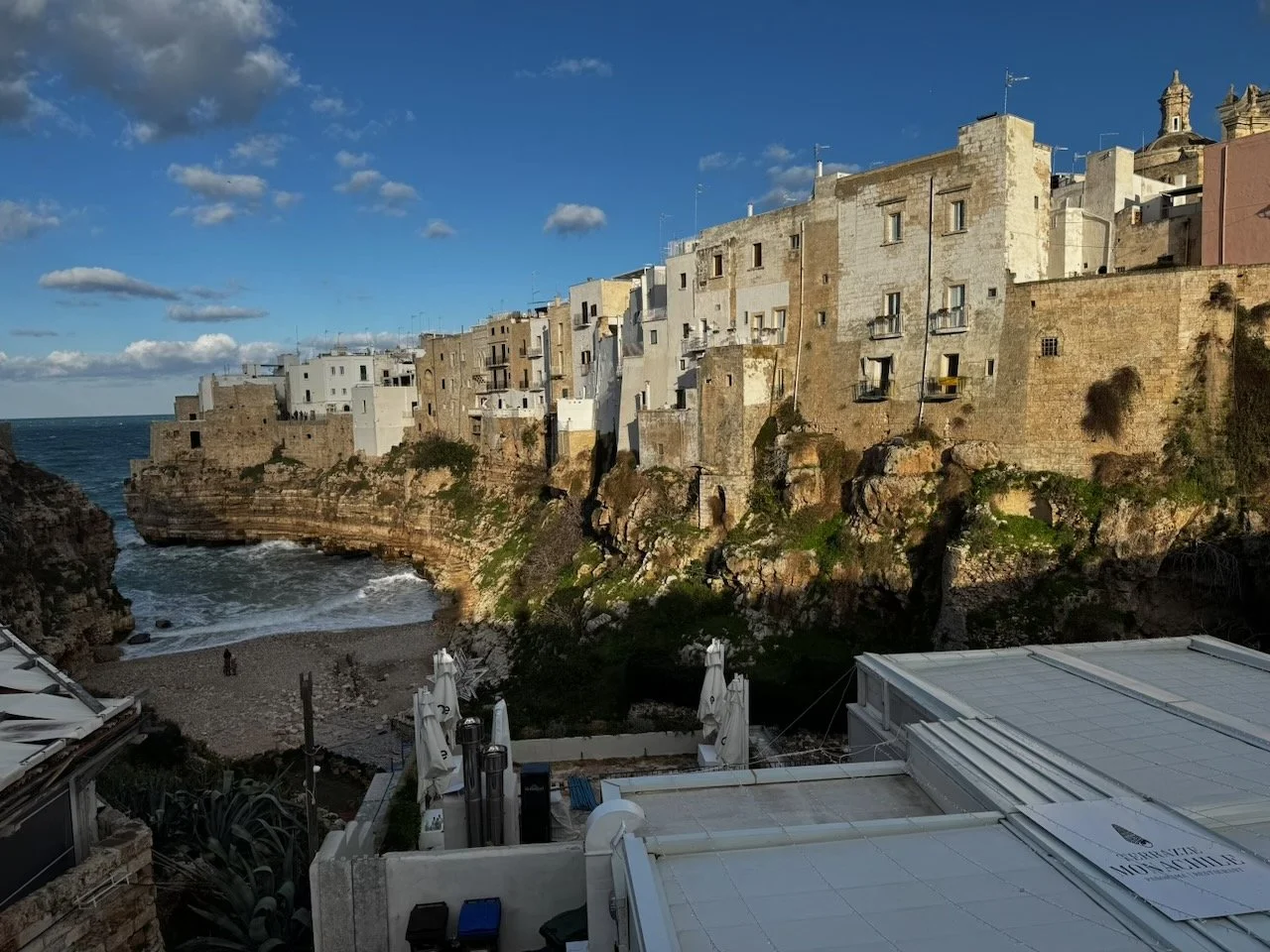
The deeply romantic old town buildings rise high above the cove.
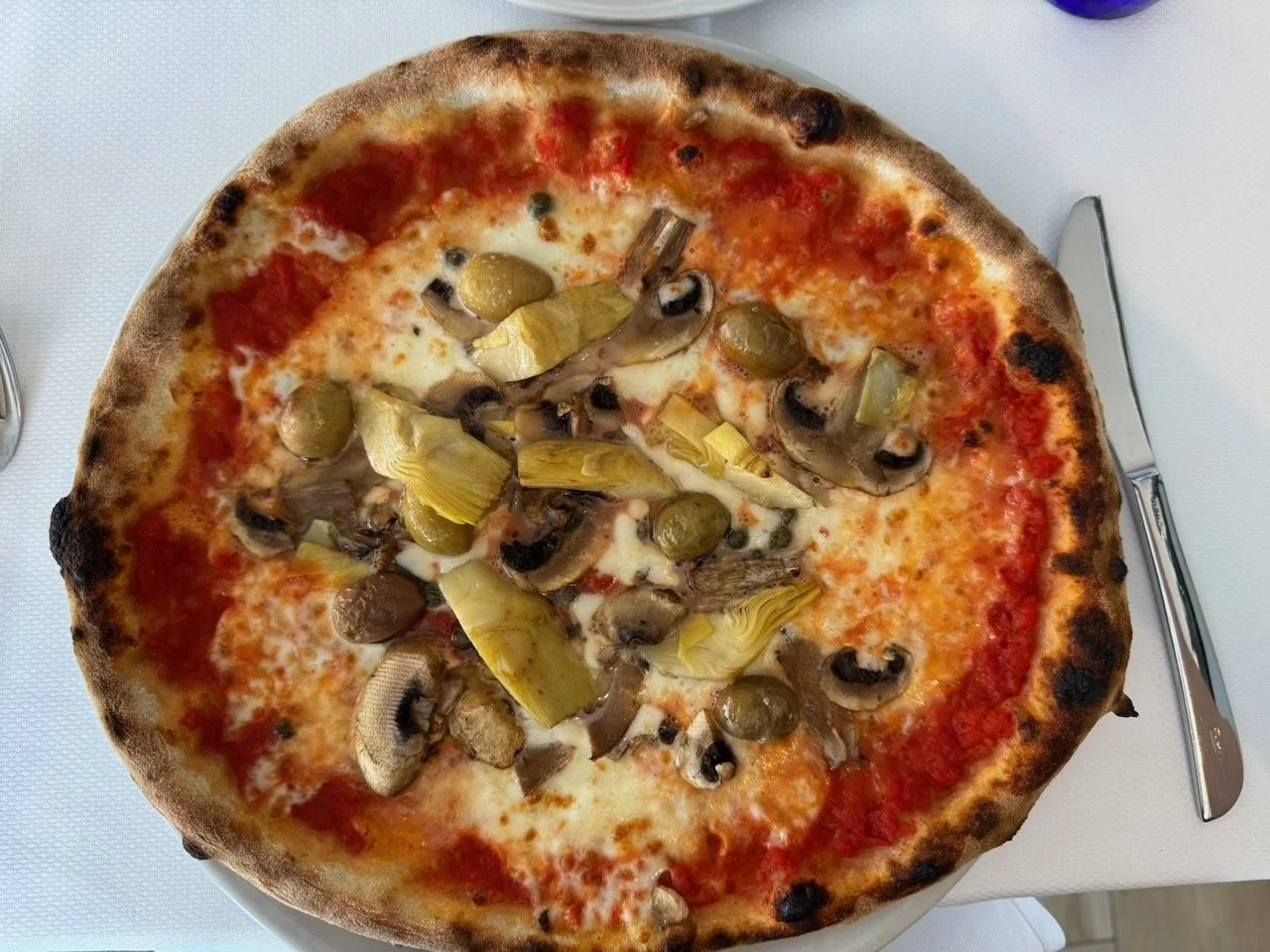
As mentioned above, we ate lunch at Via Terrazzo. Their pizza was delicious, but…
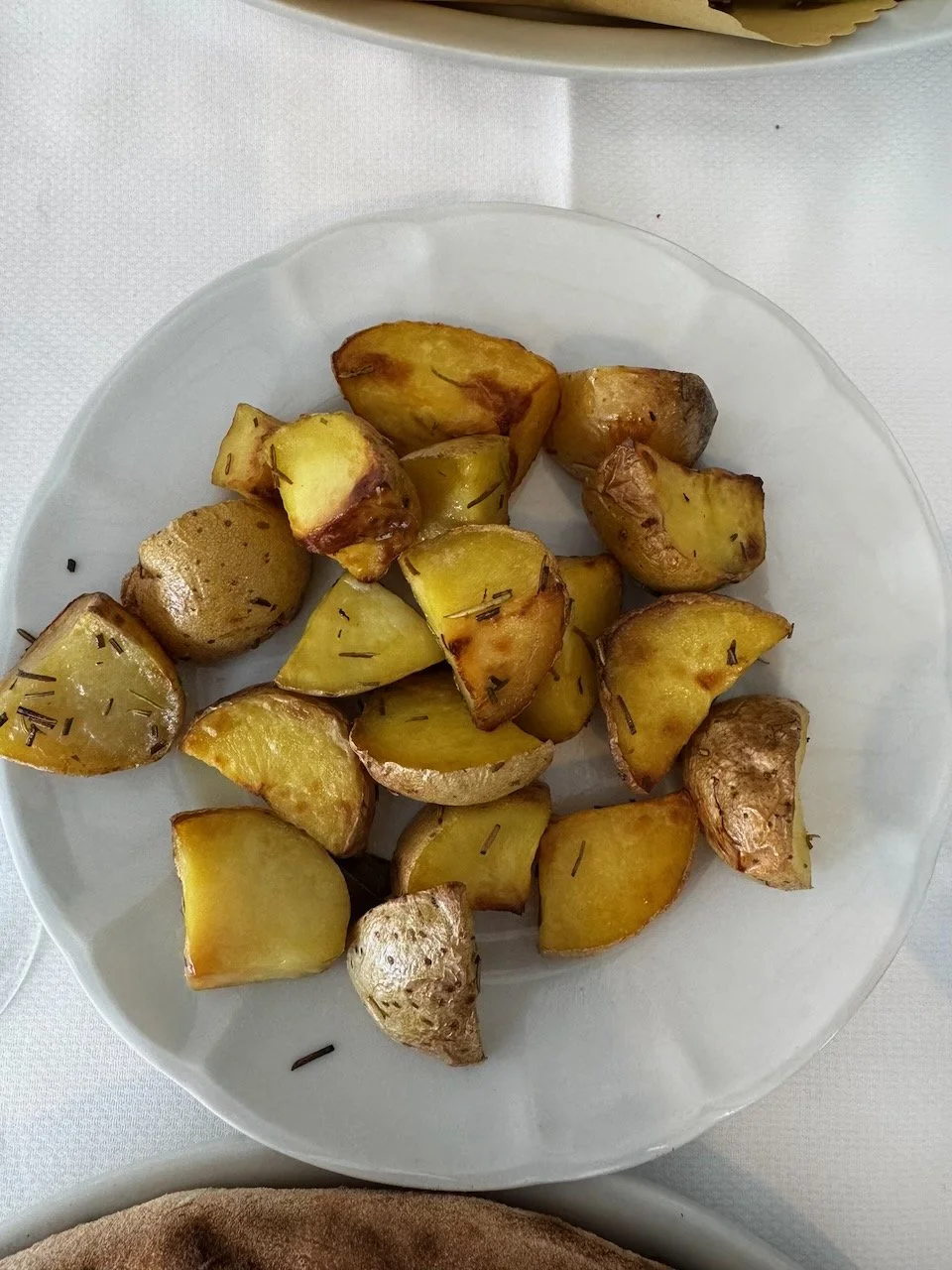
…I must say, the roasted potatoes stole the show!
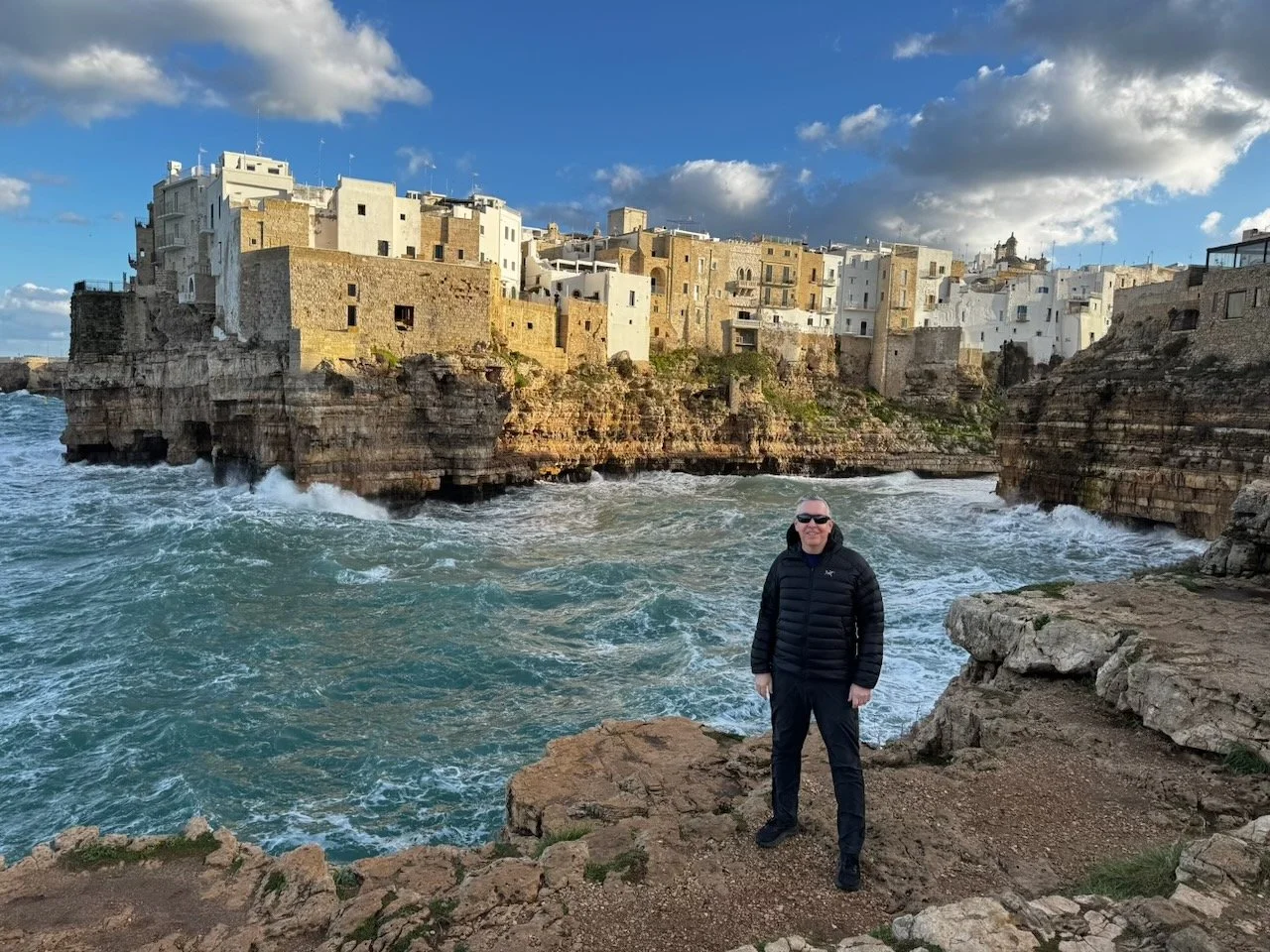
Pendma Chiatt, also known as Pietra Piatta (flat stone), offers stunning panoramic views of the old town perched on limestone cliffs and Cala Porto (beach).
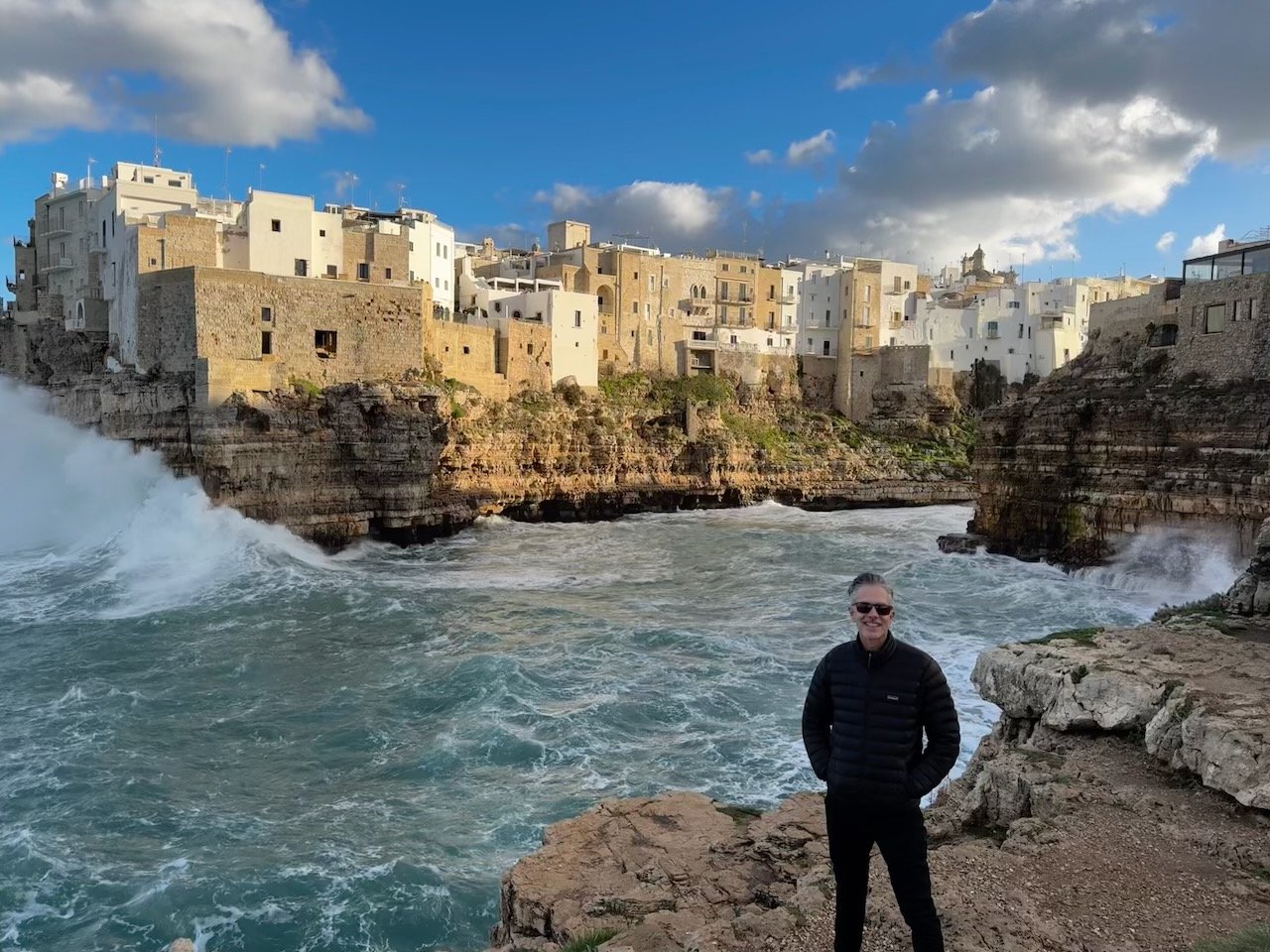
The wind whipped up some big waves and I managed to capture a pretty dramatic one crashing into the cliffside while taking Dave’s picture.
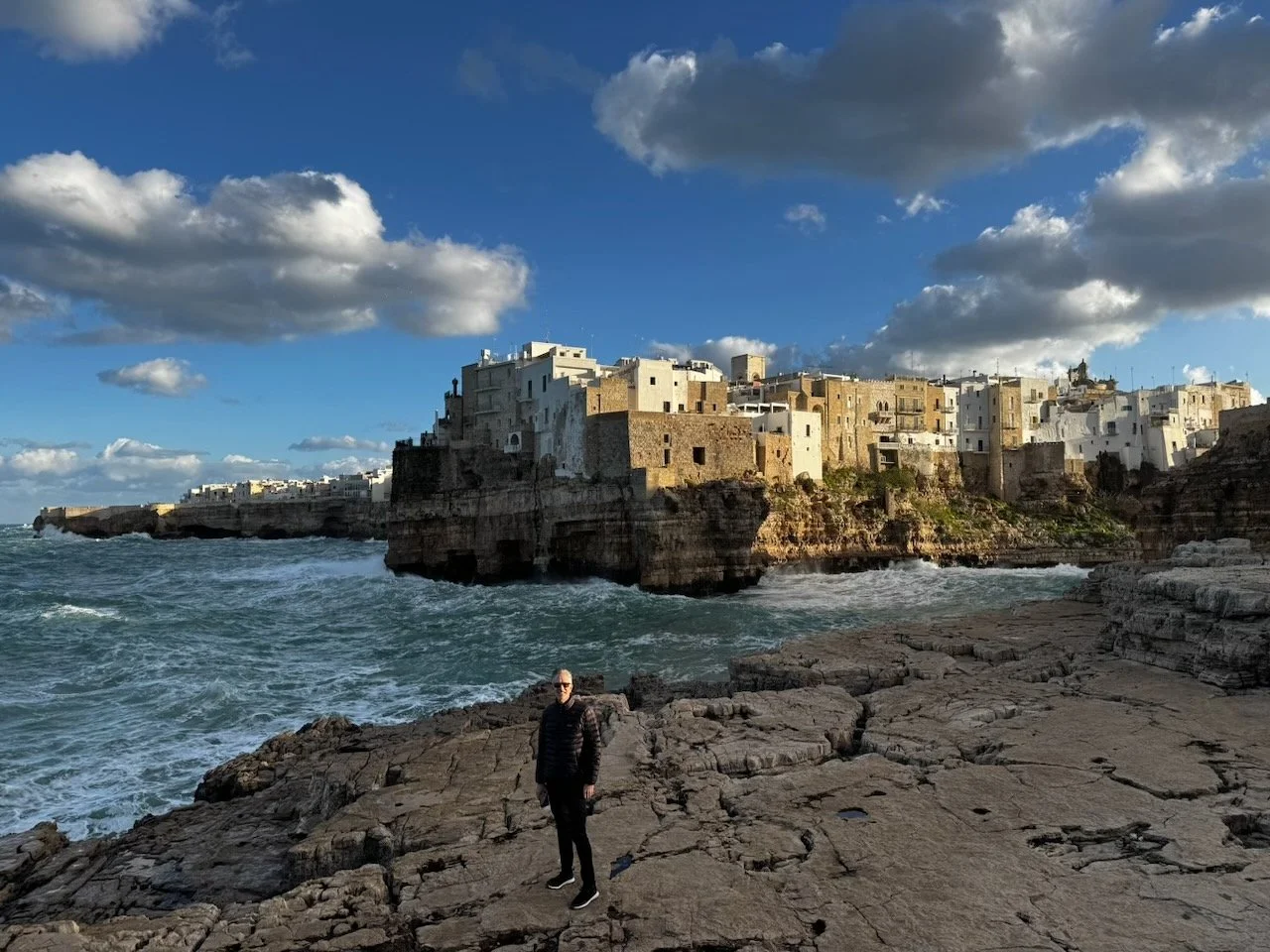
Quite the atmospheric spot! I can only imagine it at sunset!
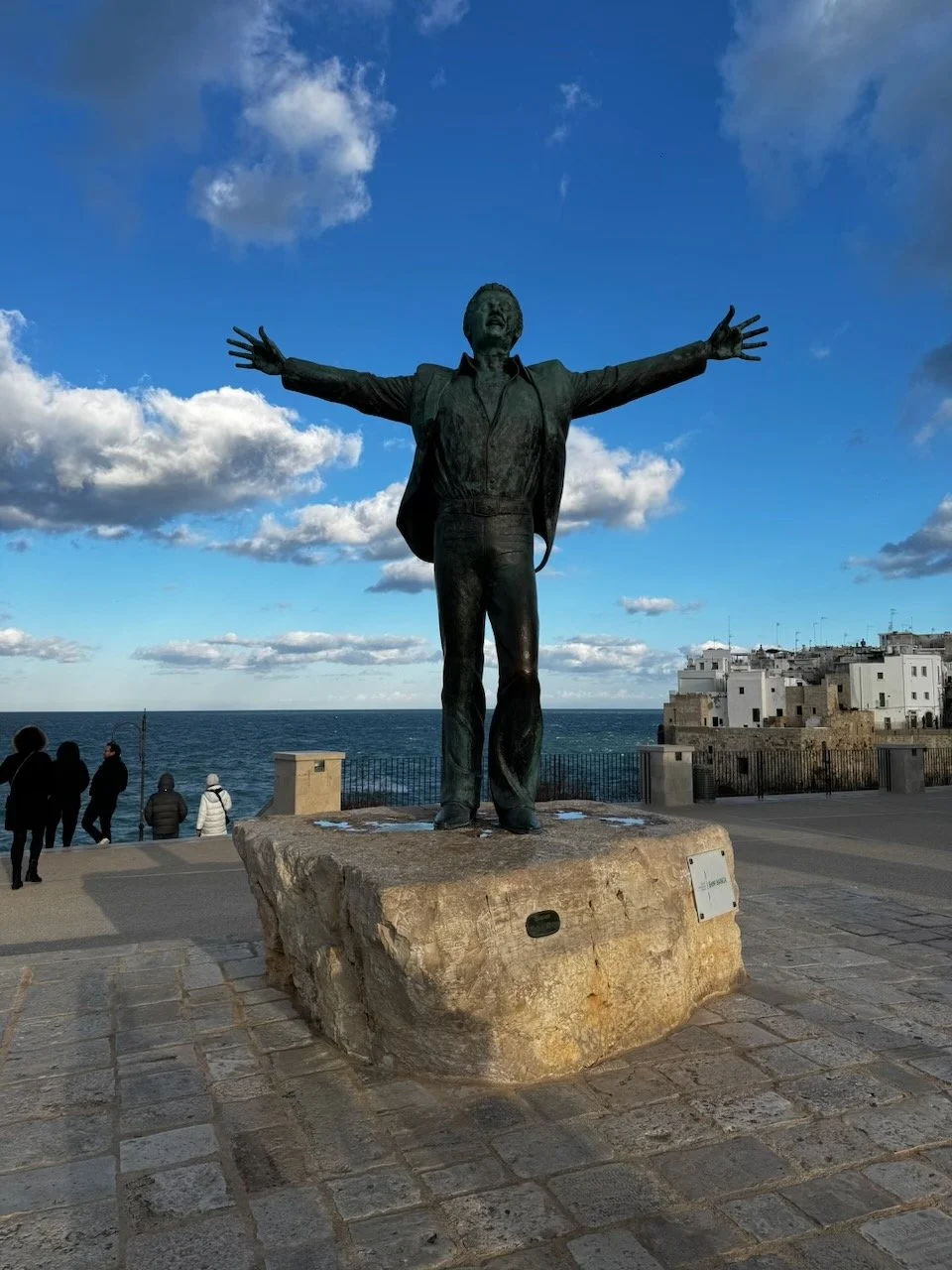
Monument to Domenico Modugno who was an Italian singer, actor, and, later in life, a member of the Italian Parliament. He is known for his 1958 international hit song “Volare (Nel blu dipinto di blu)," for which he received the first Grammy Awards for Record of the Year and Song of the Year. Modugno was born in Polignano a Mare on January 9, 1928. Turns out we were two days late for his 98th birthday anniversary. Time to escape the wind and head back to Bari.