Alberobello & Matera
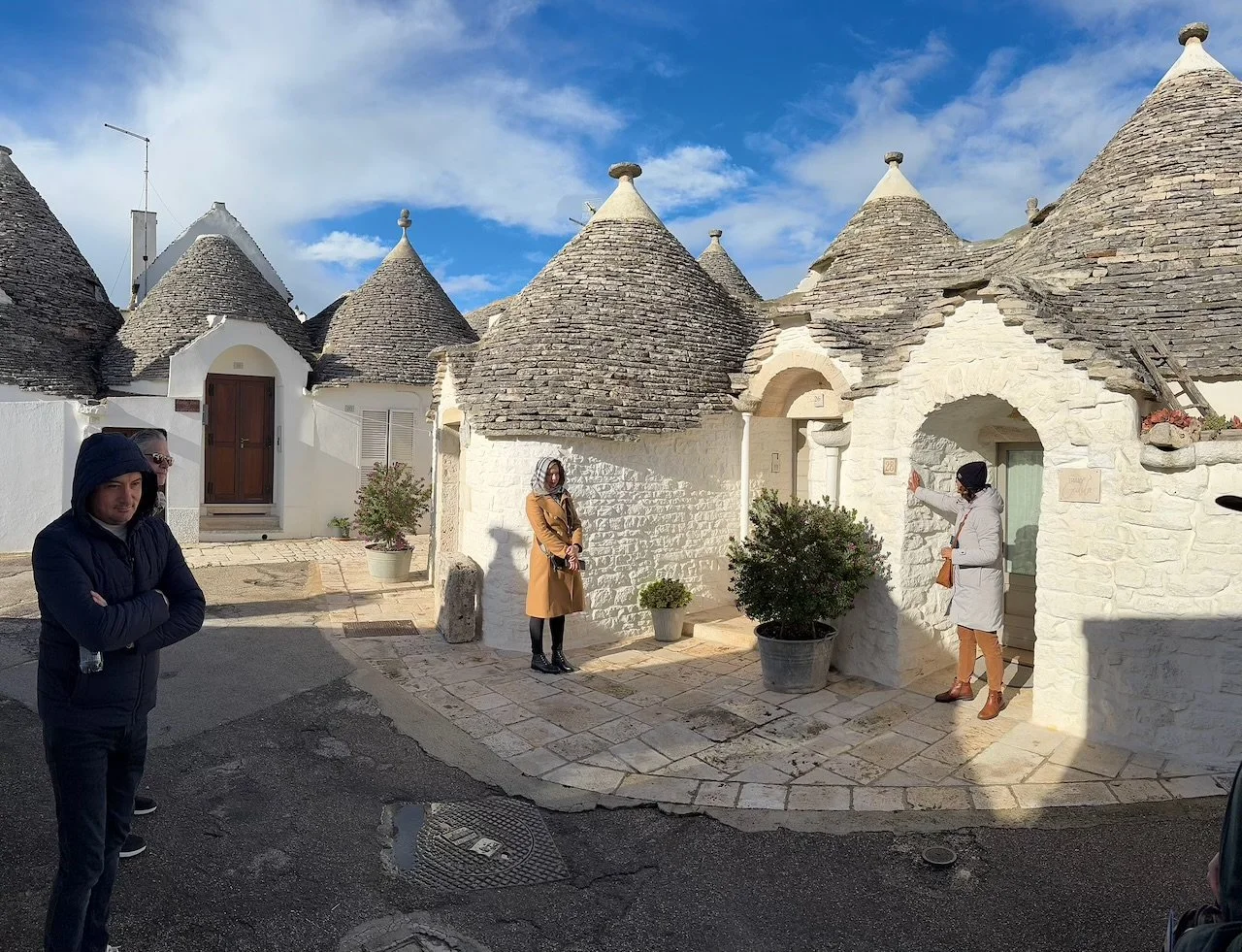
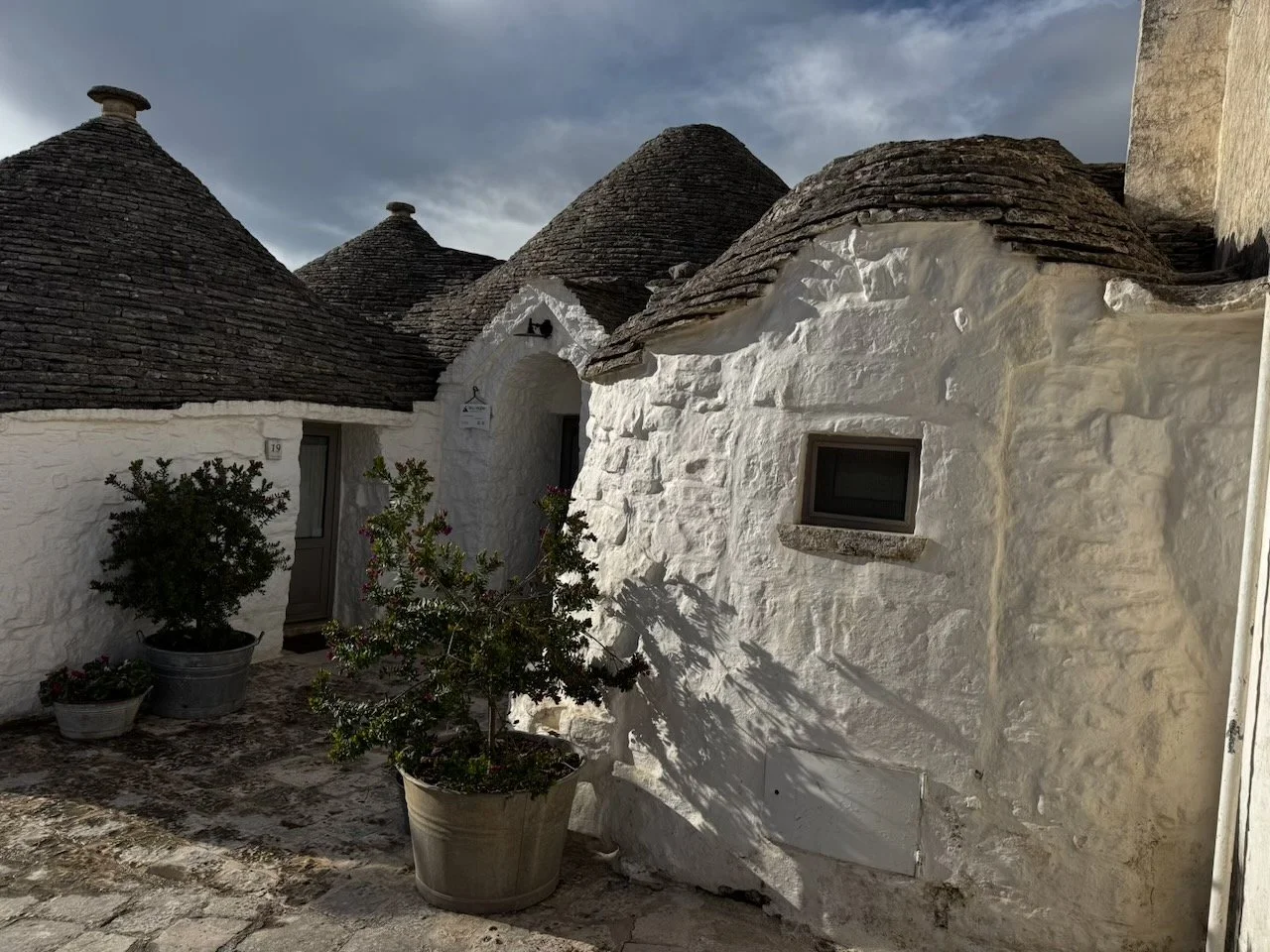
Dave booked us a bus tour that took us from Bari to Alberobello and then Matera. These distinctive whitewashed stone huts featuring conical, dry-stack stone roofs are a hallmark of rural Puglia (Apulia), in southern Italy, particularly in the countryside between Bari, Brindisi, and Taranto.
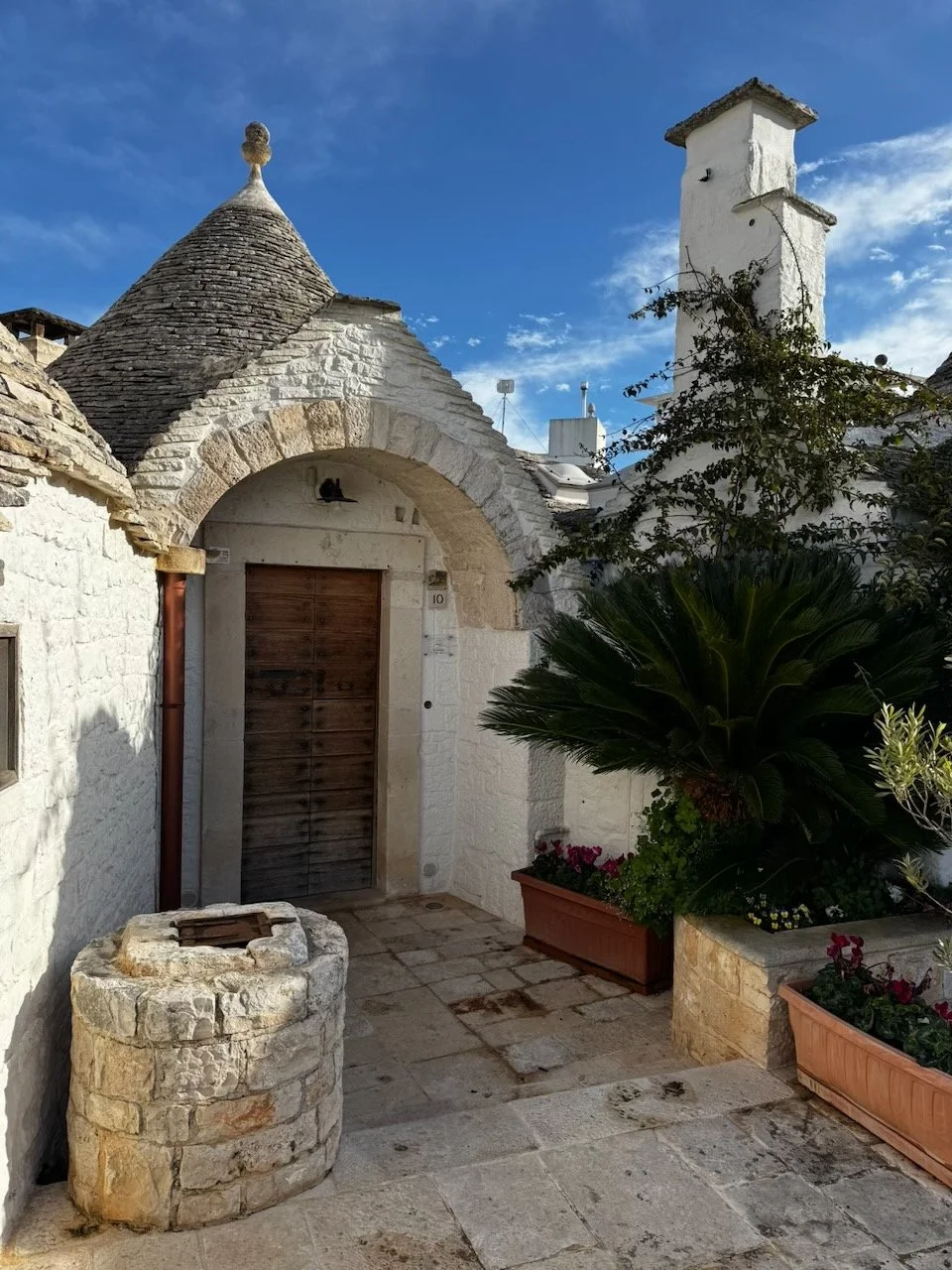
The name “trullo” (plural “trulli”) comes from a mix of Latin and local dialect roots, most commonly traced to the Latin word turris, meaning “tower.” The name essentially refers to their tower-like form, even though trulli are small rural dwellings rather than actual towers.
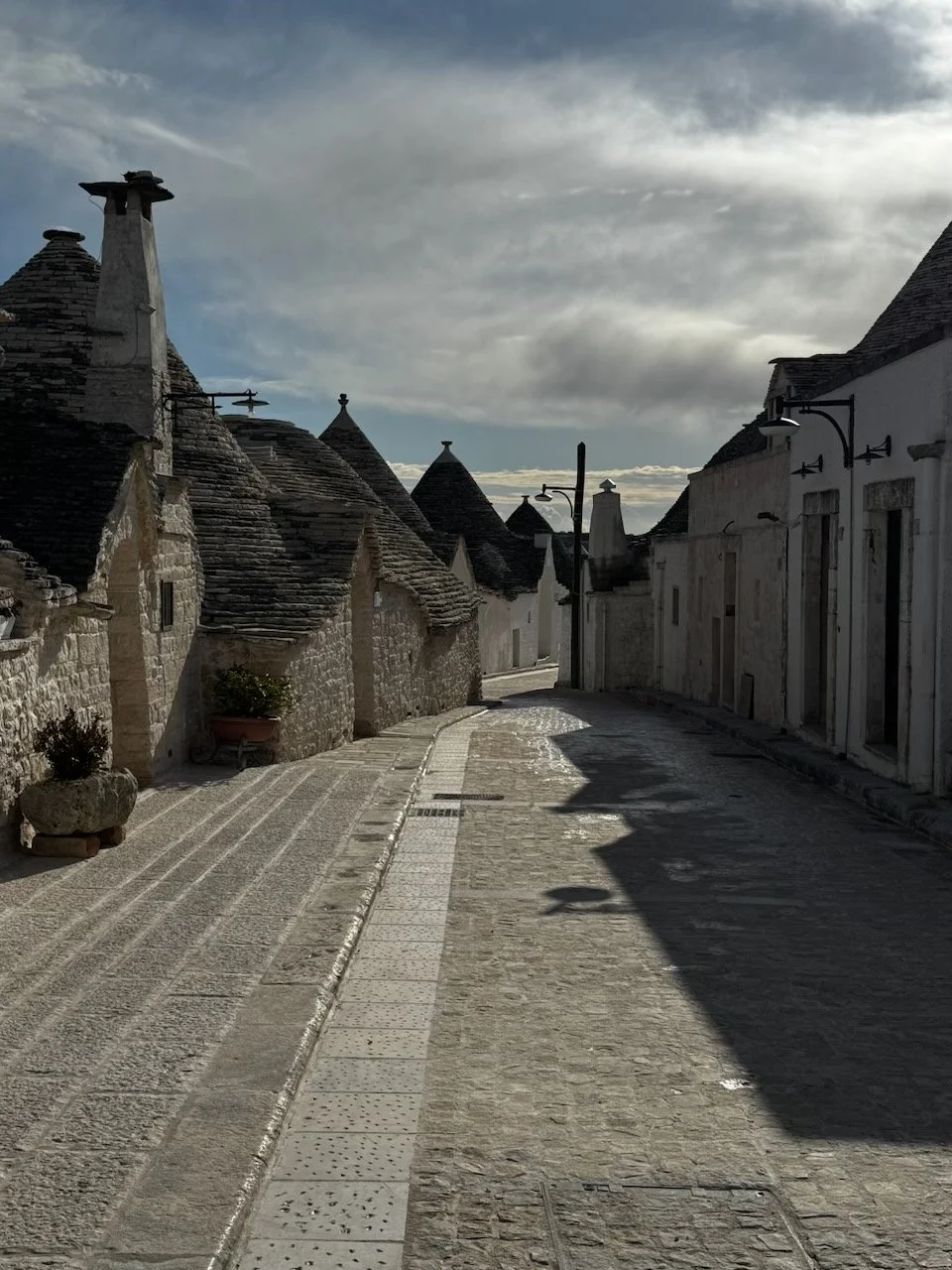
Alberobello is the most famous trulli town and a UNESCO World Heritage Site.
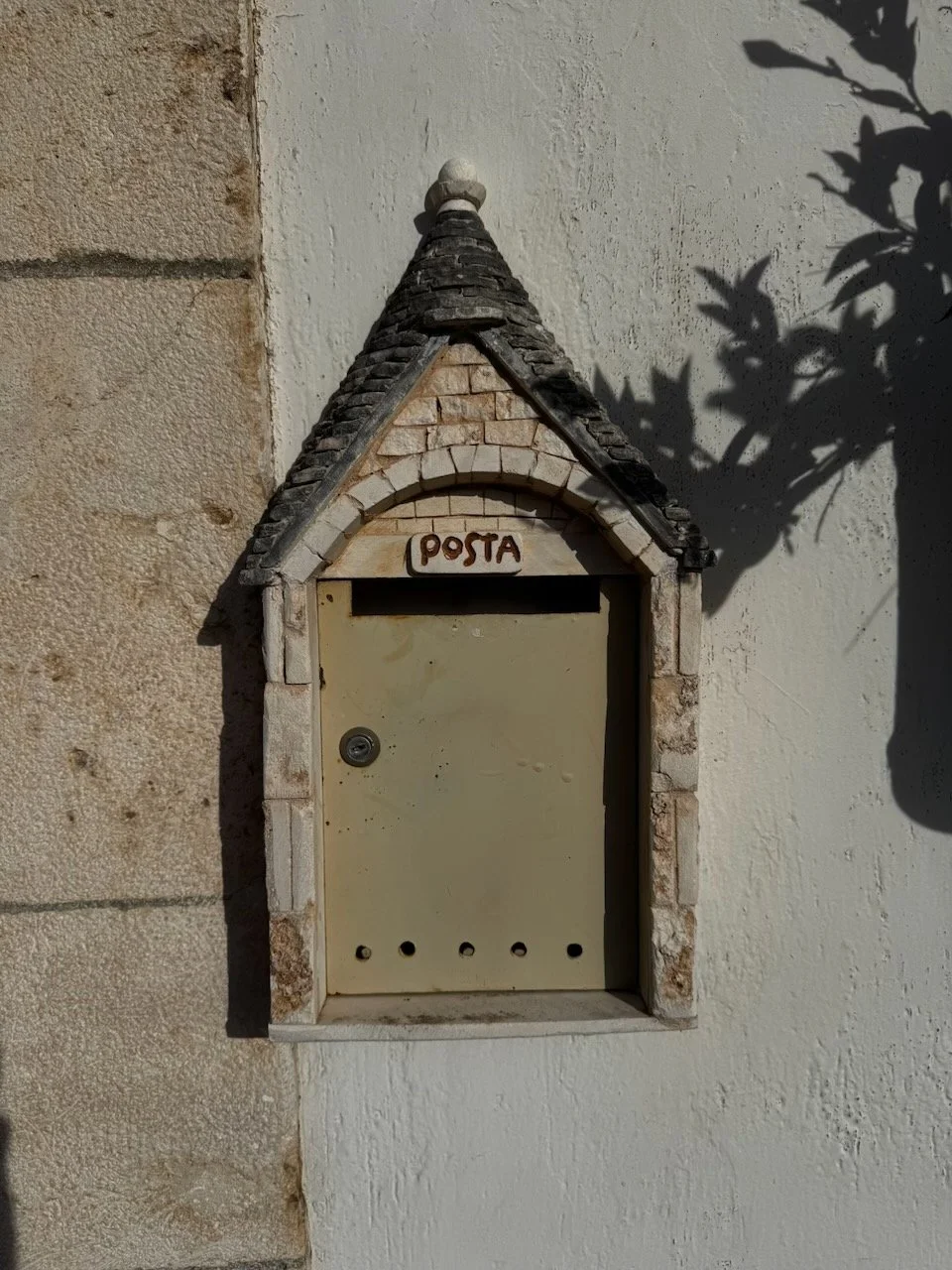
A trullo mailbox.
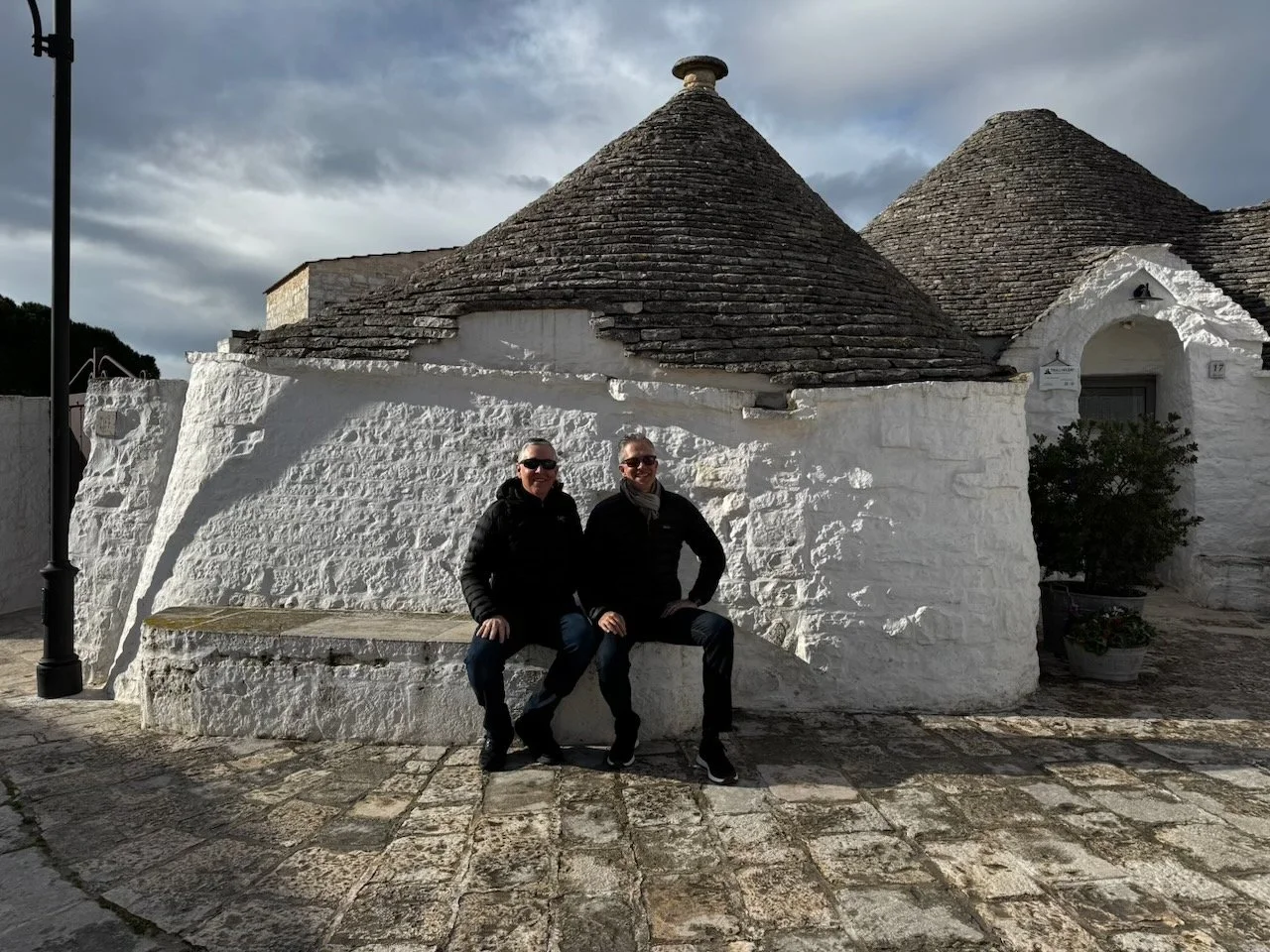
The Trulli Brothers
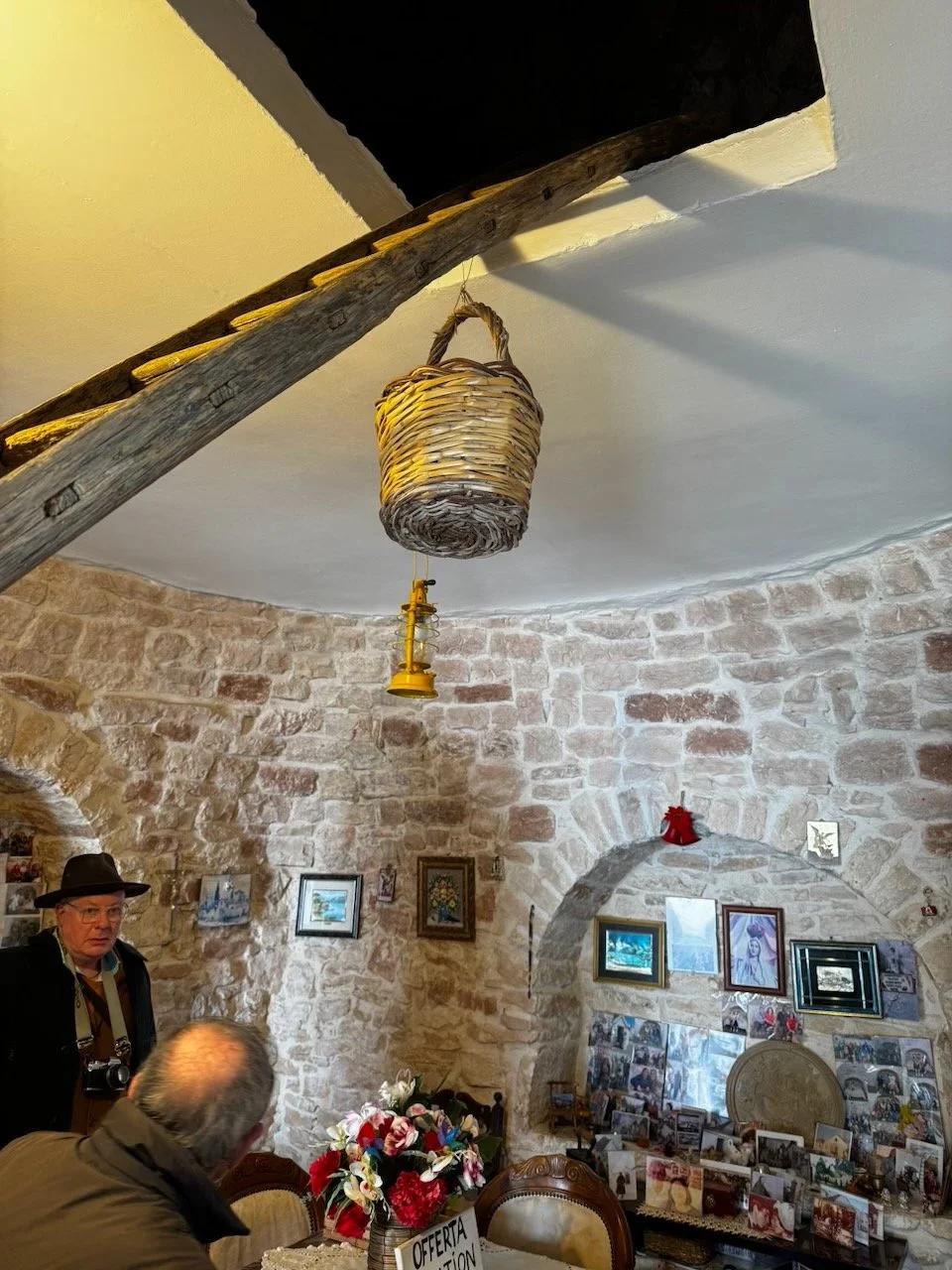
A ladder provides access to an upper level of most trulli, where supplies may be kept and children often slept.
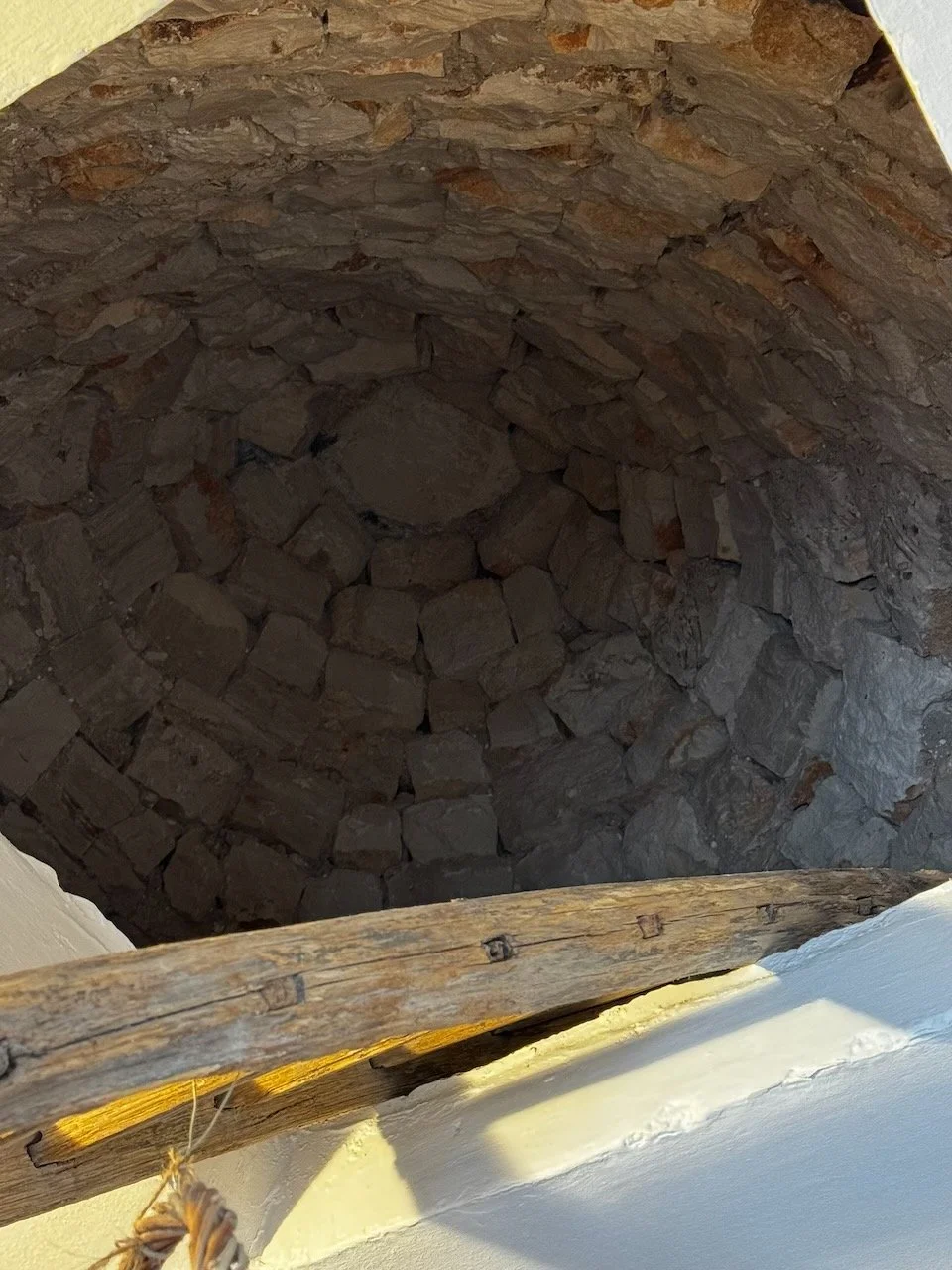
The view up into a trullo loft.
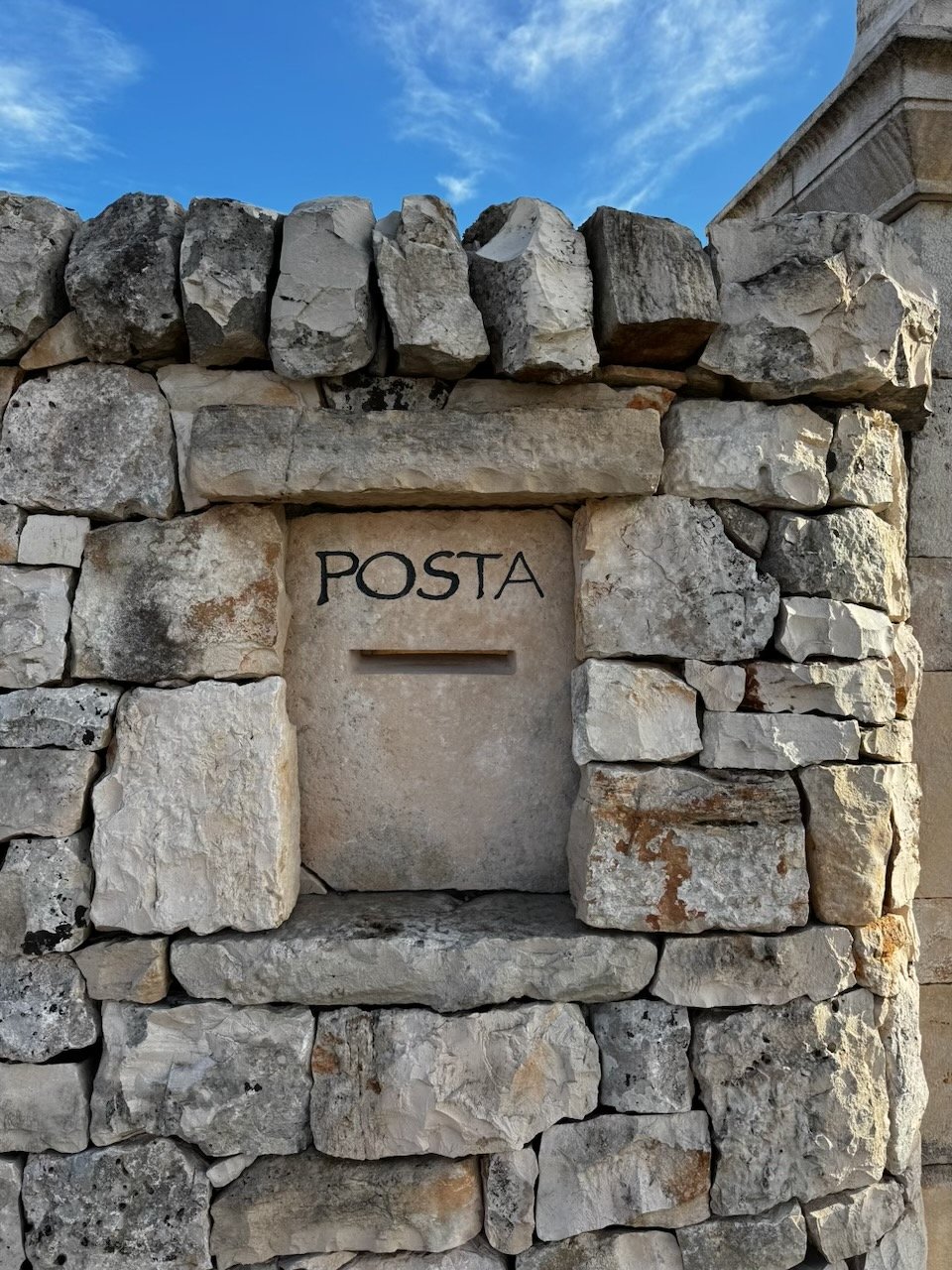
I absolutely loved this all-stone mailbox!
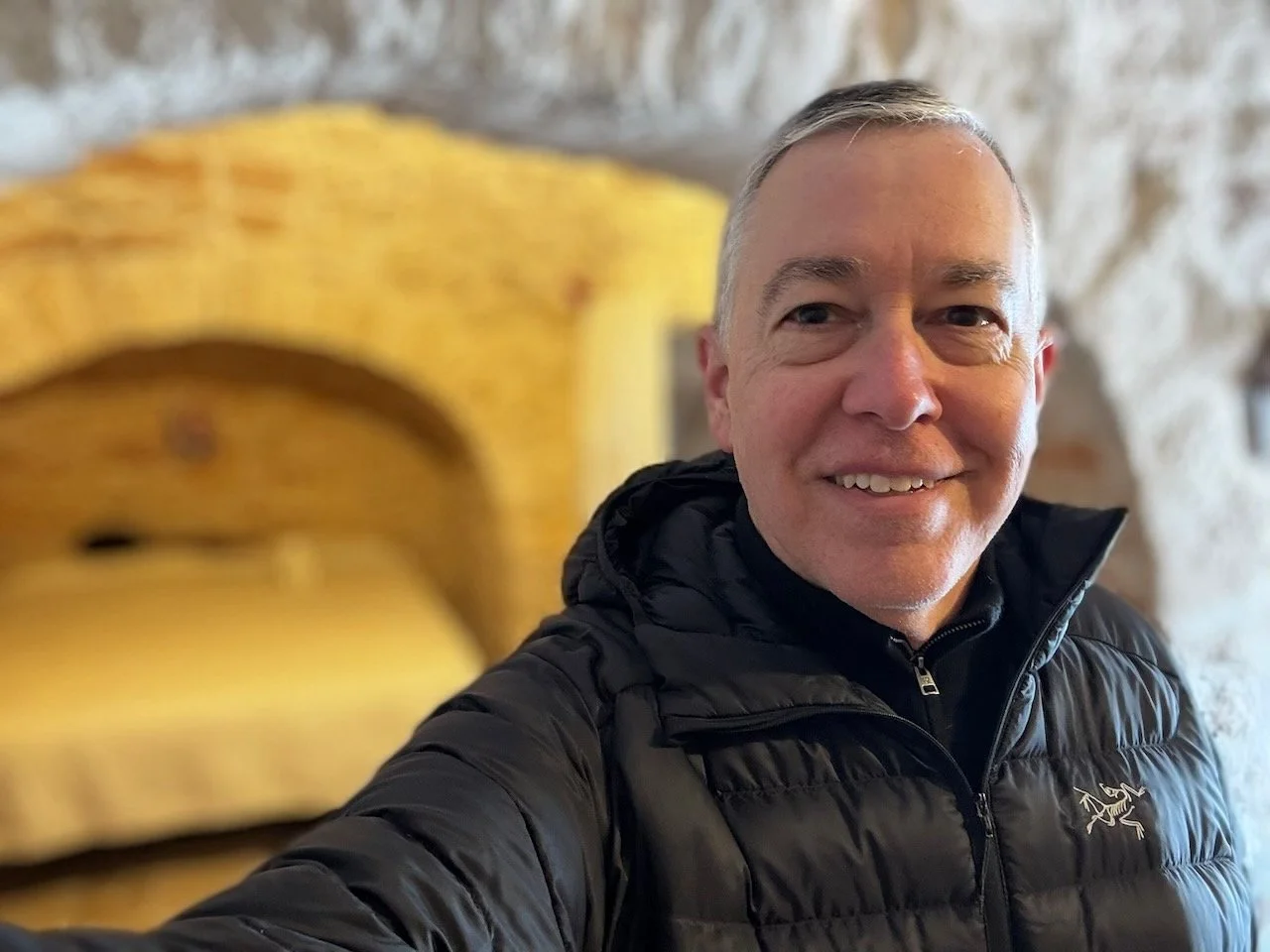
A bedroom inside a trullo.
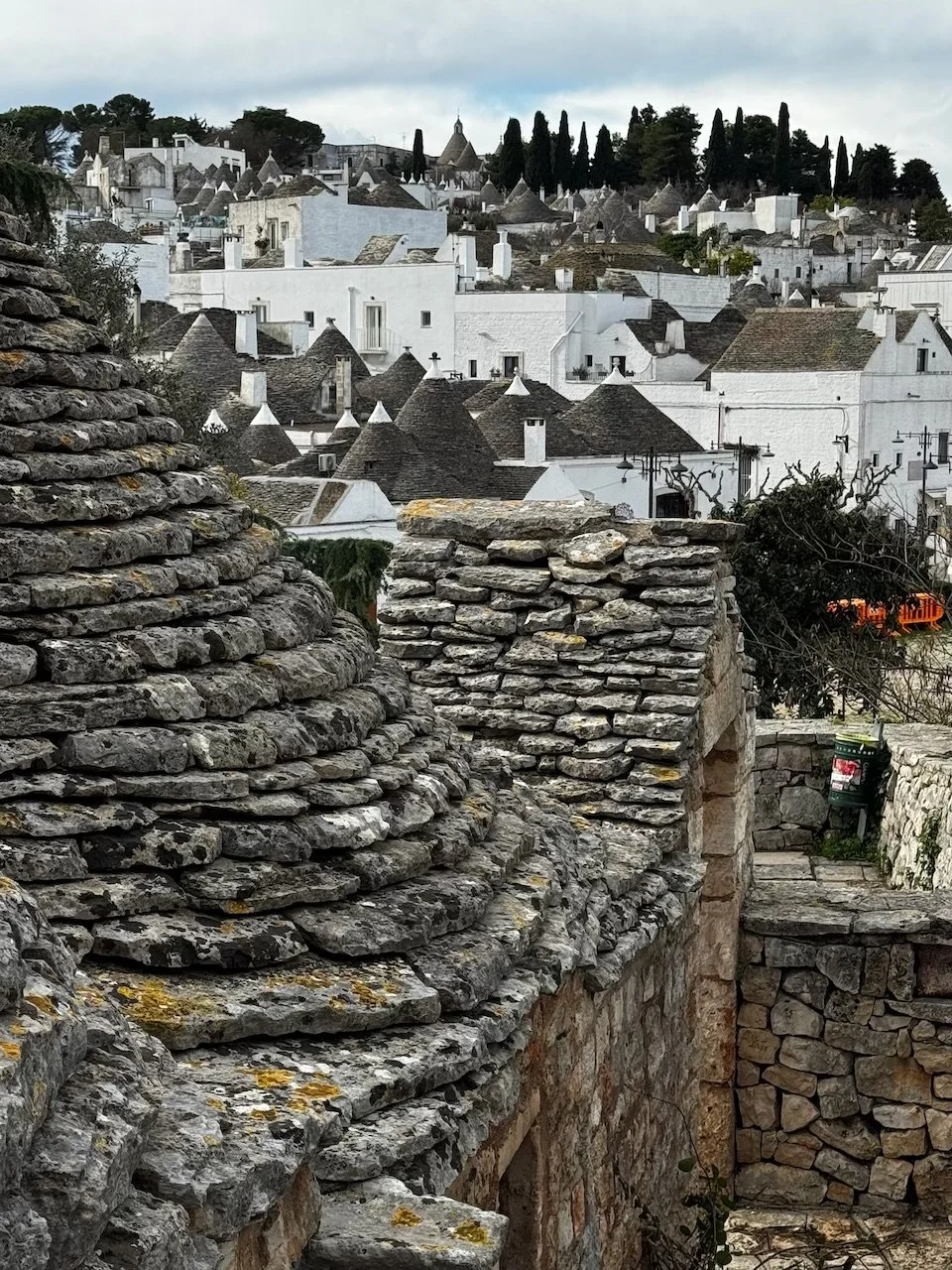
Our tour focused on the more residential northern side of town. Afterward, we wandered over to the more touristy southern side, seen here in the distance.
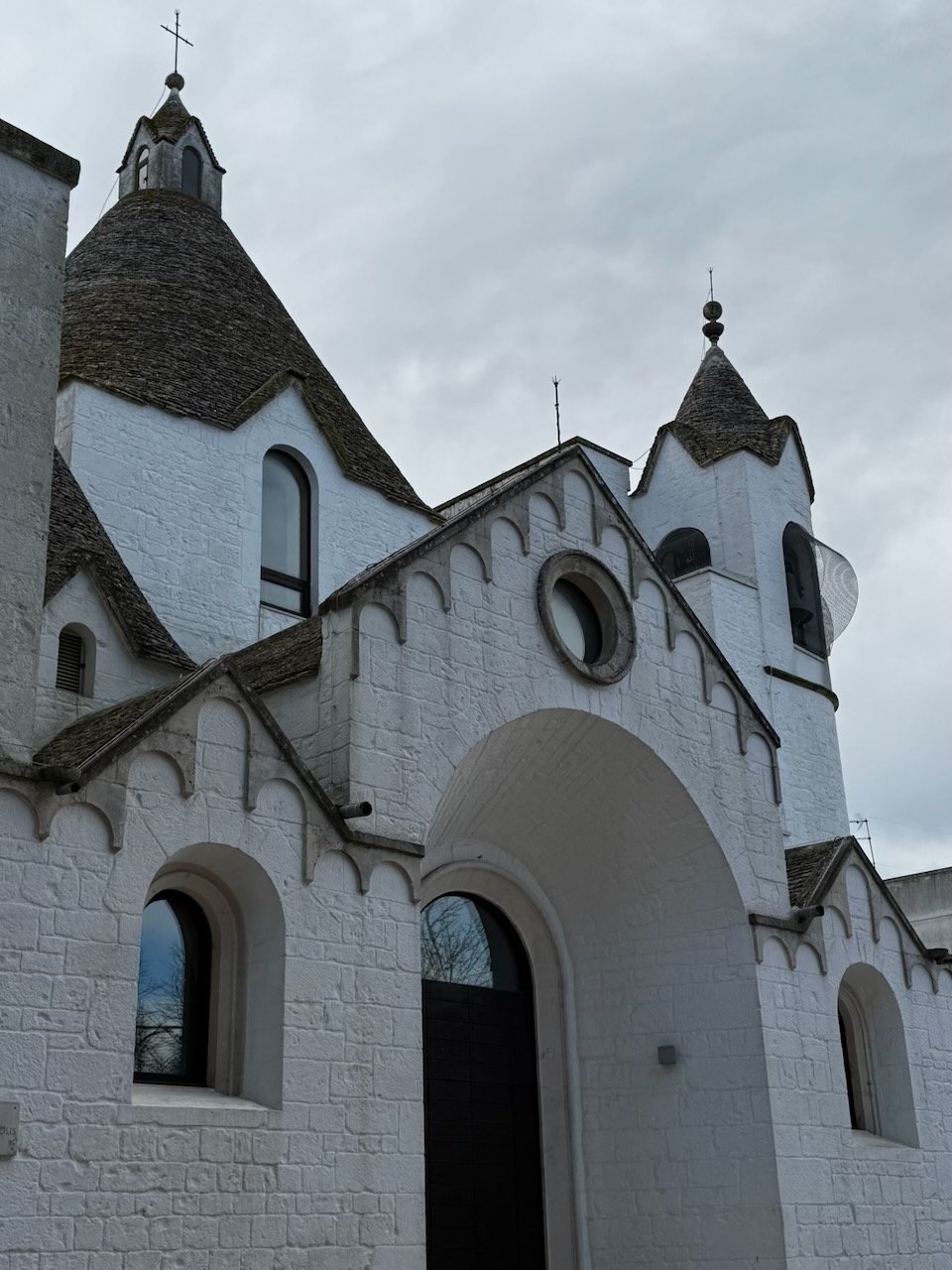
A trullo-inspired Catholic church.
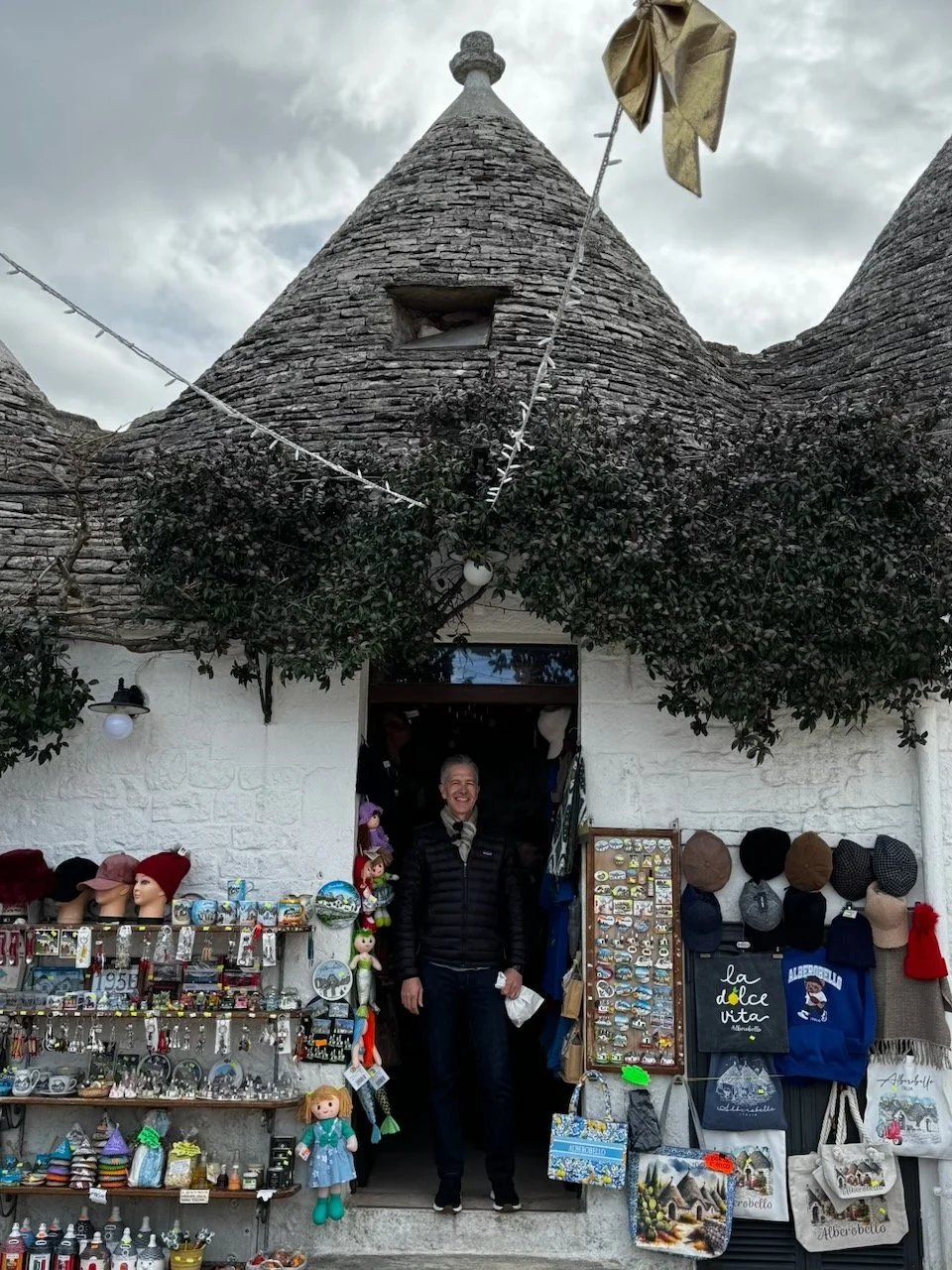
Dave having just purchased a trullo-inspired creche for Christa.
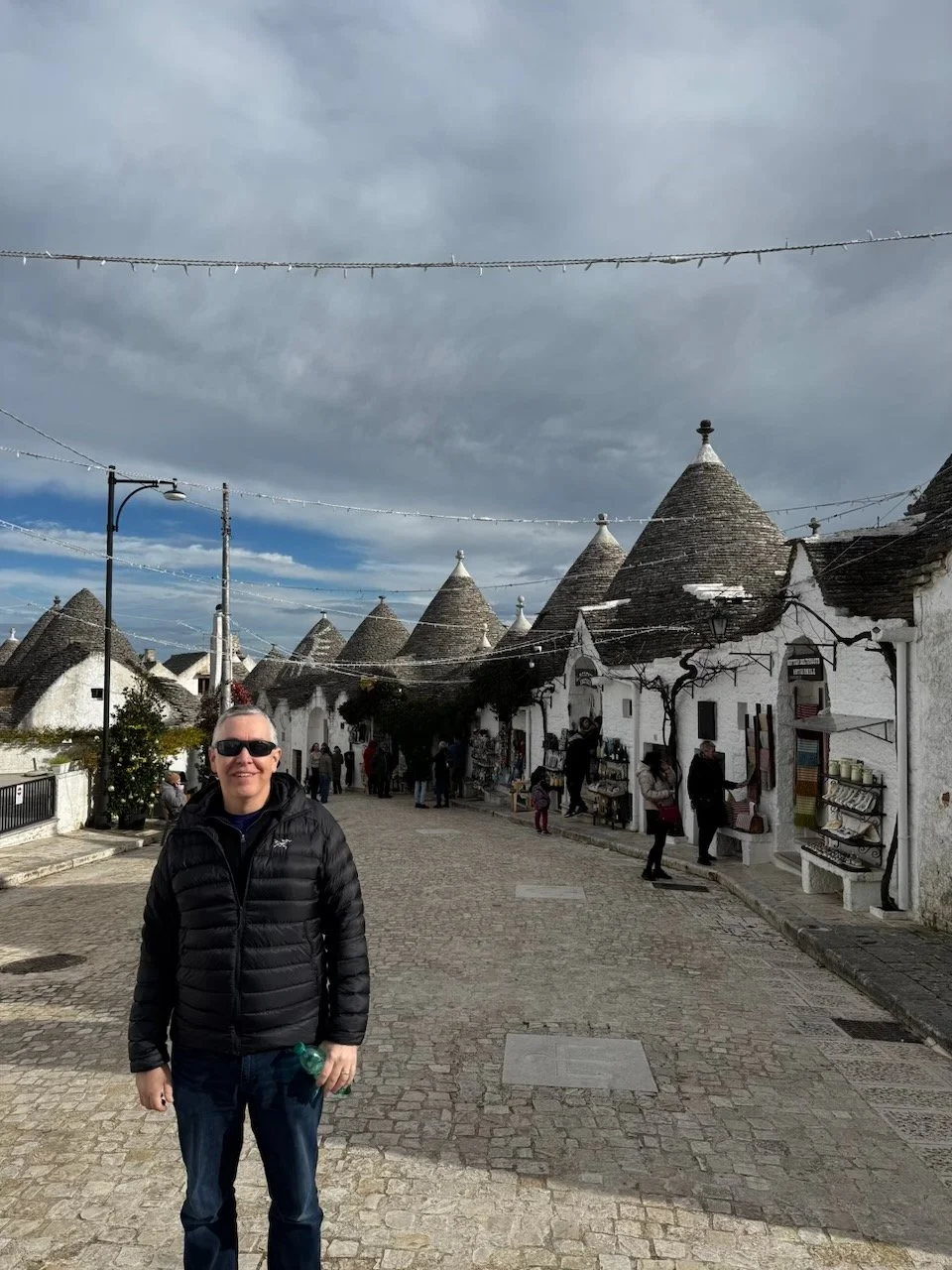
On Via Monte Pertica, the main tourist street. Now, back to the bus and on to Matera.
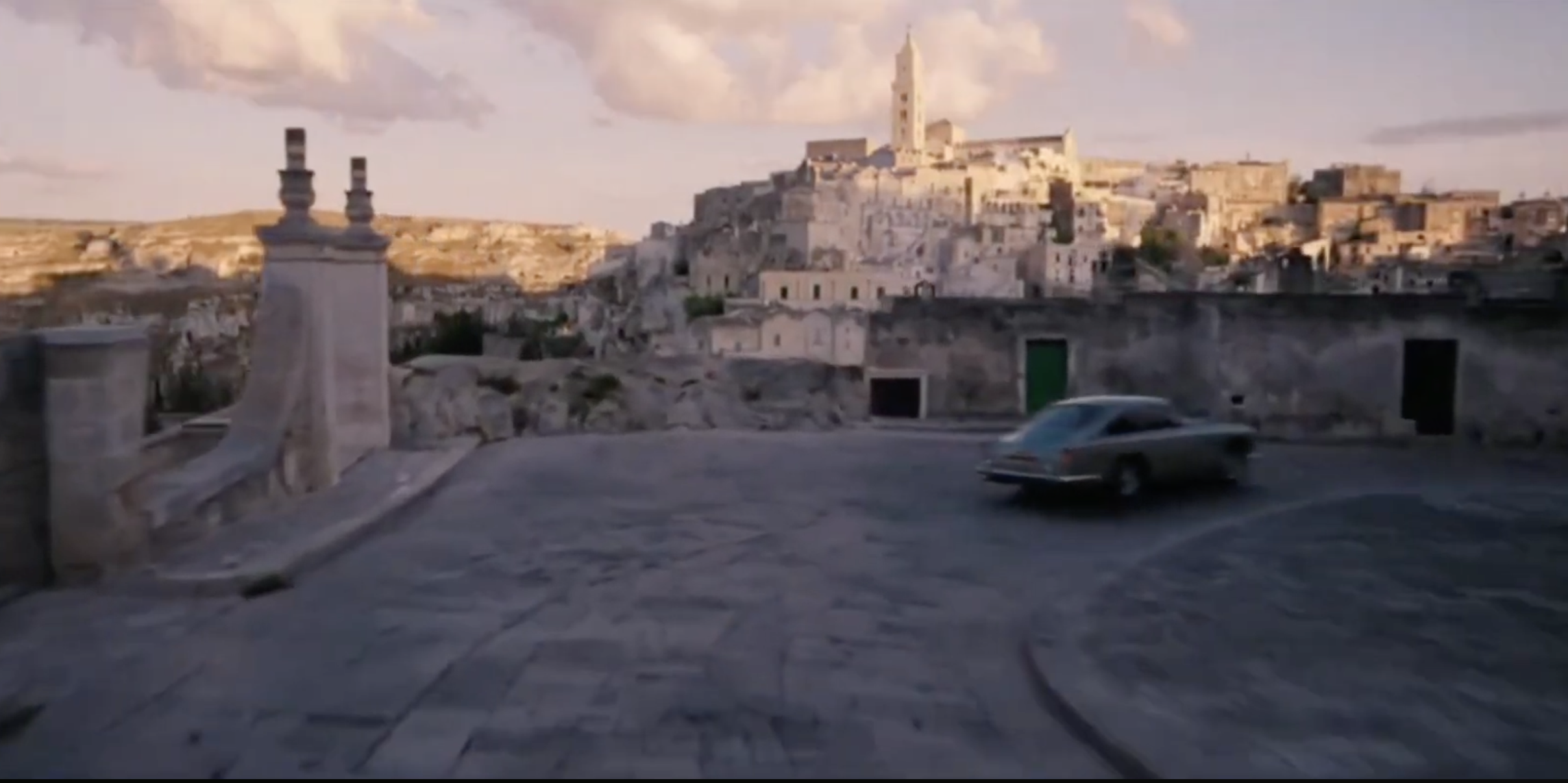
Matera was the spectacular backdrop for the opening pre-credit sequence of the 2021 James Bond movie, No Time to Die. Unlike Bond’s Aston Martin DB5, driving into Matera for us was like entering any other modern Italian city.
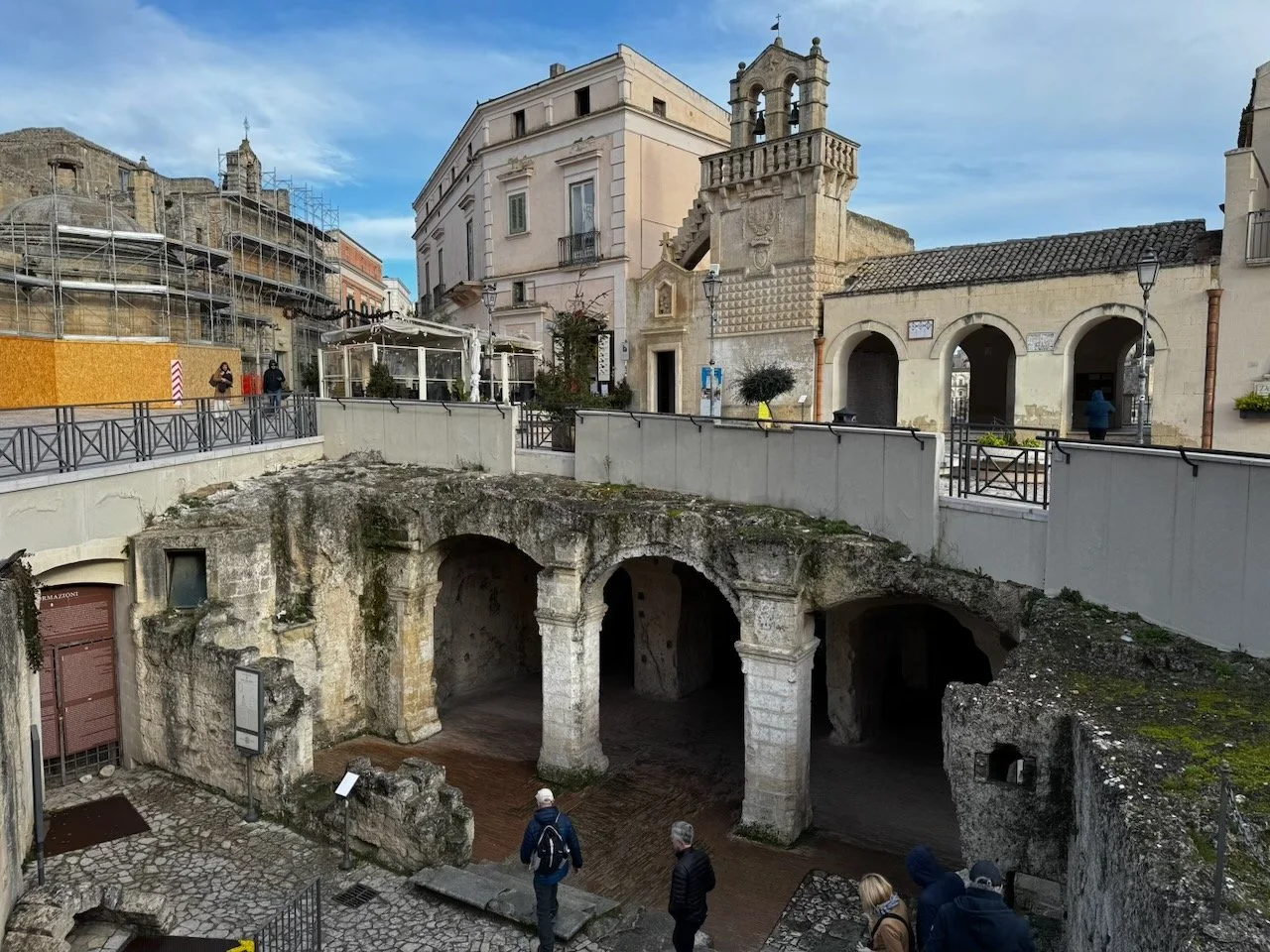
From our bus parked in the modern center of town, a half mile walk took us to the eastern edge and the historic medieval district. Stairs led below street level where we entered the remains of Chiesa rupestre dello Spirito Santo (Cave Church of the Holy Spirit).
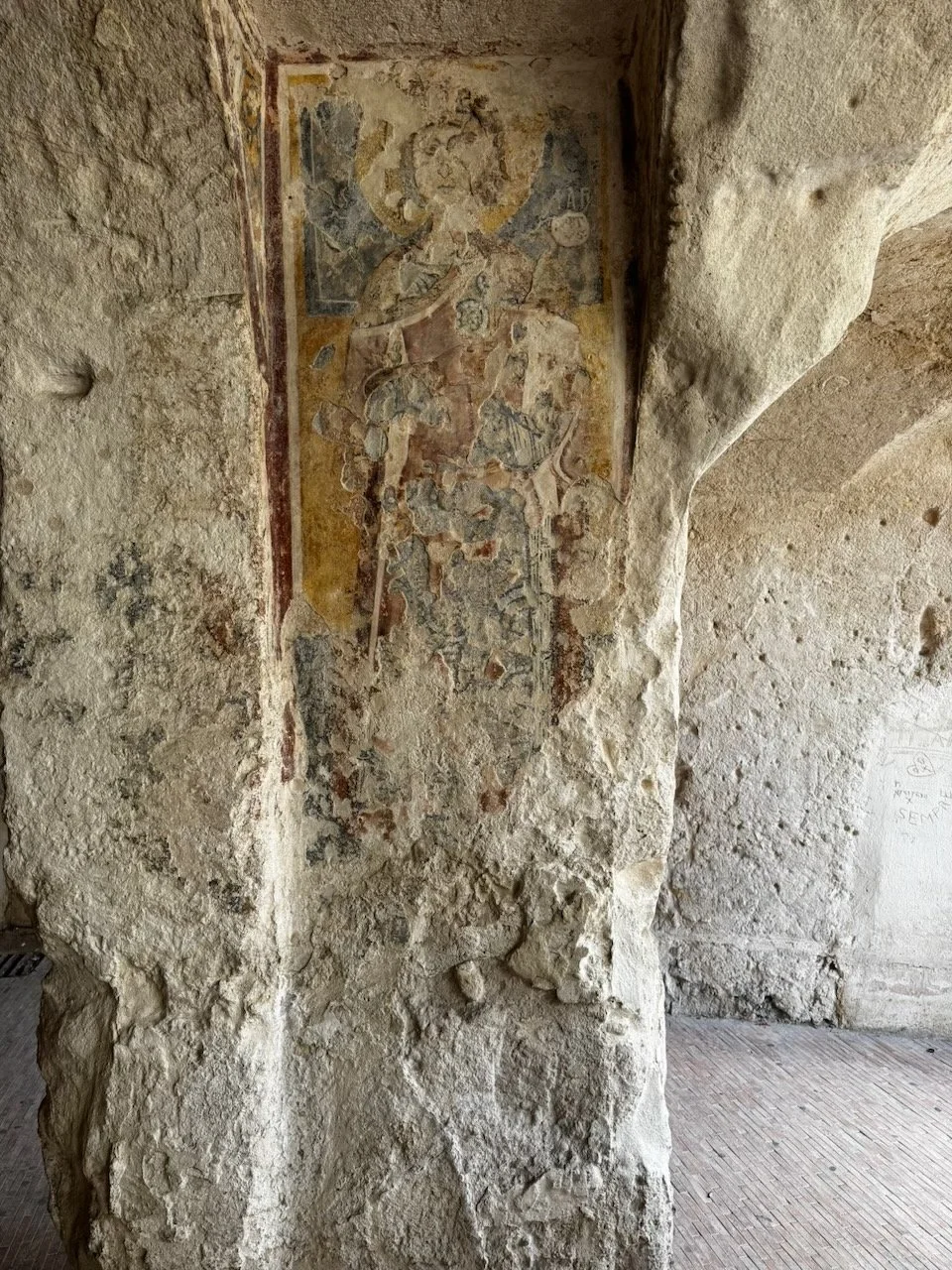
The church remains included this Byzantine-style, medieval fresco of St Sofia—the legendary early Christian mother of three daughters named Faith, Hope, and Charity (Love).
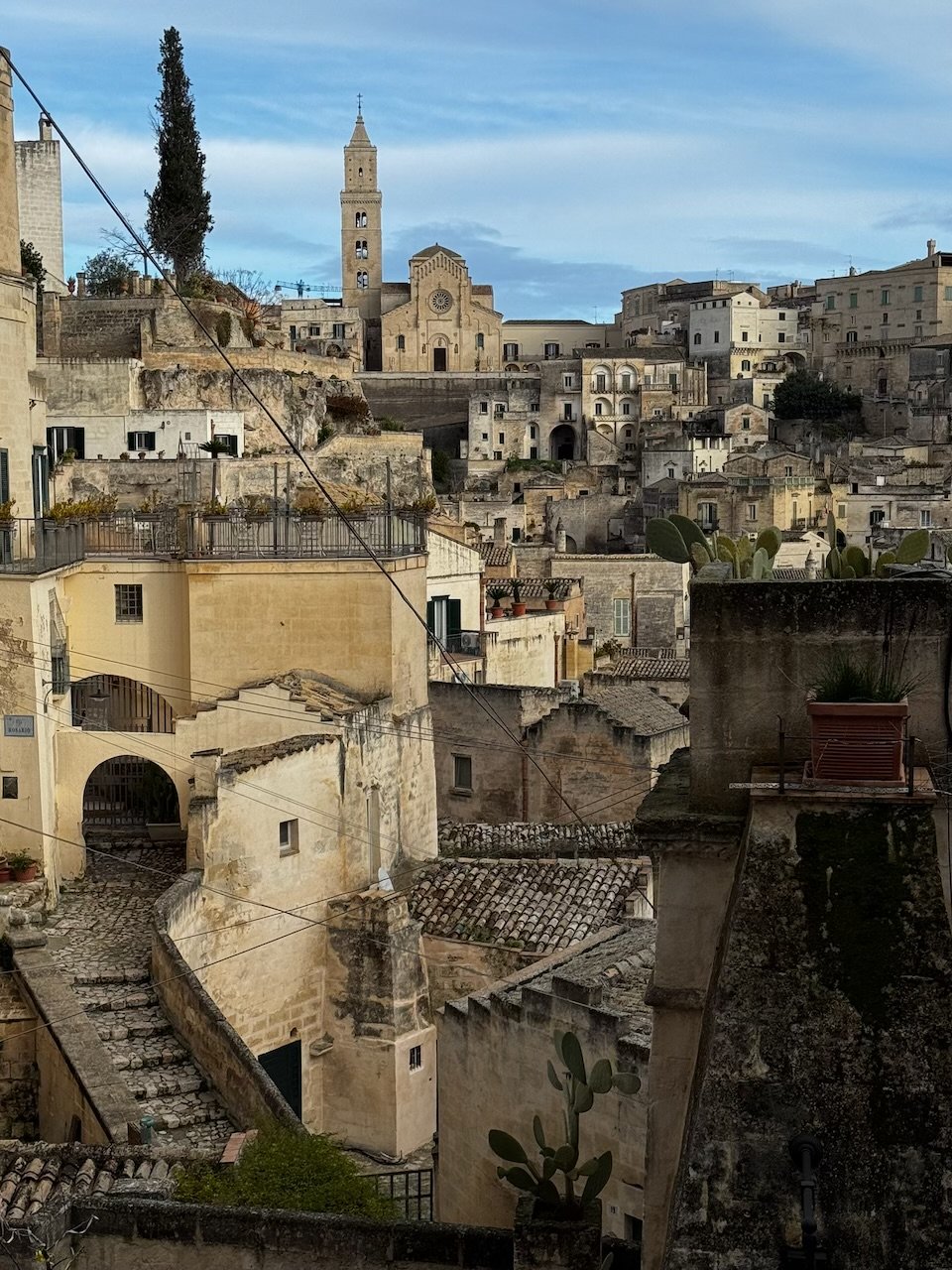
Walking through the back of the church ruins, we caught our first sight of the Sasso Barisano district where medieval façades hide deep prehistoric caves, and modern life hums inside ancient rock. Sasso means stone and Barisano describes how the canyon opens in the direction of the old trade routes to the important coastal town of Bari.
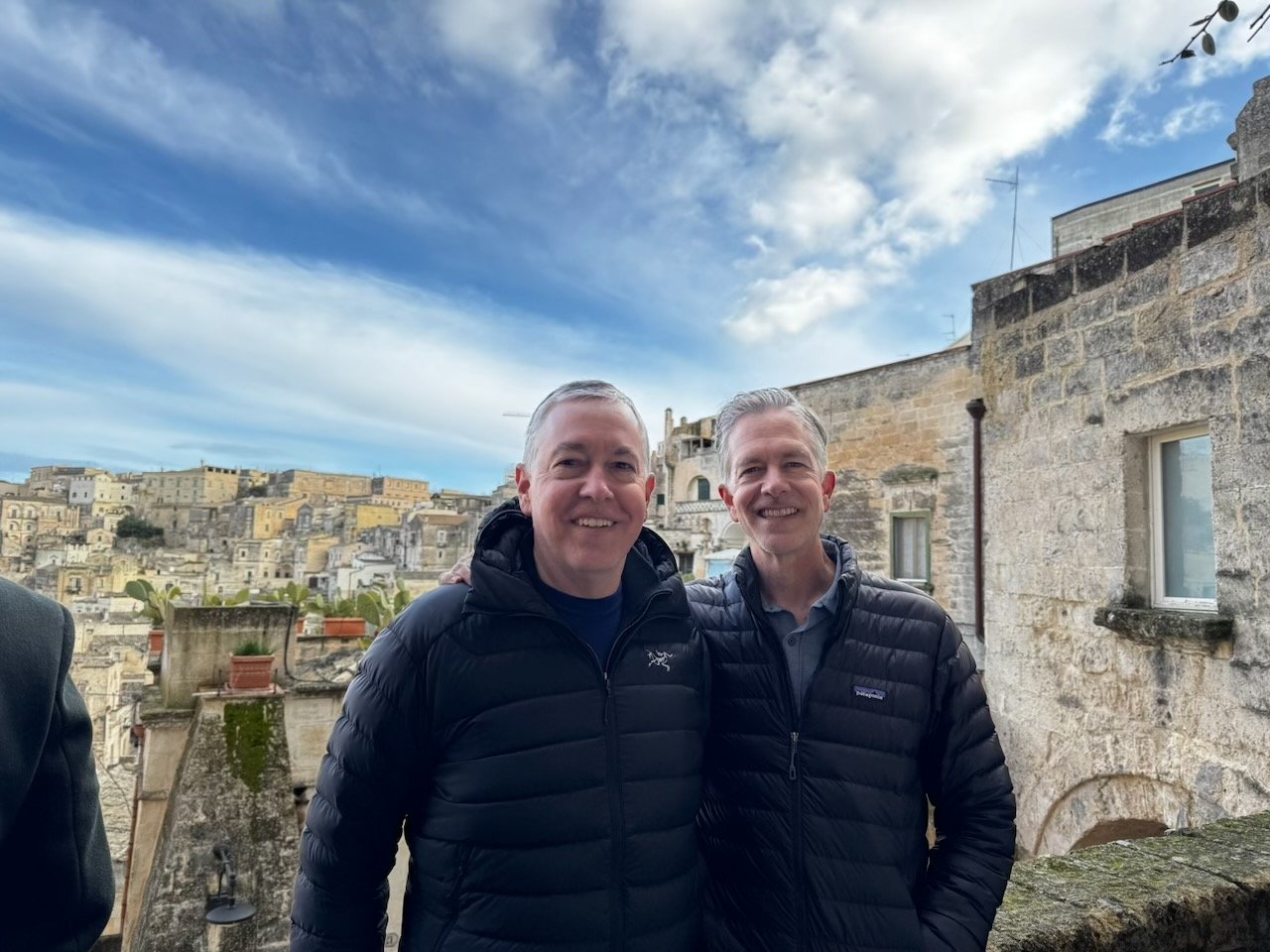

Homes, churches, cisterns, and streets were carved directly into the soft tufa rock, creating a dense, vertical city that developed continuously from prehistoric times through the Middle Ages.
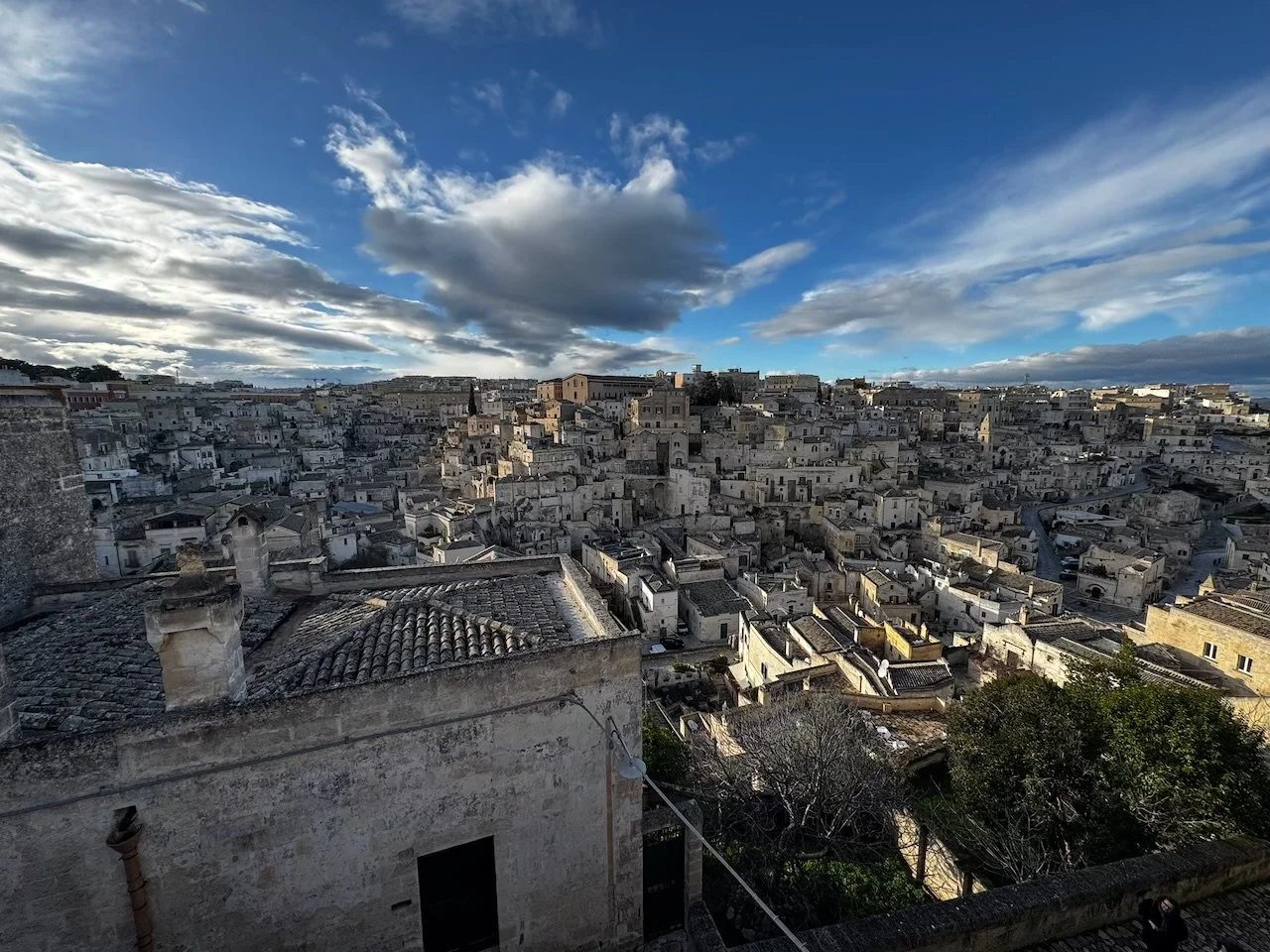
Matera’s Sasso Barisano is one of Europe’s oldest continuously inhabited settlements with cave habitation going back to approximately 7000 BCE!
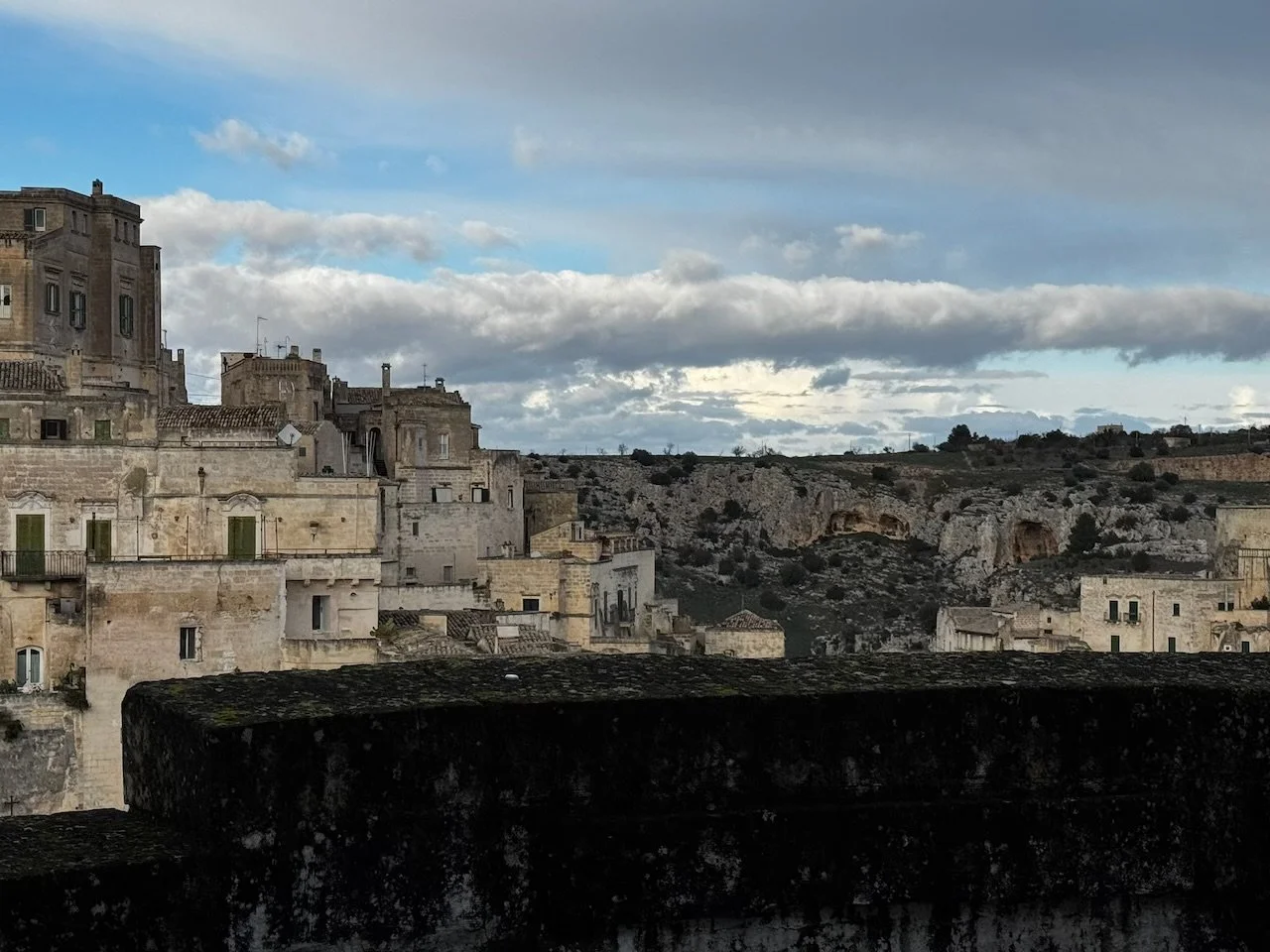
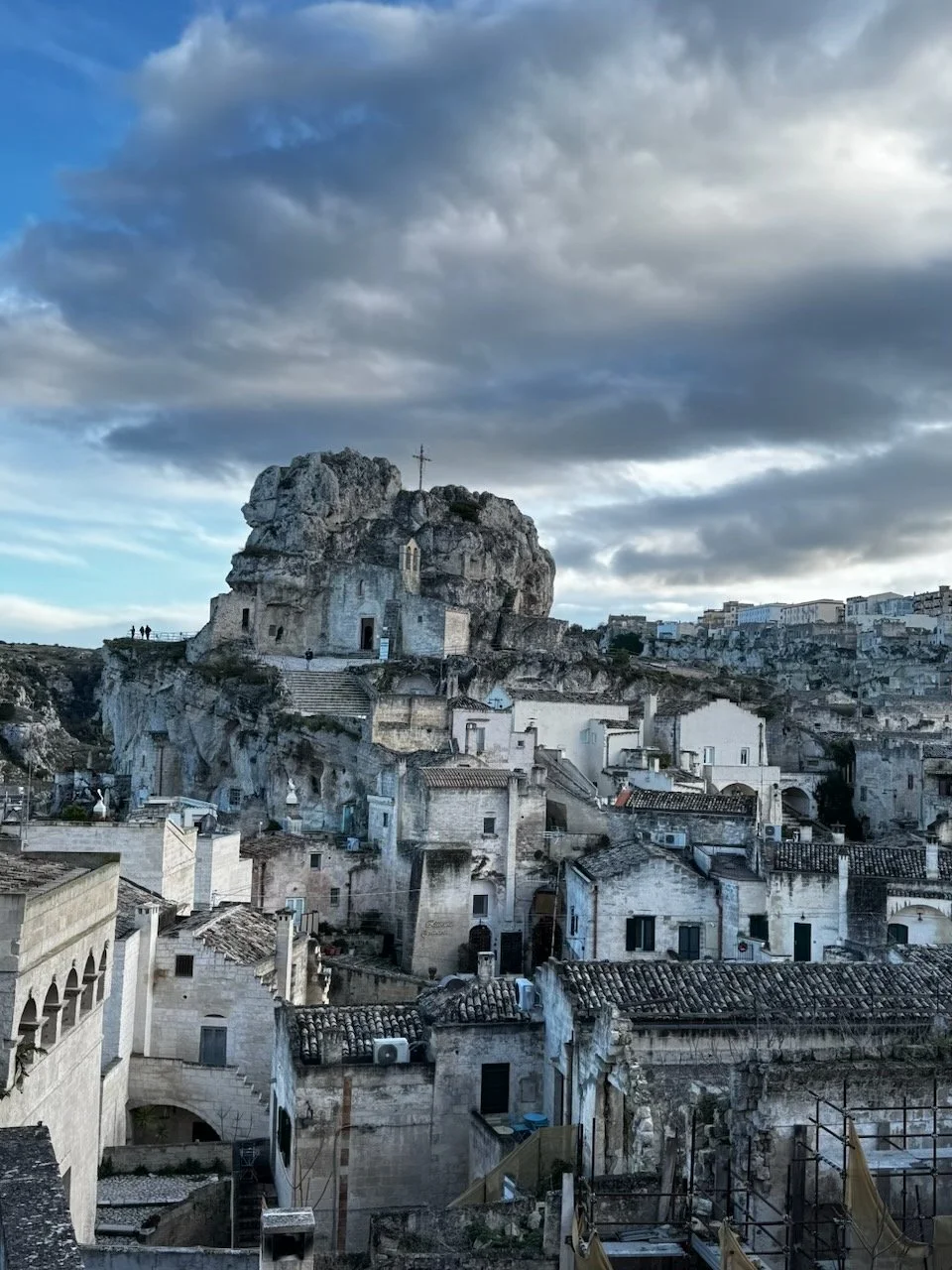
Some of the many naturally-occurring caves are visible in the distance.
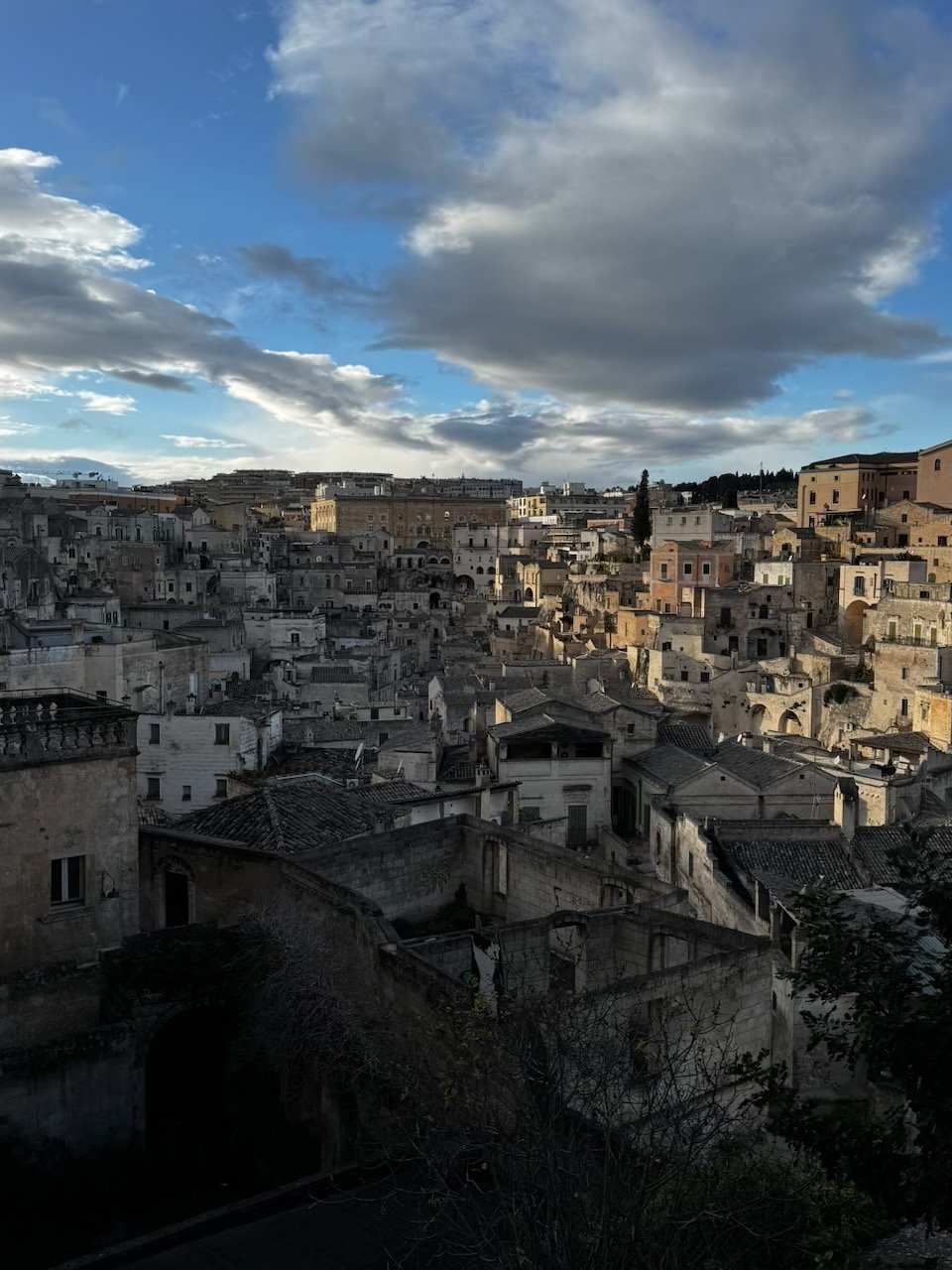
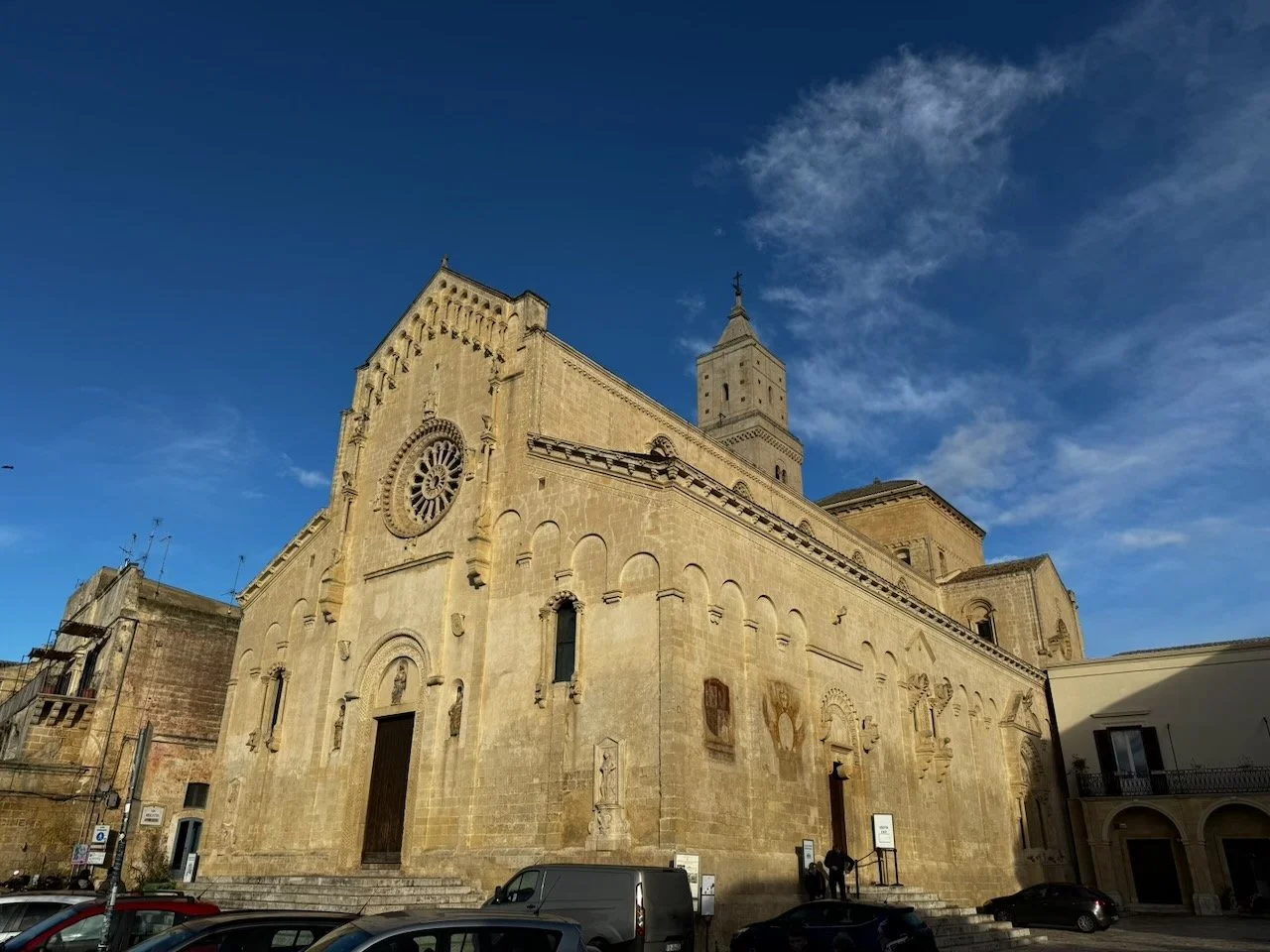
Cathedral of Maria Santissima of the Bruna & Sant'Eustachio, built in the 1200s, includes a beautiful rose window and a skyline-dominating bell tower.
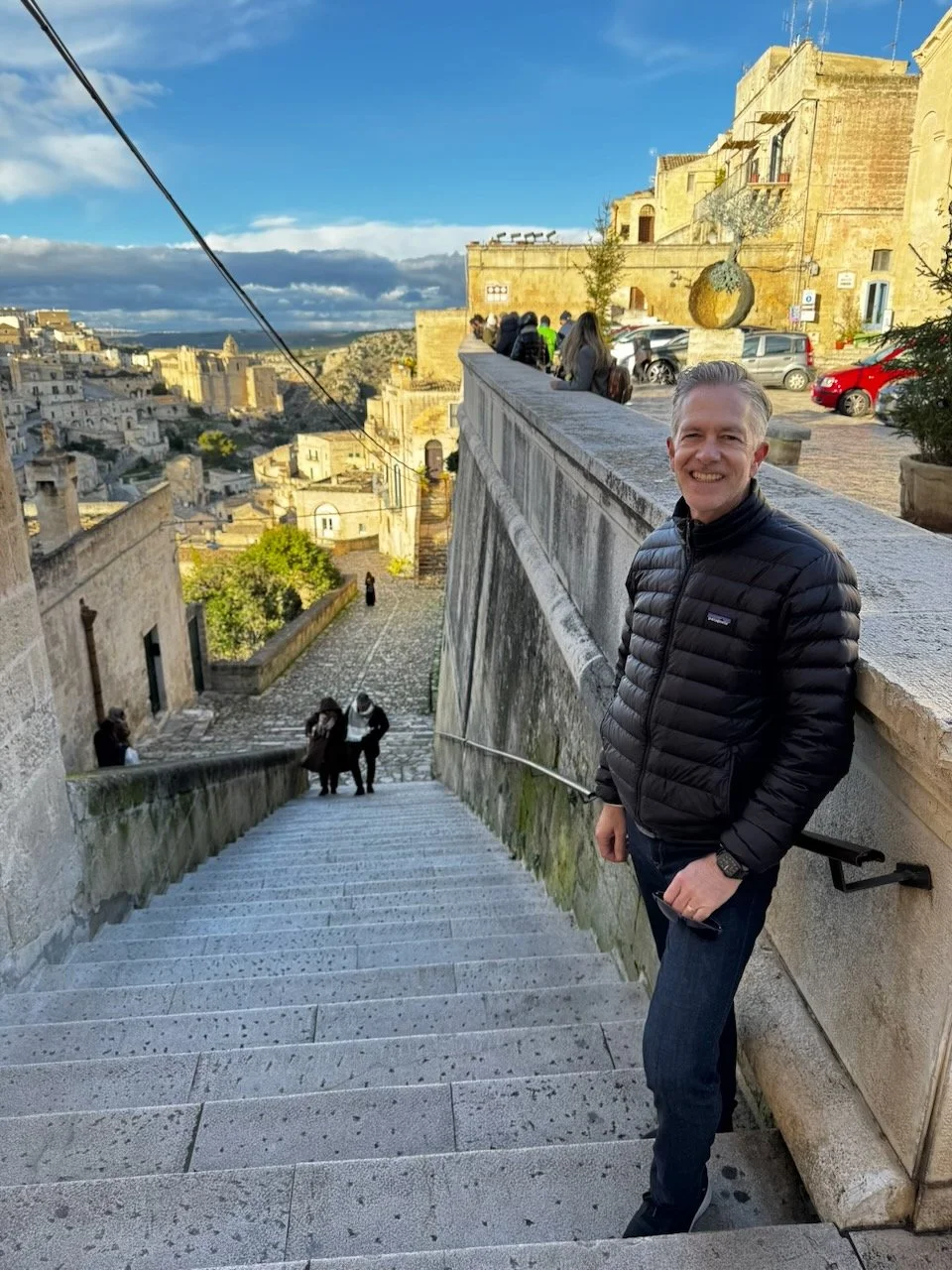
In the movie, James Bond rode a motorcycle up the cobbled street below and jumped this wall in spectacular fashion, landing in the courtyard of the church behind Dave.
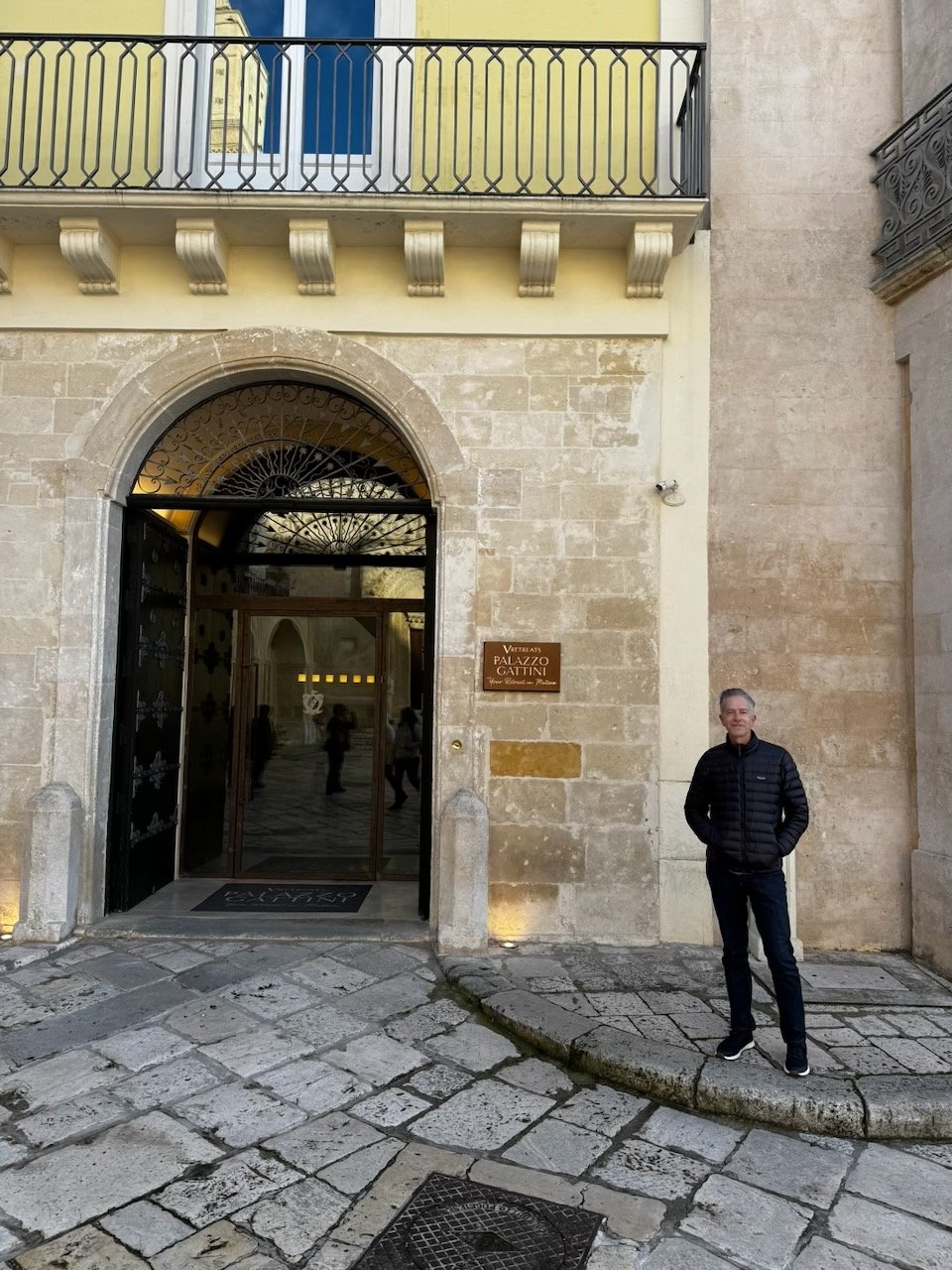
Also facing the church courtyard is this hotel, where Bond and girlfriend Dr. Madeleine Swann spent the night
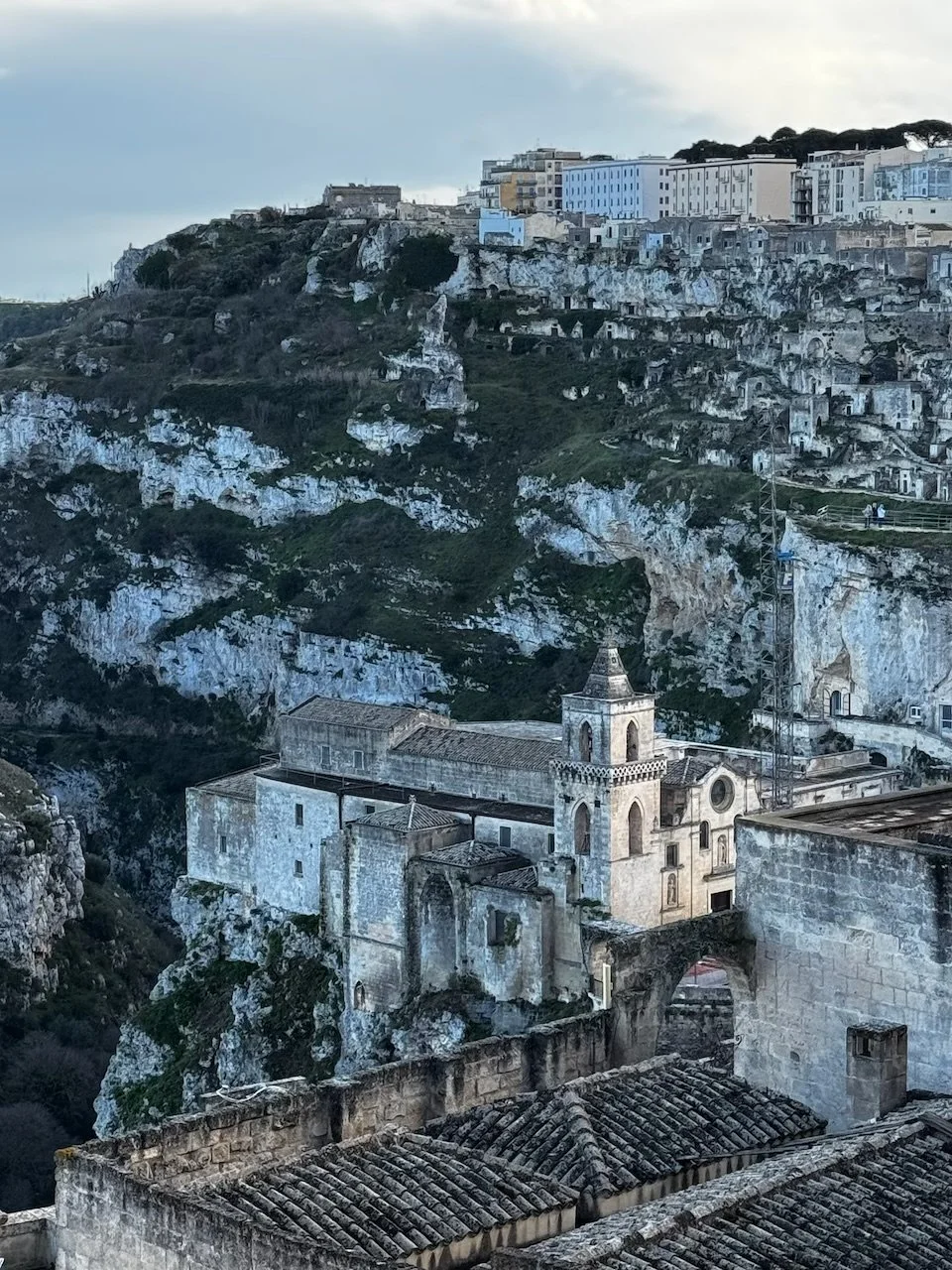
Chiesa di San Pietro Caveoso (St Peter & St Paul Church) perched atop the rocky outcrop, high above the ravine.
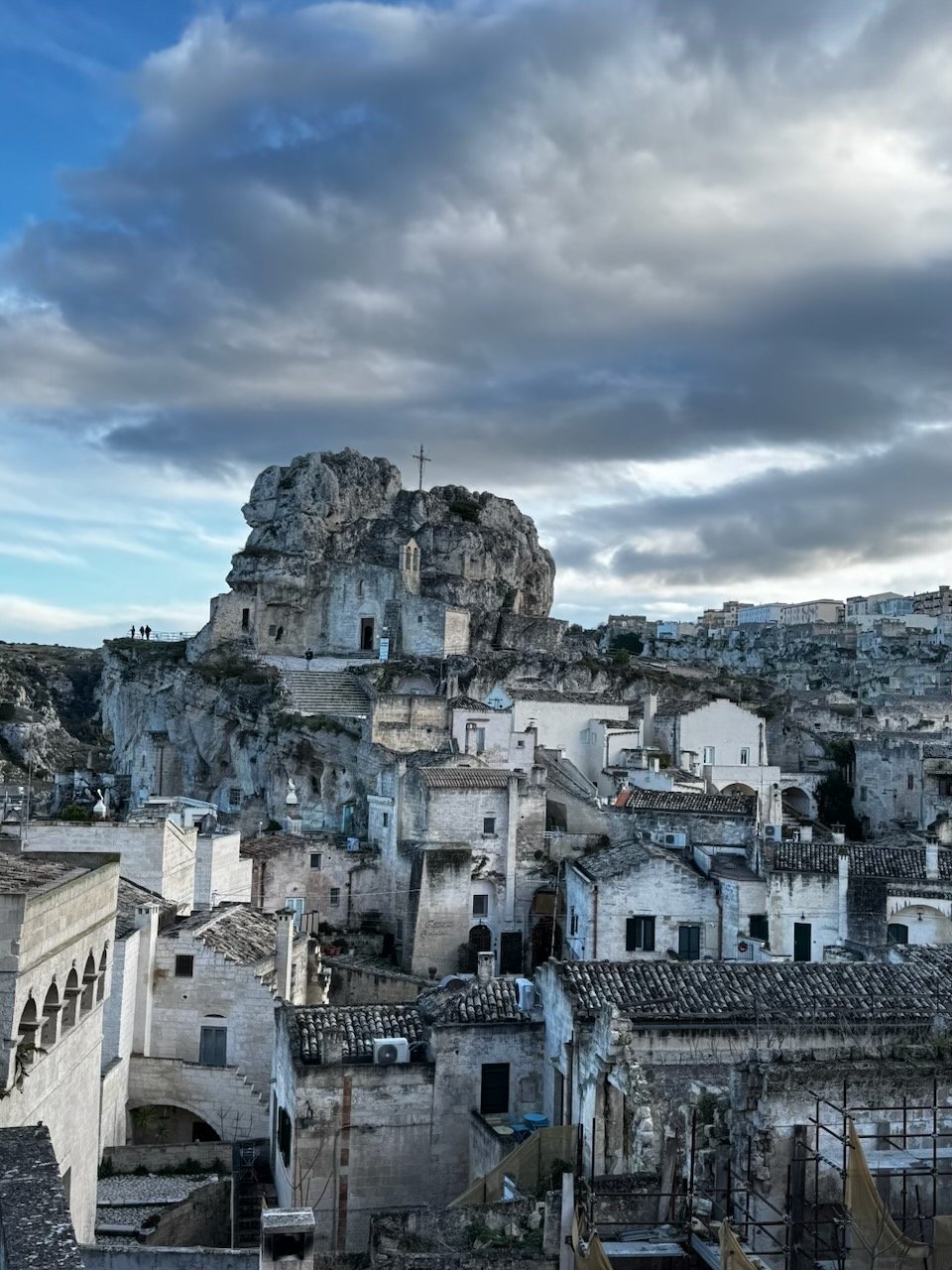
Perched on Monterrone, the cliff that rises from within the middle of Sassi, is one of the most scenic rock churches: Church of Saint Mary of Idris. Spectacular!
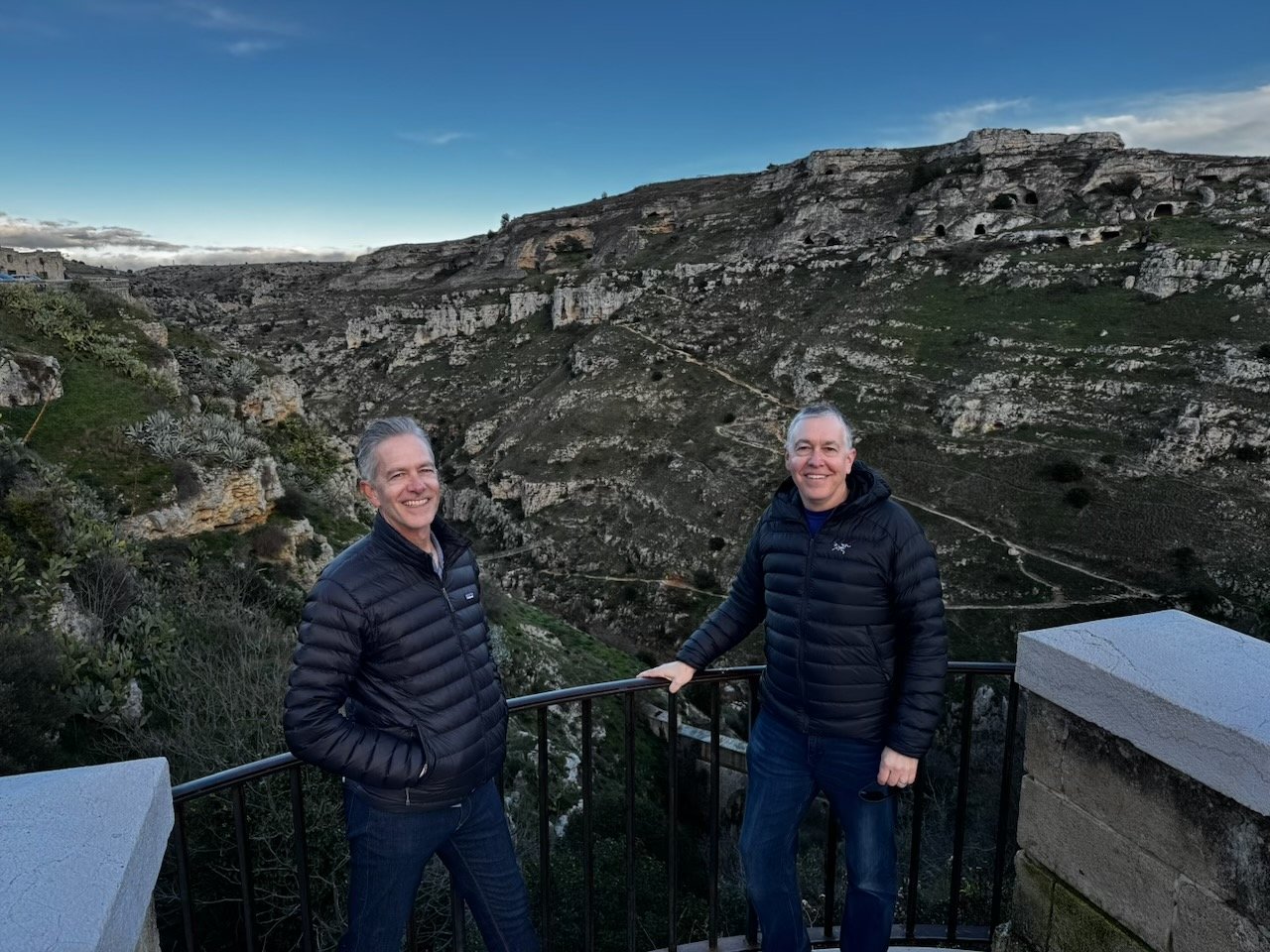
The hilltop on the other side of the ravine was used as Golgotha (the hill outside Roman Jerusalem where Jesus Christ was crucified, also known as Calvary) in the 2004 film The Passion of the Christ.
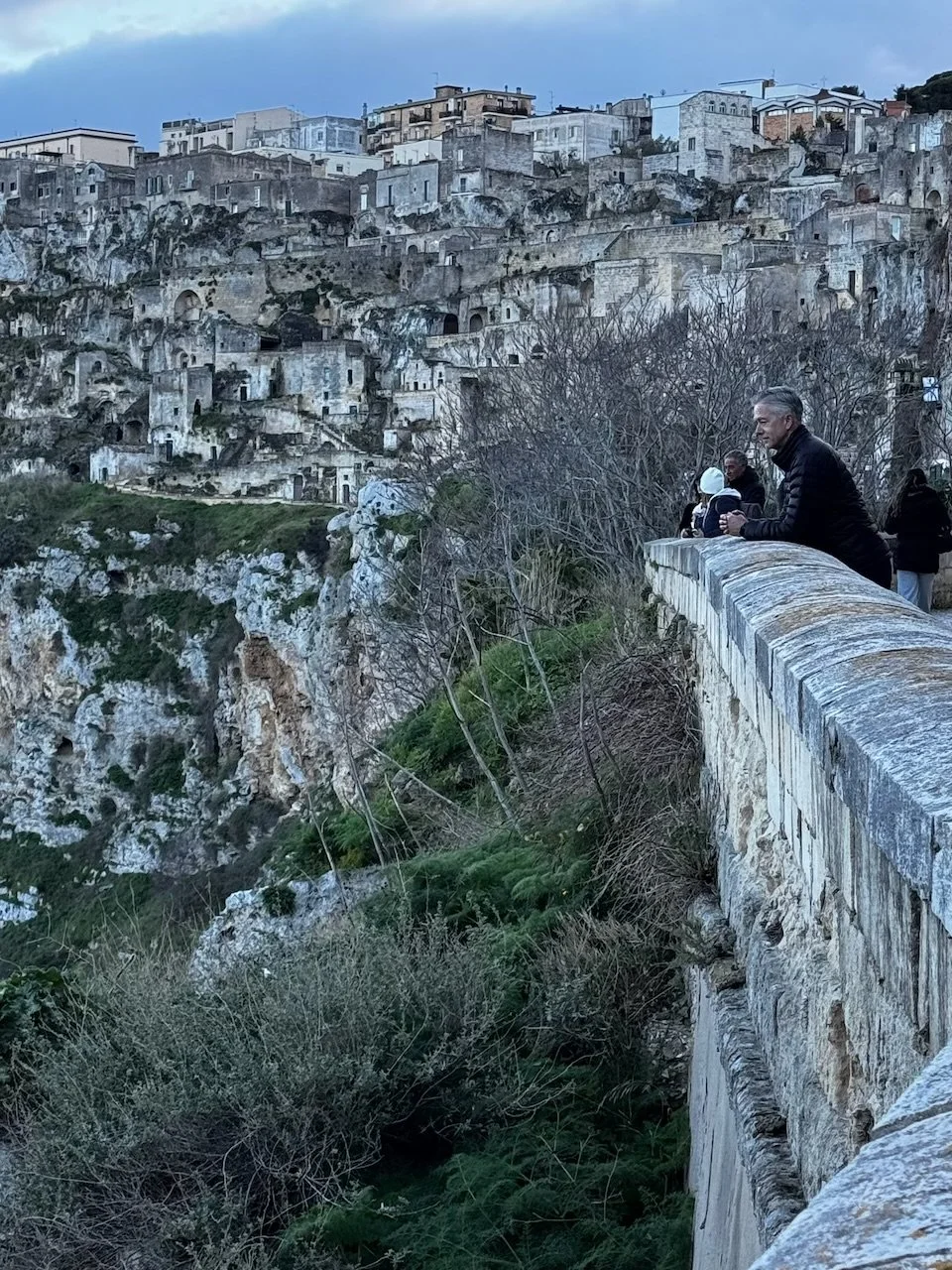
The older buildings behind Dave were used as “Jerusalem” for the filming of The Passion of the Christ.
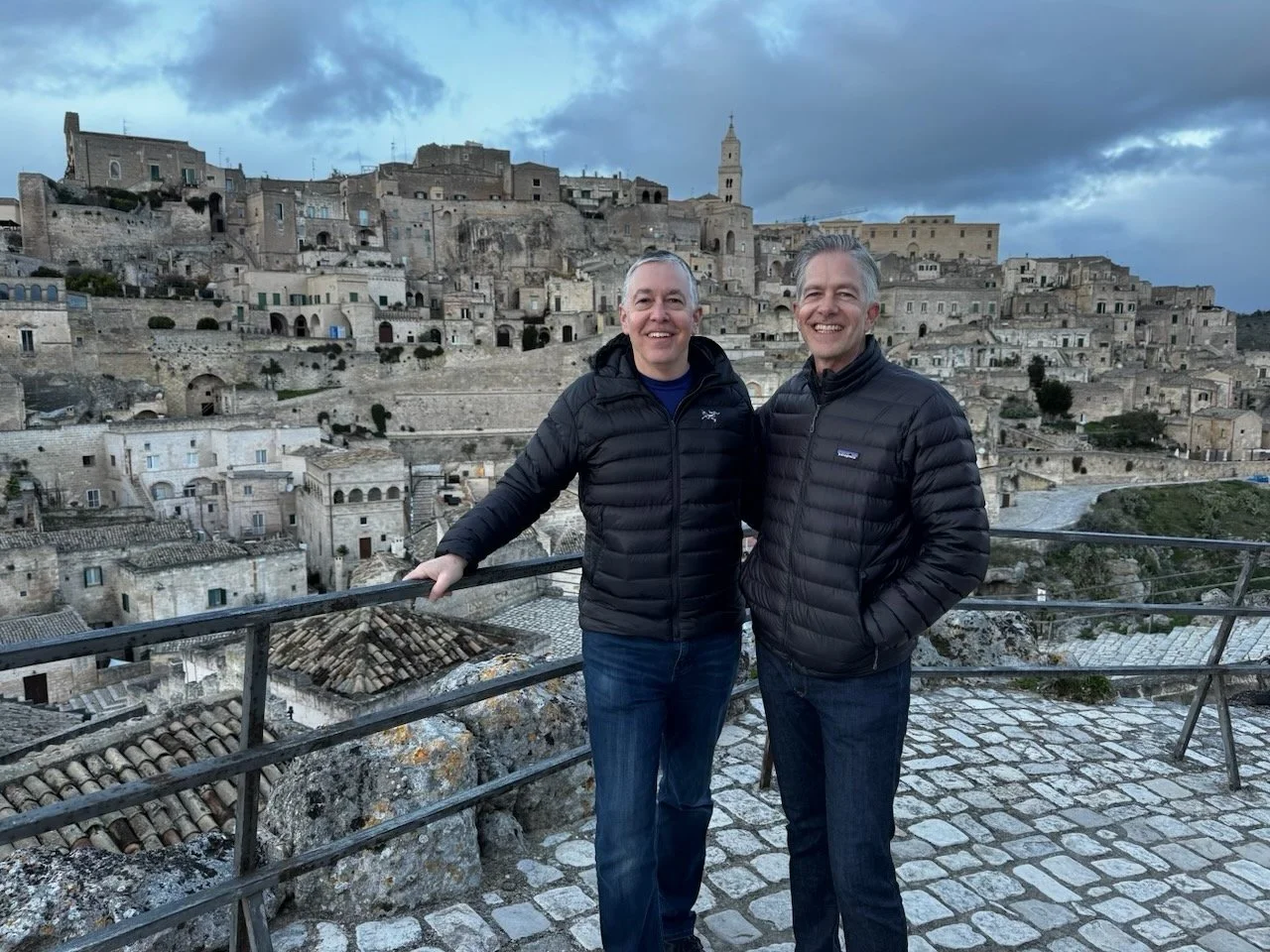
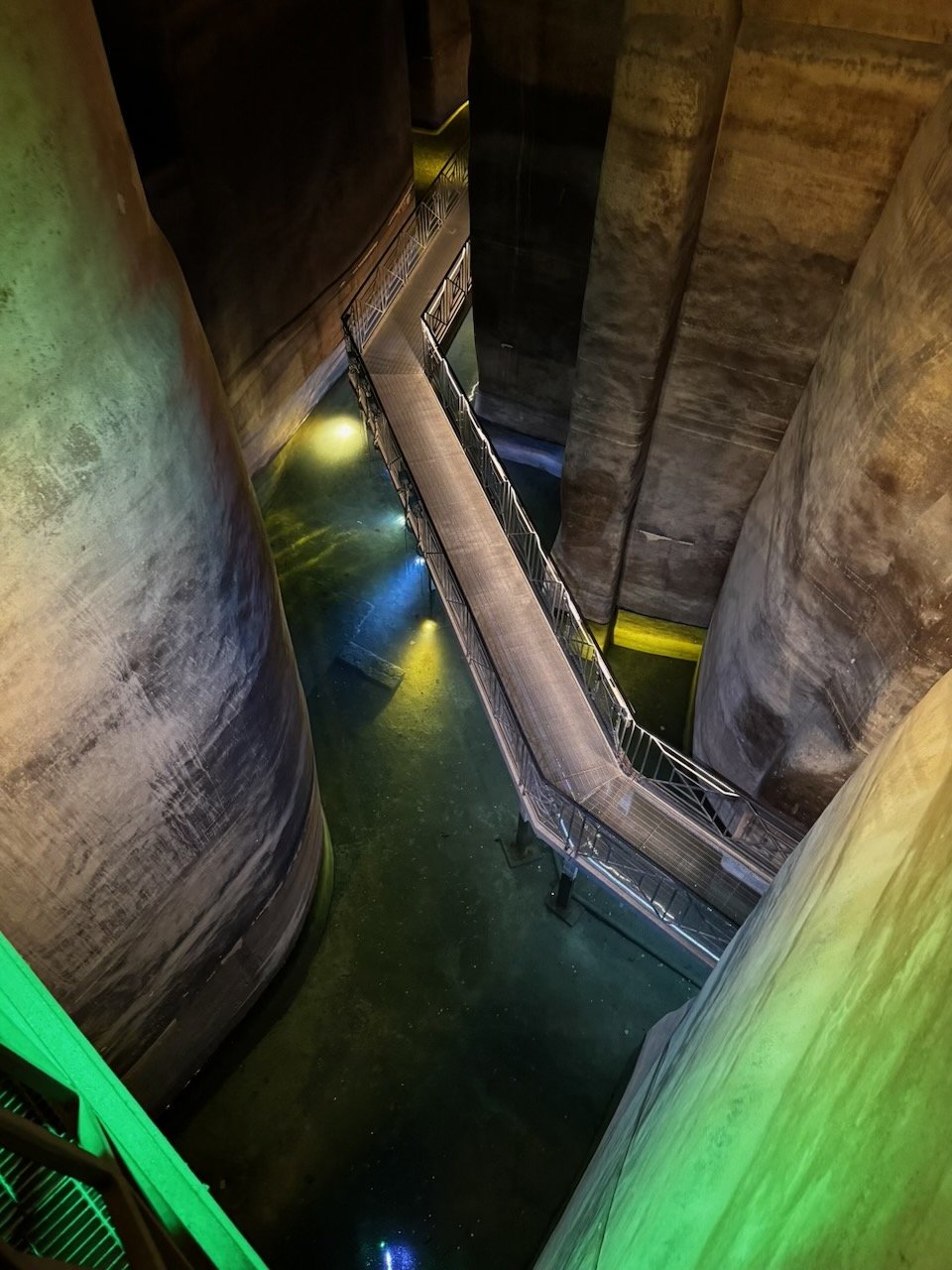
The Matera cistern, primarily known as Palombaro Lungo, is a vast, cathedral-like underground reservoir beneath Piazza Vittorio Bento, showcasing Matera’s ancient ingenuity for water management. Only the Basilica Cistern (Yerebatan Sarnıcı) in Istanbul, Turkey, is larger.
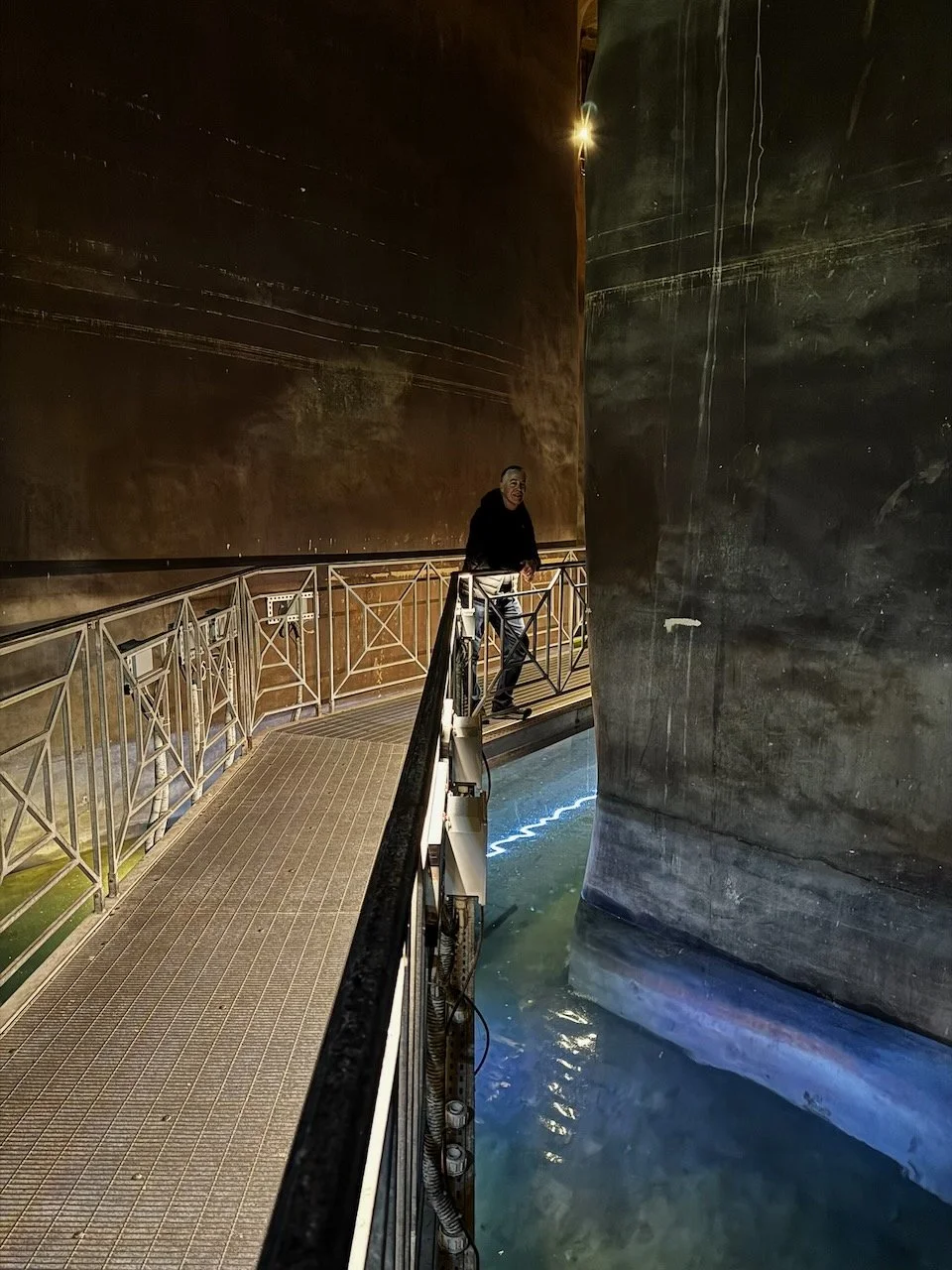
Carved into the rock, this colossal structure collected spring and rainwater, holding millions of liters and serving the city until modern aqueducts arrived. Today, walkways allow visitors to explore its cool, vaulted chambers, a key part of Matera's UNESCO World Heritage site.
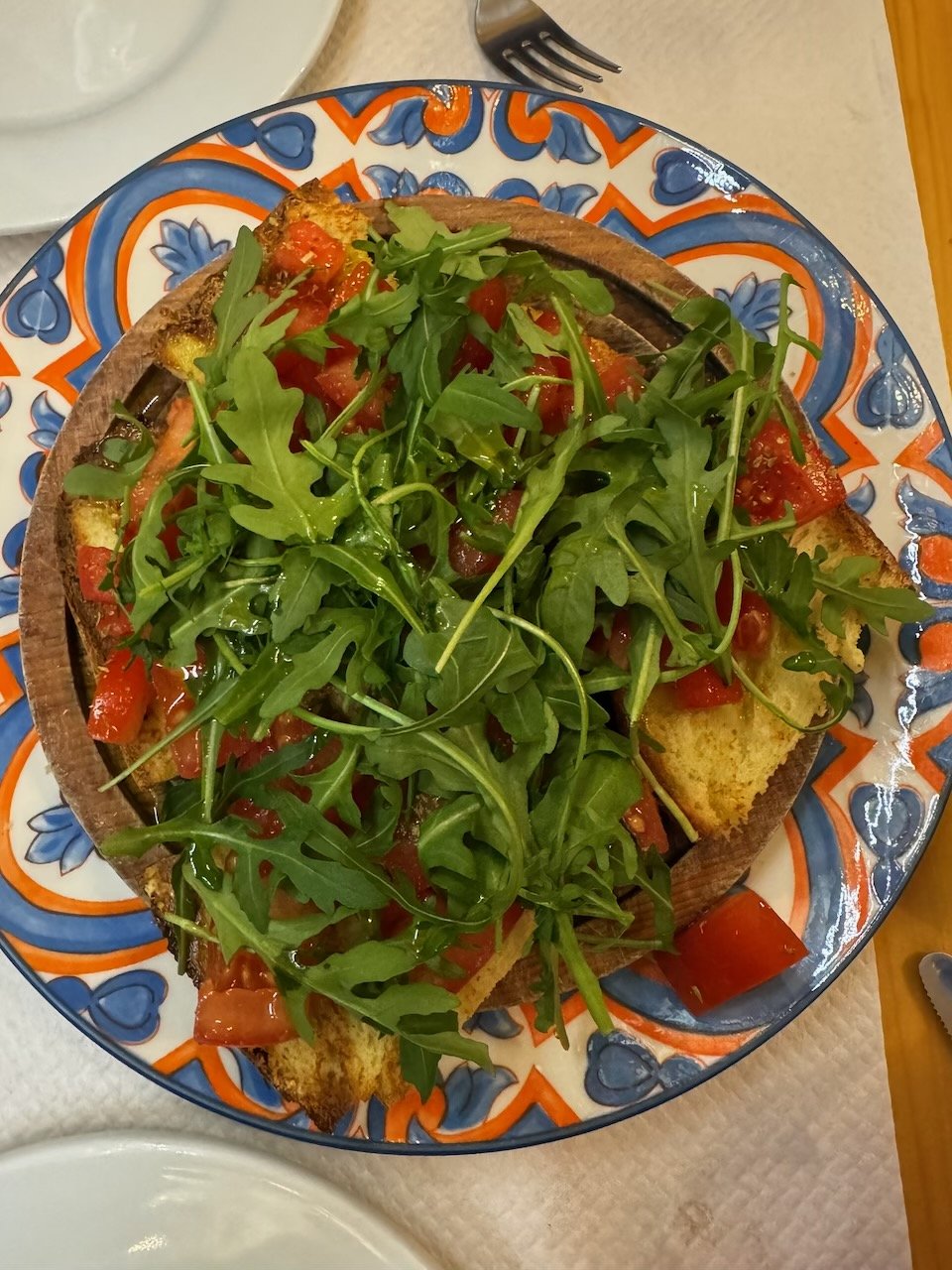
That evening, back in Bari, we had a great dinner at La Cantina dello Zio (Uncle’s Wine Cellar). This is our amazing bruschetta.
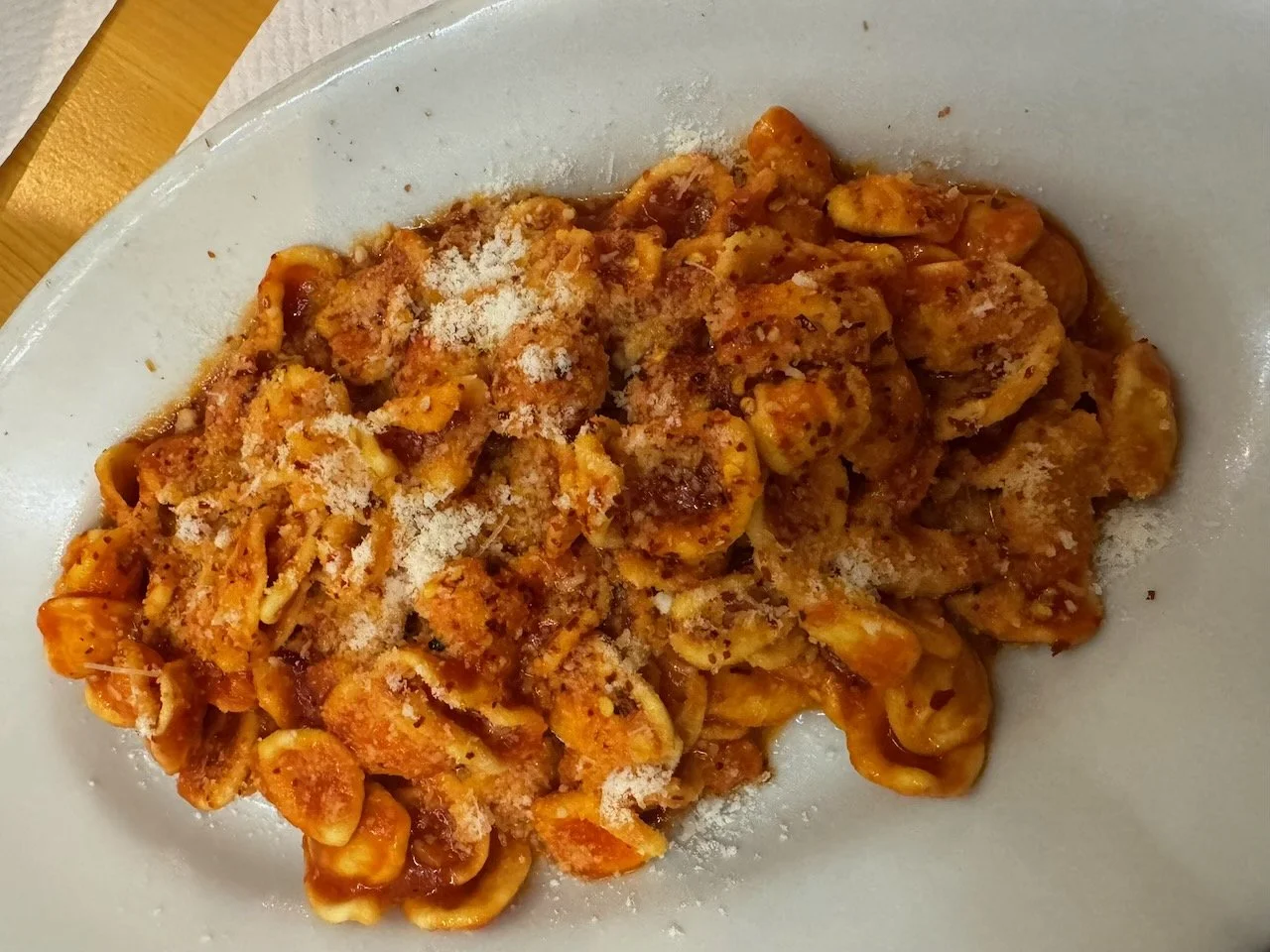
Given that orecchiette ("little ears" in Italian) is deeply associated with Bari and the Puglia region, what choice did I have but to order it for dinner. While the exact origin is debated, Bari and Puglia are recognized as the heartland of this pasta. In Bari Vecchia (Old Bari), women known as pasta grannies still make orecchiette by hand on the streets, a tradition passed down through generations. It was delicious! Good night Bari!