Bari
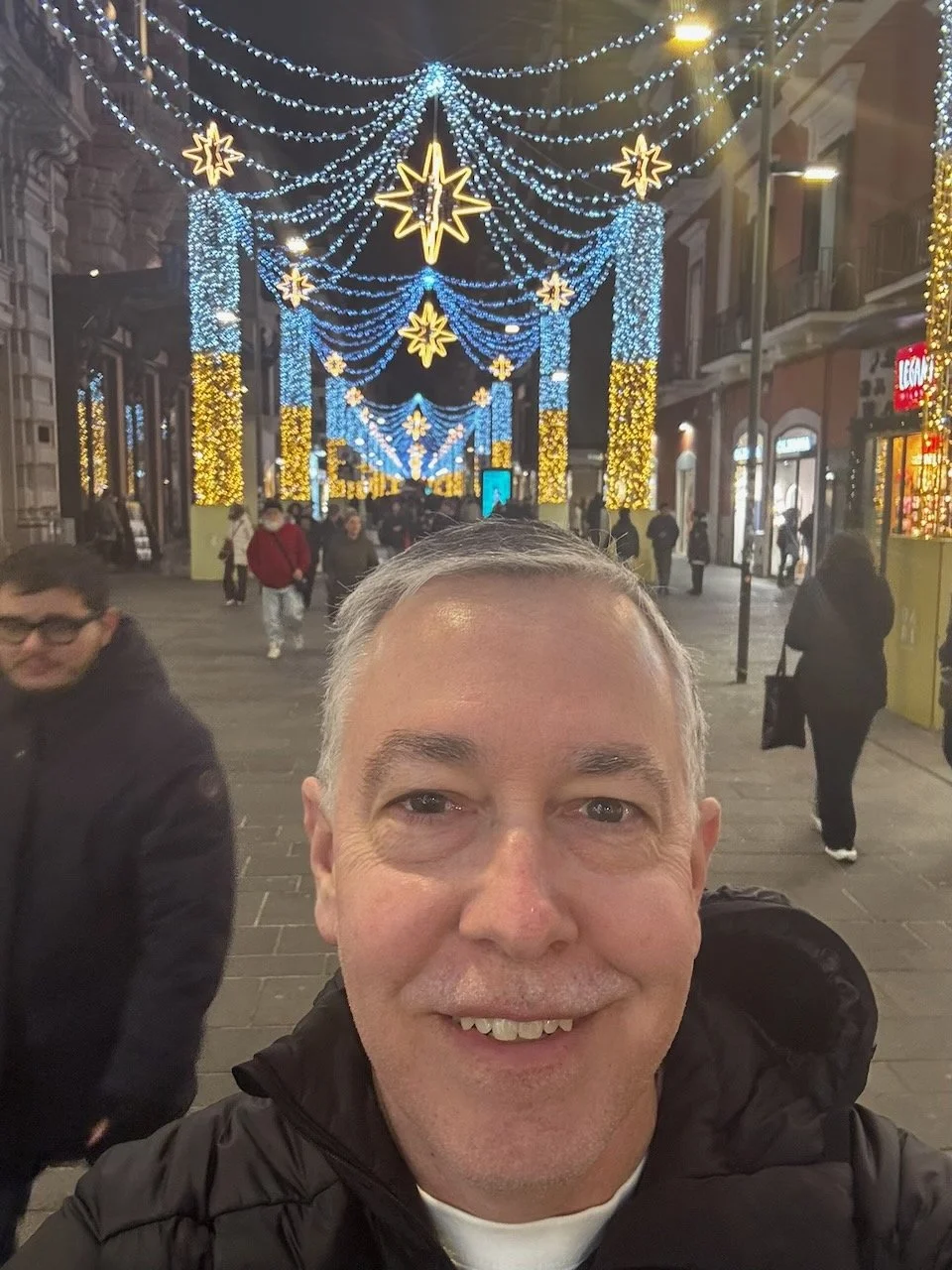
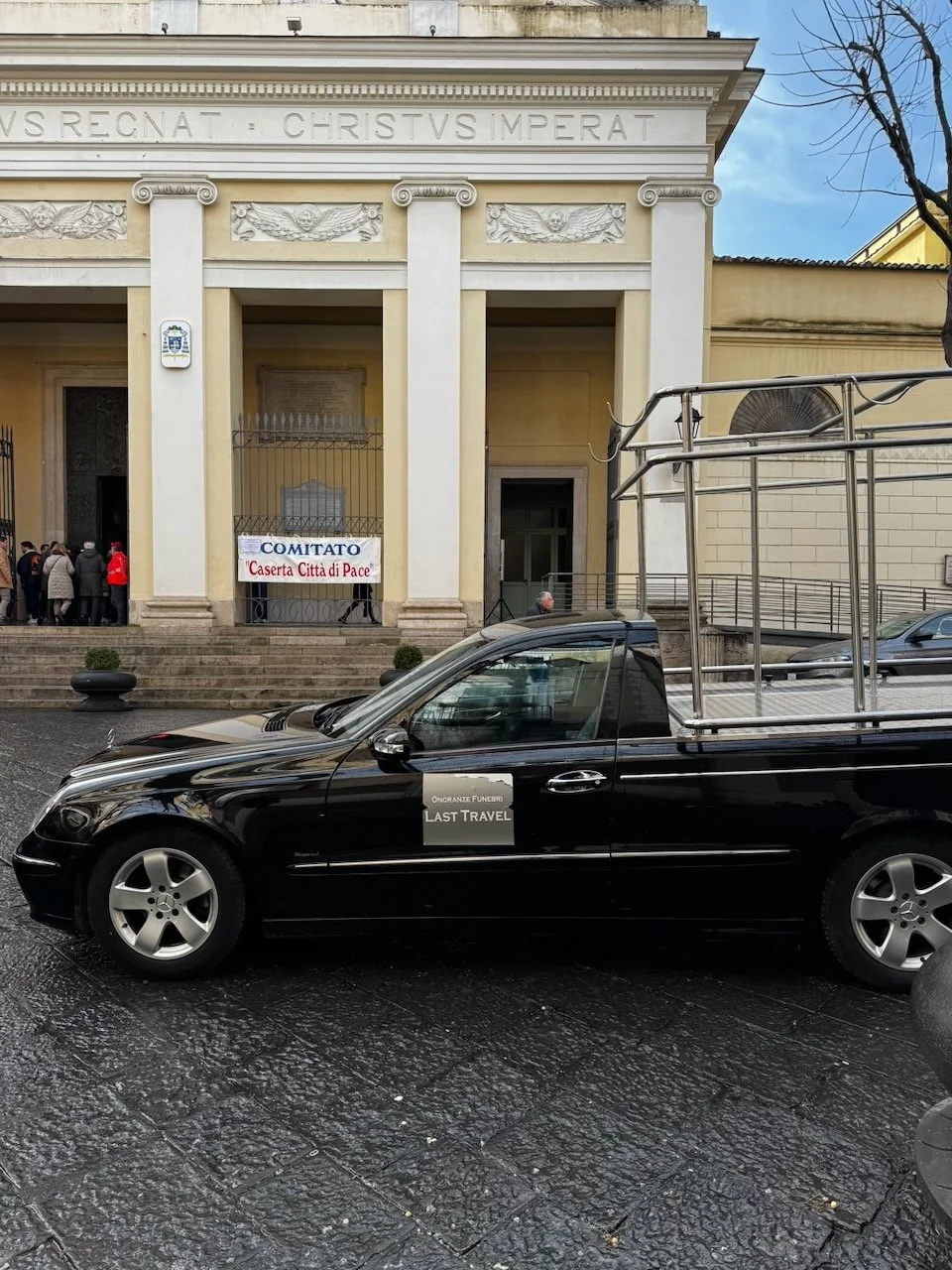
We had only one night in Caserta, but our train to Bari did not depart until 2:24 pm, so we left our bags at the hotel and wandered the streets and shops of Caserta. On our way to mail postcards at the Poste Italiane, we encountered a funeral at Duomo di San Michele Arcangelo. We found the name of the funeral transportation company quite humorous. Not sure why there were two vehicles, but the other vehicle was a hurst and it was a Maserati!
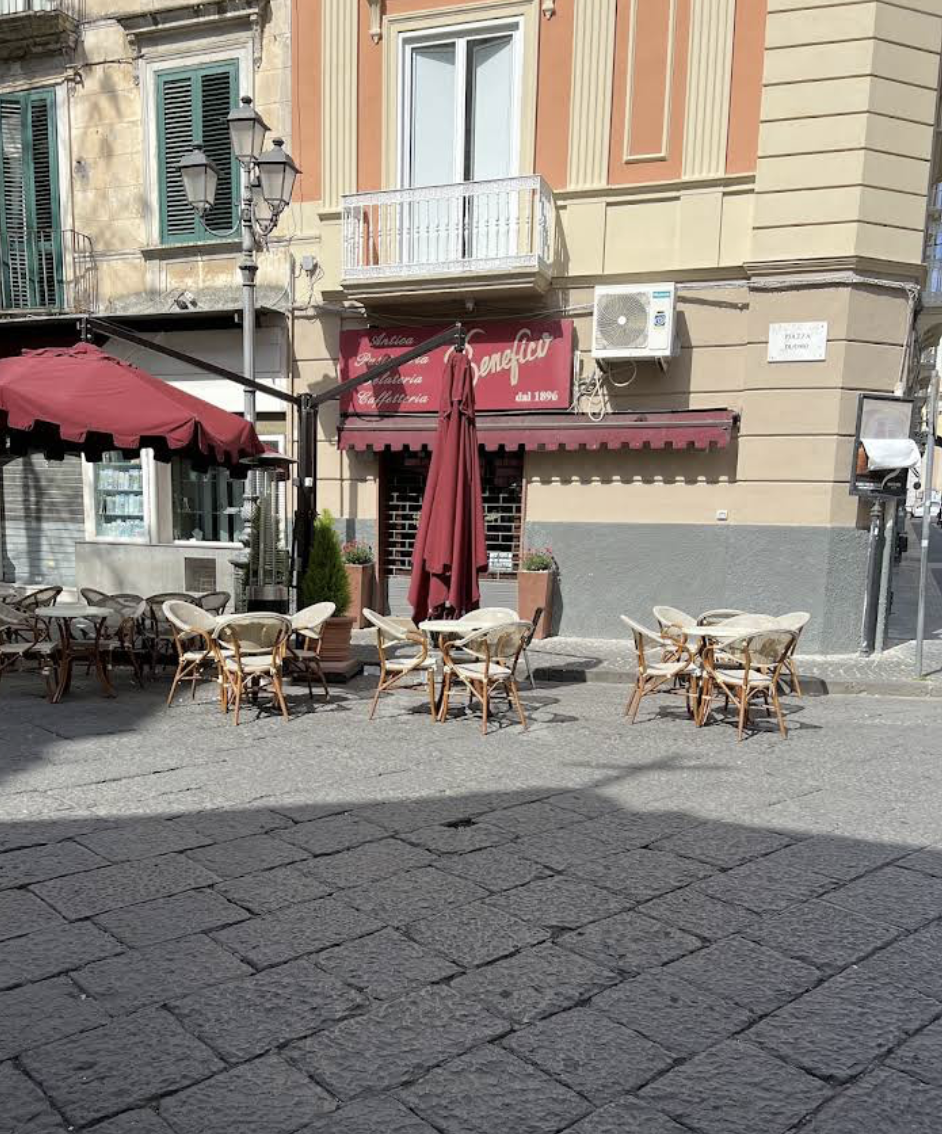
After ten days of exploring southern Italy and savoring nearly two dozen cappuccinos, the one at Pasticceria Benefico in Caserta was easily the best.
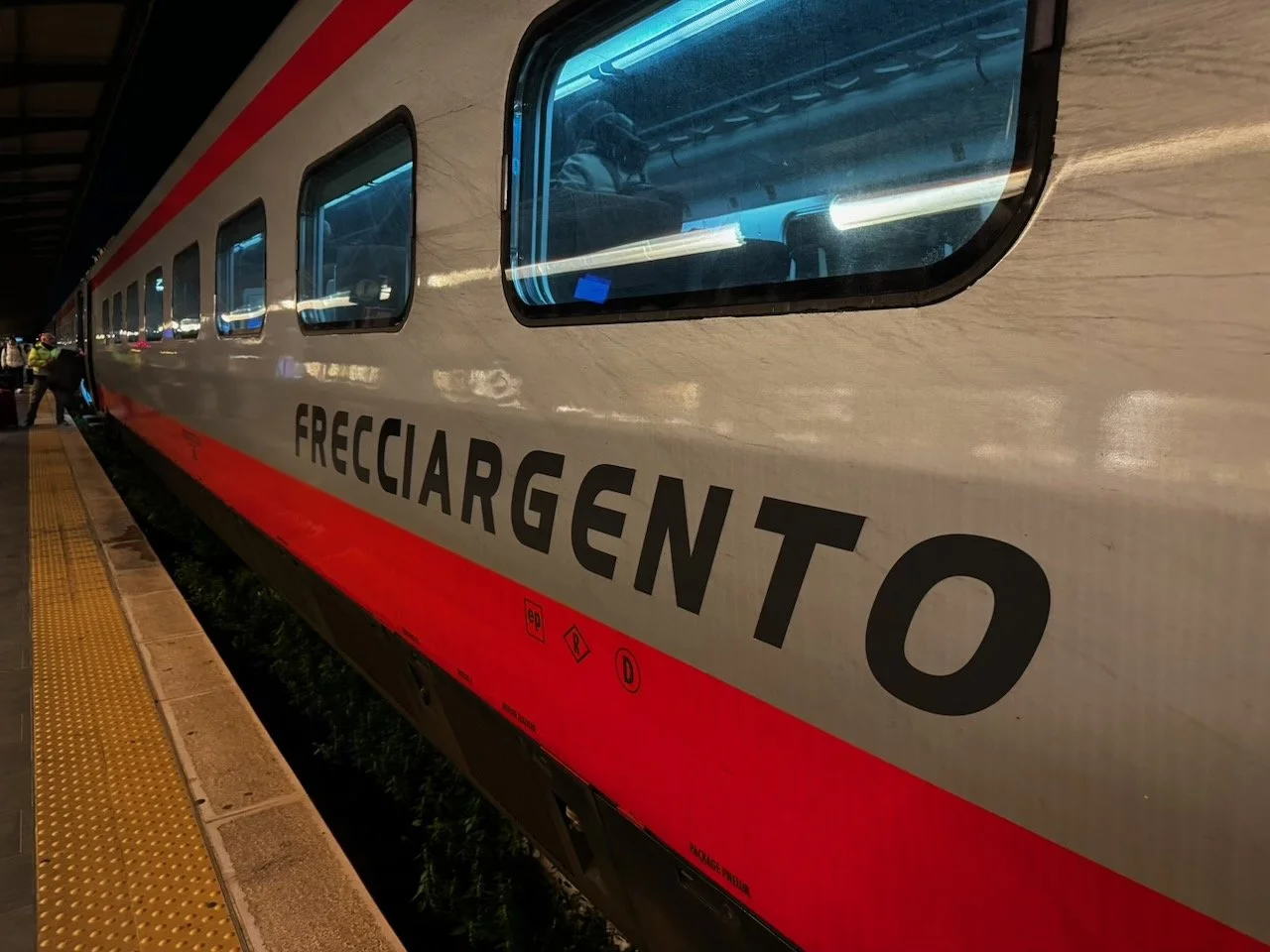
The largest train operator in Italy is Trenitalia, which is a division of the Italian government. The company has been in existence since 1905—the year my grandfather was born in San Vittore del Lazio! The fastest trains operated by Trenitalia are the Alta Velocità (AV) series, named in descending order of speed: Frecciarossa (“Red Arrow”), Frecciargento (“Silver Arrow”), and Frecciabianca (“White Arrow”). This was the “Silver Arrow” train that took us to Bari in a little less than four hours.
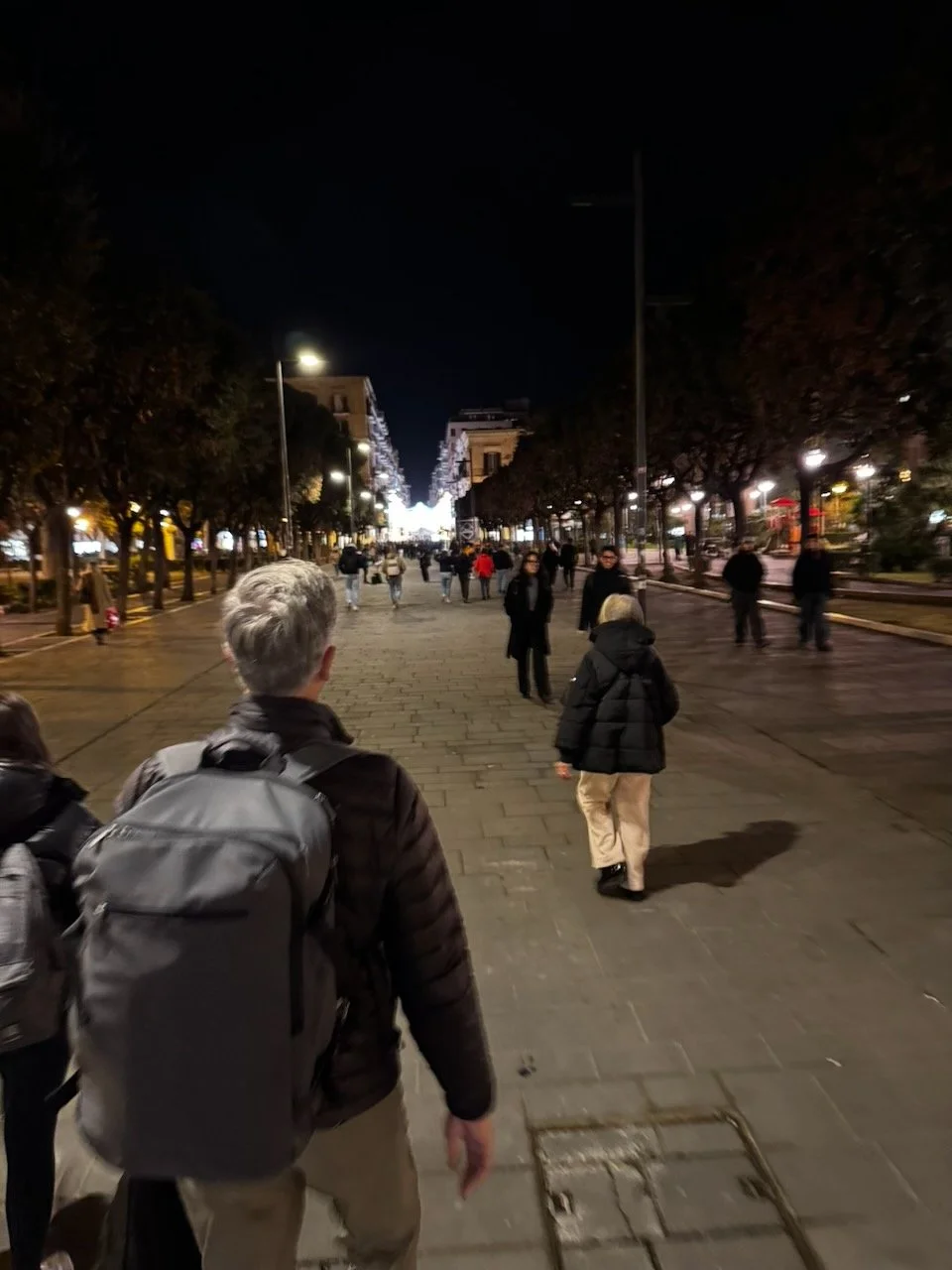
Dave walking through Giardini di Piazza Umberto I (The Gardens of Umberto I Square) after departing the Bari Centrale train station. Umberto I was King of Italy from 1878 to 1900.
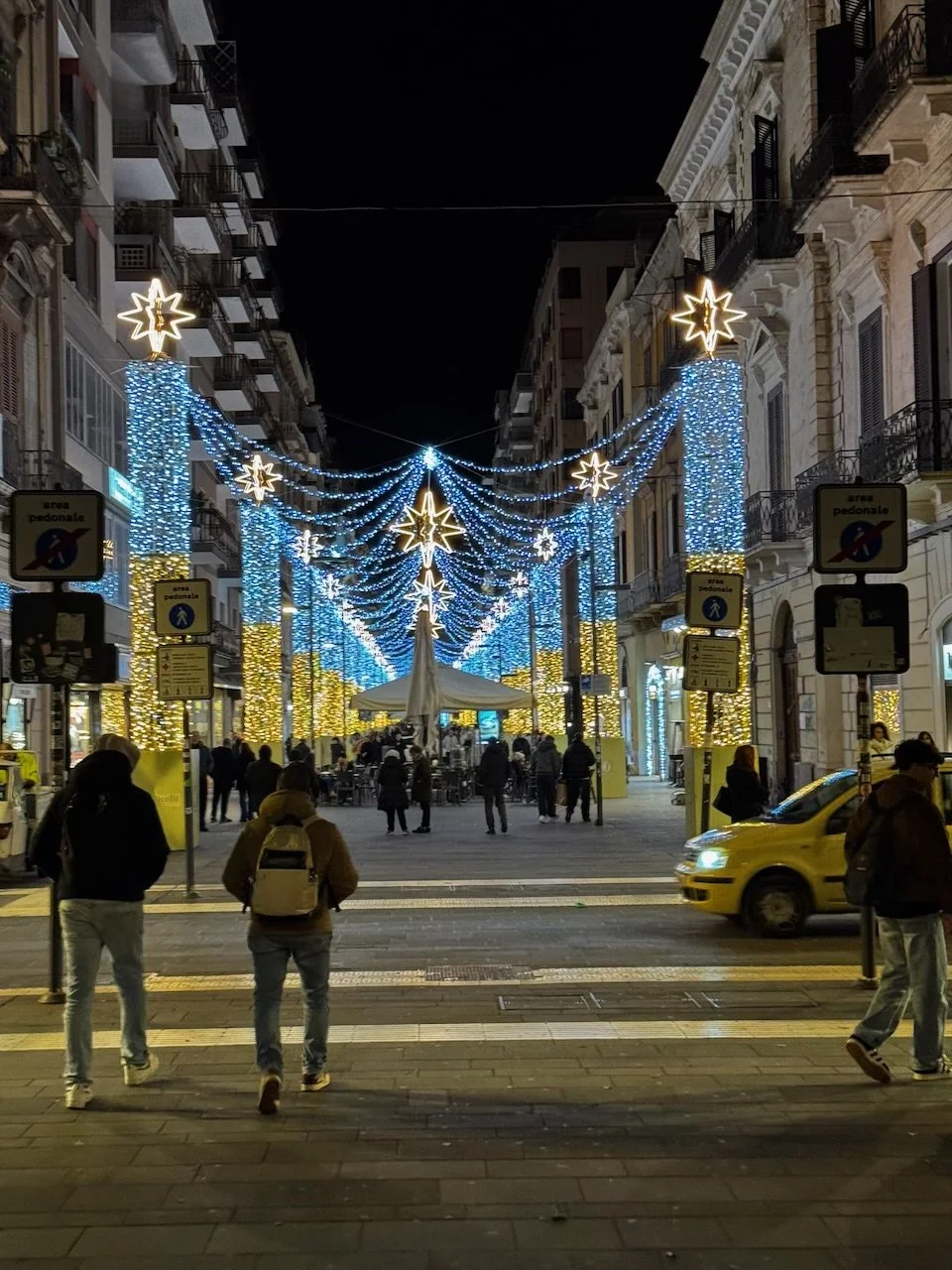
The garden square gave way to Via Sparano da Bari, a lengthy, decorated pedestrian walkway lined with every imaginable shop. It reminded me of wealthy beach towns in California, like Del Mar or Encinitas—only chillier.
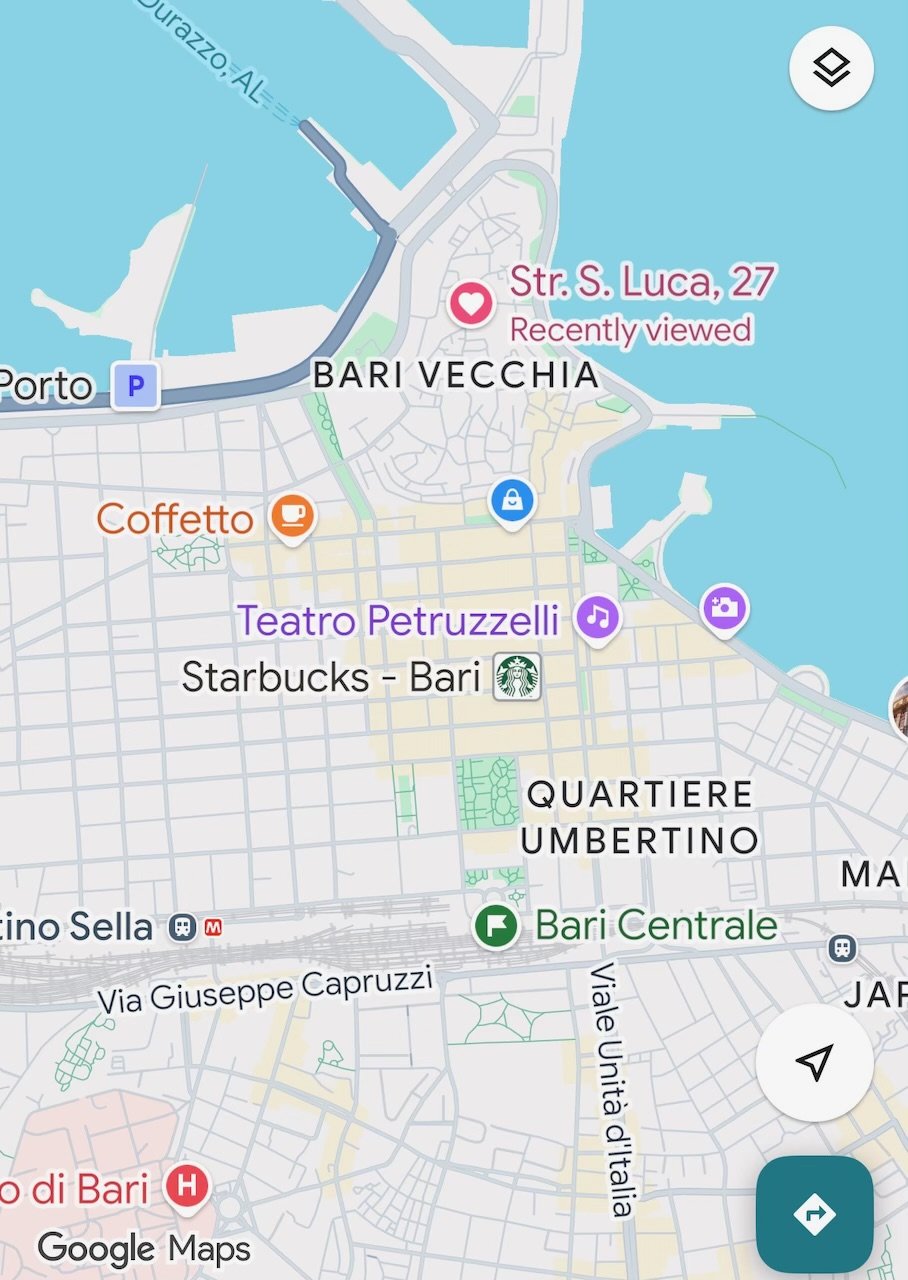
On this map you can see the Bari Centrale train station, the park, and then the developed urban areas in yellow. Much like Lower Manhattan, the original portions of Bari—Bari Vecchia (old Bari)—are quite noticeable because the street grid disappears and becomes irregular and winding. Our Airbnb is marked with a red heart.
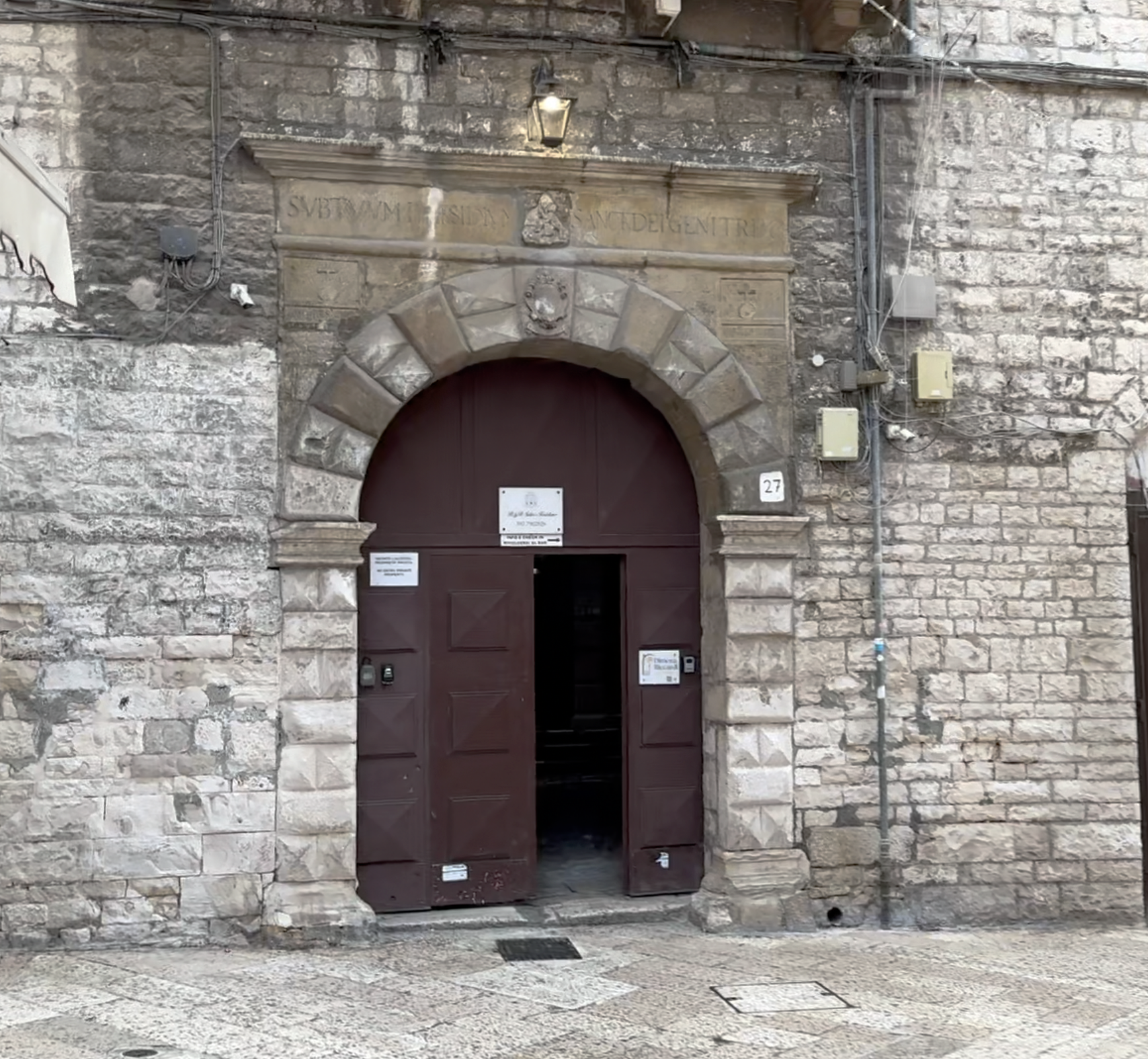
Our Airbnb—Dimora Riccardi San Nicola (Riccardi St Nicholas Residence)—was part of a larger building that began as an ancient monastery in the 1500s. The bas relief over the entryway depicts the Madonna and Child and includes the Latin inscription Sub tuum praesidium confugimus, Sancta Dei Genetrix, meaning “Under your protection we take refuge, Holy Mother of God,” which is the opening line of an ancient Christian prayer to the Virgin Mary. Oral tradition hold that Pope Sixtus V stayed here during a pilgrimage to venerate the relics of St Nicola.
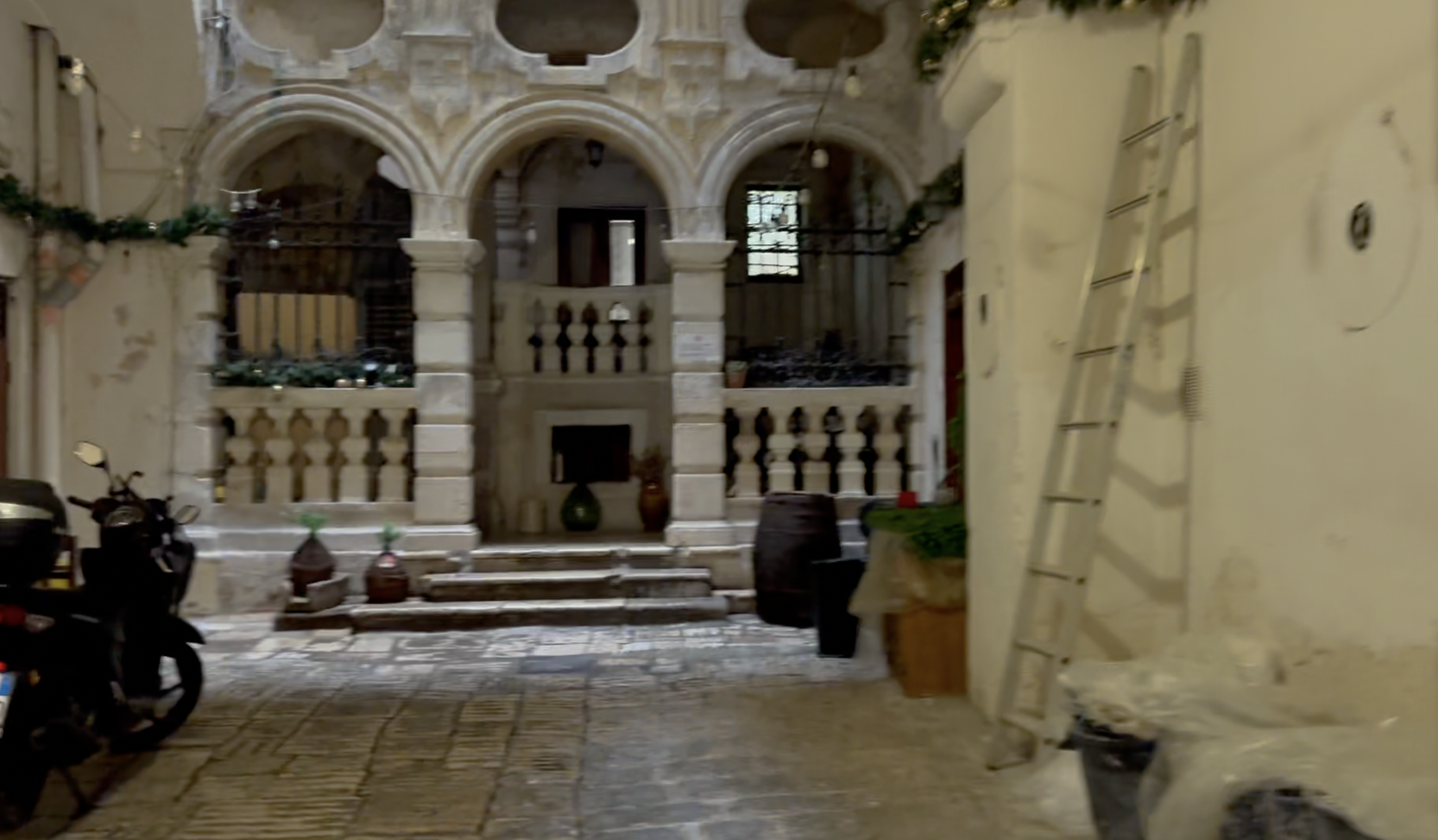
The convent was eventually abandoned until it was acquired by the noble Nitti-Valentini family who, in 1785, transformed it into an elegant aristocratic residential palace. With the construction of the Murat district in the 19th century, many noble families left Bari Vecchia. The palace, too, was gradually converted into a popular apartment building.
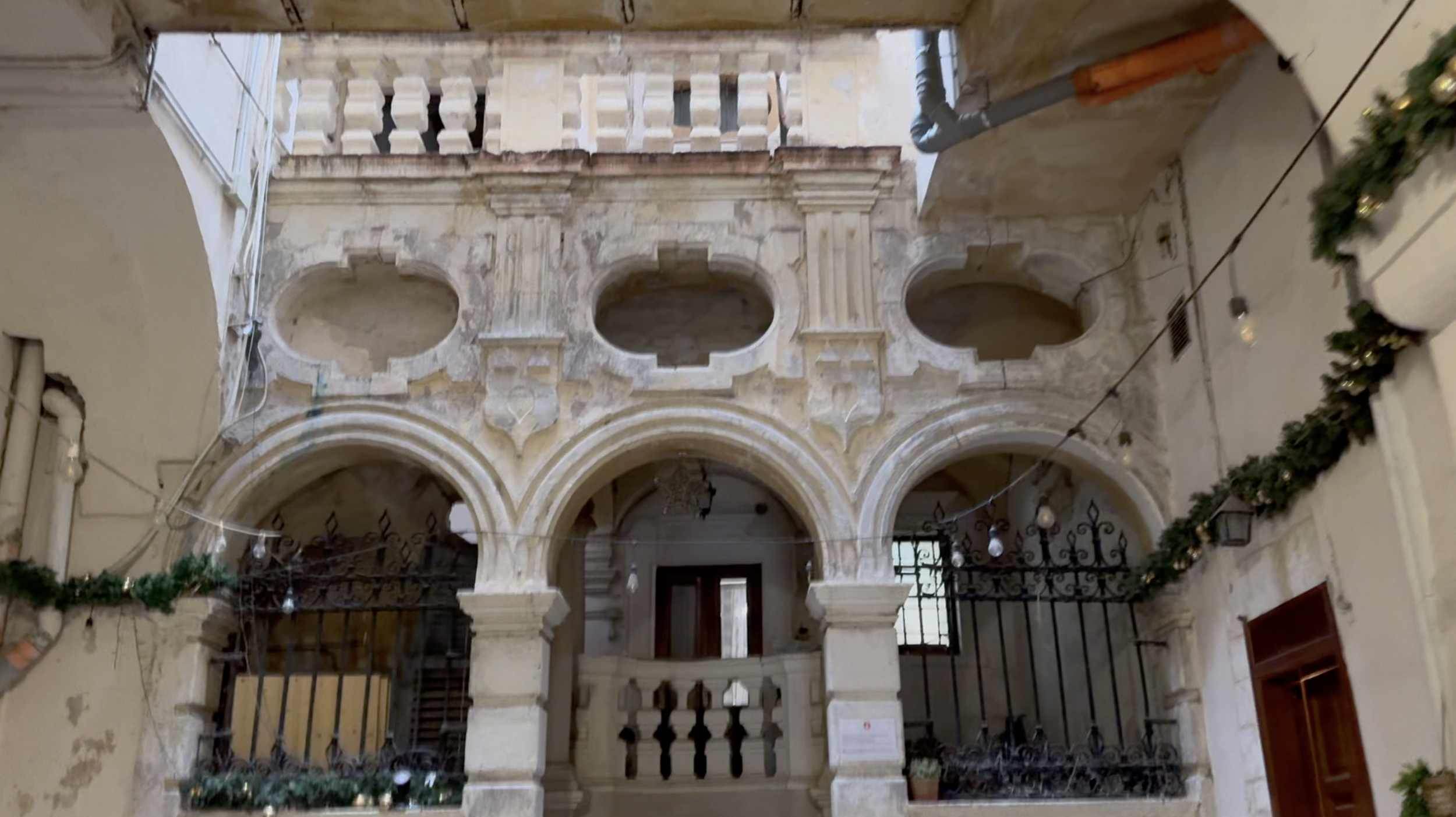
The building still retains valuable architectural elements: a rusticated stone portal, Doric columns, a courtyard with rings for tying horses (two are seen on the right wall in the previous image), a stone staircase, and a loggia with Tuscan columns.
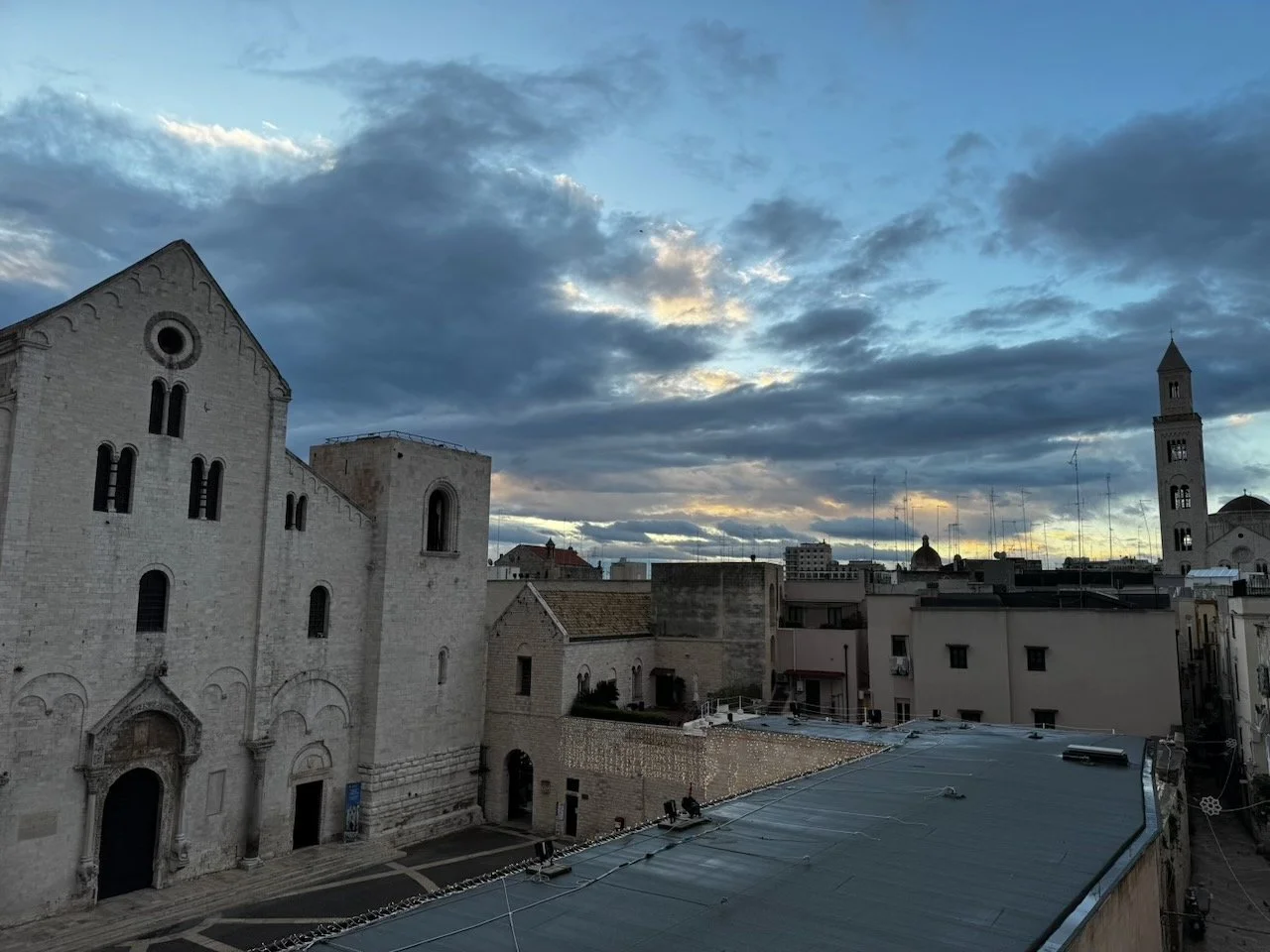
Our apartment was immediately adjacent to and had exceptional views of the Basilica San Nicola (Church of St Nicholas). The church is said to house the relics of St Nicholas of Myra—the 4th-century bishop who inspired the figure of Santa Claus. These were brought from Myra (in present-day Turkey) to Bari in 1087 by sailors, to protect them from Muslim invasion.
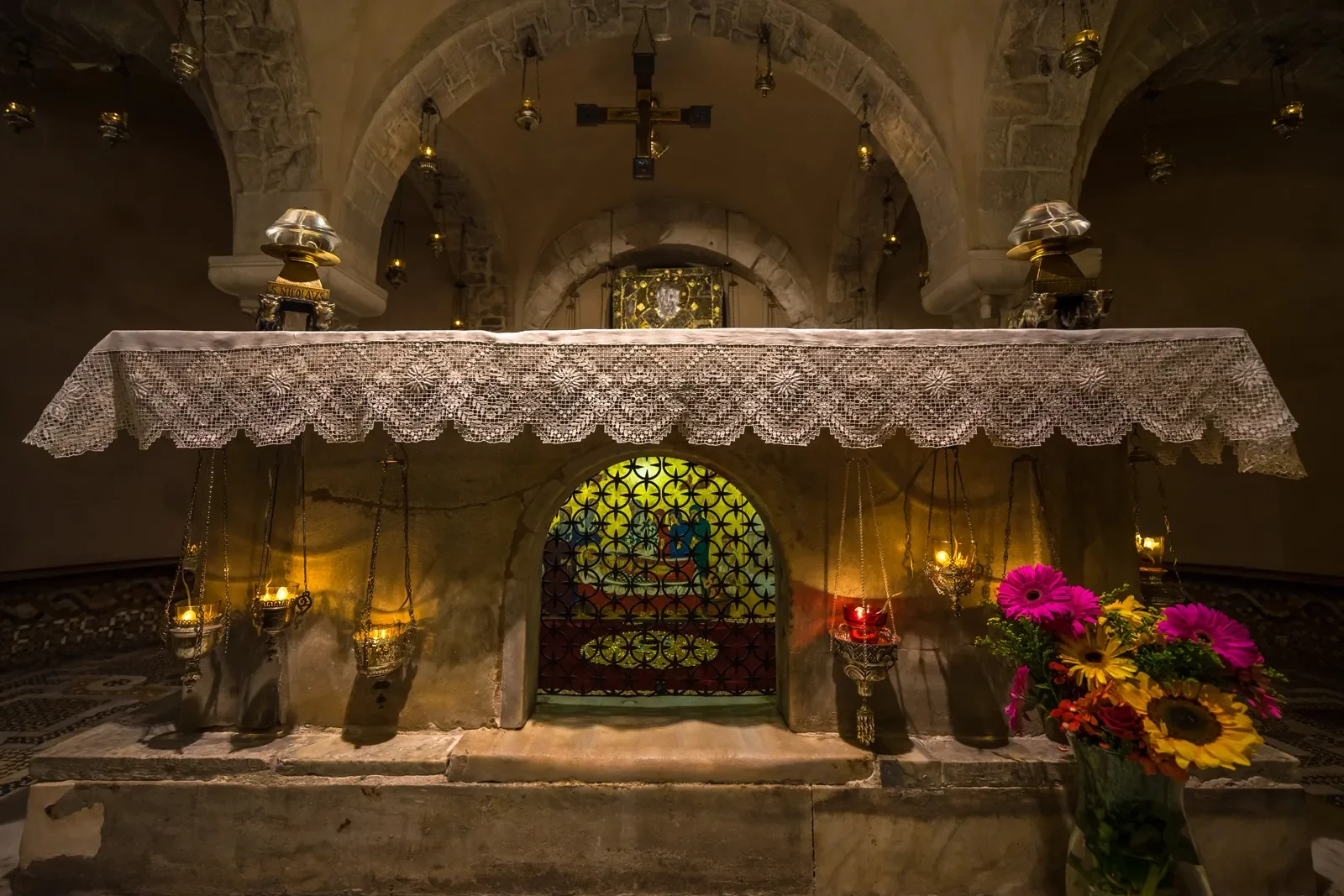
The relics are kept in this marble tomb in the crypt beneath the main altar. Every May 9—the day the relics arrived in Bari in 1087—clergy open the saint’s marble tomb and a priest lowers a small container and collects a clear, fragrant liquid that has seeped from the relics. This “manna” (often described as myrrh-like) is mixed with holy water, increasing the quantity so it can be shared with the faithful. The solemn, ceremonial moment is attended by both Catholic and Orthodox clergy.
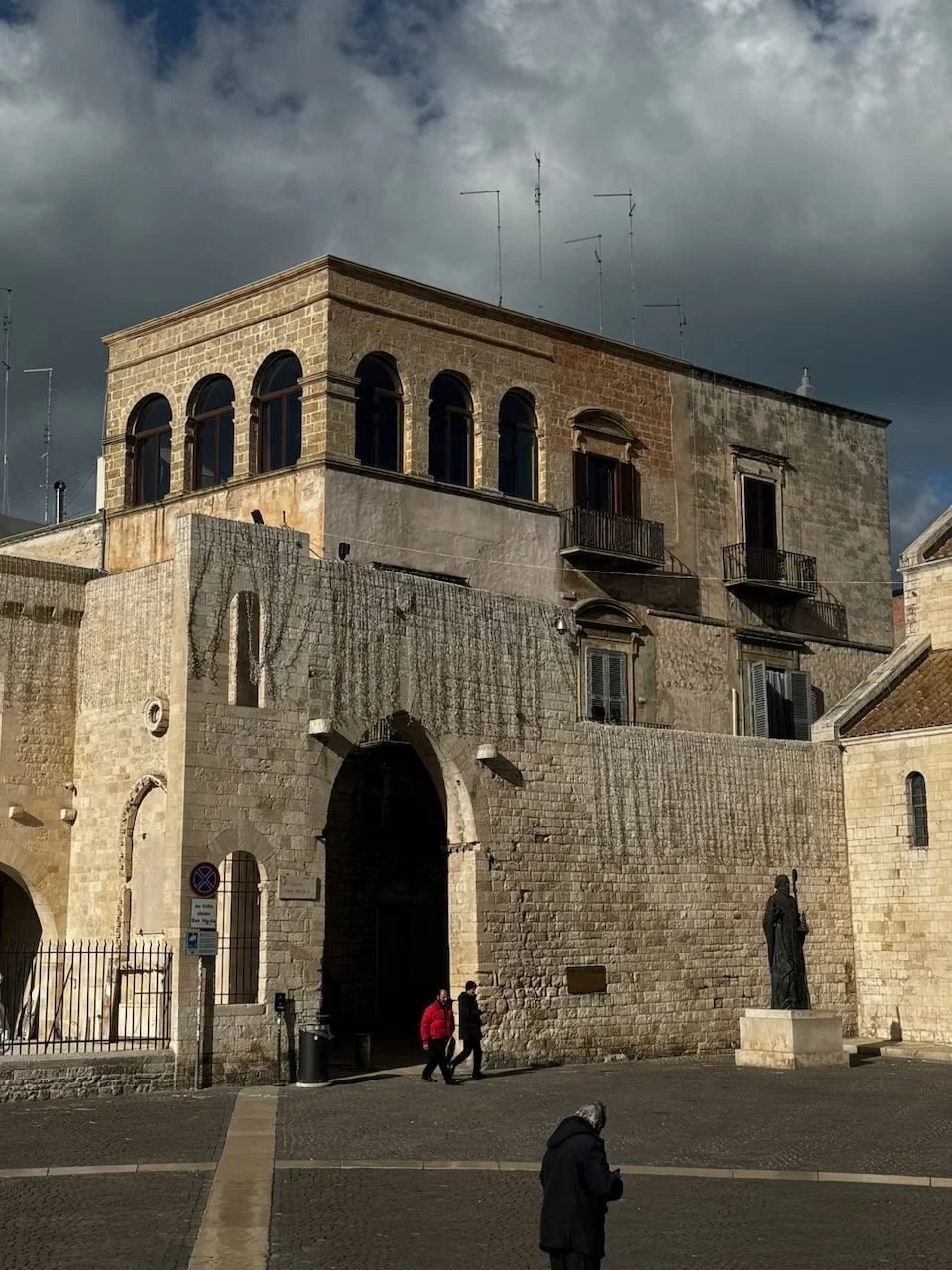
Our apartment (the 6 arched windows and the first Juliette balcony) as seen from the Basilica. Because of St Nicholas’s relics, the basilica is an important pilgrimage site for Roman Catholics, as well as for Eastern Orthodox Christians. The statue of St Nicholas seen here is controversial because it was personally gifted to the church by Vladimir Putin.
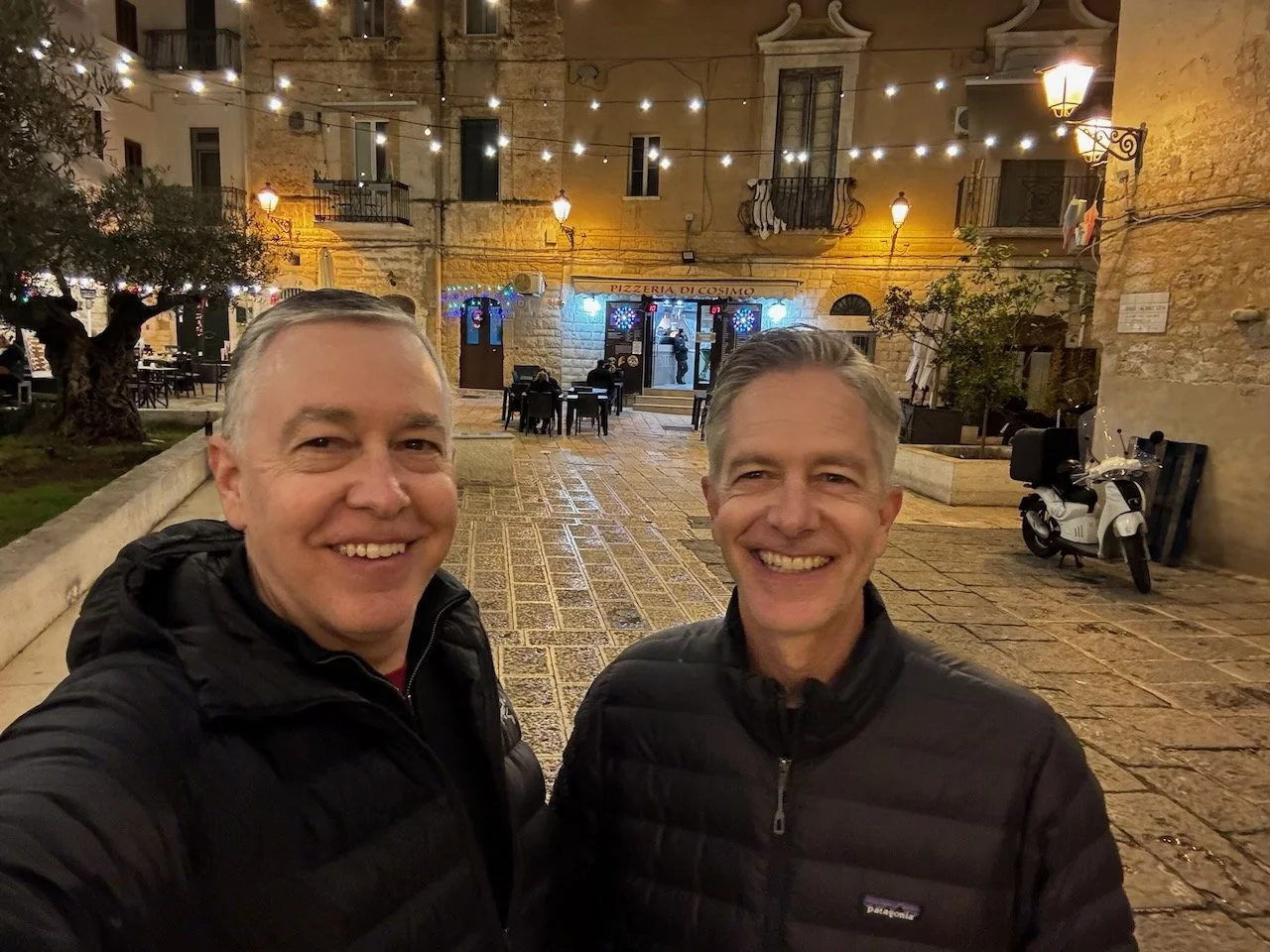
After dropping off bags in our amazing rental, was ate dinner in this striking piazza in Bari Vecchia known as Lovers’ Square.
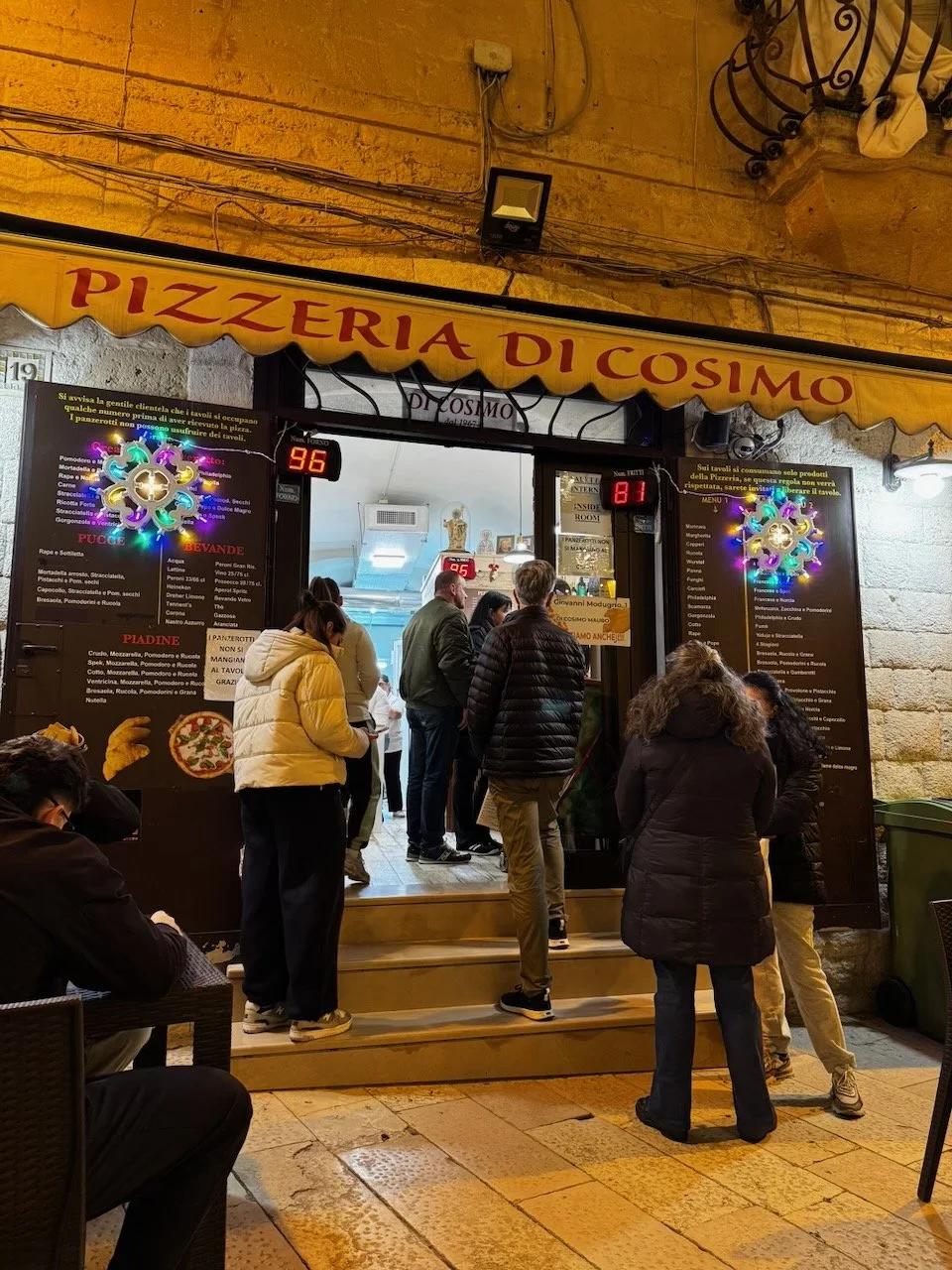
Dave preparing to order our pizzas at Pizzeria dei Cosimo (Cosimo is a traditional Italian male given name).
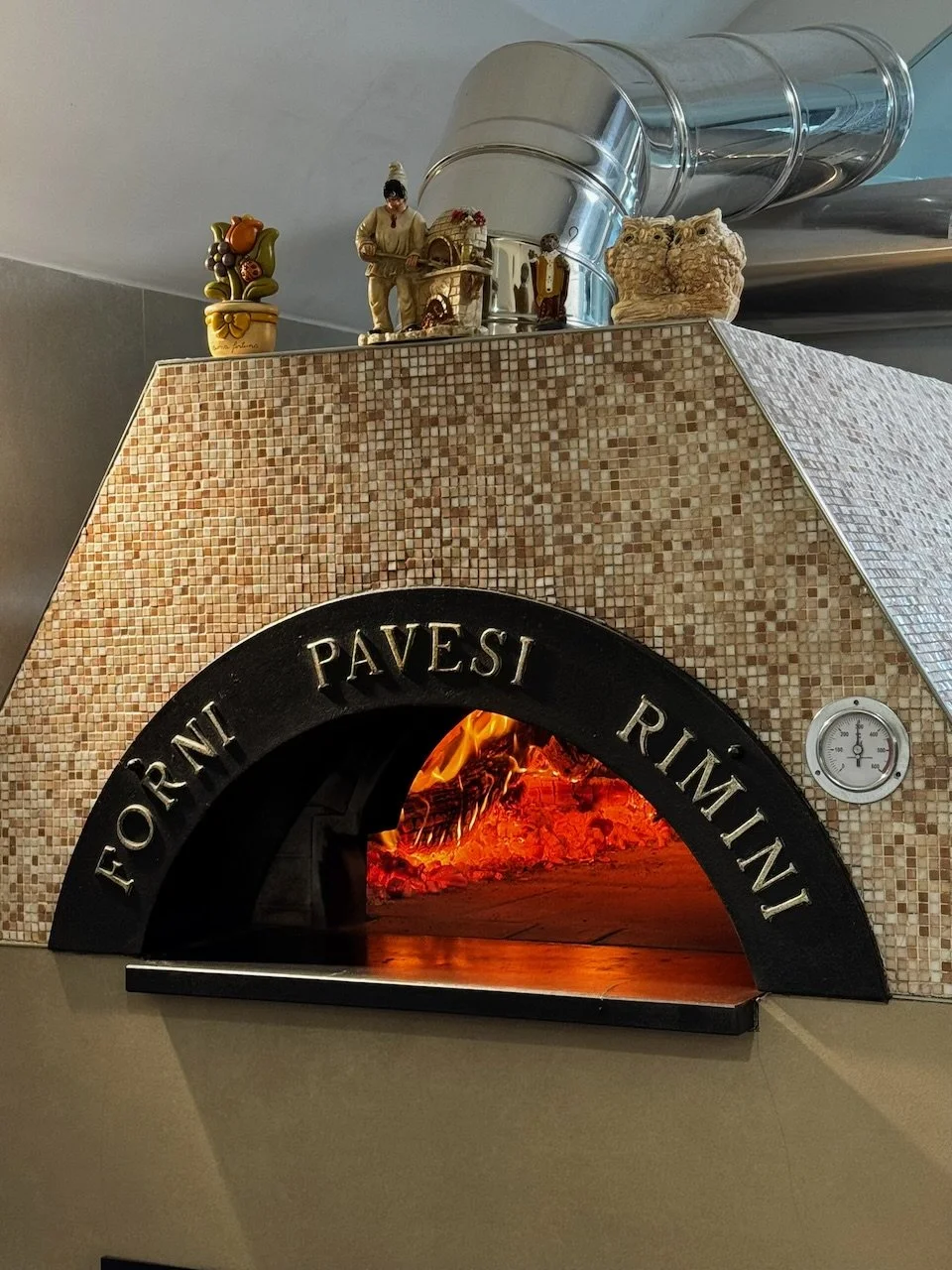
With an amazing pizza oven made by Pavesi Ovens of Rimini (Rimini is a region of Italy near San Marino), your pizza just has to be good!