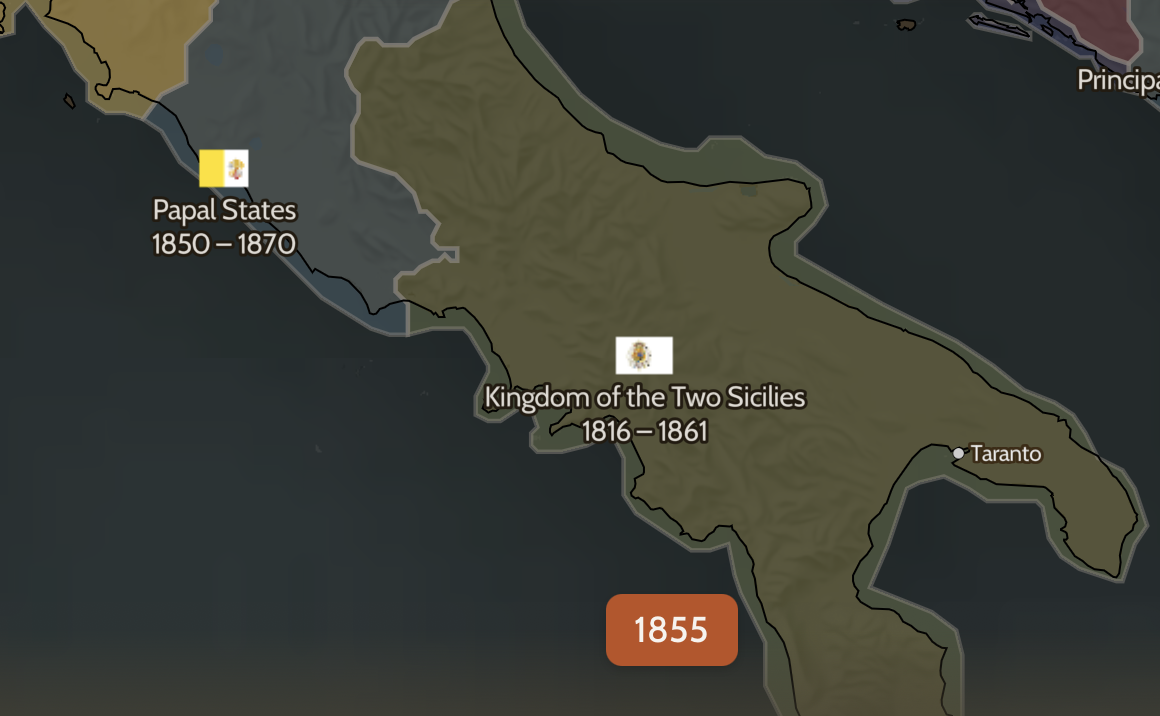
1. Every story has a beginning, and—as far back as we can trace—Ruth’s begins in the rural countryside of what is now southern Italy, where her paternal great-grandfather Pasquale Verdone was born around 1855.
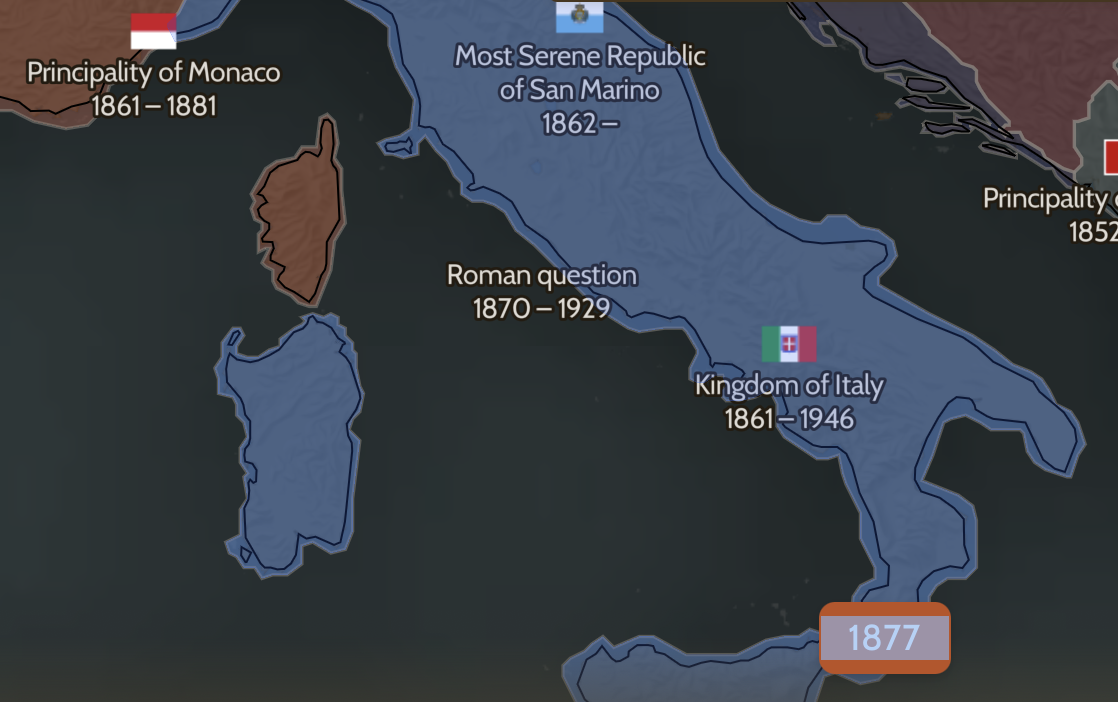
2. Pasquale married Mary A. Yennillia (sp?) around the time Italy was united on March 17, 1861. Mary gave birth to Ruth’s paternal grandfather Angelo Verdone on February 15, 1877. Based on Ellis Island records for Angelo’s 1910 voyage to America, Pasquale, Mary, and Angelo may have lived in Castelliri, a village about 35 miles northwest of San Vittore del Lazio.
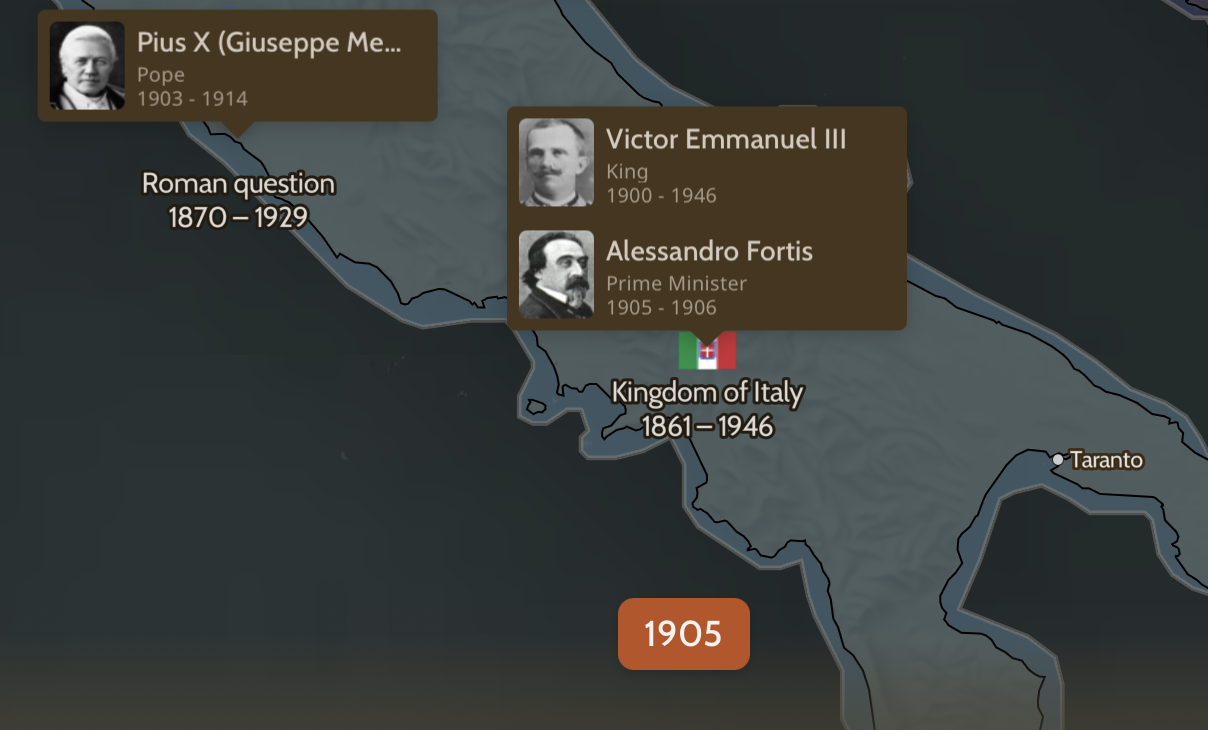
3. Ruth’s paternal grandmother Elvira Bonaventura was born on September 18, 1873, in San Vittore del Lazio to father Gaetano and mother Diodata Bonaventura née Malizia. Elvira and Angelo met and they began married life together in San Vittore. Their first-born child was a son and they named him after Angelo’s father. Ruth’s father Pasquale Verdone was born November 3, 1905.
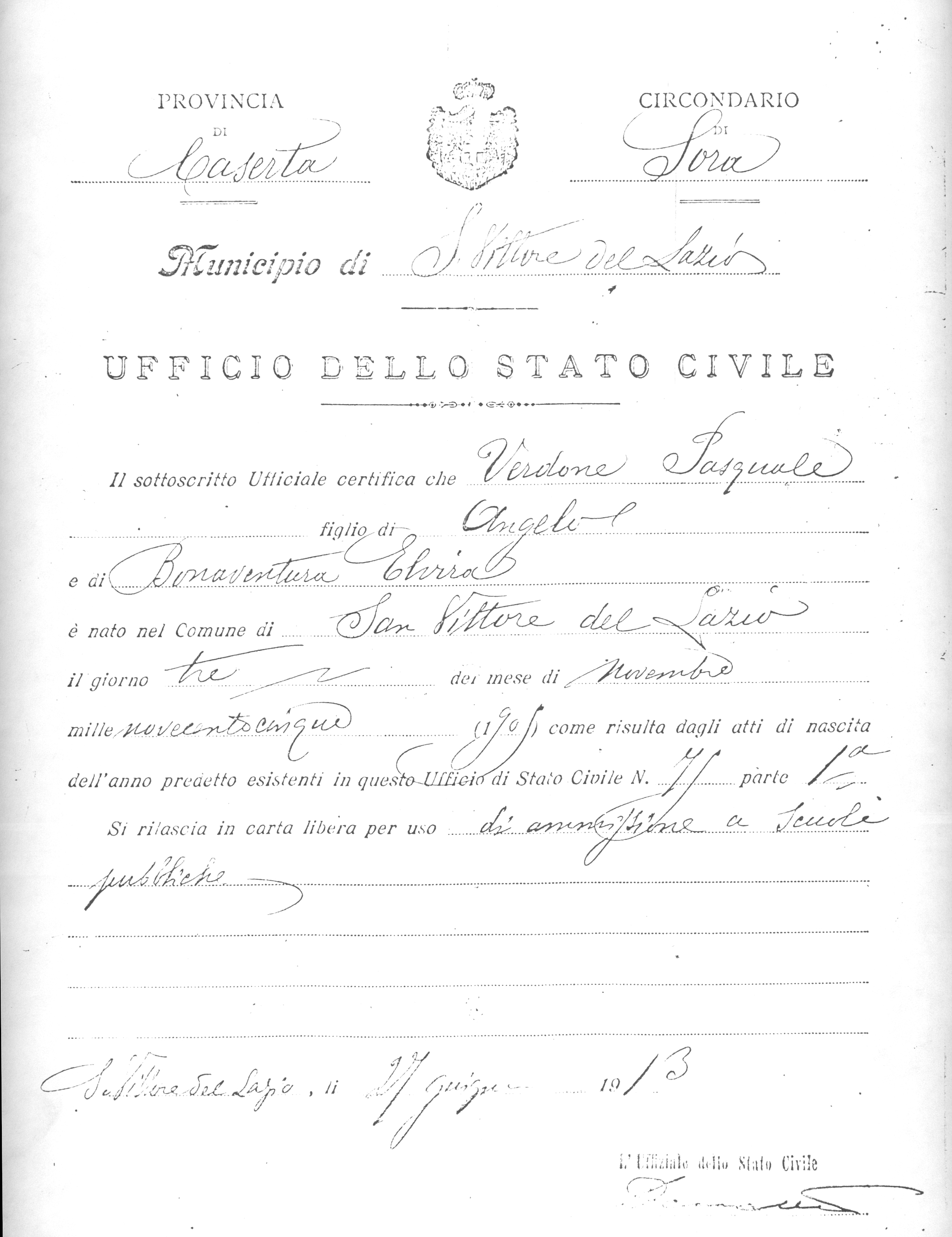
4. Italian birth certificate for Pasquale Verdone, born to Angelo and Elvira Verdone, née Bonaventura, on November 3, 1905, in San Vittore del Lazio. Pasquale later Anglicized his name to Patrick (Pat).
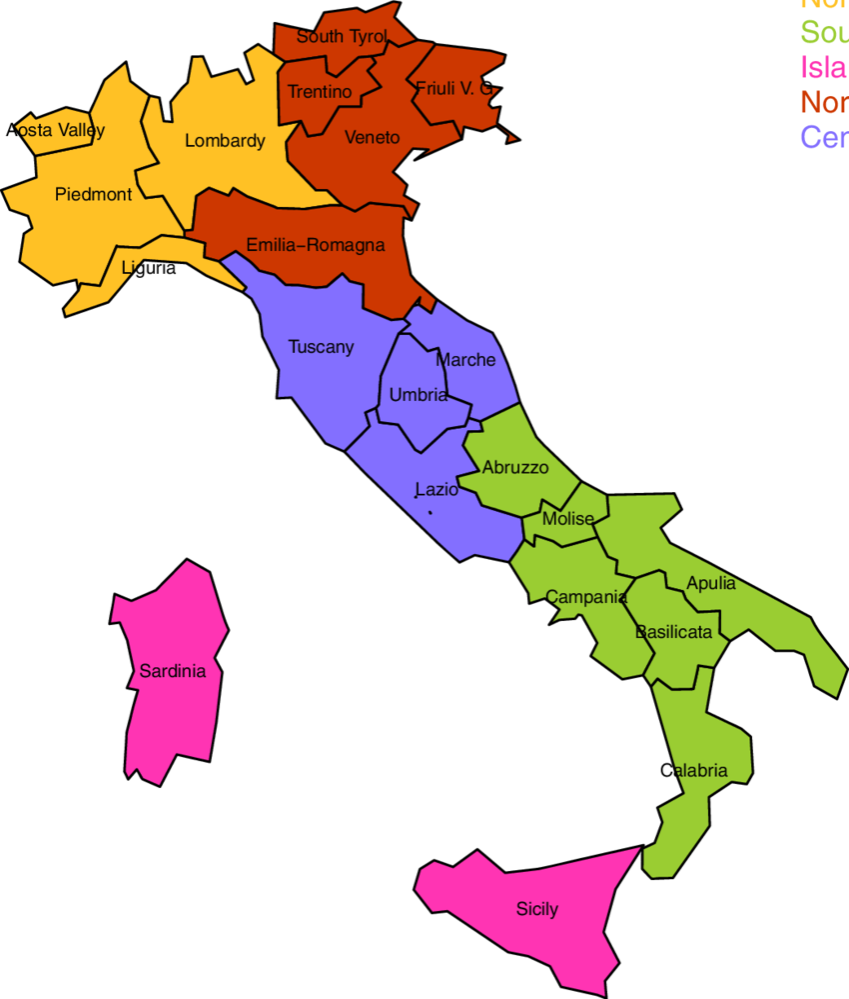
5. Italy is divided into five geographical areas: Northwest, Northeast, Central, South, & Islands. Italy is further divided into 20 regions, with the Lazio Region being in Central Italy. San Vittore del Lazio translates as Saint Victor of the Lazio Region. Southern Italians venerated St Victor of Marseilles, an early Christian Roman soldier who was martyred for refusing to worship pagan gods and destroying an idol of Jupiter.
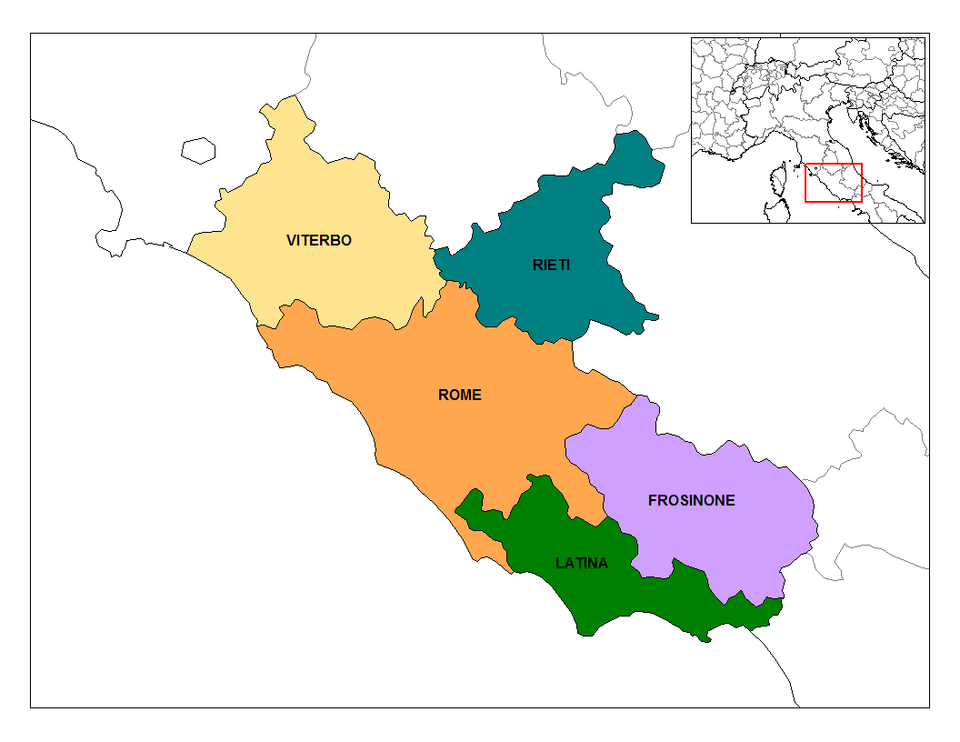
6. Pat’s birth certificate from 1905 says Province of Caserta, which no longer exists. When Mussolini consolidated the provinces, San Vittore del Lazio was placed into Province of Frosinone.
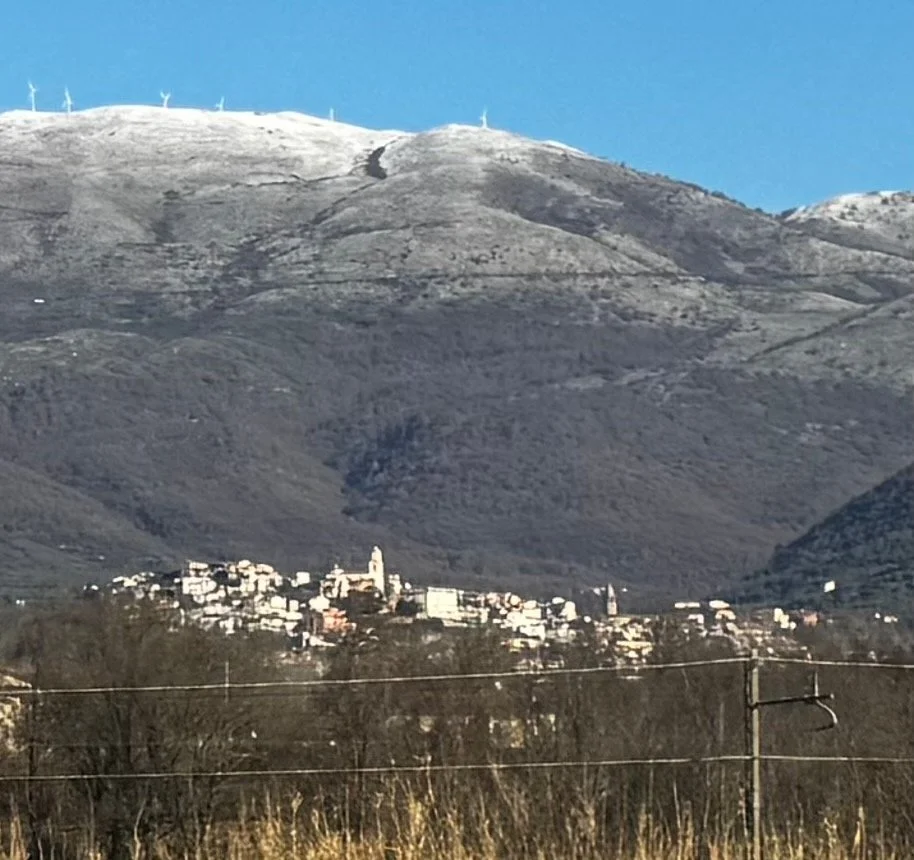
7. San Vittore del Lazio perched on a hill overlooking the last stretch of the Liri Valley and the confluence of the Liri and Gari Rivers. The village is surrounding by the Mainarde and Aurunci Mountains. The tall white belfry (center) is St Mary of the Rose Church; the other (right) is Church of St Nicolas.
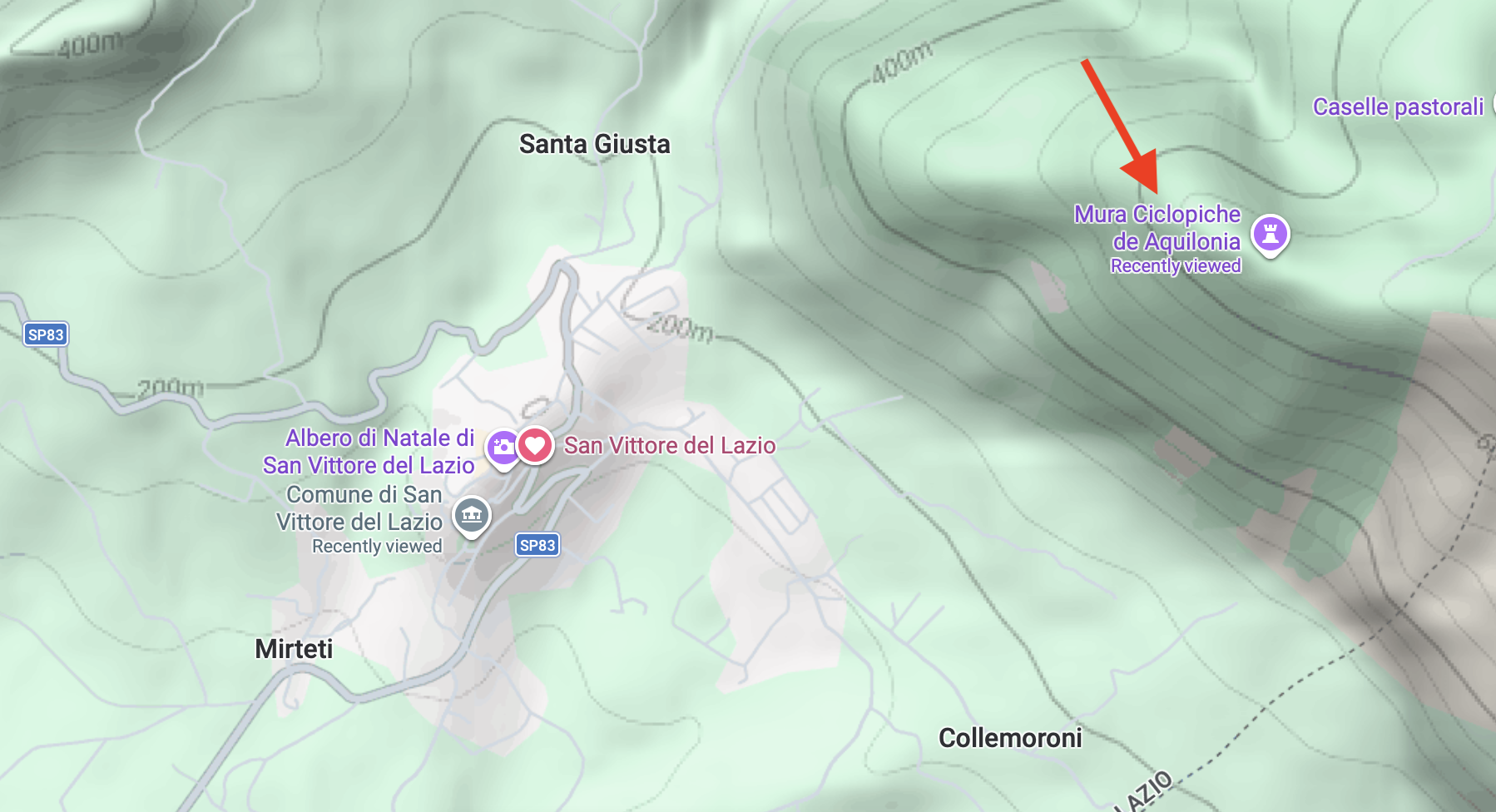
8. The slopes of Mount Sammucro include pre-Roman ruins, notably a formidable defensive system of massive boulders encircling the mountain’s first two ridges on the first peak northeast of the village.
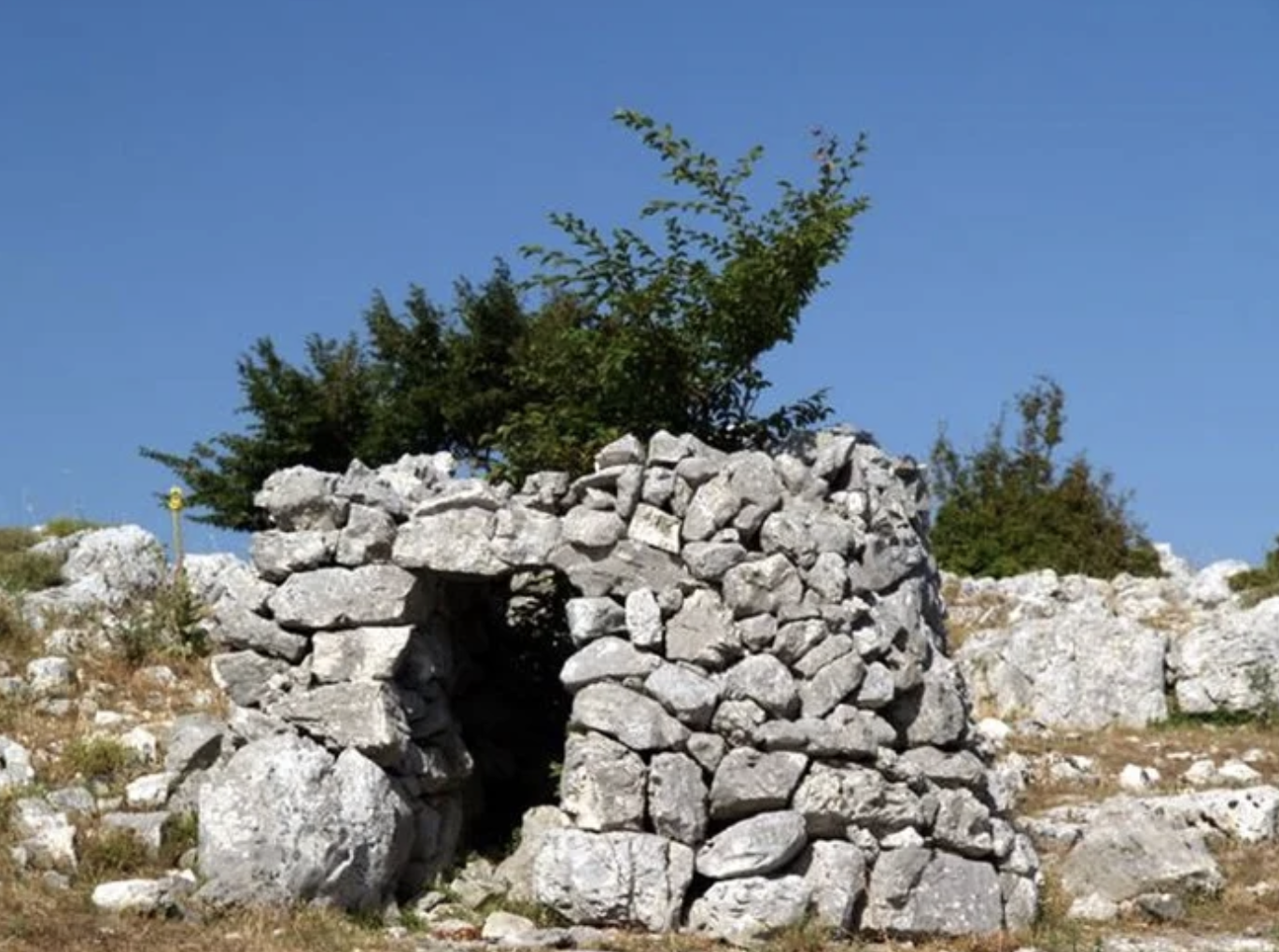
9. The pre-Roman remains are the walls of a Samnite settlement on the slopes of Mount Sammucro, likely the city of Aquilonia. The Samnites, rivals of the Romans, were defeated by the Roman legionaries in 293 BCE.
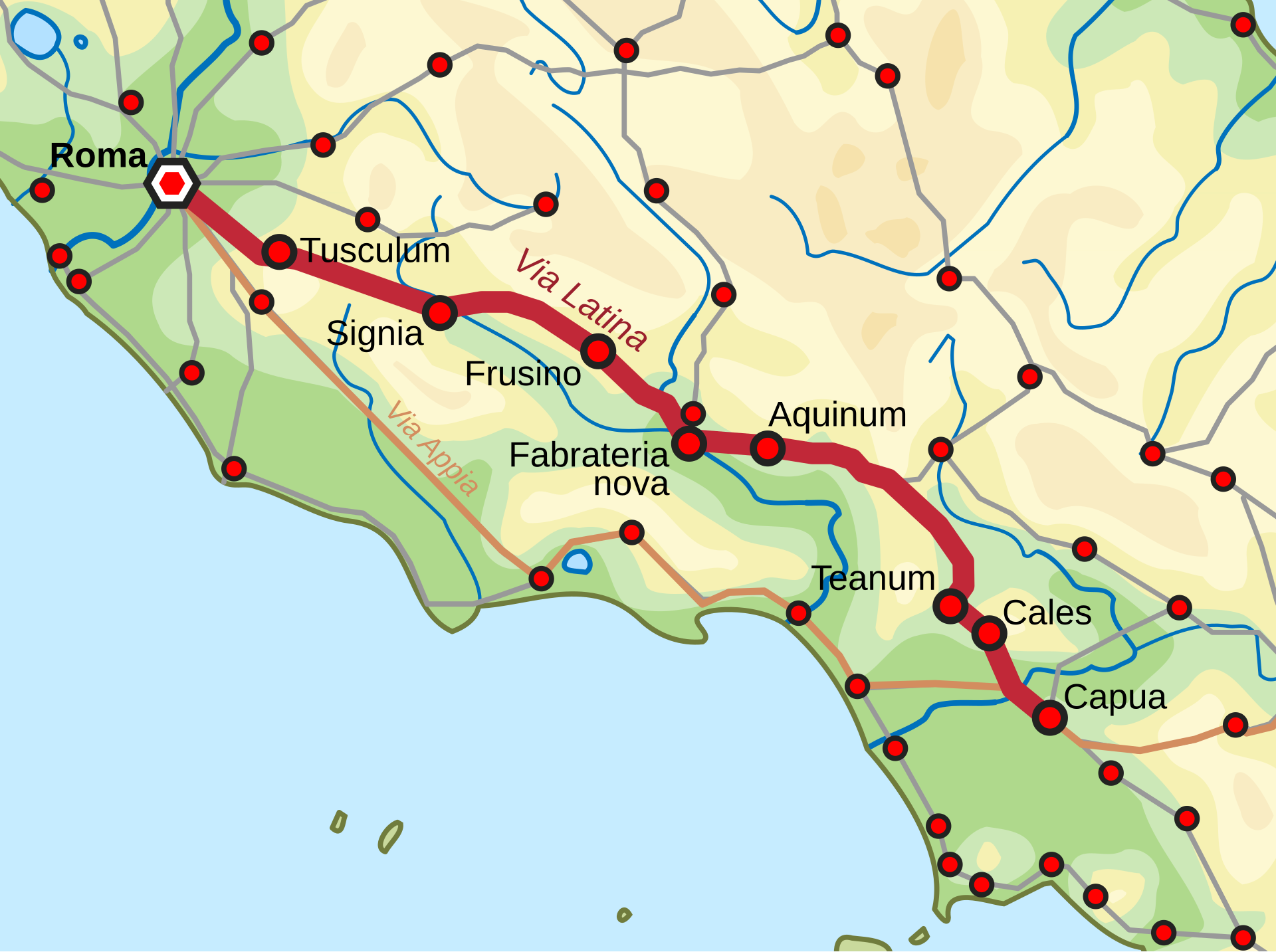
10. Situated near the Via Latina—a major Roman road linking Rome with Campania, including cities such as Pompeii and Naples—the Romans used San Vittore del Lazio as a strategic stronghold to control the surrounding plains and as a defensive position during the Samnite Wars.
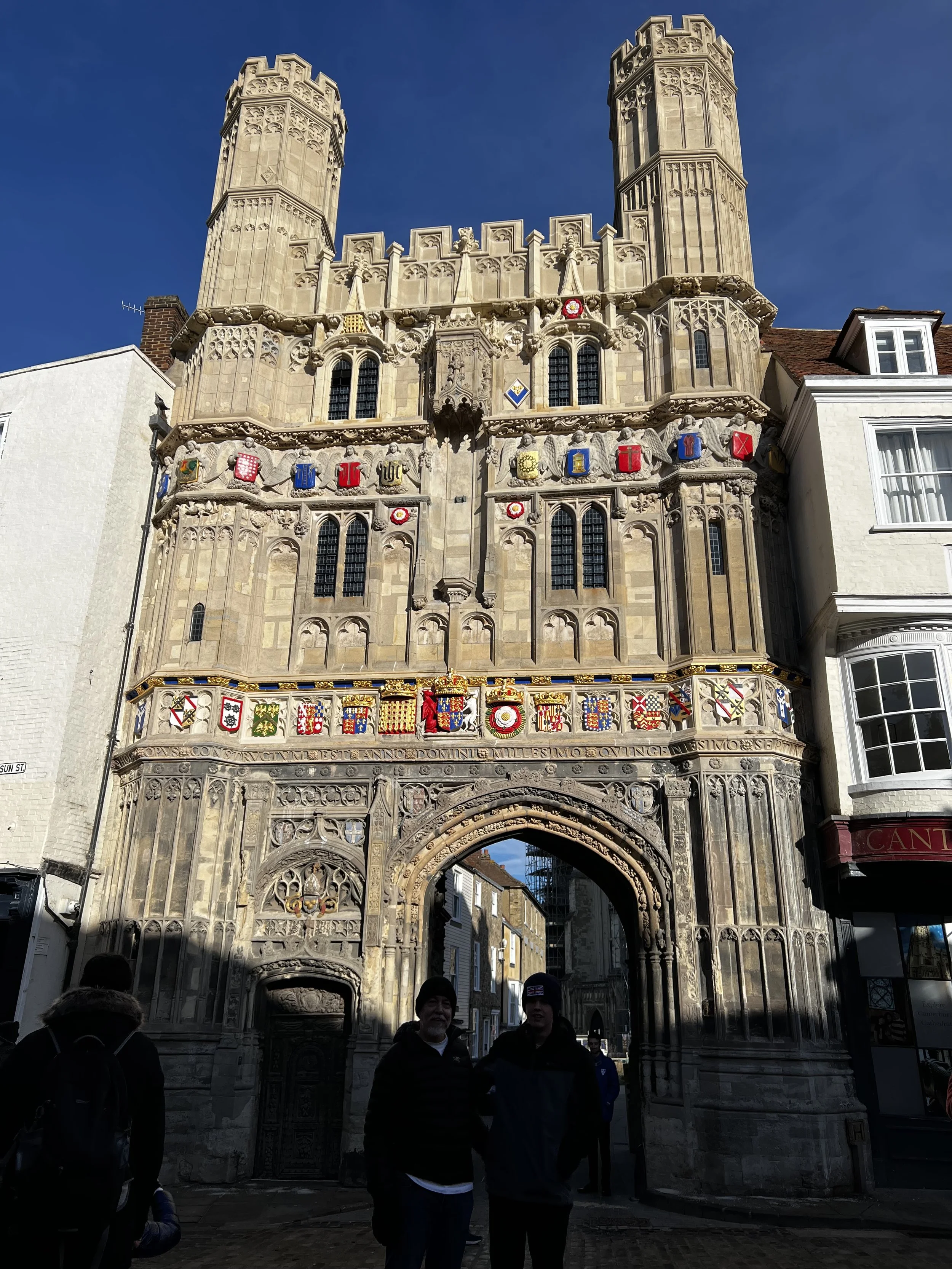
11. Pilgrims bound for Rome following the Via Francigena depart Canterbury Cathedral from the Christ Church Gate (above). After the Crusades began, Via Francigena nel Sud (Via Francigena in the South) was added from Rome to the Apulian ports of embarkation for Jerusalem. This Via passes through San Vittore del Lazio.
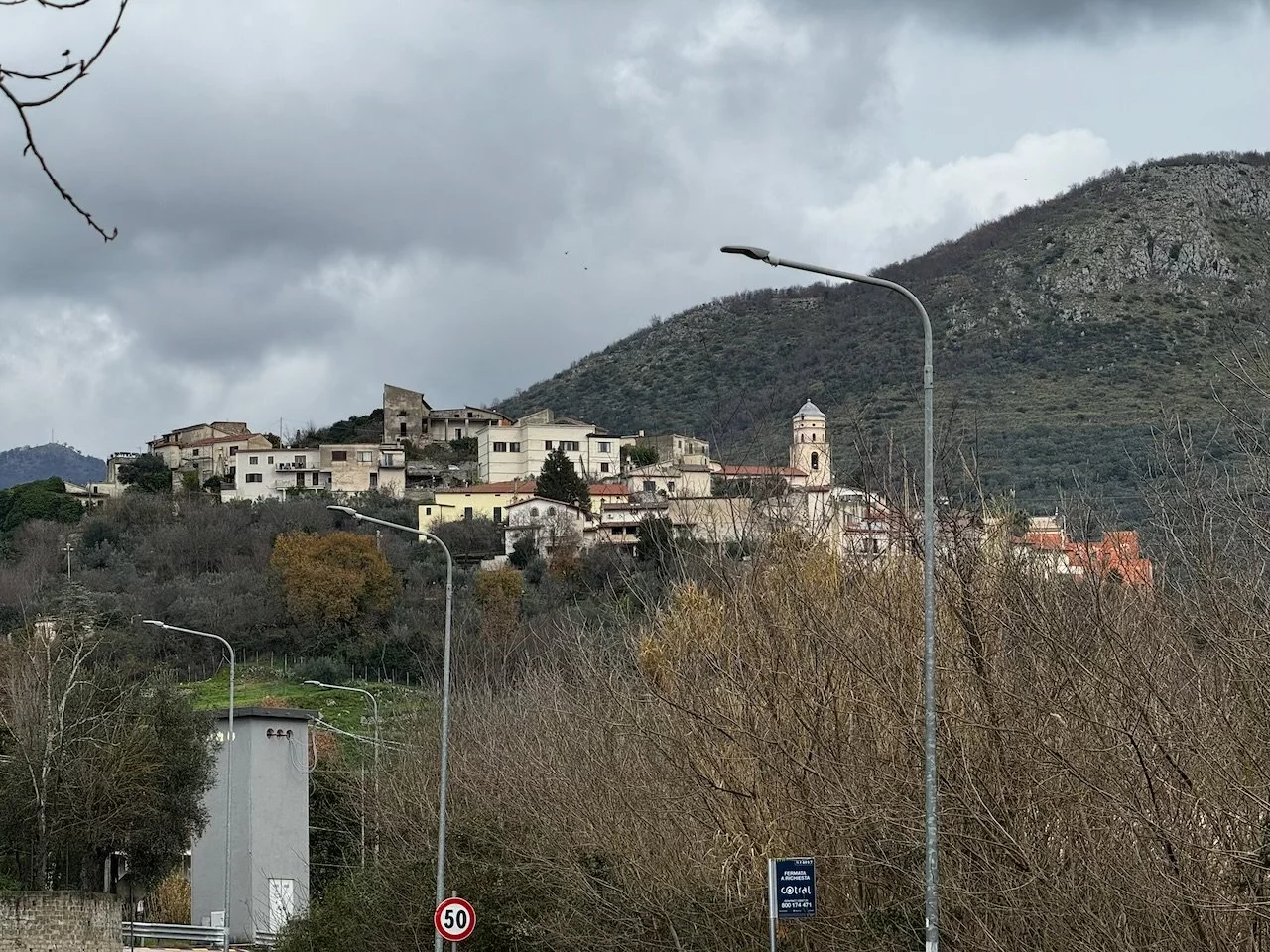
12. The Aquilonian ruins are on the hilltop to right. Later, in the early medieval period, a monastic cell dedicated to San Vittore (St Victor) was established on this lower hilltop. By the tenth century, repeated Saracen raids promoted the cell’s fortification, and it gradually evolved into a defensive stronghold—shaping the medieval street plan that remains. San Vittore defenses were first documented in a 1057 charter.
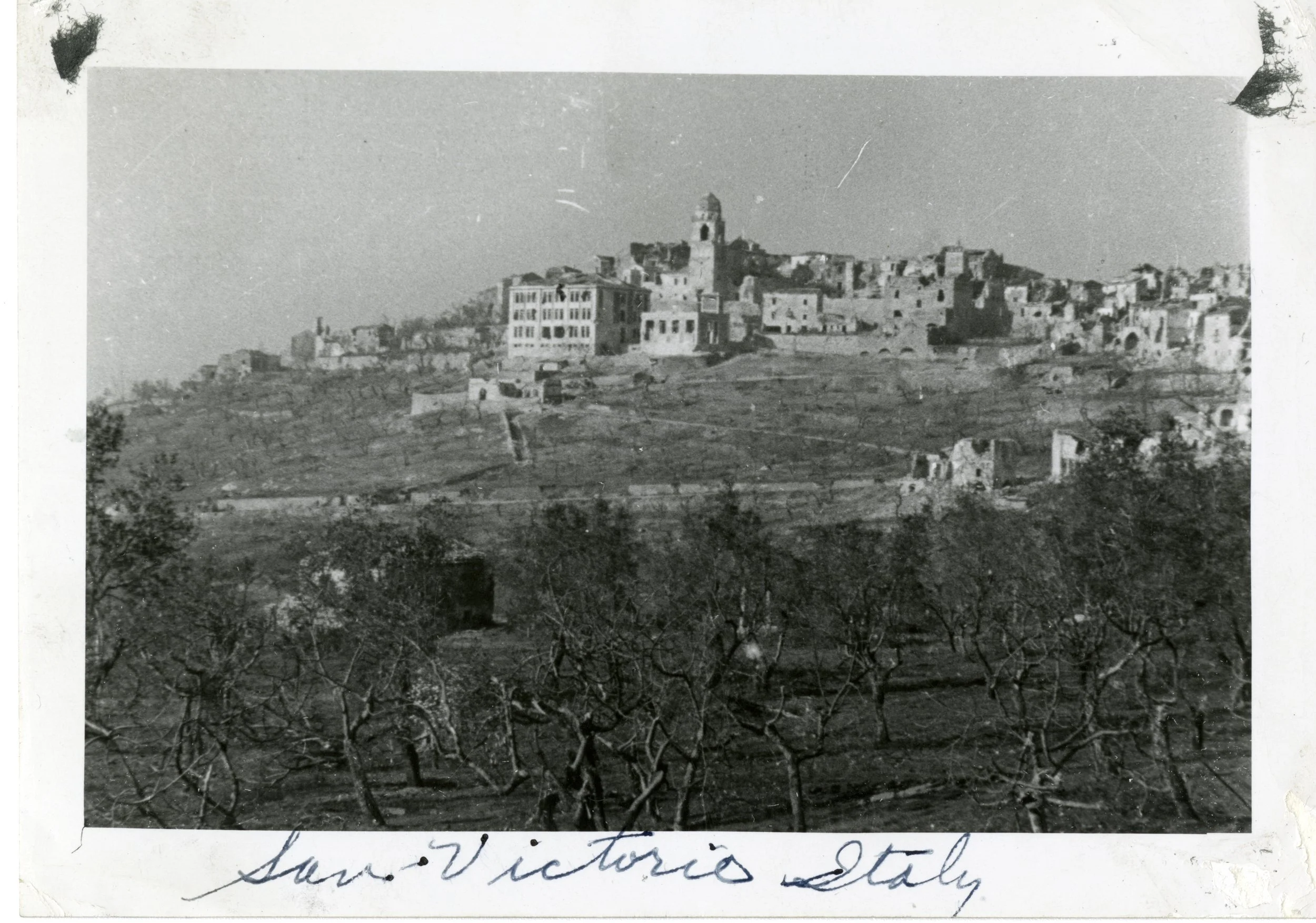
13. San Vittore del Lazio was once again of strategic importance during WWII. This is the town before suffering near-total destruction due to its position on the Gustav Line, a key German defensive front near Cassino. From late 1943, the area endured intense fighting as part of the broader, brutal Battle for Cassino, with San Vittore serving as a critical, heavily damaged outpost before the main abbey battle in February.
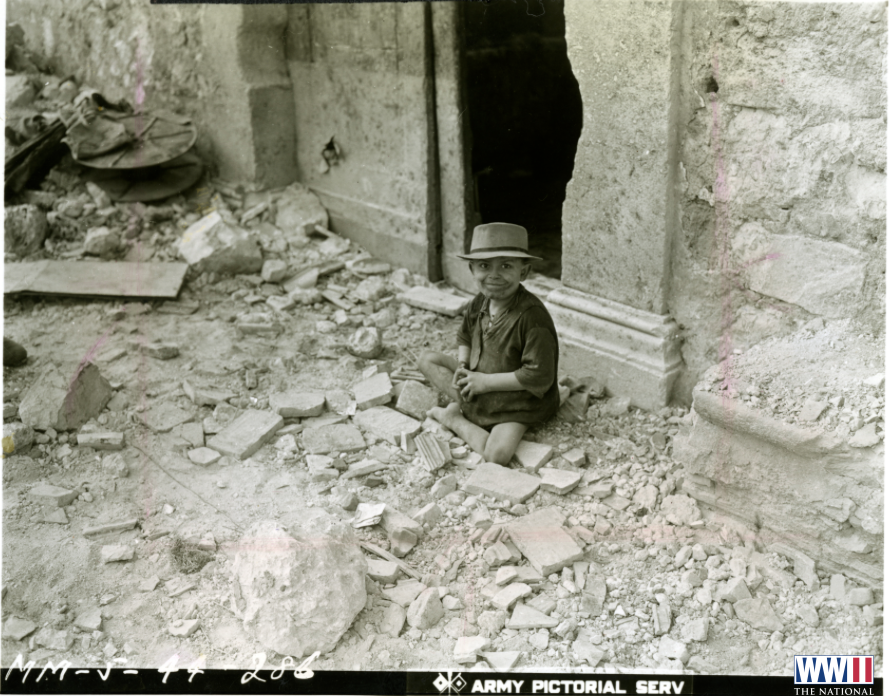
14. Allied forces advanced toward the town in early January 1944. Heavy Allied bombings and fierce house-to-house combat to dislodge German forces, led to high civilian casualties. Here a child plays in the rubble of San Vittore del Lazio.
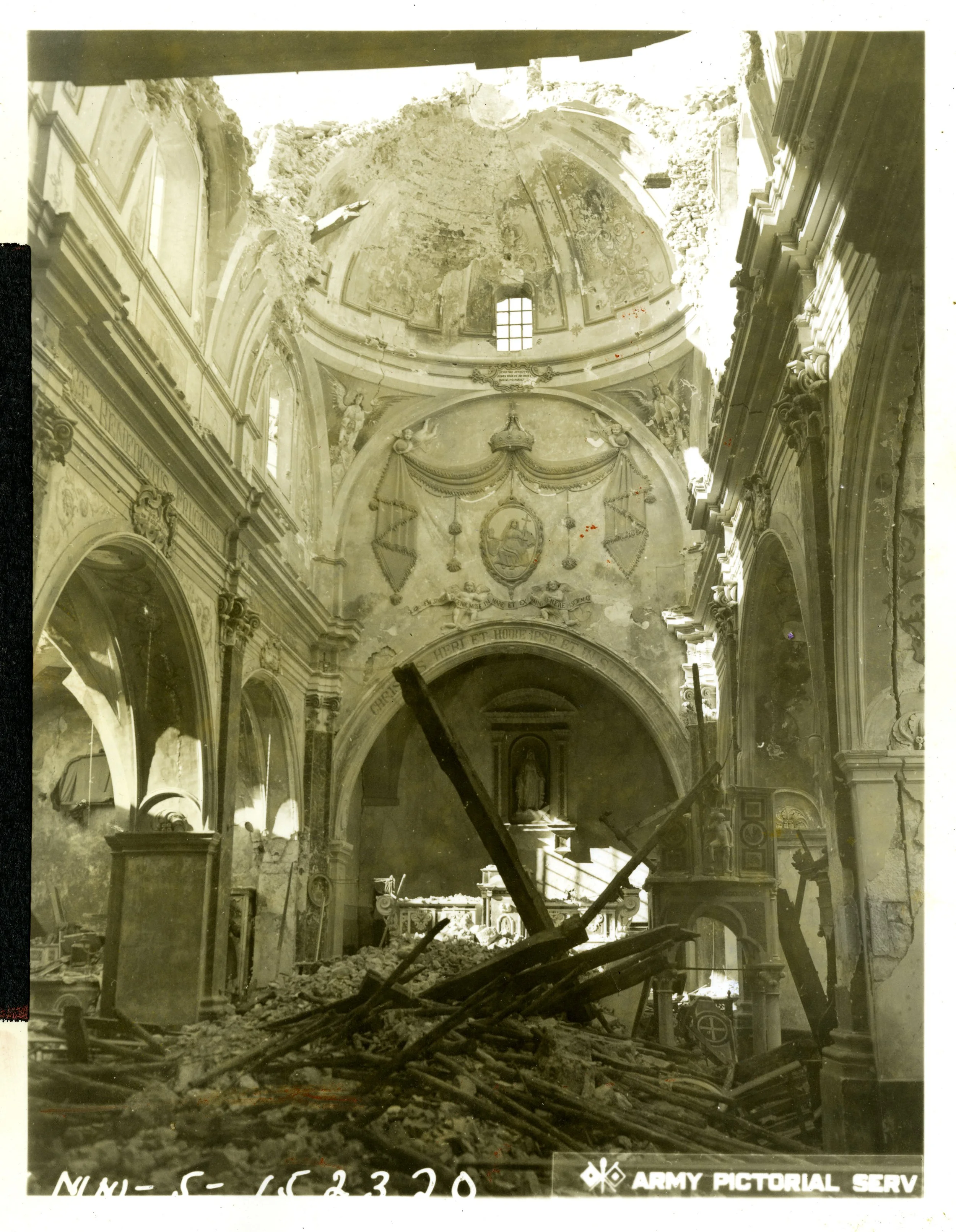
15. Roughly 91% of the town’s buildings were heavily damaged or destroyed, including St Mary of the Rose Church, which features the prominent church belfry seen in most images of the village.
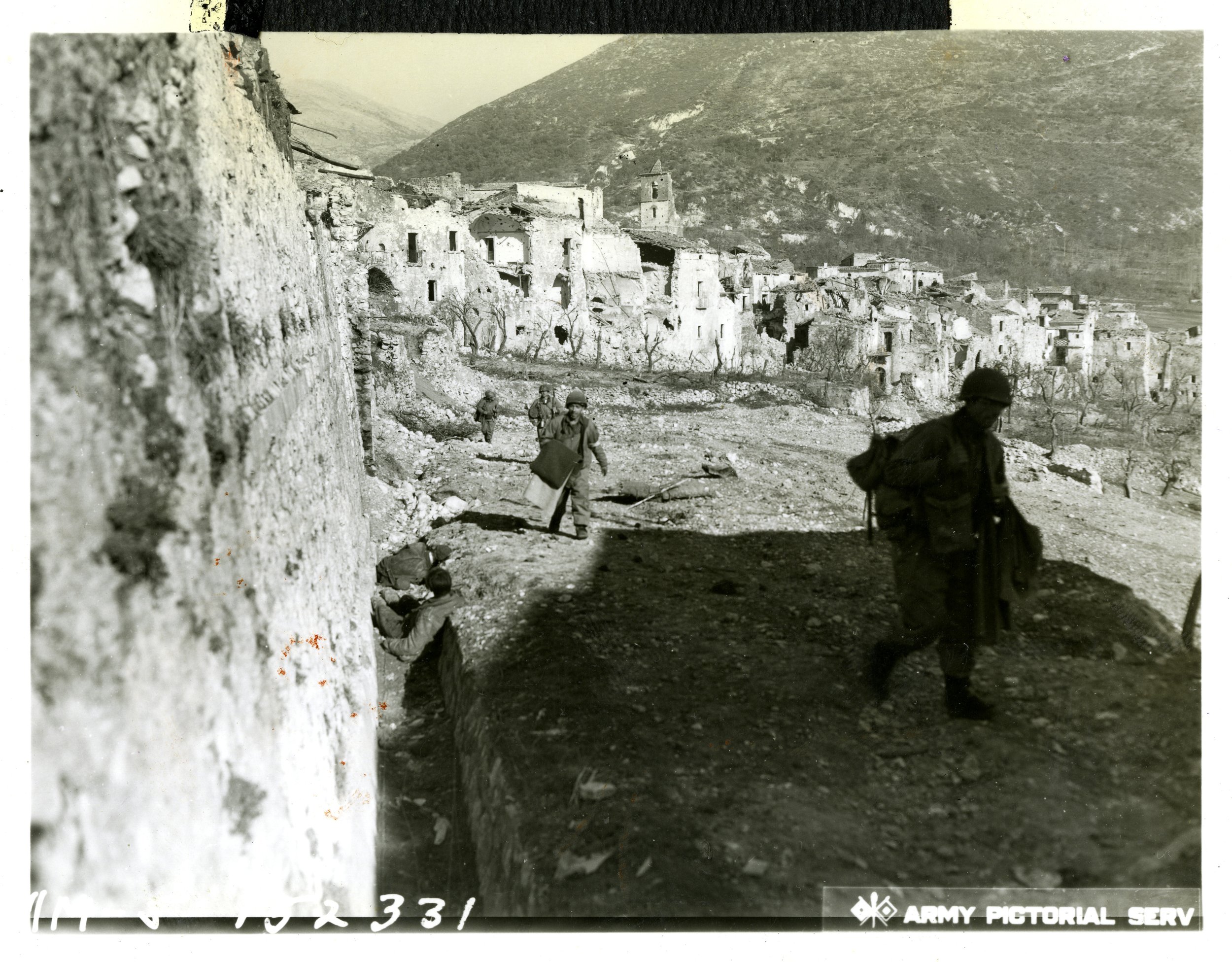
16. San Vittore del Lazio was liberated on January 6, 1944. Here, on January 9, weary American infantrymen enter the village, now quiet with desolation and death after three nightmarish days of ceaseless shelling and bombing preceding its capture. The two-tone spire of Chiesa di San Nicola (Church of St Nicolas) is visible in the distance. For its wartime ordeal San Vittore received the Silver Medal for Civil Valor in 2004.
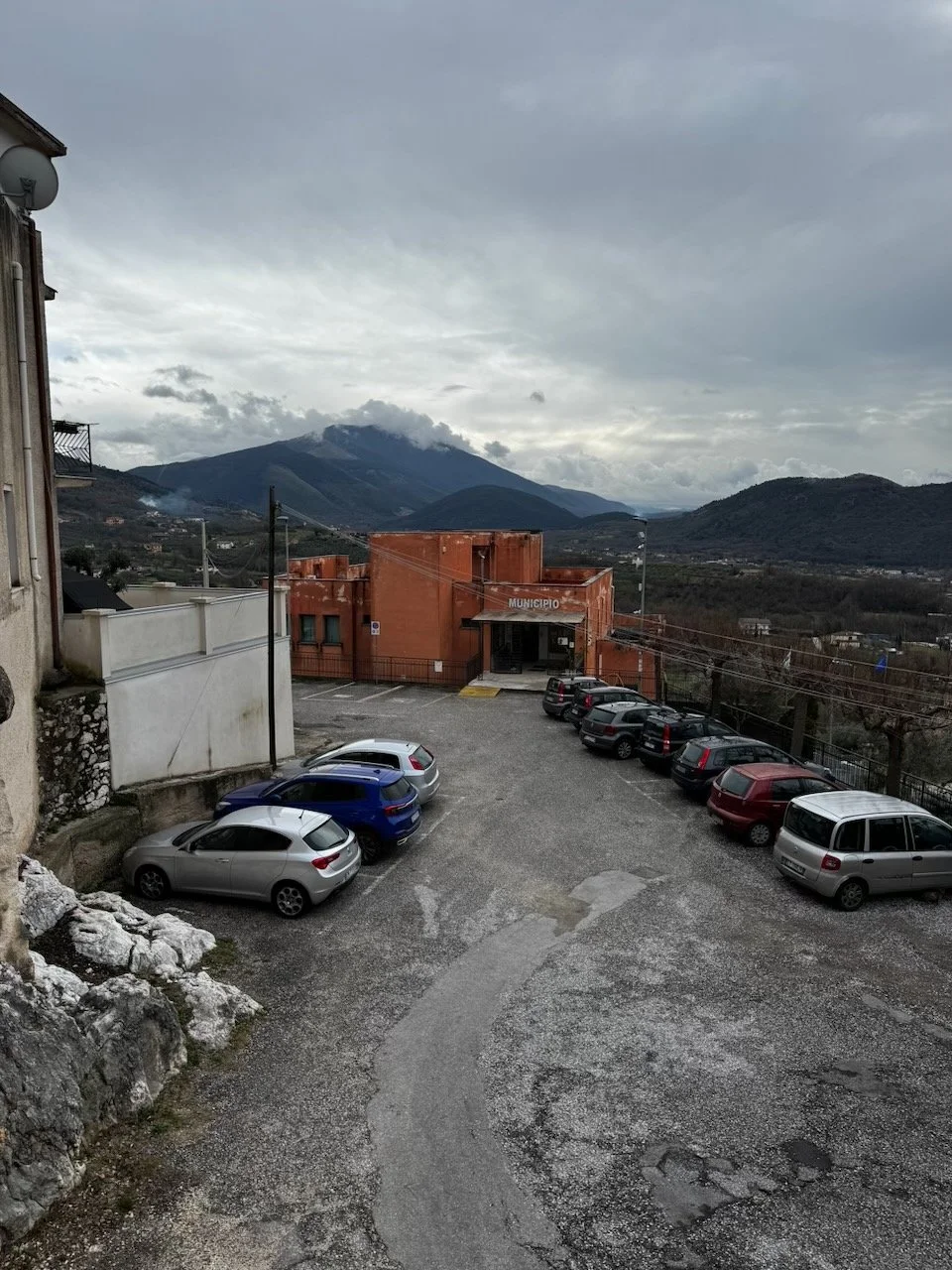
17. San Vittore’s town hall that Steve and Dave visited on January 7, 2026.
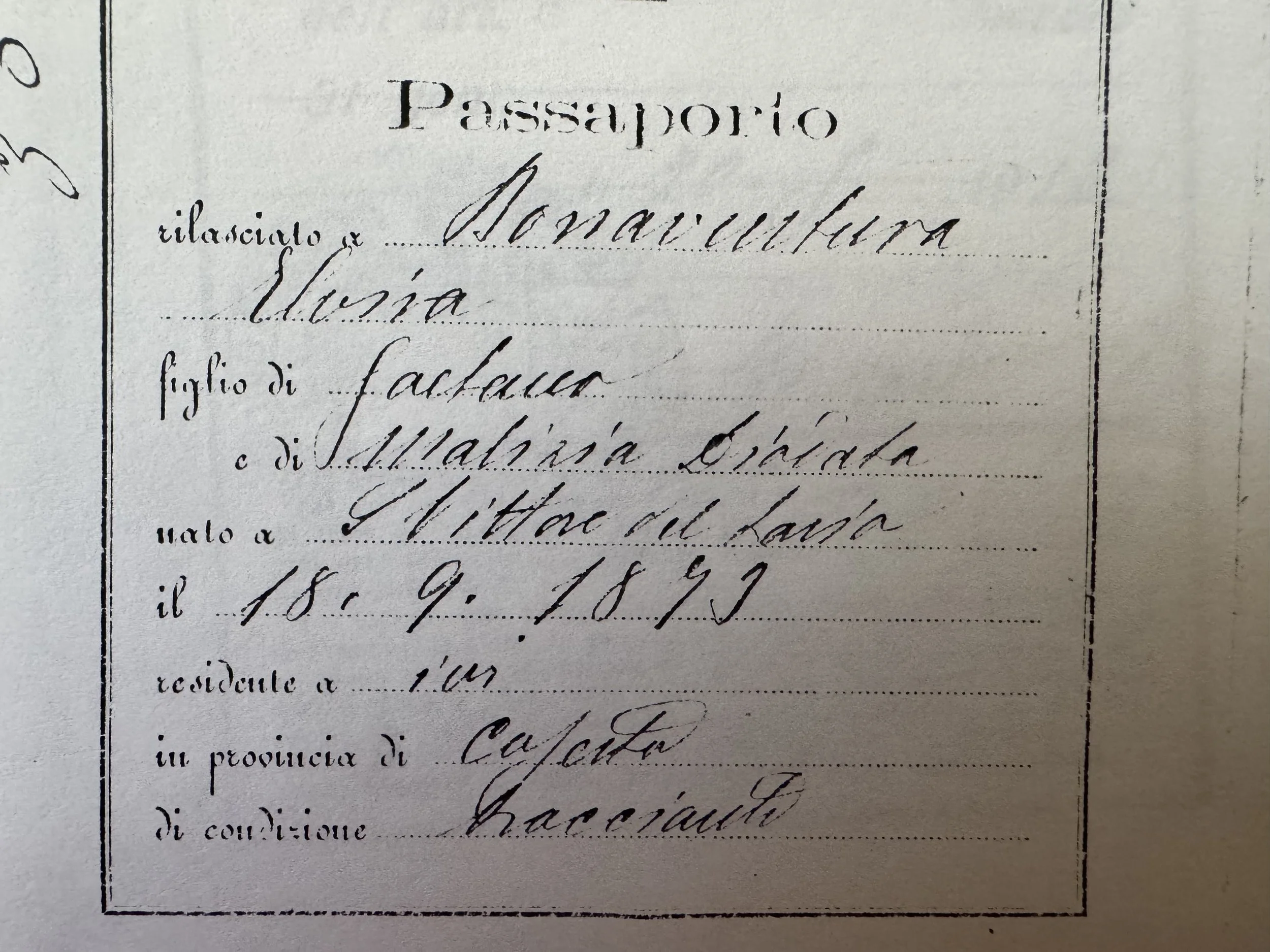
18. Elvira’s passport listing her parents Gaetano and Diodata Bonaventura née Malizla. From her passport we know her correct DOB to be Sep 18, 1873.
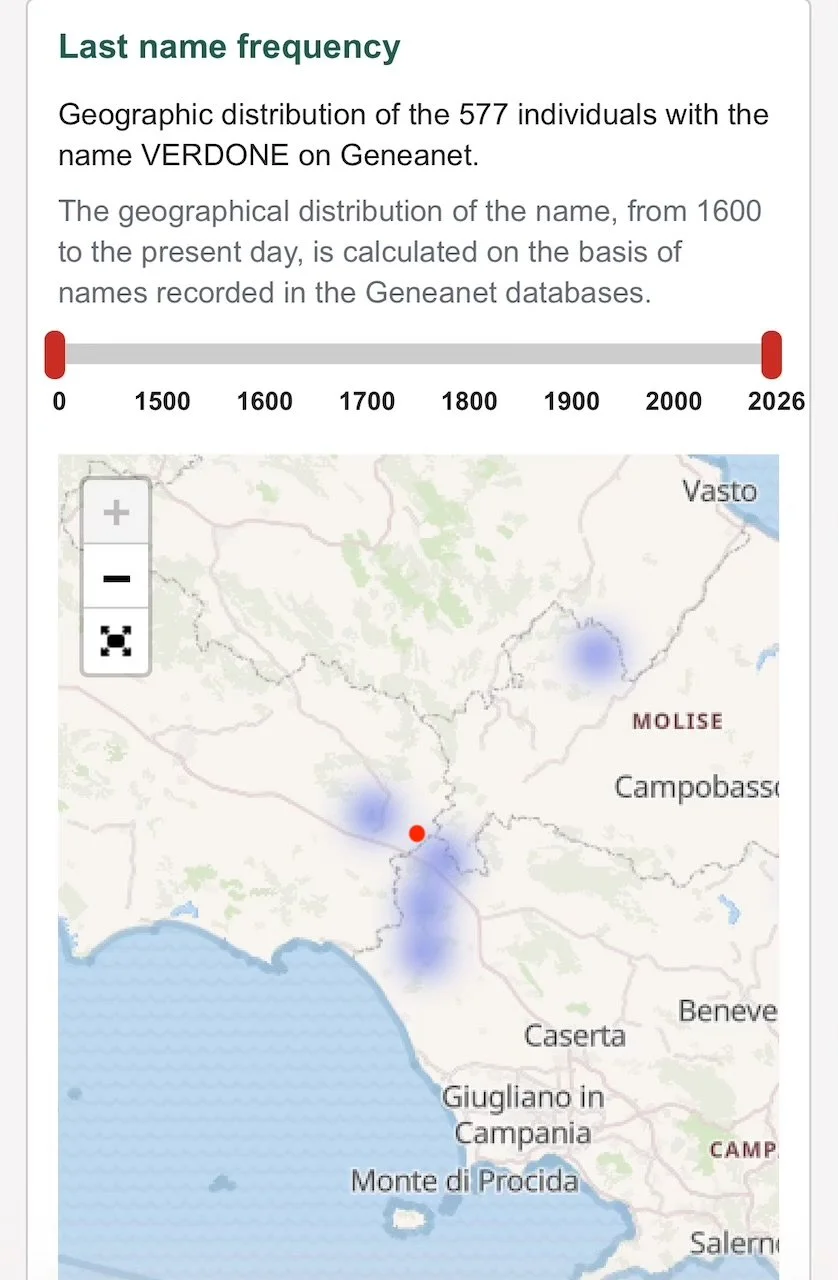
19. From the town hall they learned Verdone was not a surname directly connected with San Vittore, but the surnames Bonaventura and Malizia were. The red dot shows San Vittore with surrounding clusters of the surname Verdone. From this it seems likely Angelo Verdone was a neighbor to Elvira Bonaventura, who lived in San Vittore del Lazio.
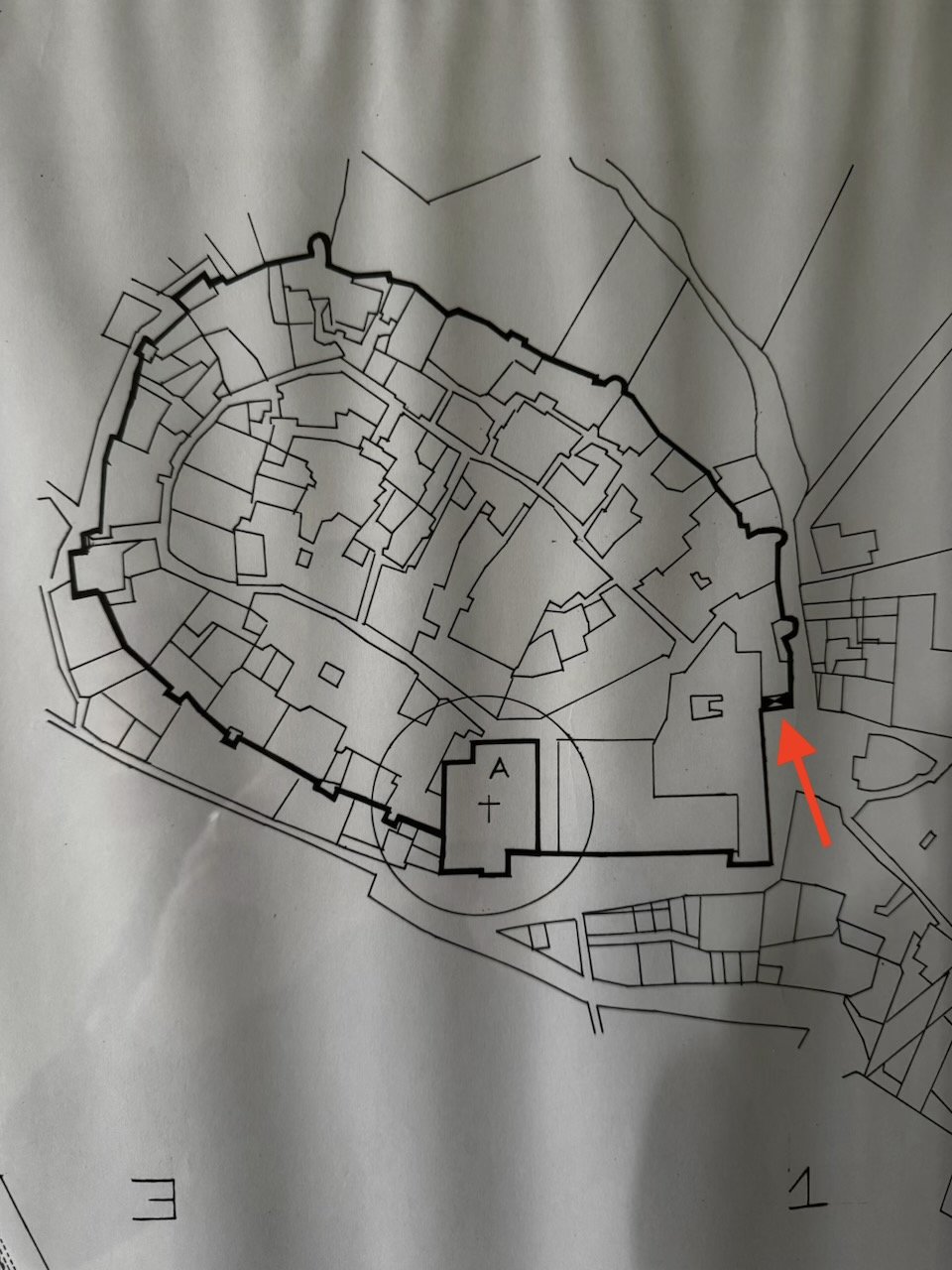
20. A map inside the town hall showed the outline of the once formidable medieval town walls and towers, some of which are still discernible—in particular “A” is St Mary of the Rose Church. San Vittorie del Lazio was once known locally as the “castle with twenty-three towers.”
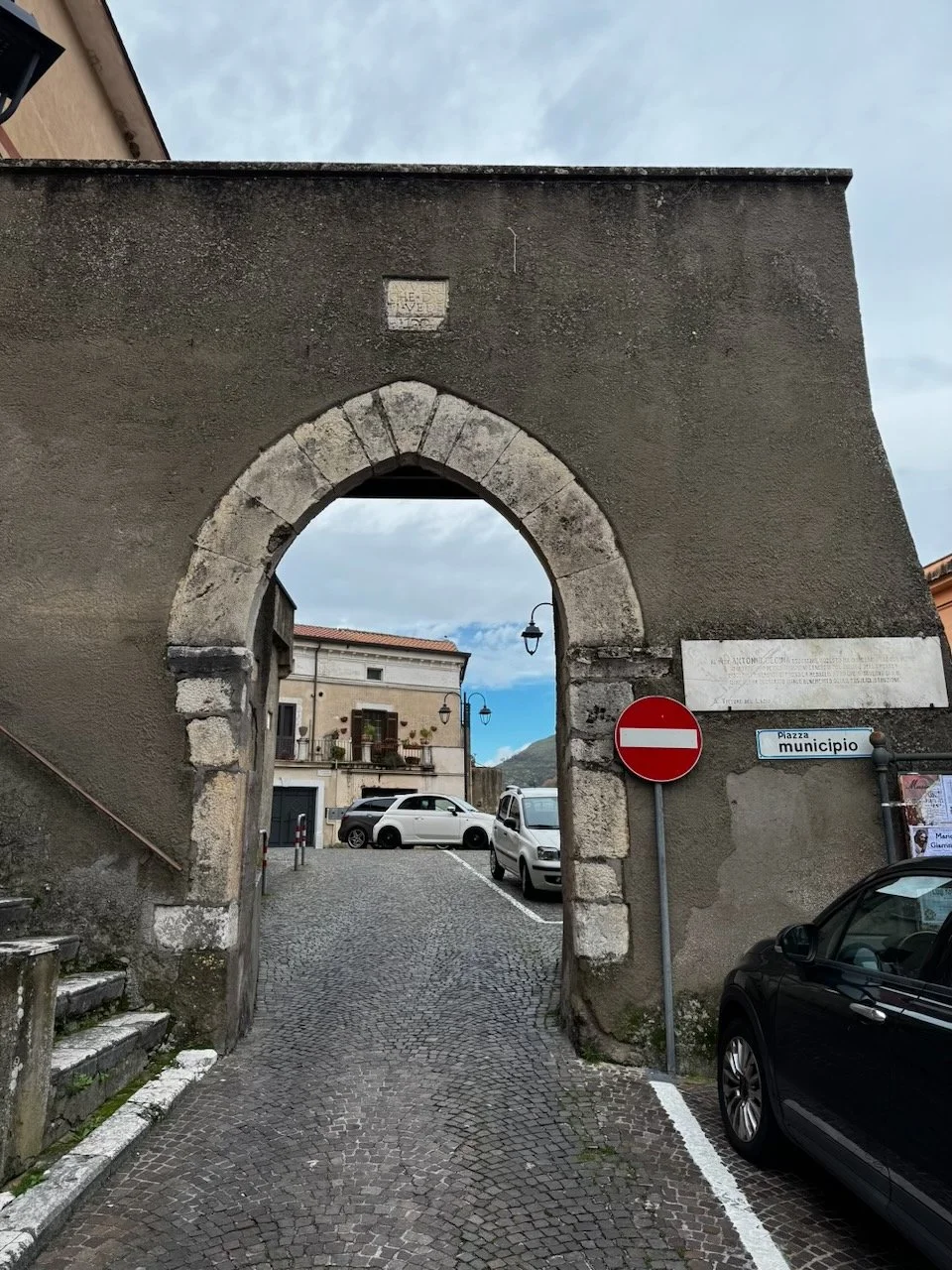
21. The red arrow on the map of the medieval city walls marks this, the fortification’s only remaining gate.
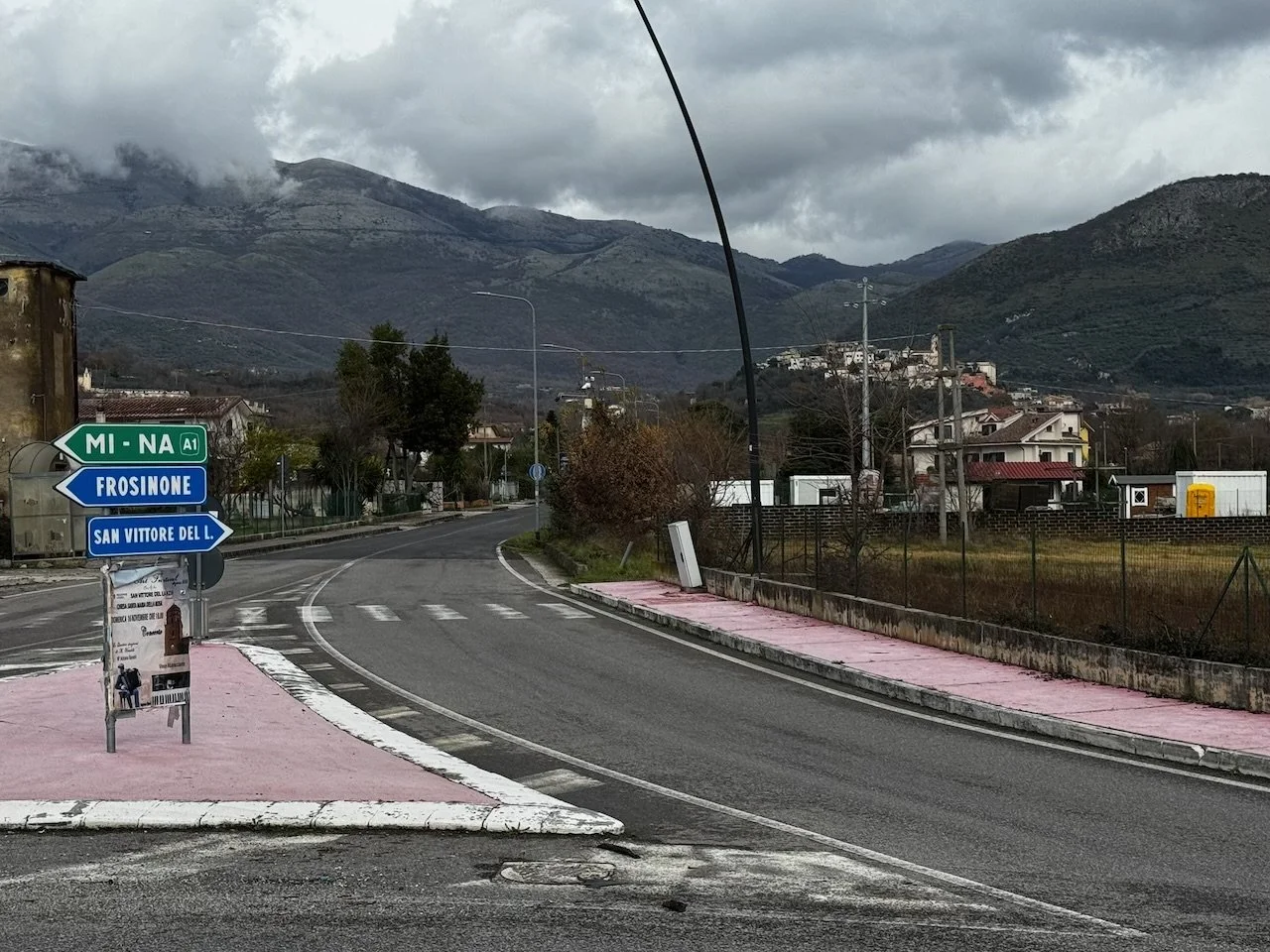
22. The "San Vittore del L" exit from the traffic circle on the A1—the main highway between Rome and Naples. The ruined walls of Aquilonia still crown the hilltop to the right, overlooking the village of San Vittore del Lazio on its promontory.
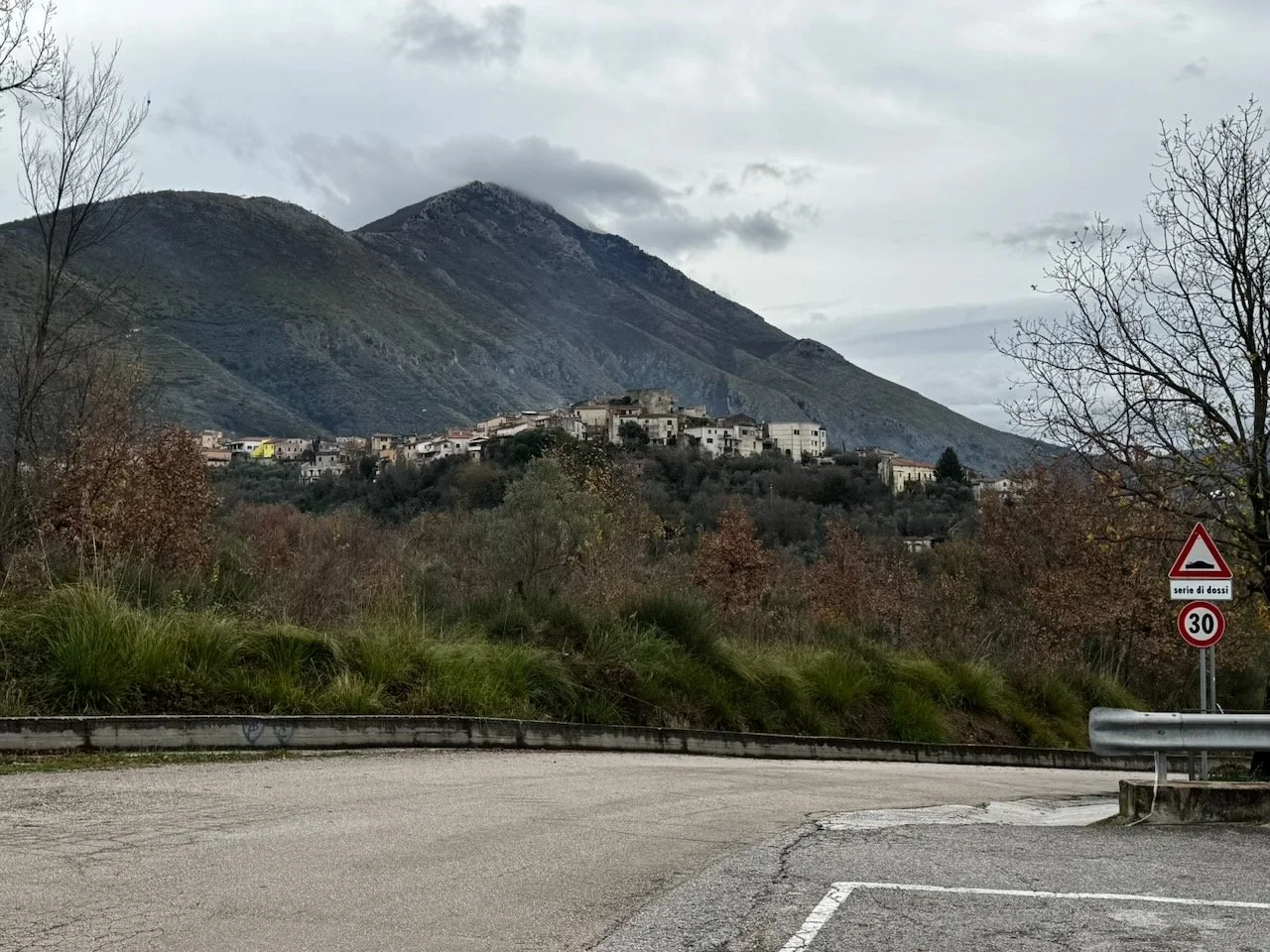
23. The hilltop position of San Vittore del Lazio.
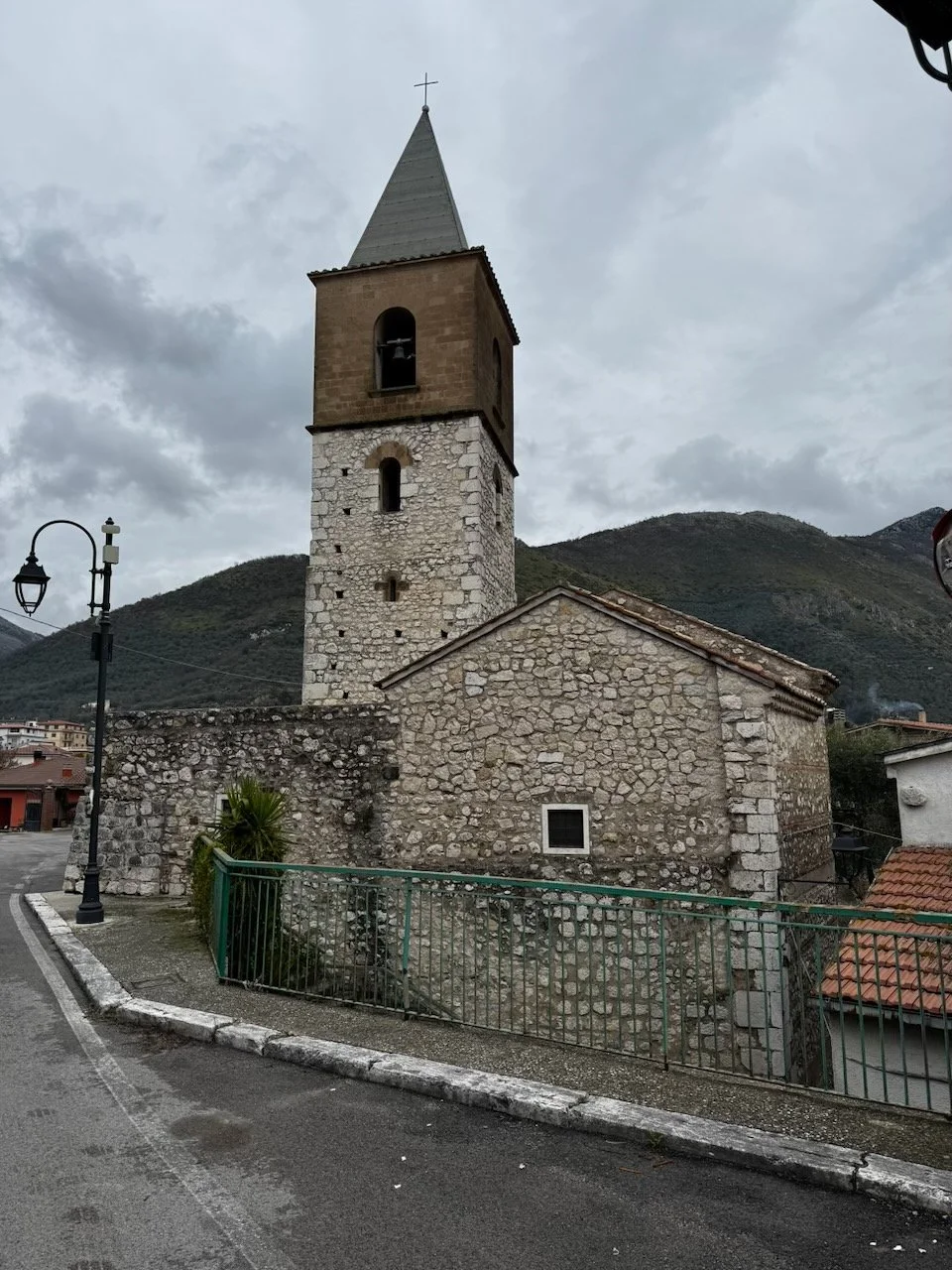
24. The two-tone spire of Chiesa di San Nicola (Church of St Nicolas), one possible church where Pasquale may have been baptized. Chiesa di San Croce (Holy Cross) once existed but no longer remains, making it an unlikely option.
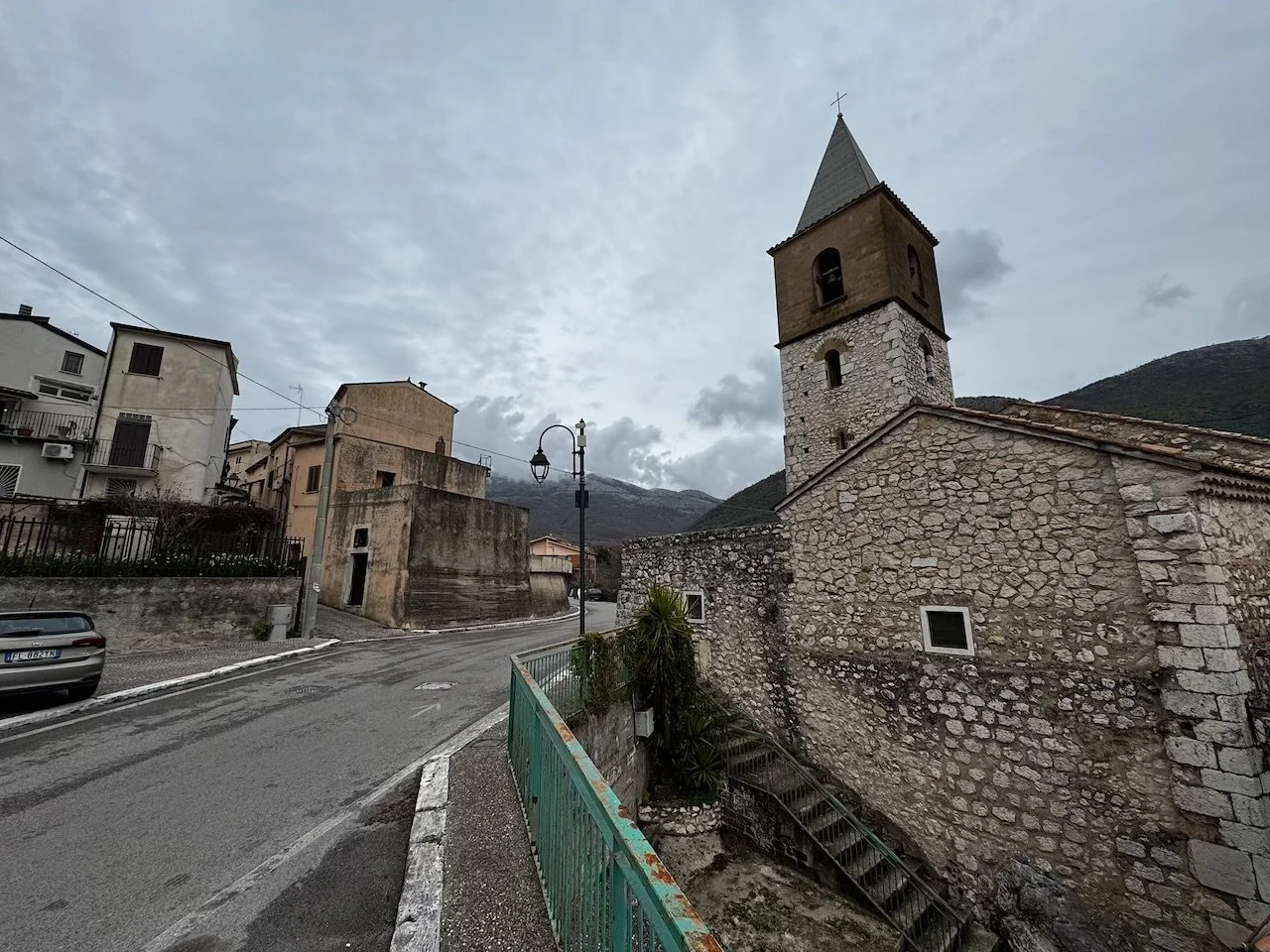
25. San Nicola began in the 10th century in the place formally known as the “Greek Village,” which was outside the eastern edge of the medieval walls. It was probably built to support a large colony of Greeks who chose to settle near the Abbey of Montecasino.
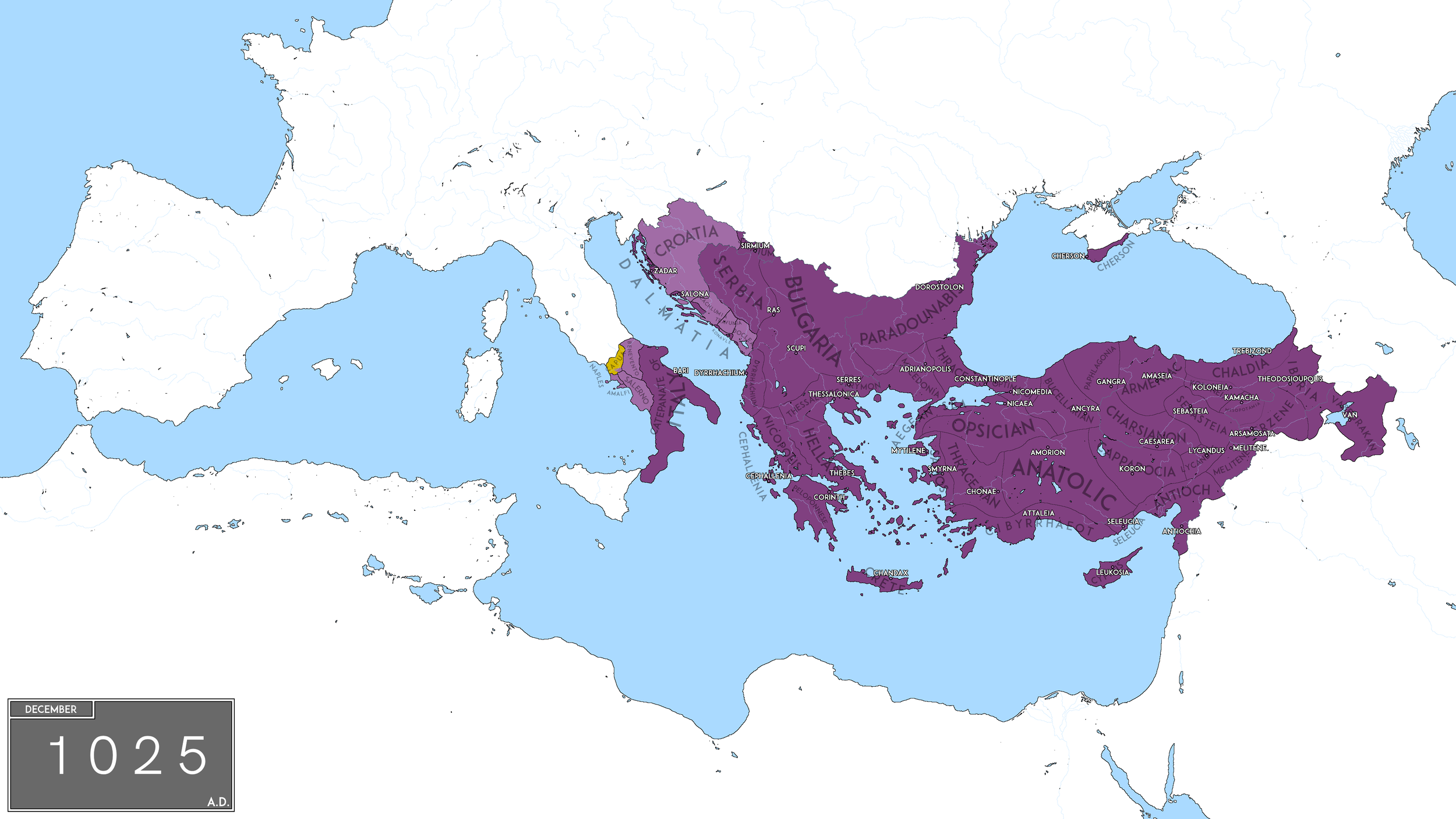
26. The Greeks colonized southern Italy long before the expansion of the Roman Empire and ultimately the Byzantine empire shown here. Though Italian Greeks in the 10th century lived under Roman rule, they remained unmistakably Greek, and thus the “Greek Village” in San Vittore del Lazio.
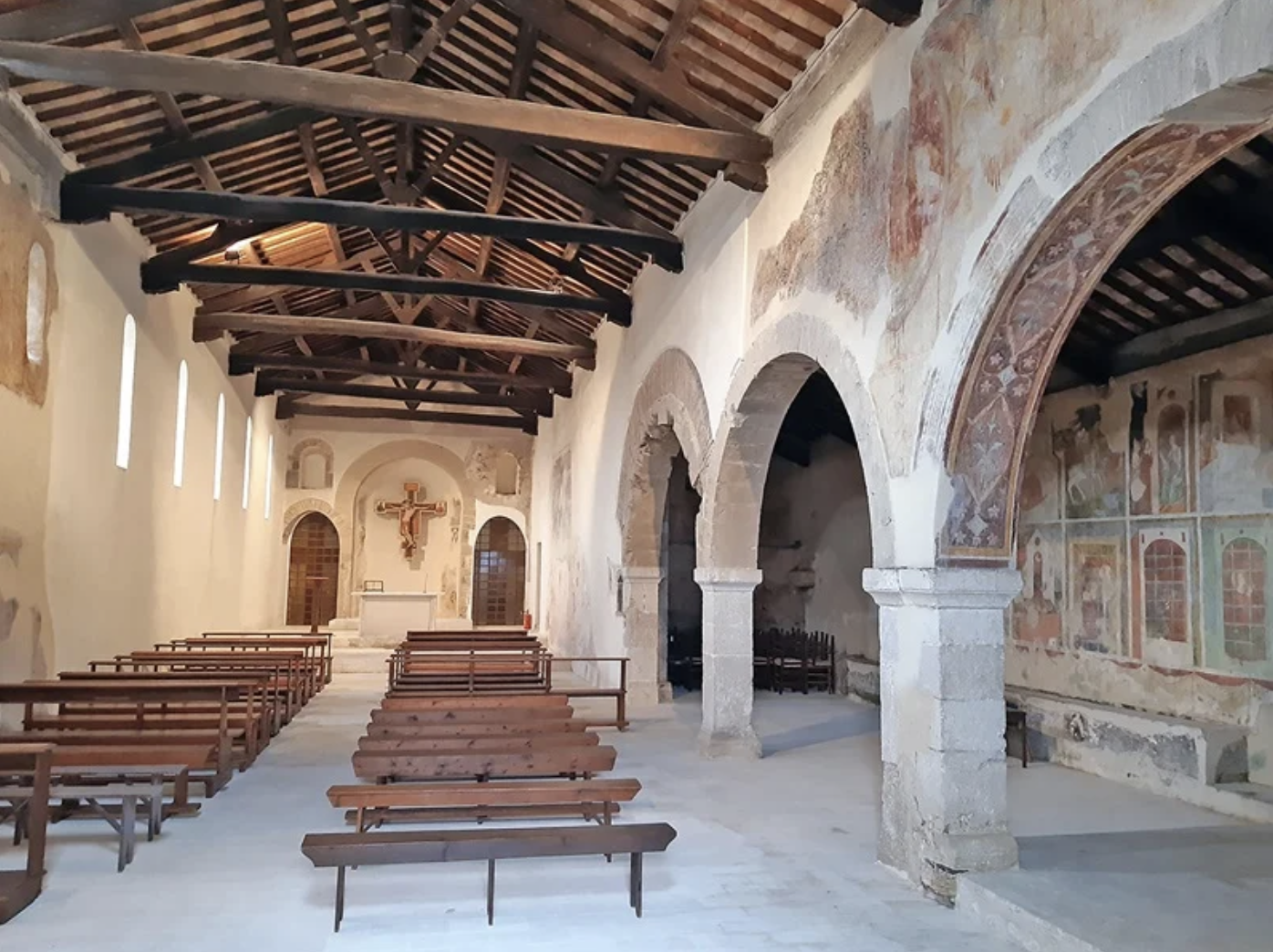
27. San Nicola’s original structure consisted of a single nave, with this aisle added to the north in the 13th century. There was once a cemetery, presumably reached through a south aisle and a door—neither of which remain. A major restoration project was completed in 2022.
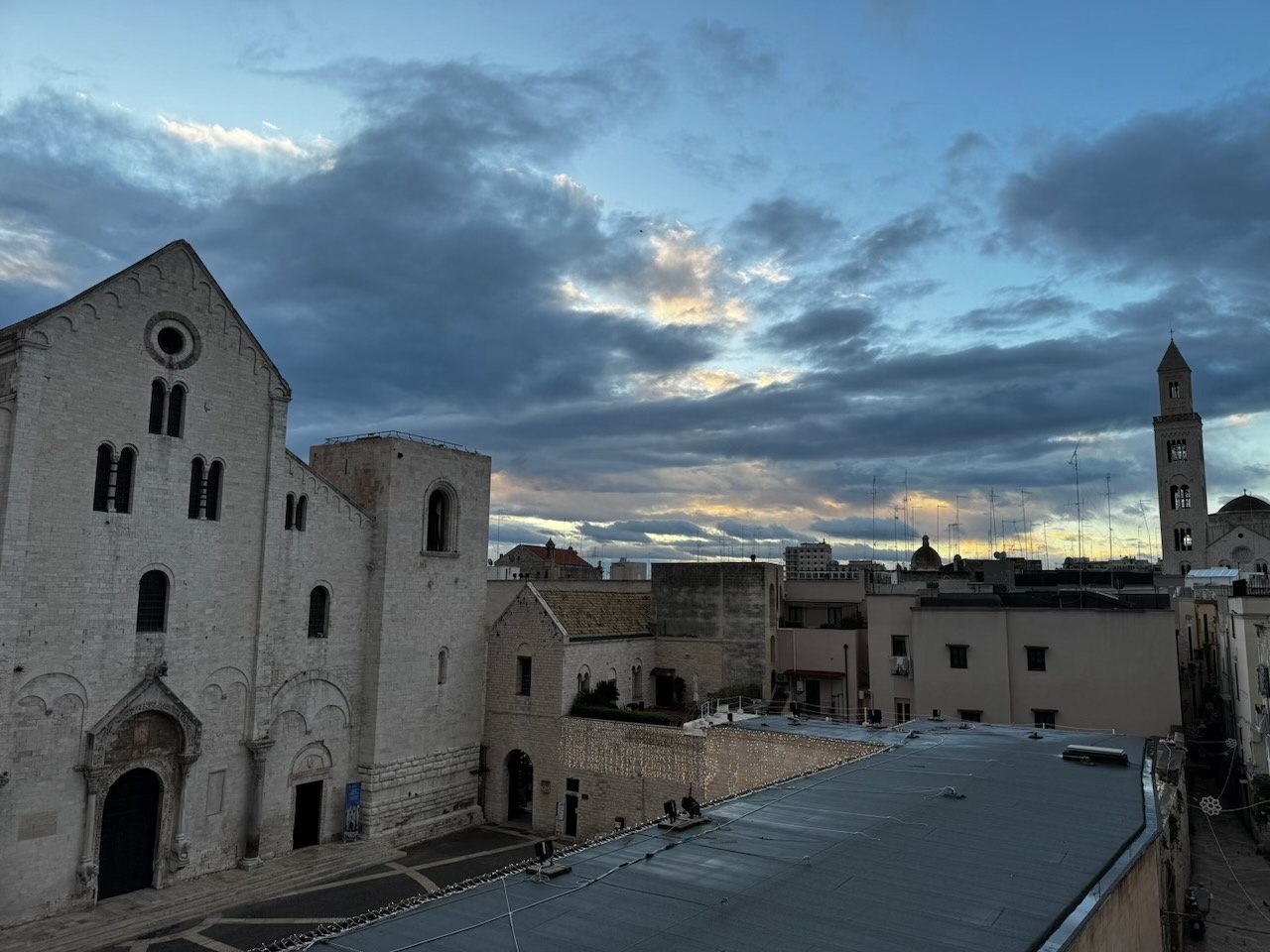
28. St. Nicholas was a 4th-century Christian bishop born in the Greek world of Asia Minor and buried in what is now modern-day Türkiye. Centuries later, merchants from Bari carried away the major bones of his skeleton to their hometown in Italy, where they remain enshrined in the Basilica di San Nicola (above). In that light, the Church of St. Nicholas in the “Greek Village” of San Vittore del Lazio is entirely consistent with his enduring ties to both the Greek and Italian worlds.
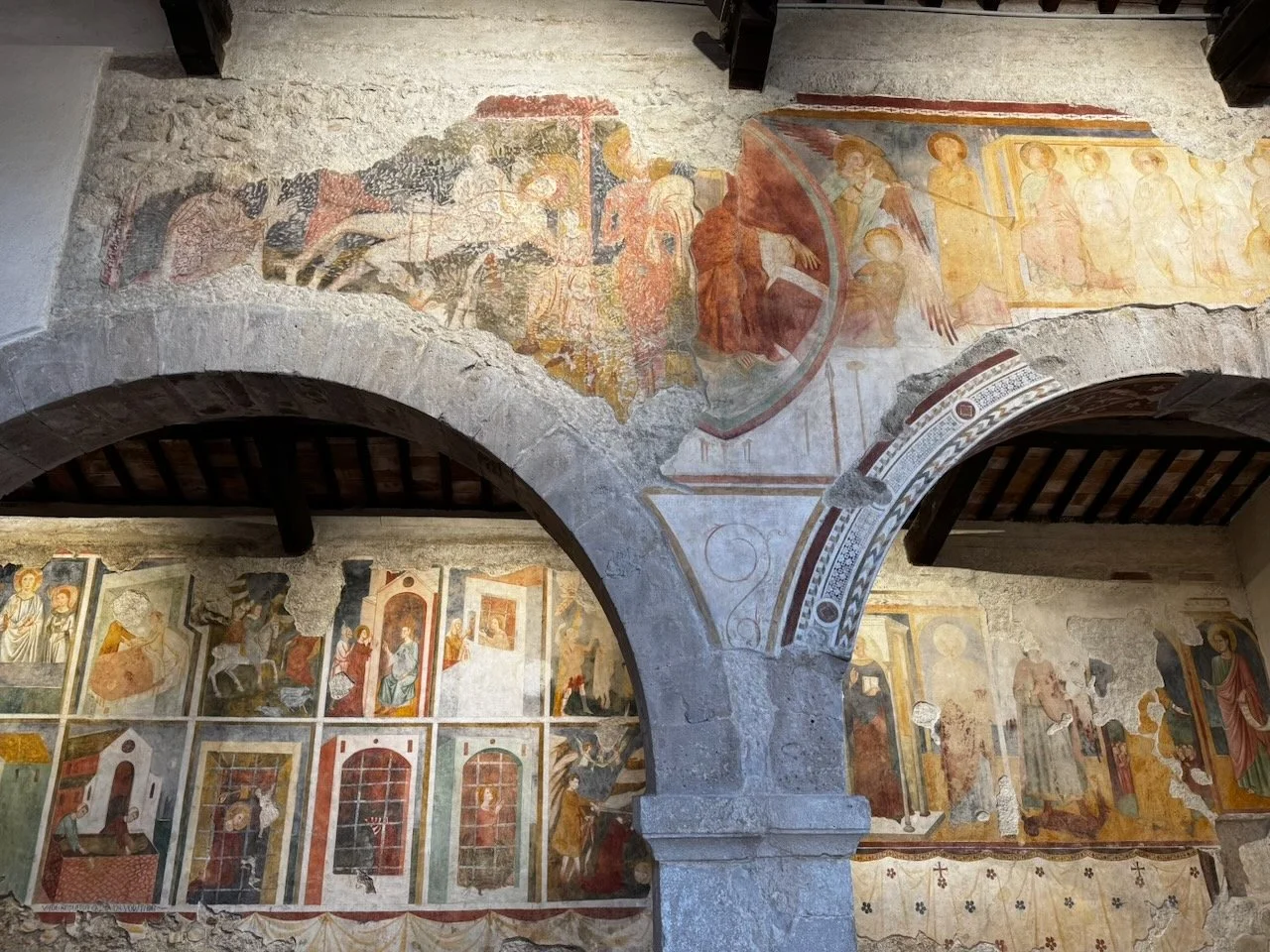
29. San Nicola is filled with colorful frescos dating from the year 1000 in the Middle Ages and the Renaissance (14th-17th centuries). They include 16 fourteenth-century panels portraying the merciful acts and martyrdom of St Margaret of Antioch.
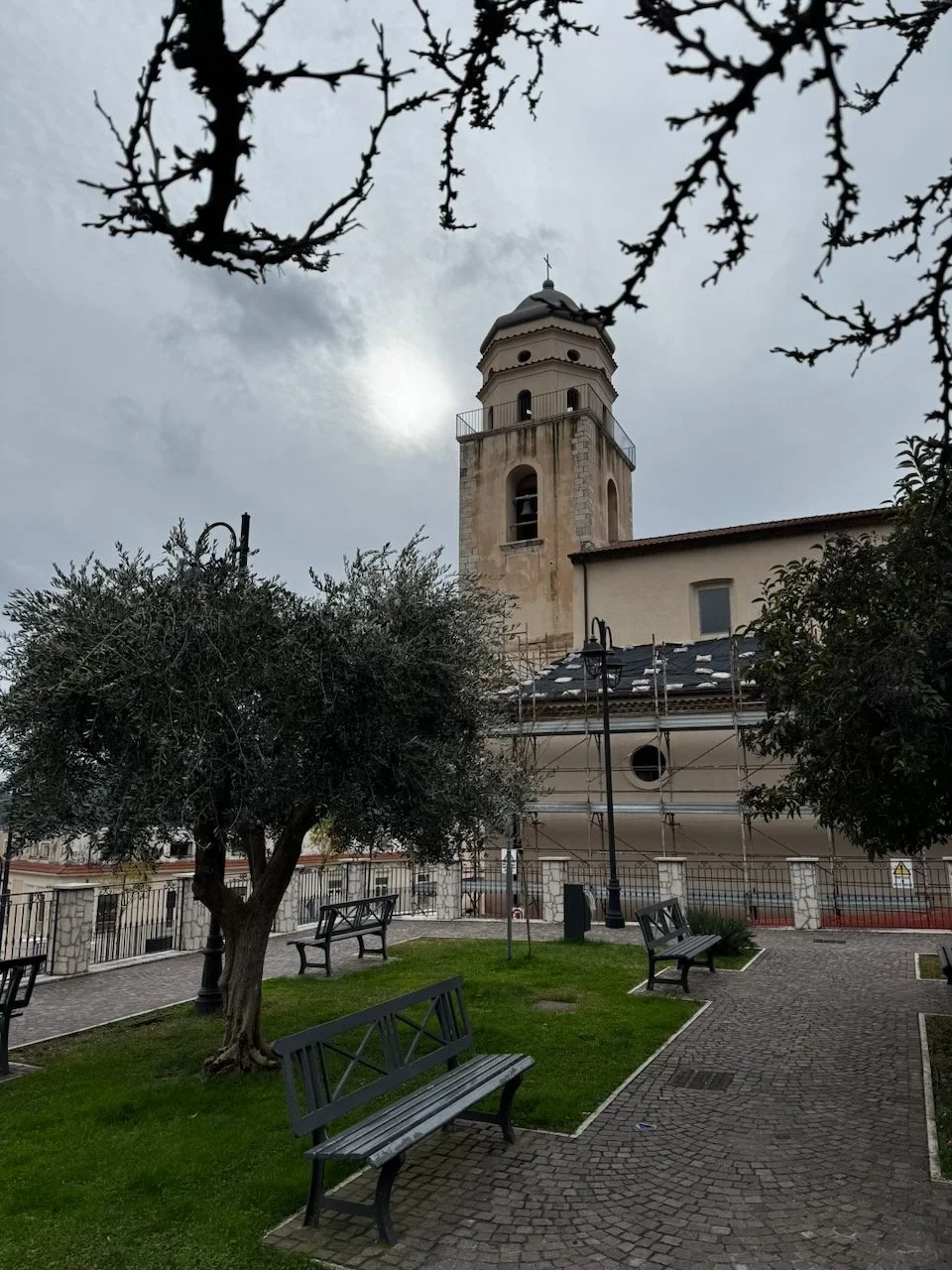
30. Several times rebuilt, Chiesa Collegiata di Santa Maria della Rosa (St Mary of the Rose Church) was once again under repair during Steve and Dave’s 2026 visit and could not be toured. The belfry is the town’s most distinguishable feature.
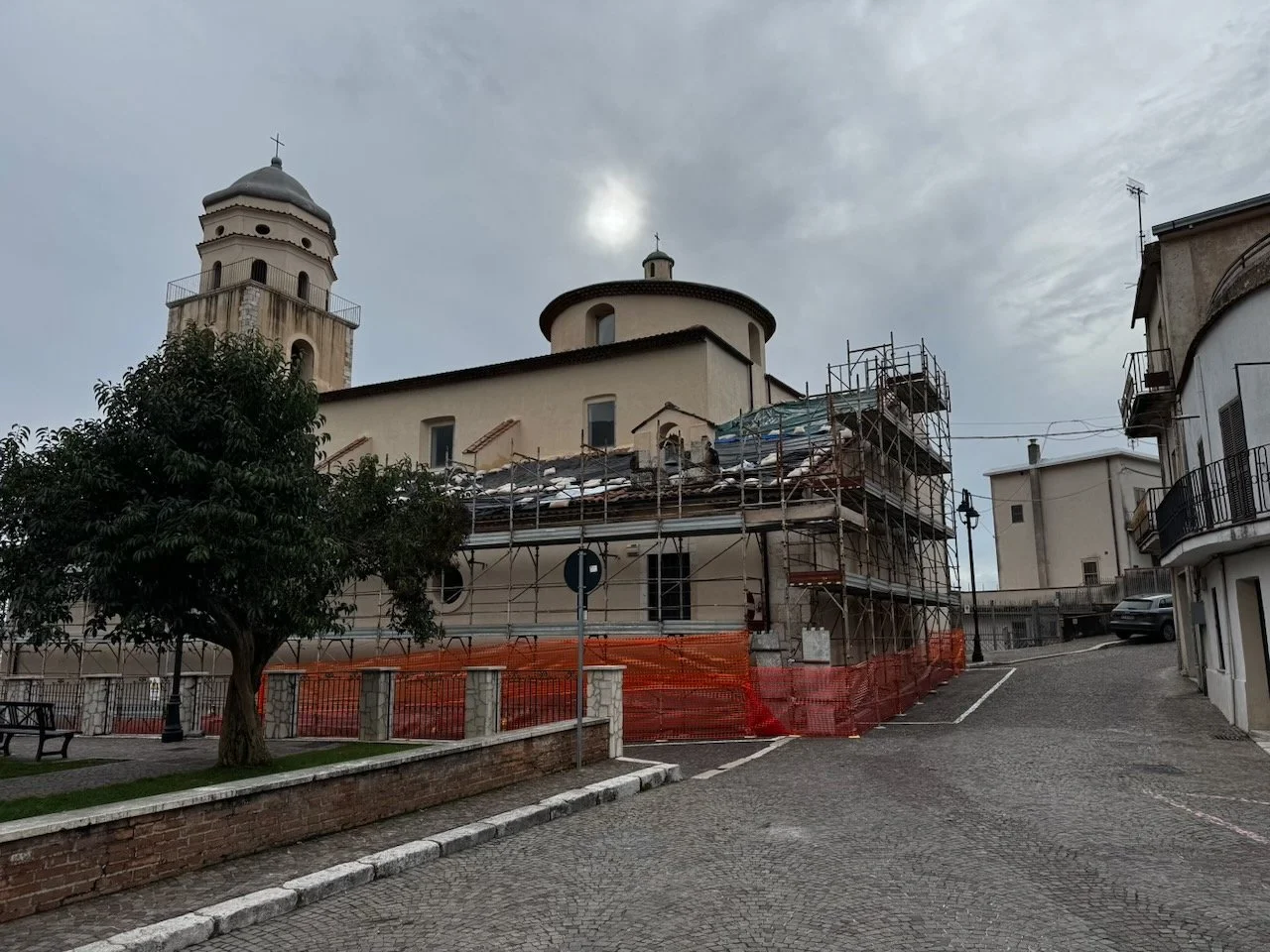
31. St. Mary was built in the 15th century, the belfry and eastern walls forming part of the medieval city walls—noted as “A” on the town hall map. This was likely San Vittore’s principal church and a strong contender for where Pat may have been baptized.
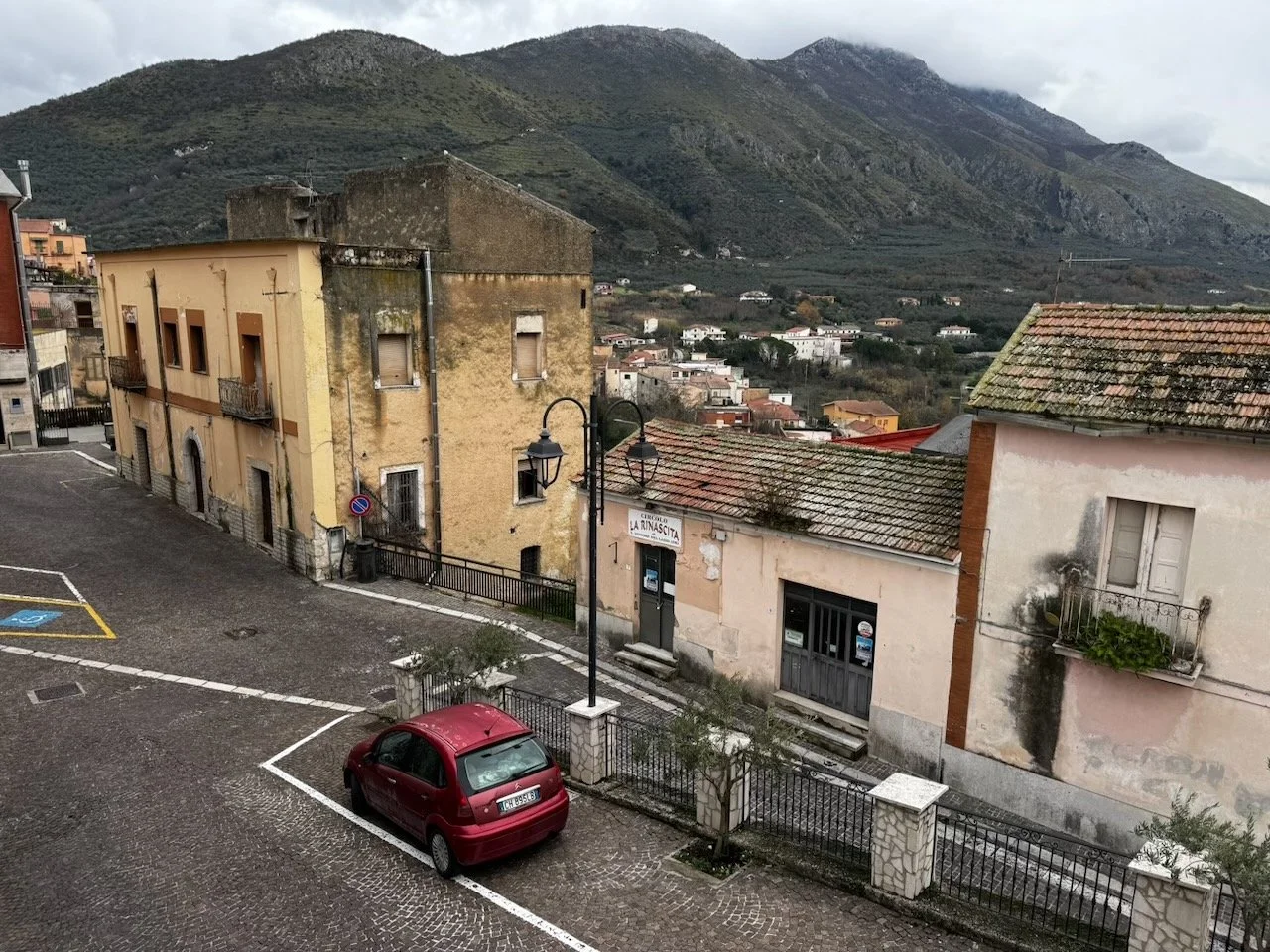
32. Looking southeast from St Mary of the Rose Church. The buildings and the view must remain much the same as when Pat and his family lived here.
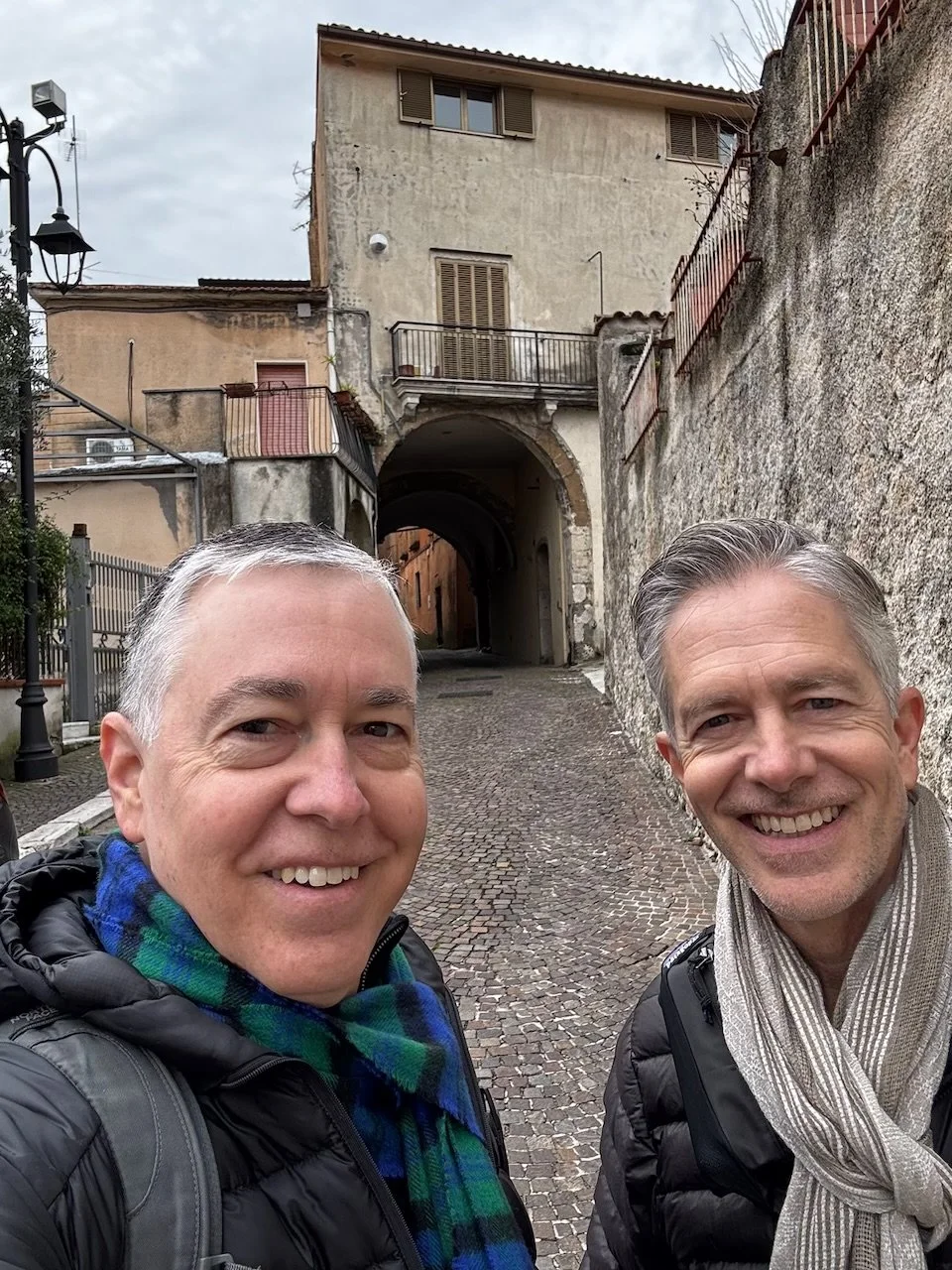
33. The stone setts of Via Castello and this narrow passage trace the circular route of San Vittore del Lazio’s fortified medieval core. The buildings may be largely rebuilt after the war, but the route is likely the same Angelo, Elvira, young Pat, and his siblings followed before emigrating.
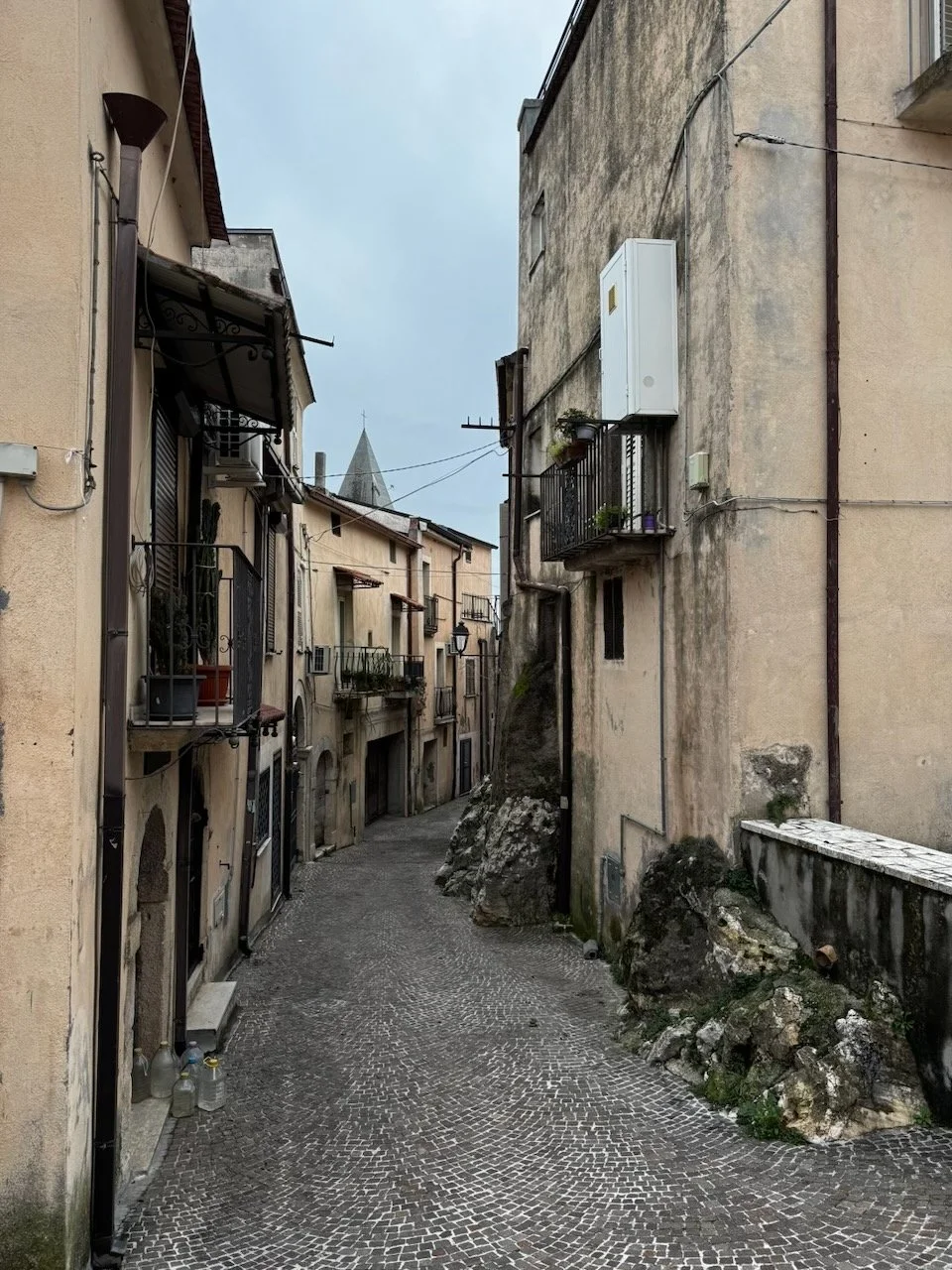
34. Born in November 1905 and transported to America in September 1913, Pasquale spent the first eight years of his life wandering the winding paths of San Vittore del Lazio—surely, more than once, his footsteps traced this very stradina along Via Castello.
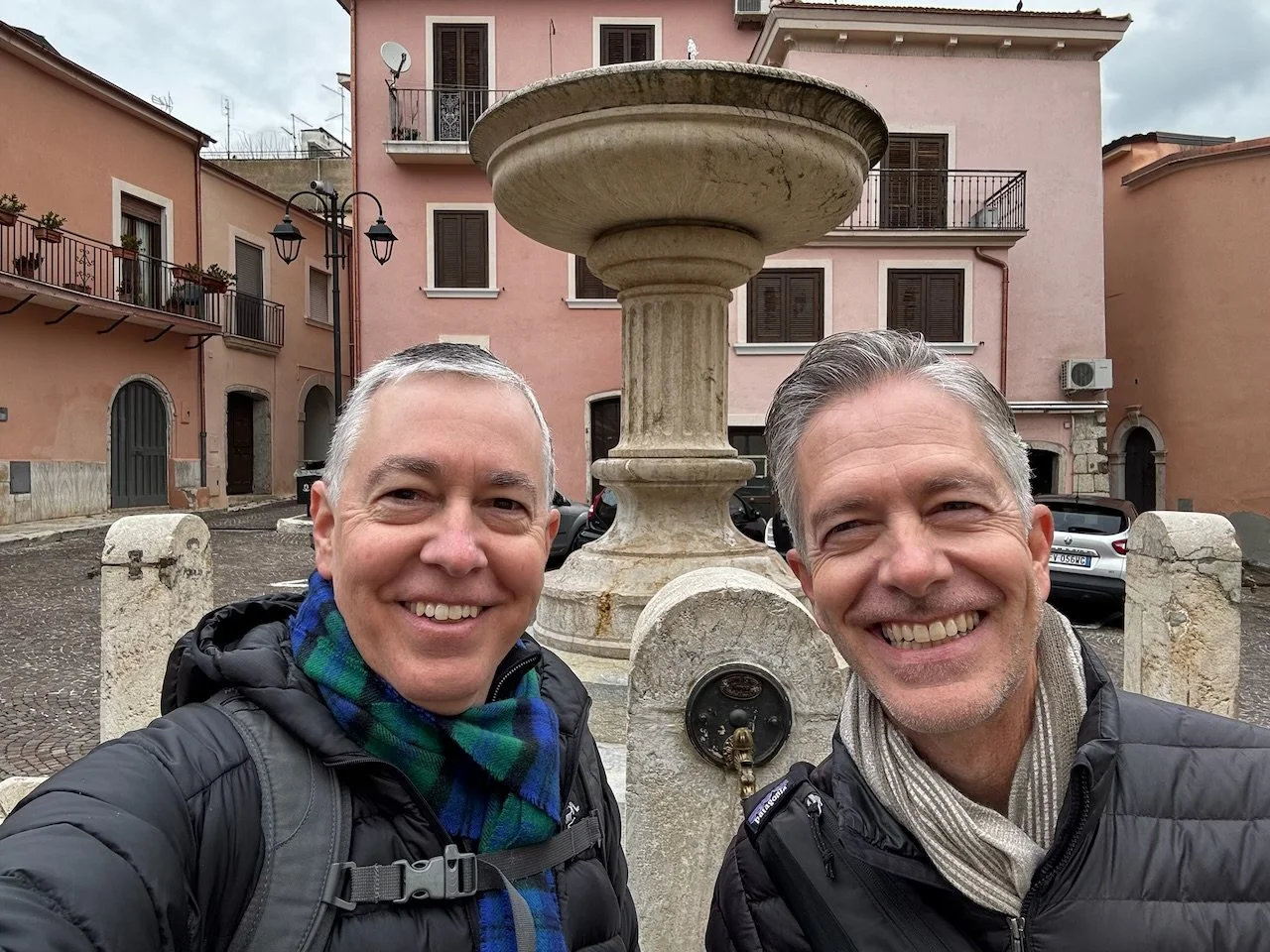
35. San Vittore del Lazio’s municipal water fountain in the Piazza Principio, just outside and east of the old walled city’s only extant gate.
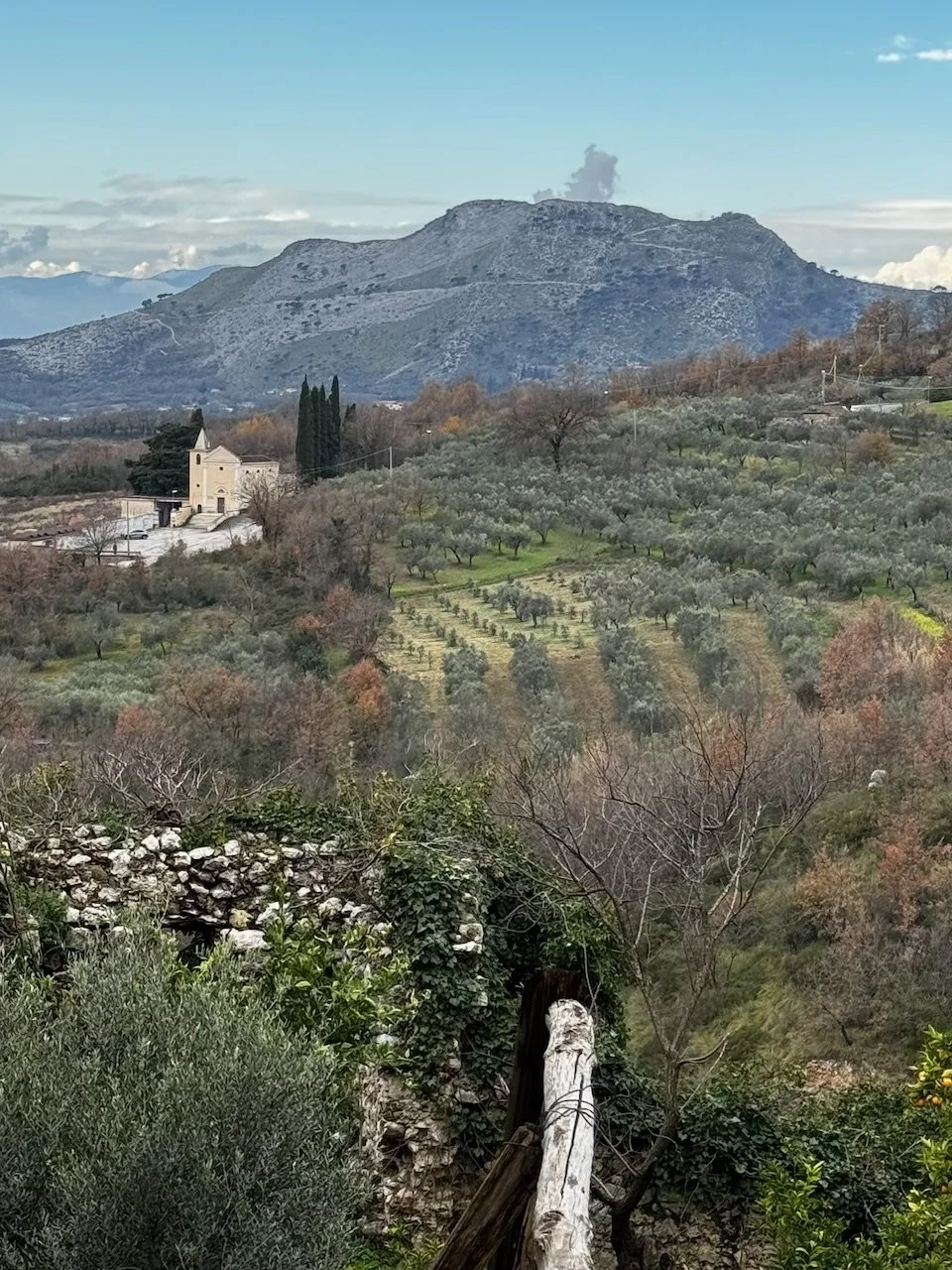
36. Lying directly west of town center are Church of Our Lady of Grace and the adjacent Campo Santo San Vittore del Lazio (Cemetery of St Victor). The original church and cemetery were destroyed during WWII. According to a plaque on the church, they were restored by “the people of San Vittore and fellow townspeople residing in Detroit and Canada, AD 1975.”
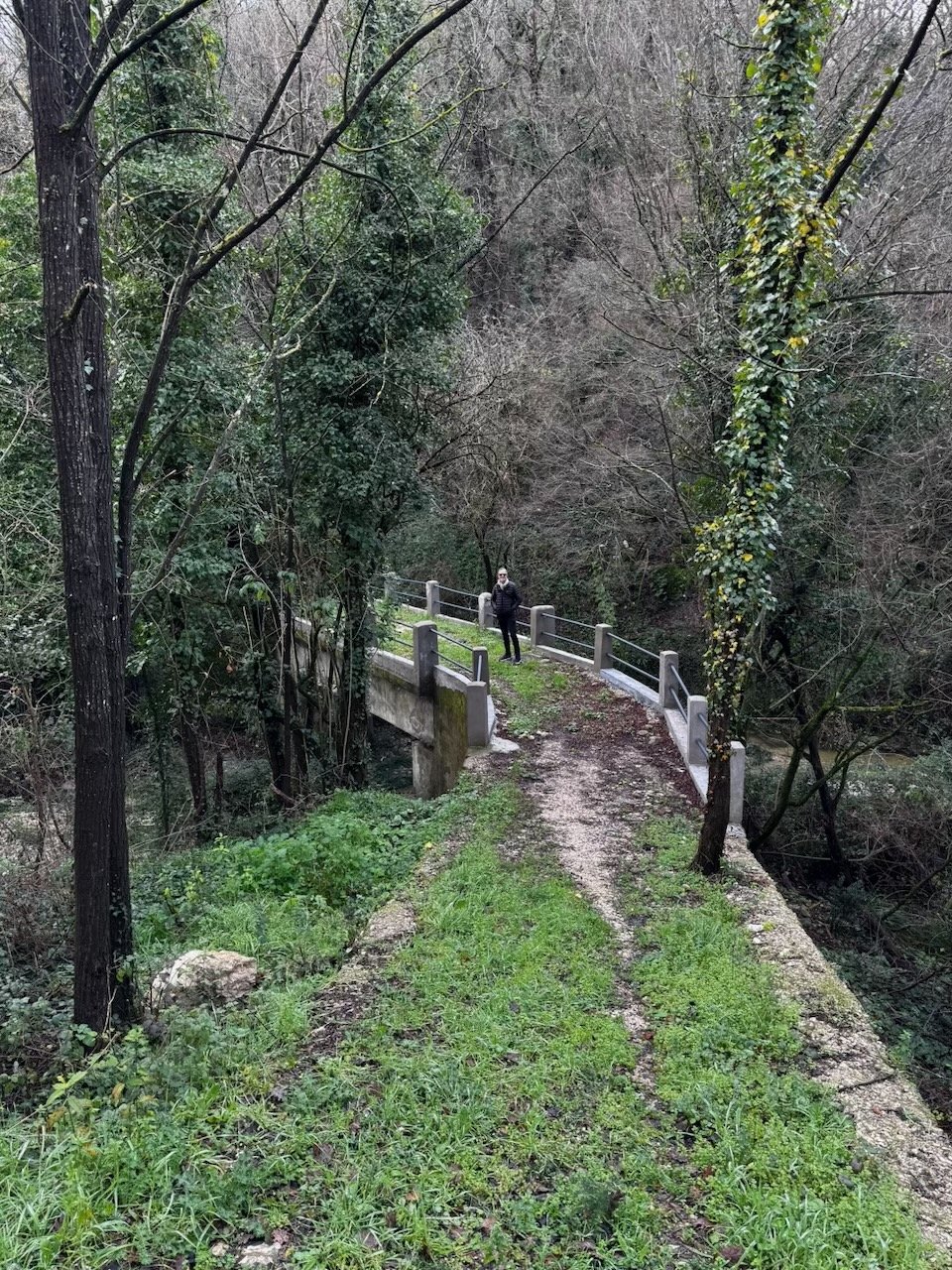
37. Dave on the unnamed dirt path and ravine crossing that connect the church and cemetery with the town center. We were looking for graves from family born in the mid-nineteenth century; however, due to the graveyard’s destruction during WWII, we only found those buried since the war.
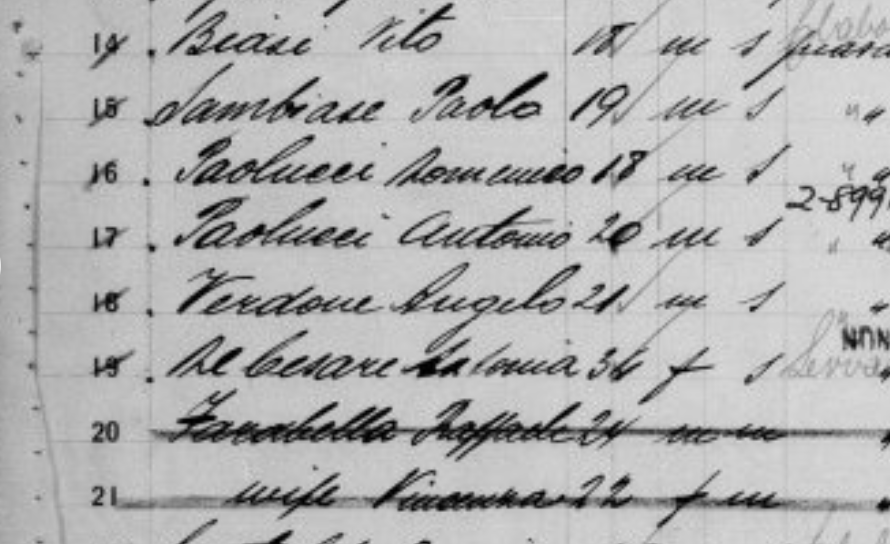
38. Line 18 of this Ellis Island record could be Angelo’s first journey to America, arriving on July 12, 1906, aboard SS Sannio. This Angelo was from “Castellini,” probably a misspelling of Castelliri, a village near San Vittore, which matches the 1910/1911 journey below.
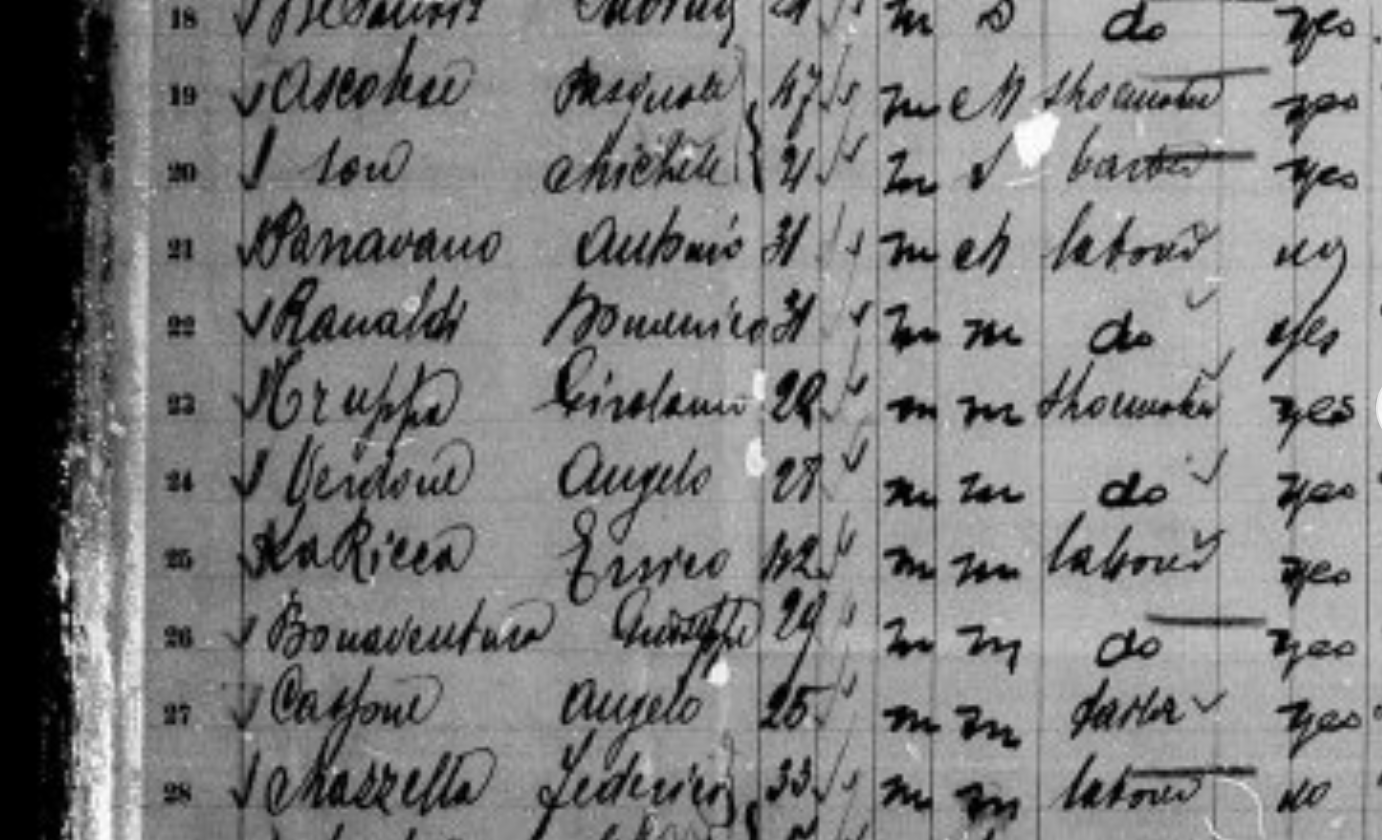
39. Line 24 of this Ellis Island record indicates Angelo of San Vittore del Lazio traveled to America from Naples aboard the SS Cedric, arriving on March 18, 1907. This may be a first or possible second journey. In March 1907, Ruth’s father was not quite 1-1/2 and her Aunt Victoria would be born 4 days after Angelo’s arrival in New York! Presumably, she lived with her parents.
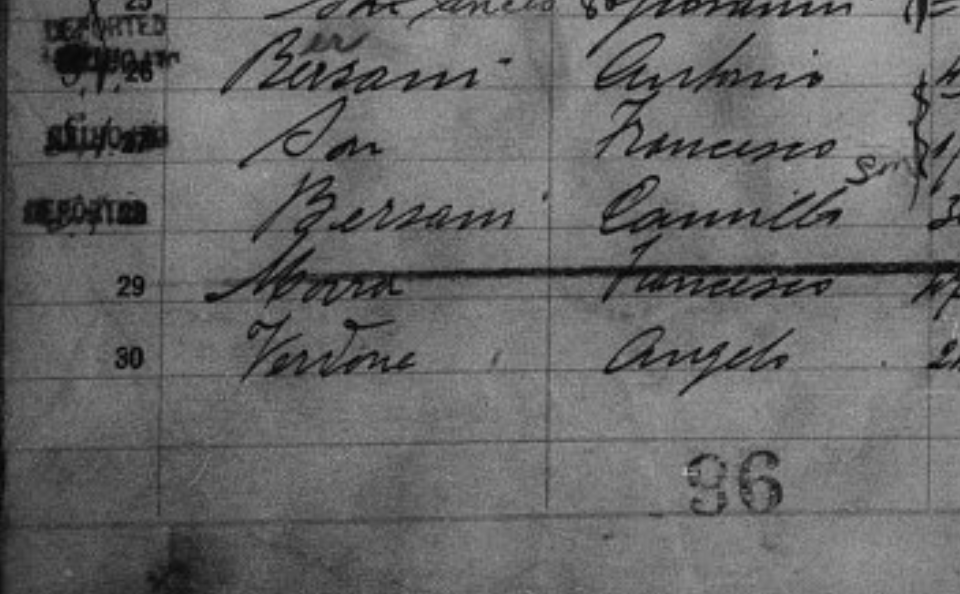
40. Angelo must have remained in America for about a year, because he was back in Italy in October 1908 for the conception of their third child Eugenio. Baby Eugenio was only 11 months old when Angelo departed Naples again on June 8, 1910, arriving in New York 13 days later on June 21, 1910. Elvira, Pat (4 yr/7 mo), & Victoria (3 yr/3 mo) would not see Angelo for 3 years and 1 month, when the family reunited in New York on July 13, 1913. This was likely Angelo’s permanent move to American.
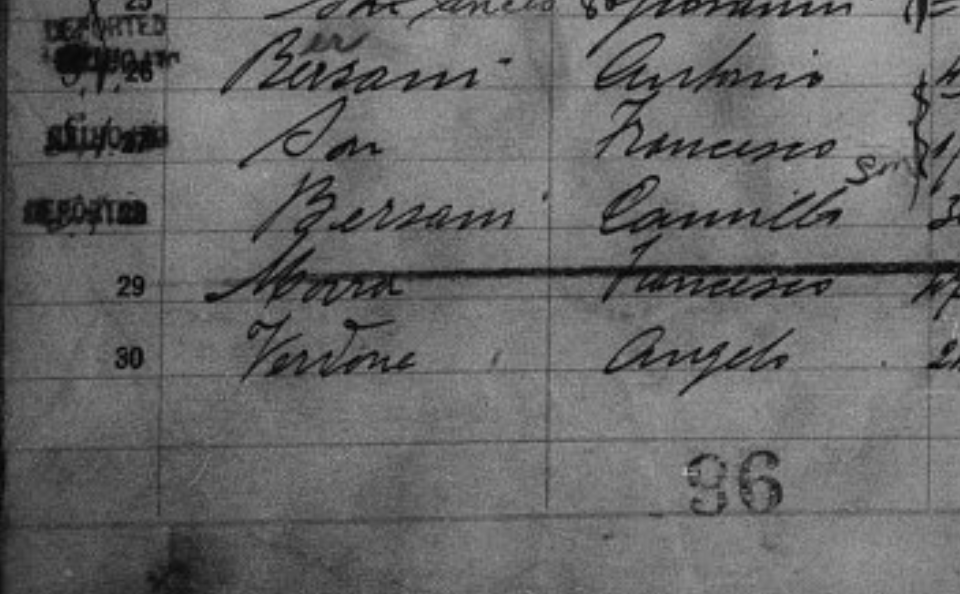
41. The previous record was from Ancestry. Line 30 of this Ellis Island record offers an alternative travel itinerary for Angelo with an arrival in NY on June 20, 1911, aboard SS Europa. If so, Pat was 5 yr/7 mo, Victoria 4 yr/3 mo, & Eugene 1 yr/11 mo, and the family was reunited in just over 2 yrs. This record says Angelo was from “Castellisi,” probably a misspelling of Castelliri, the village near San Vittore del Lazio.
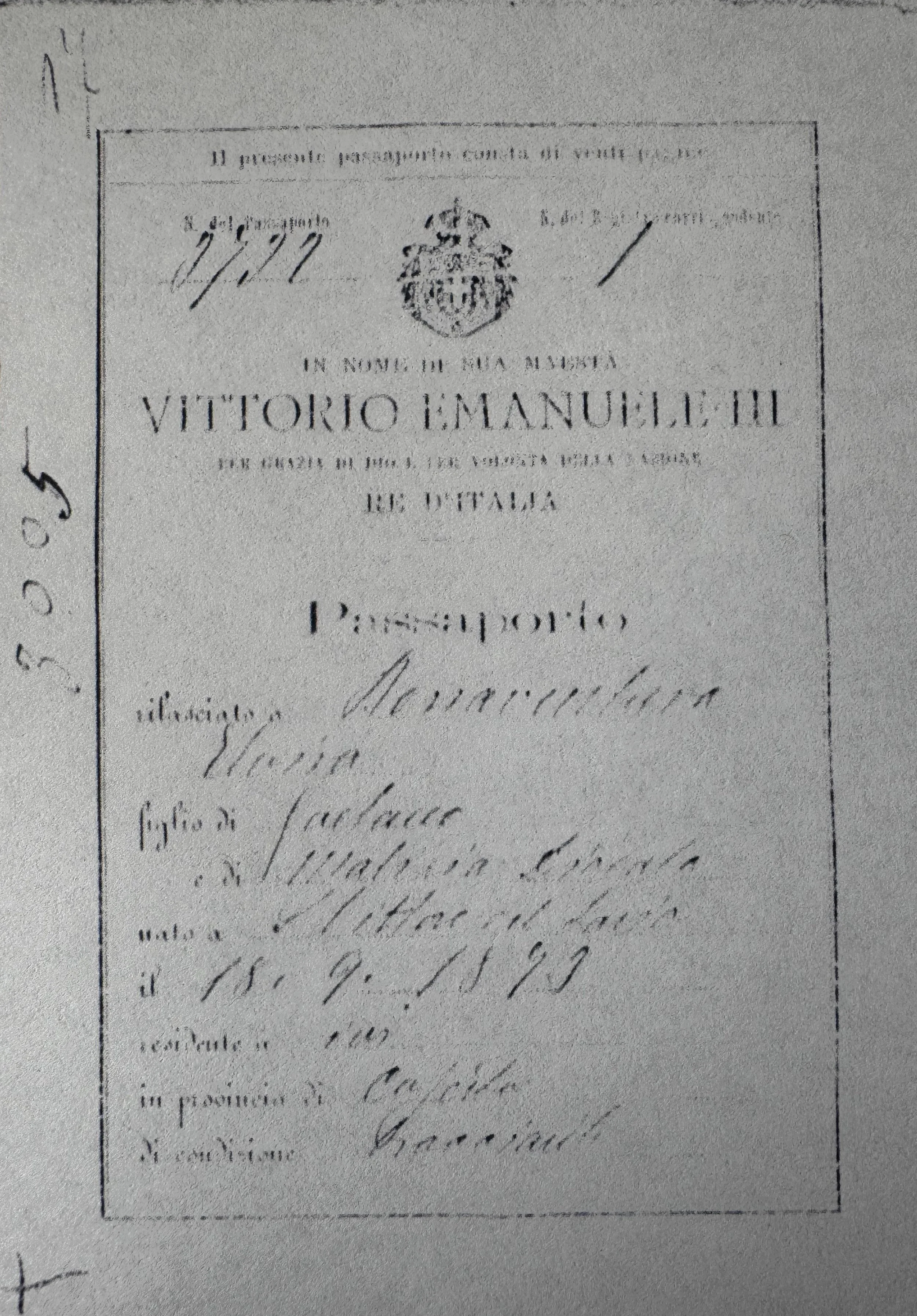
42. Passport issued to Pat’s mother Elvira Verdone née Bonaventura born September 18, 1873.
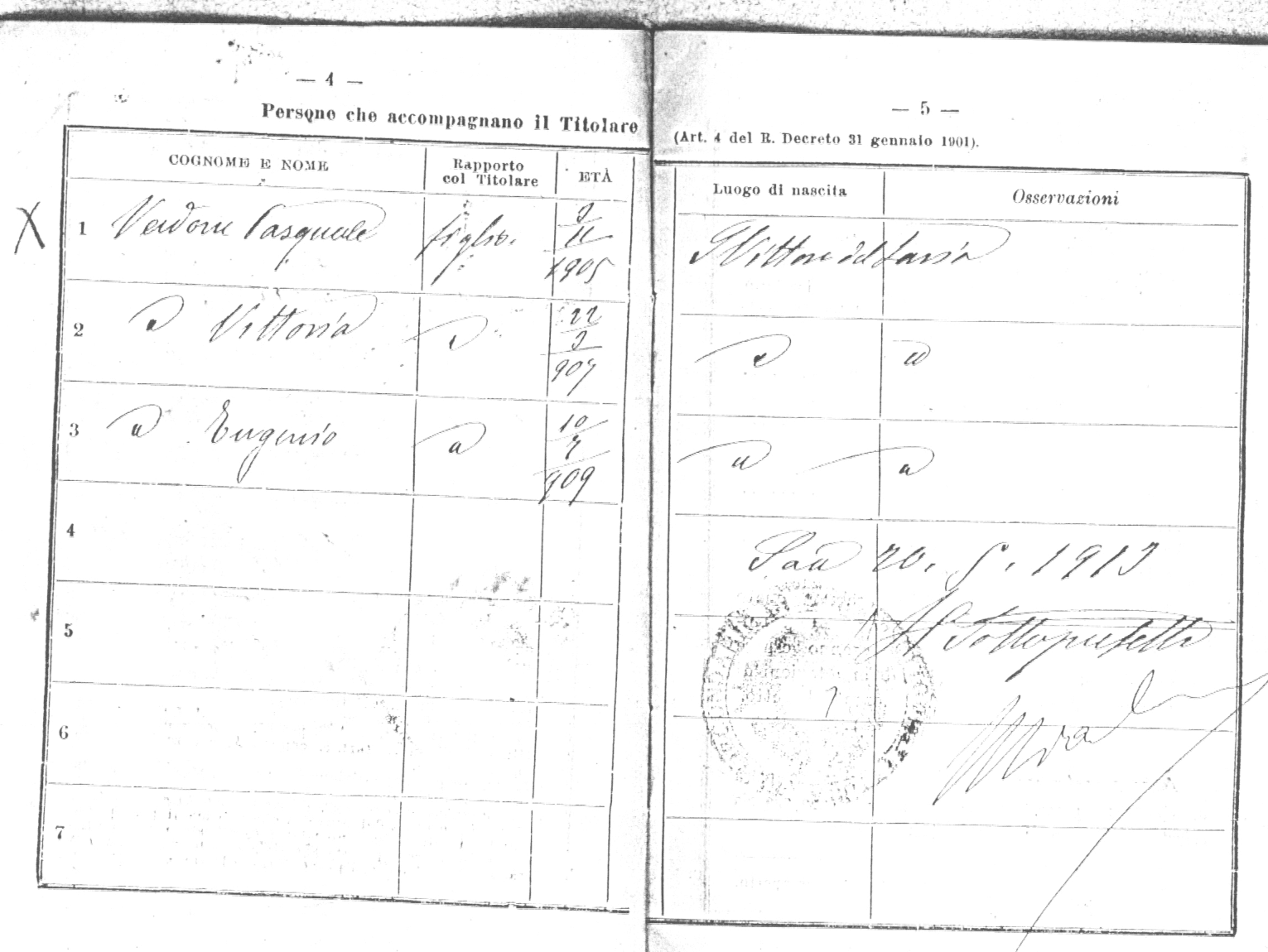
43. The three children occupying an entry on Elvira’s passport, their places of birth all listed as San Vittore del Lazio. Pasquale 11/3/1905, Vittoria 3/22/1907, and Eugenio 7/10/1909. Frank was born in the US on 1/1/1916.
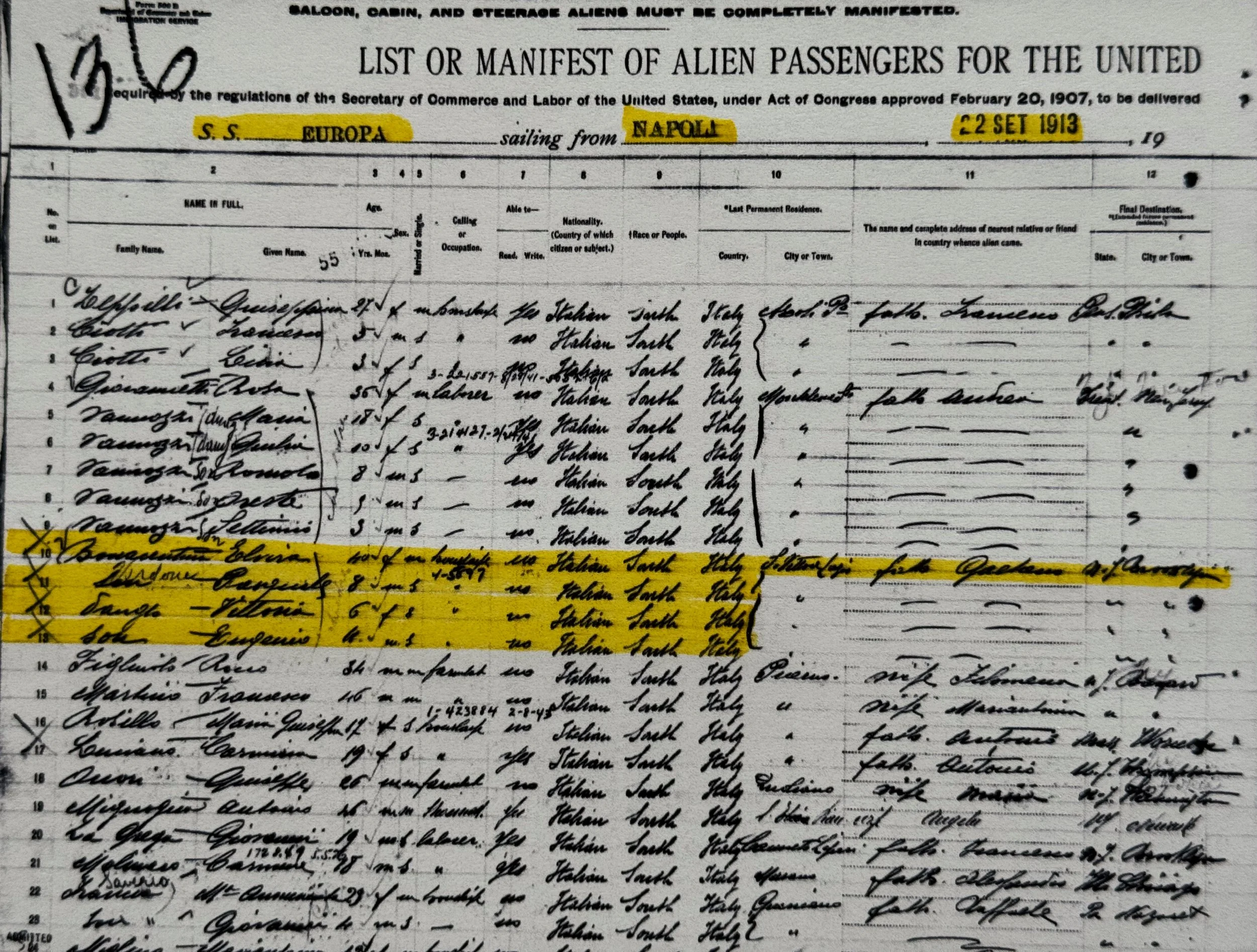
44. Manifest for the SS Europa, which set sail from Naples, Italy, with passengers Elvira (40, married, housewife), Pasquale (8), Vittorio (6), and Eugenio (4). While the form is date stamped September 22, 1913, Ellis Island records indicate they arrived on July 13, 1913—almost exactly one year before the outbreak of WWI. Pat would later write on two applications for citizenship that he arrived on October 7 & 11, 1913, respectively.
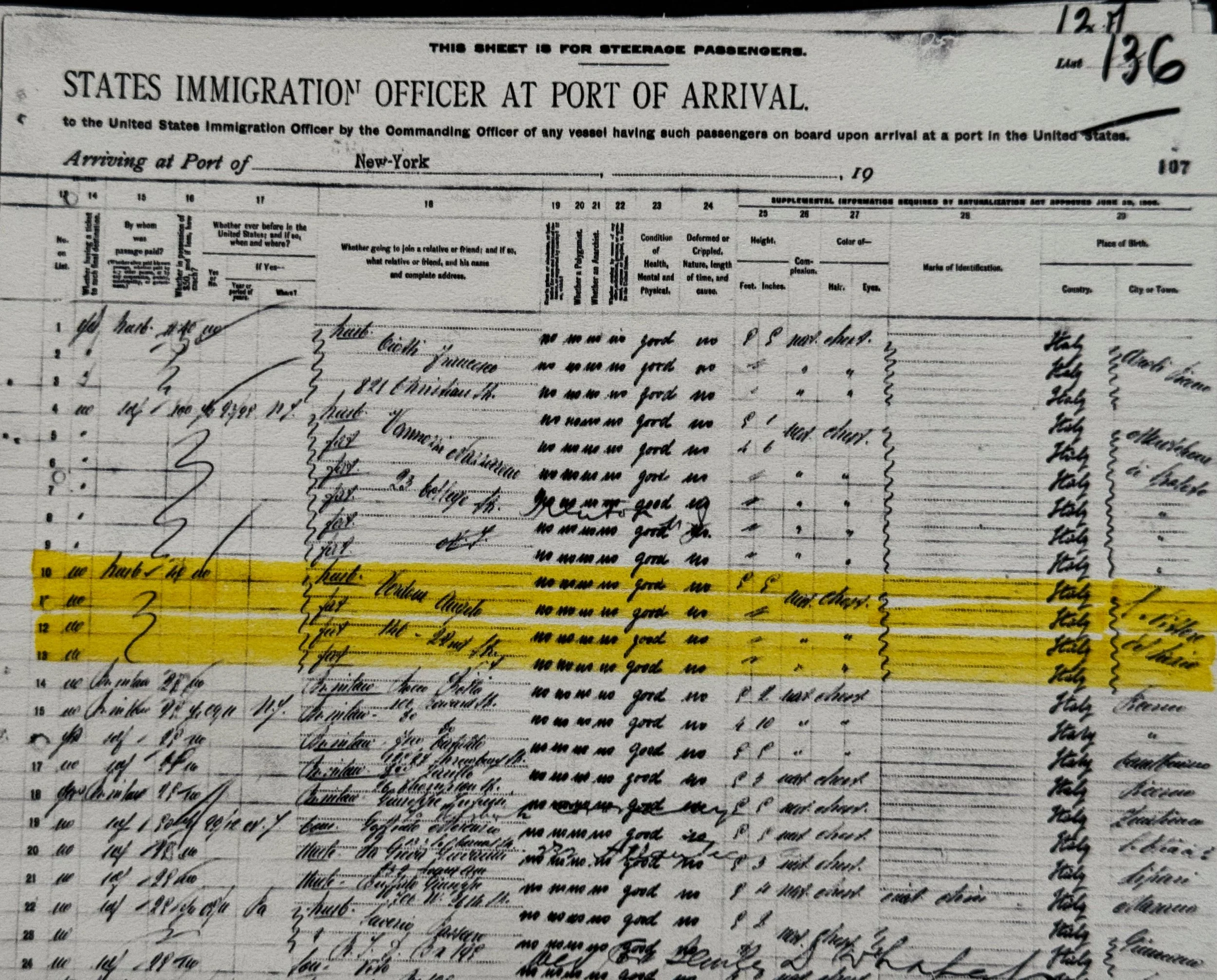
45. The record documenting the arrival of Elvira and the children at Ellis Island. The record reflects they are meeting Angelo Verdone who resides possibly on 22nd Street. He listed 155 21st St., Brooklyn on his Declaration of Intention (below).
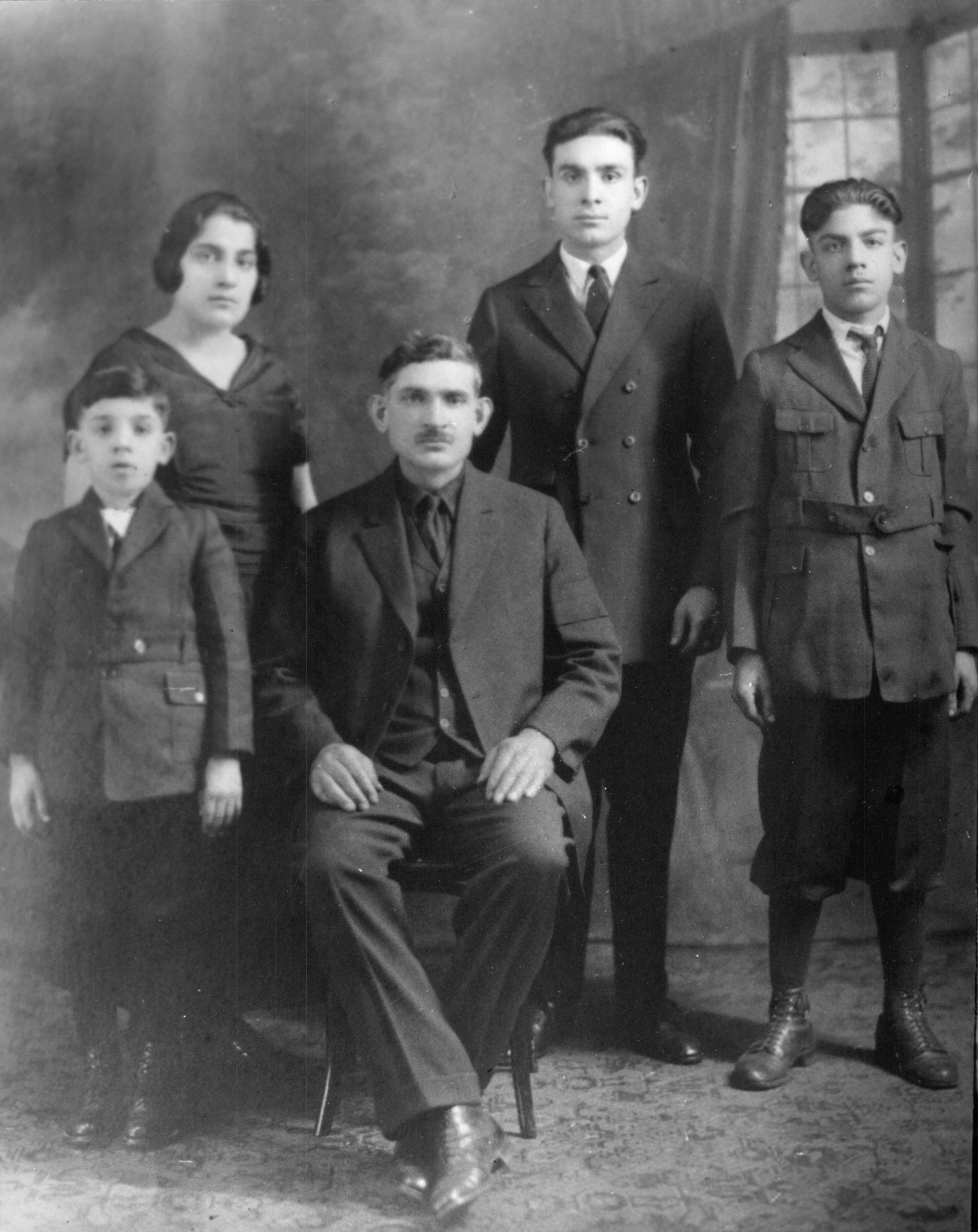
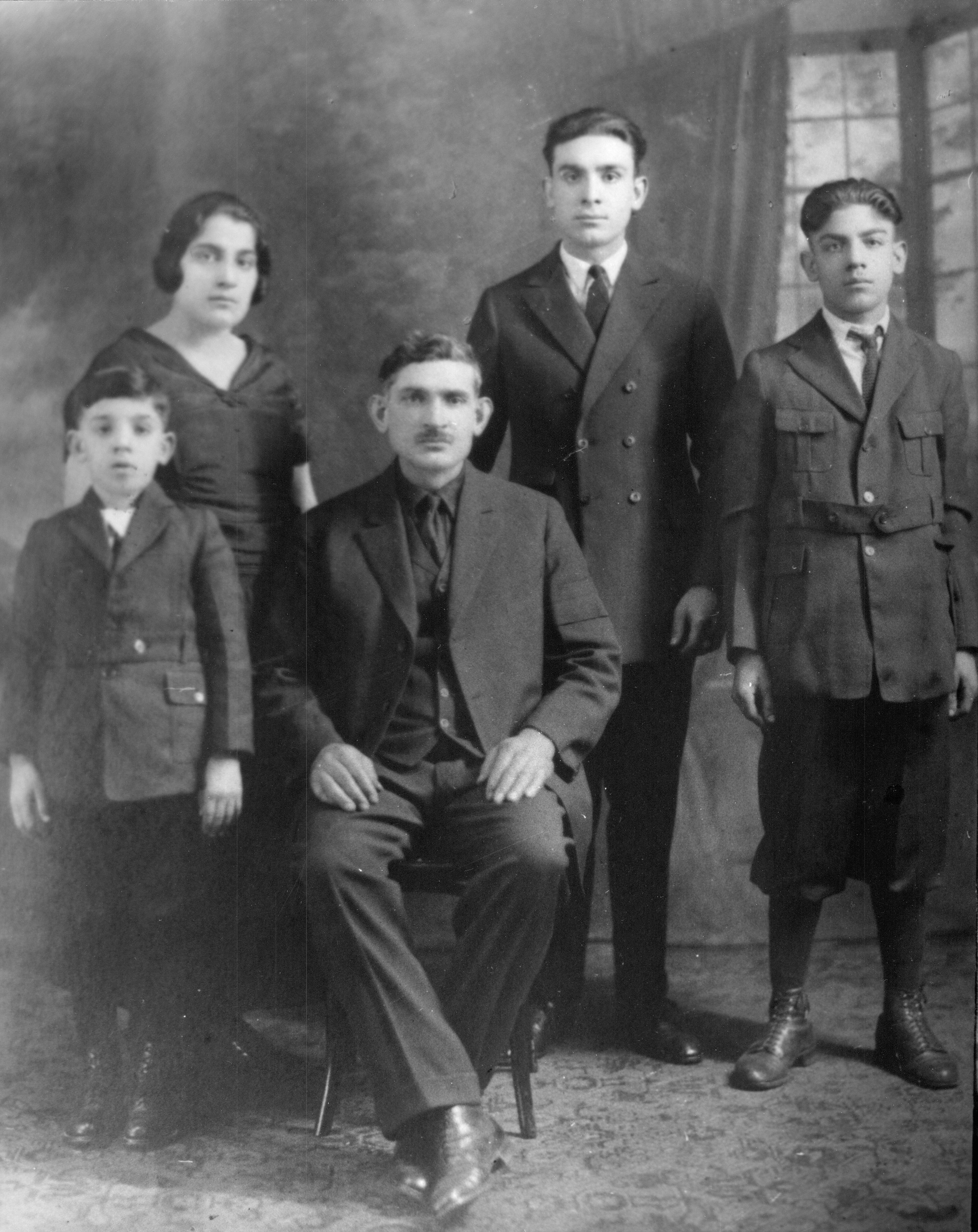
46. Unfortunately for the young family, nearly 10 years after arriving in America, Elvira died on May 15, 1923, at age 49. Given her absence & their dress, this photo was likely taken at her funeral. If so, then Pasquale (Pat) is 17-1/2, Vittorio (Victoria) 16, Eugenio (Eugene) is nearly 14, and (Franco?) Frank is nearly 7-1/2. Pat is dressed as a “man” while his brothers are clothed as “boys.”
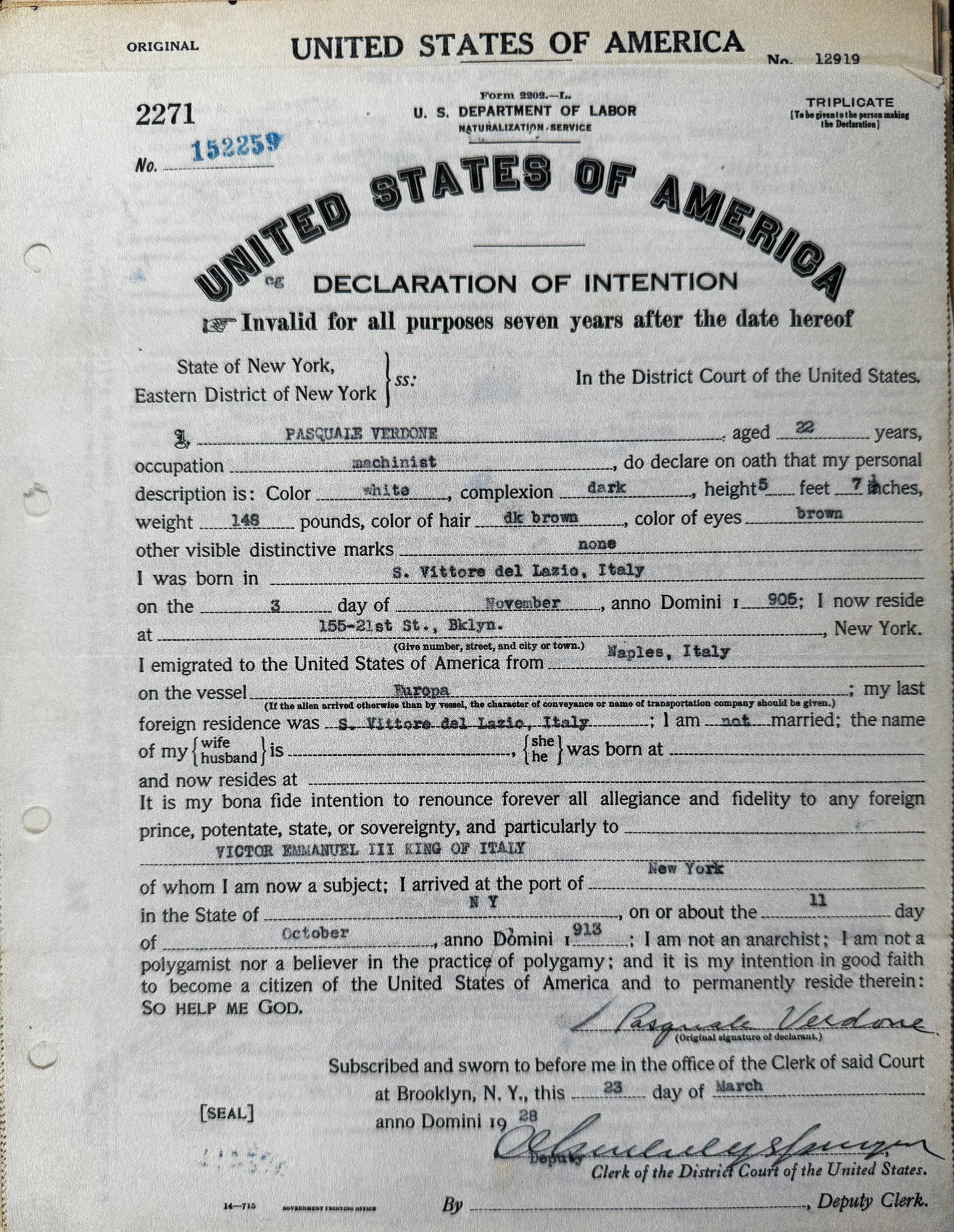
47. Pat’s Declaration of Intention (or “first papers”)—dated March 28, 1928—was his initial document filed as an immigrant to announce his intent to become a US citizen and renounce foreign allegiances. While a Declaration was often filed shortly after arrival, Pat was only 8 at the time. Pat filed his Declaration at 22, nearly 15 years after arrival.
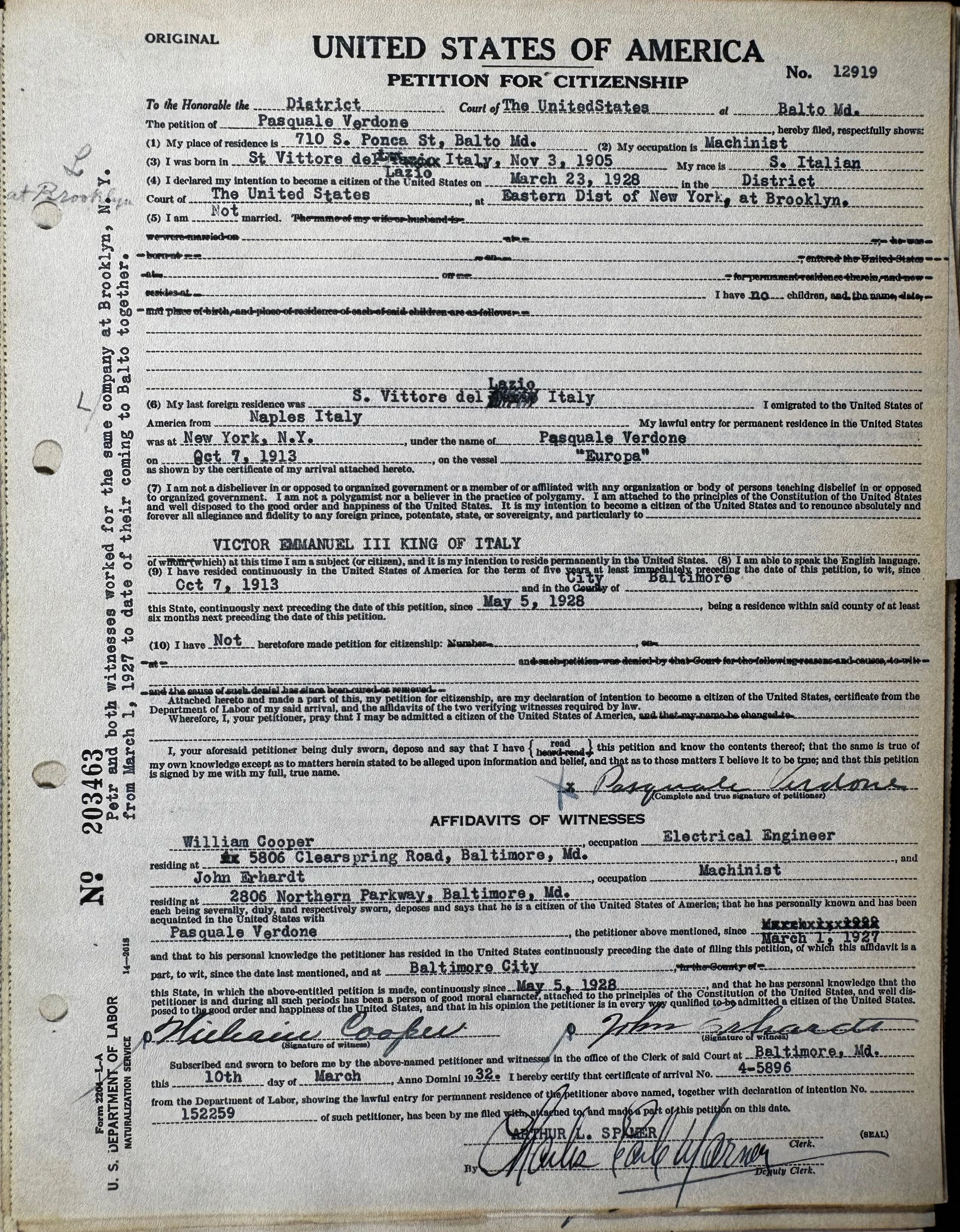
48. Pat’s Petition for Citizenship (or “final papers”)—dated March 10, 1932—was his formal application submitted after meeting residency requirements. This is the form that usually resulted in actual citizenship. Pat completed this four years after submitting his Declaration.
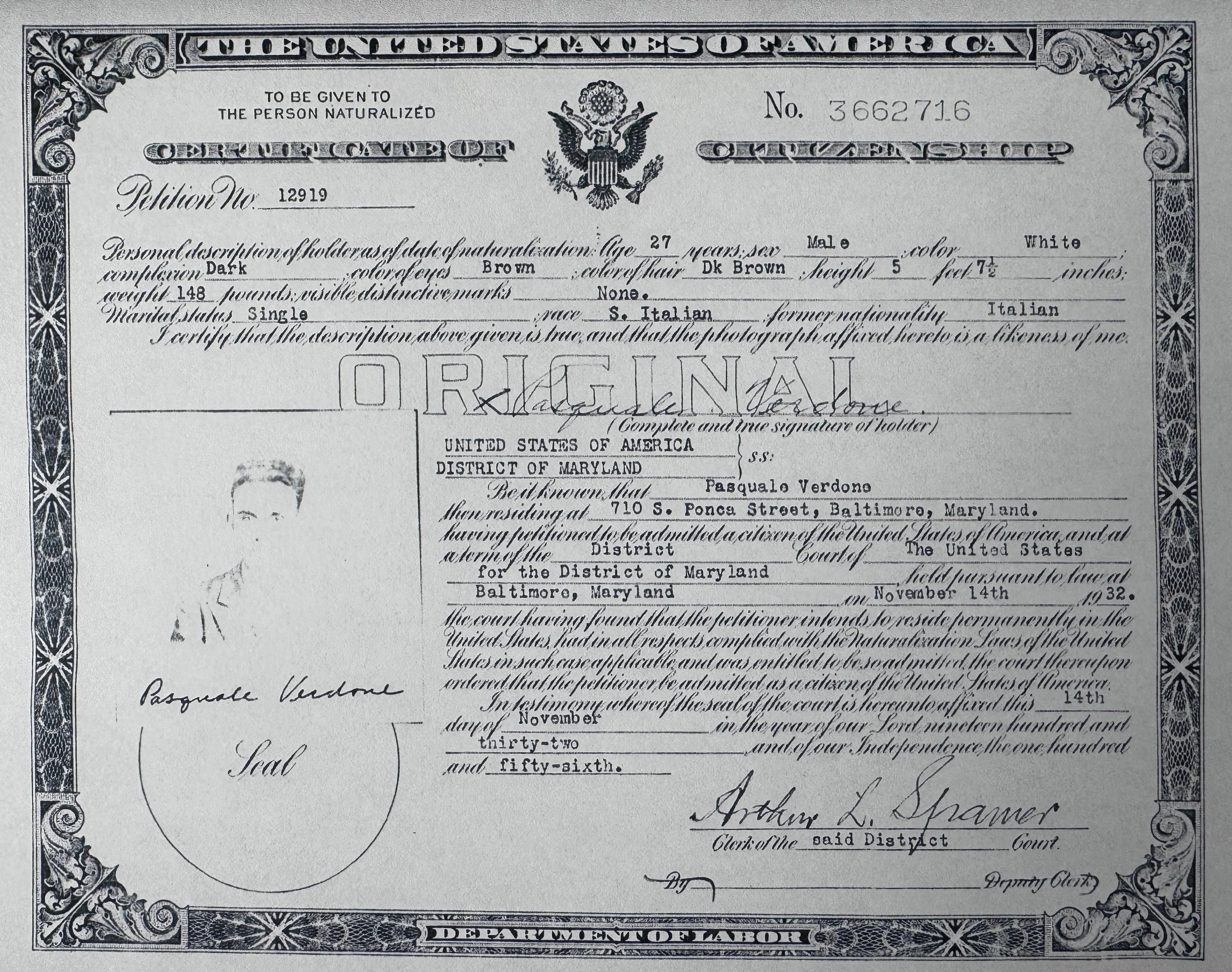
49. Pat’s Certificate of Citizenship is dated November 14, 1932. He had married Mildred on April 10 of that same year, but because his petition was submitted a month before the wedding, the certificate—issued afterward—still lists him as single.