San Vittore del Lazio
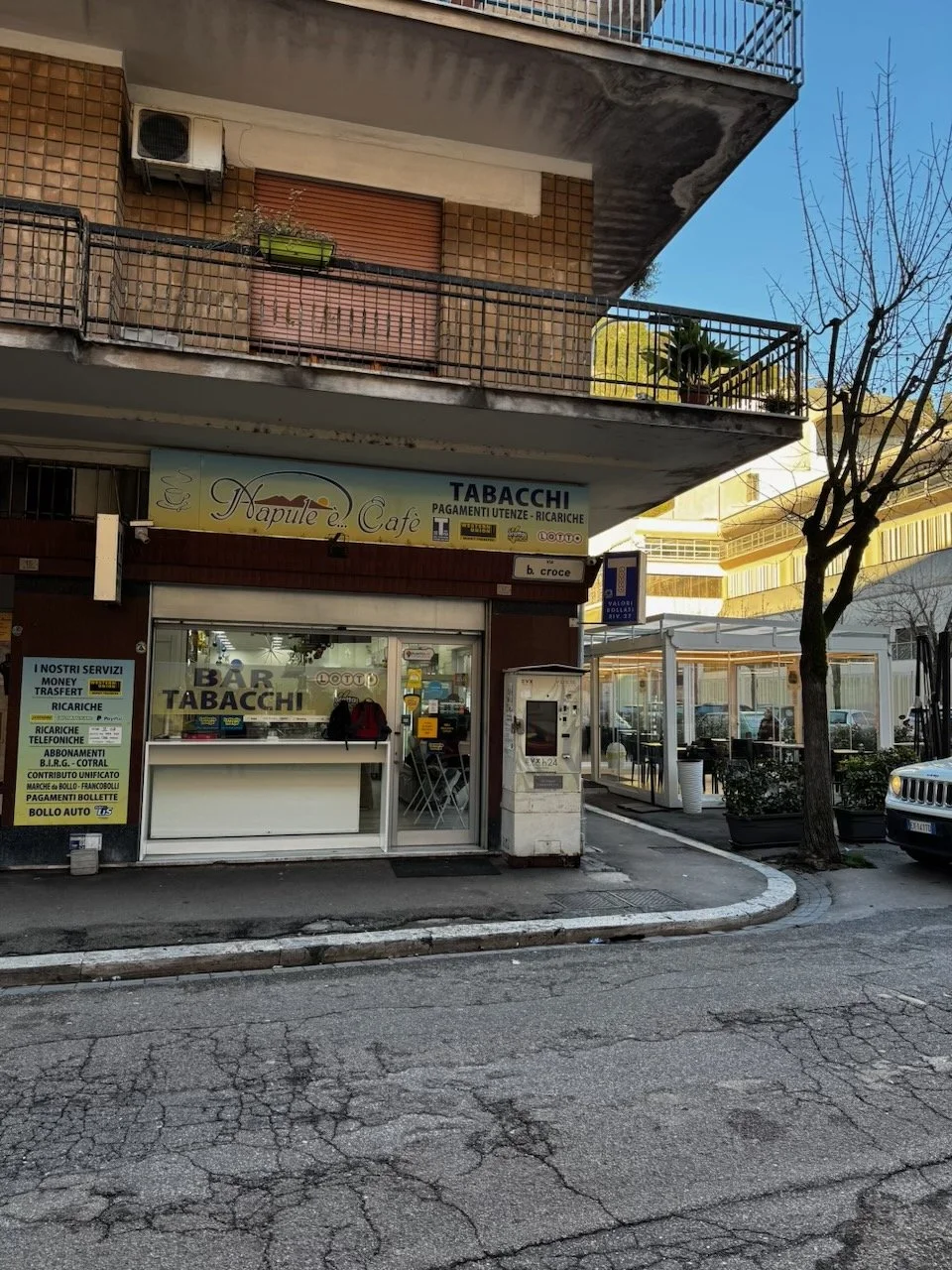
Today, Wednesday, January 7, 2026, was the big day—time to visit the birthplace of our maternal grandfather Patrick Verdone (b. 11/3/1905; d. 1/16/1994). But first things first! We walked down the hill from La Residenza di Carolina to Naples Coffee Bar.
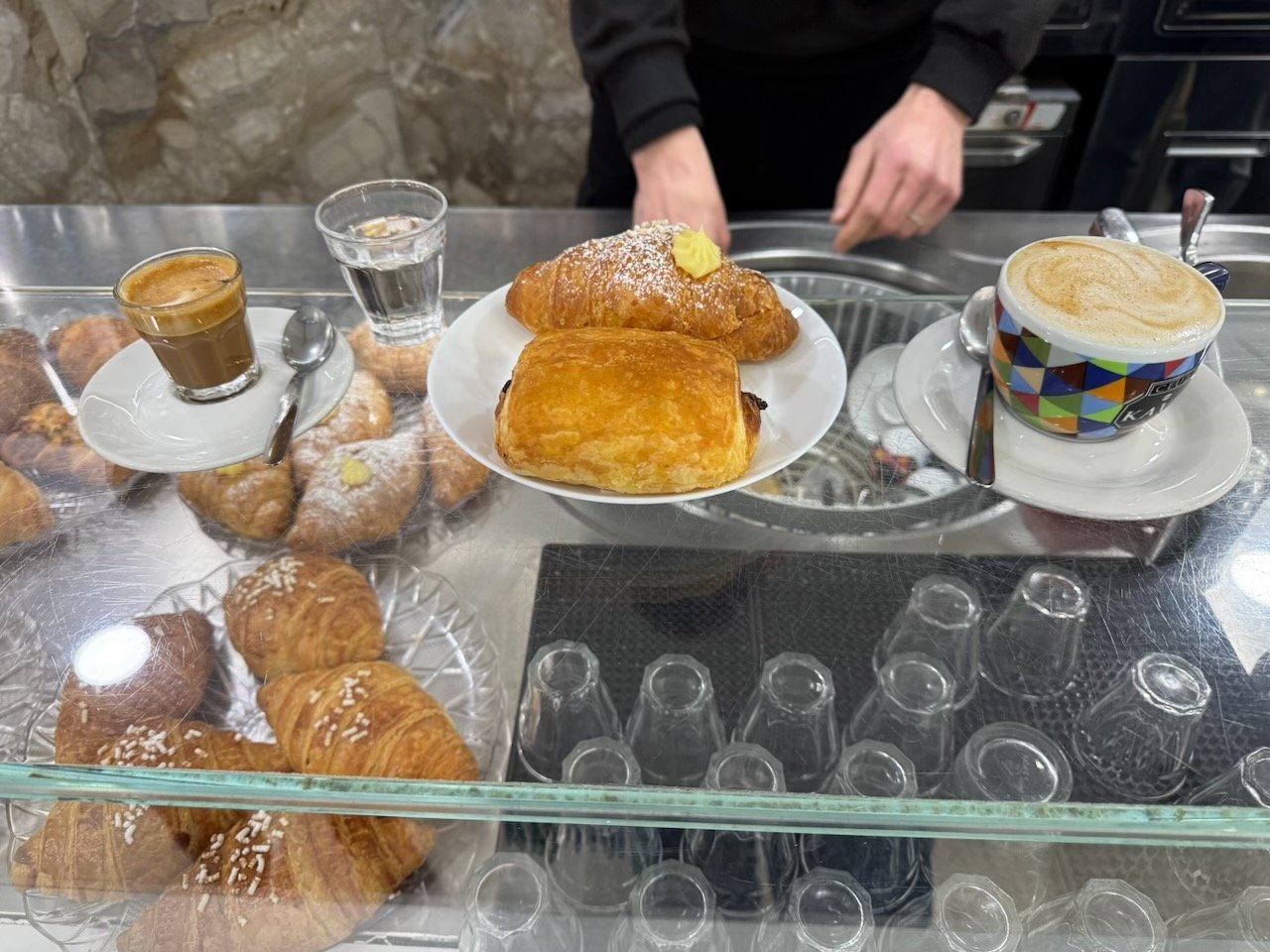
Pastries and cappuccinos—the absolute essential morning ritual.
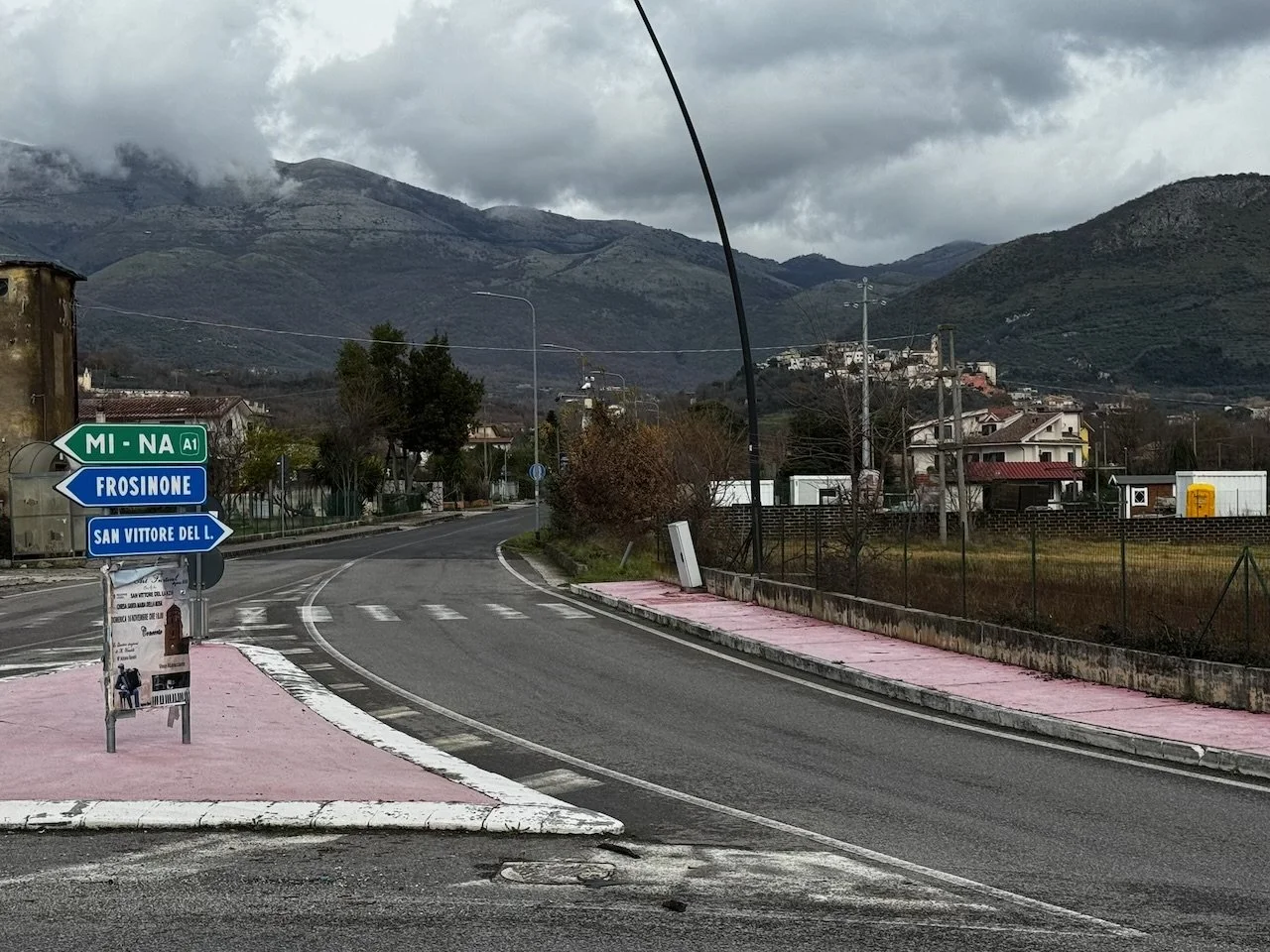
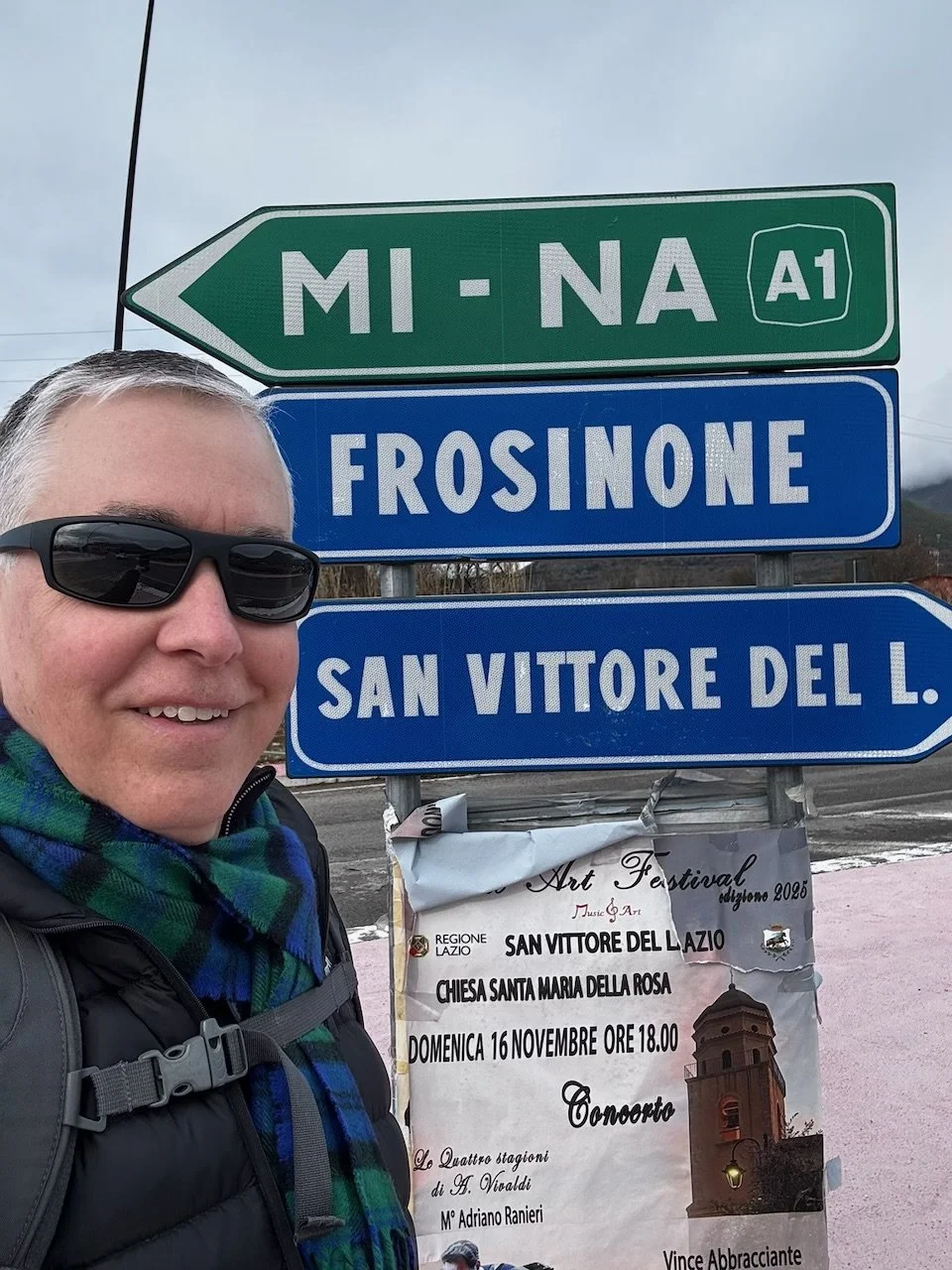
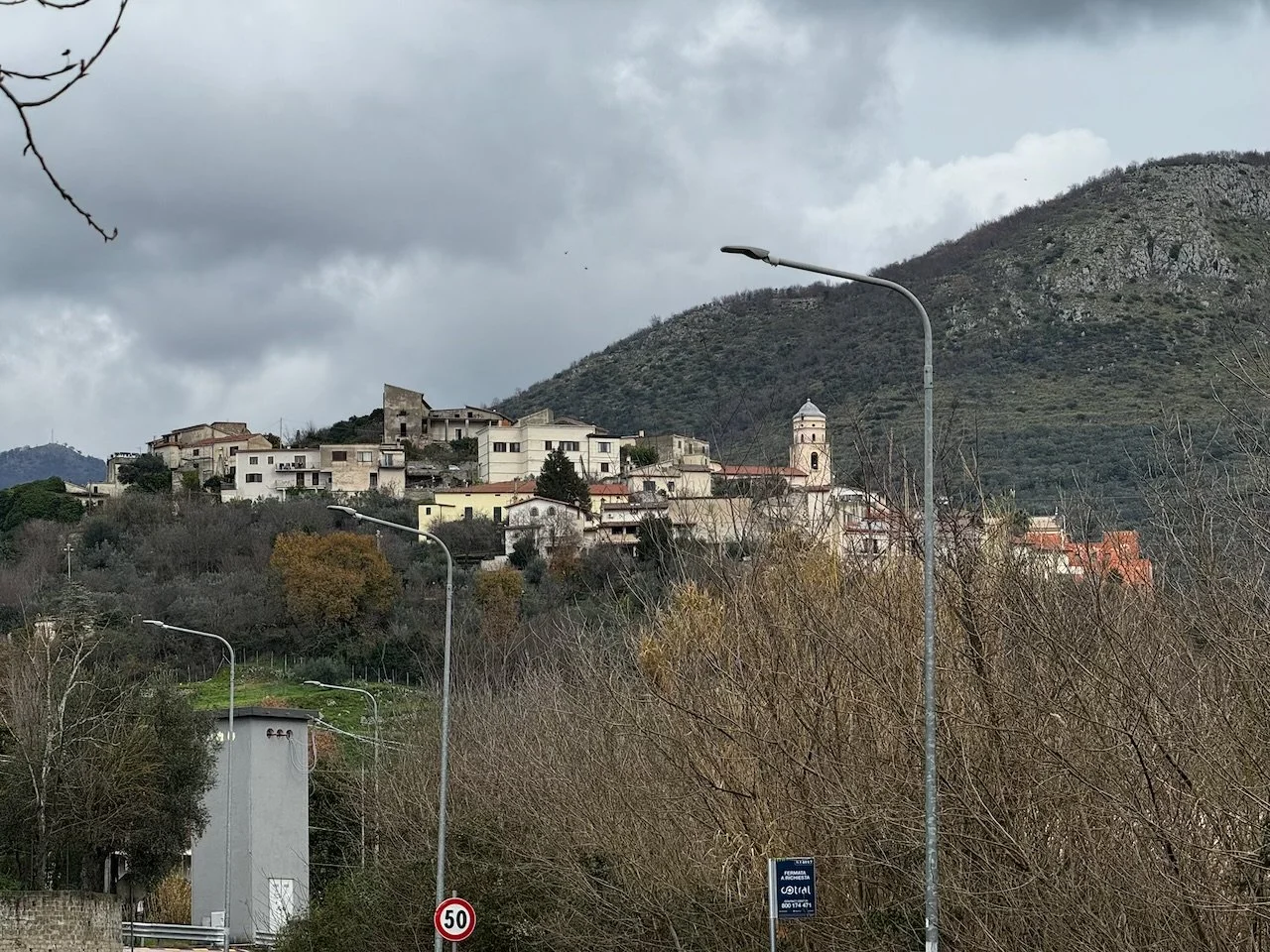
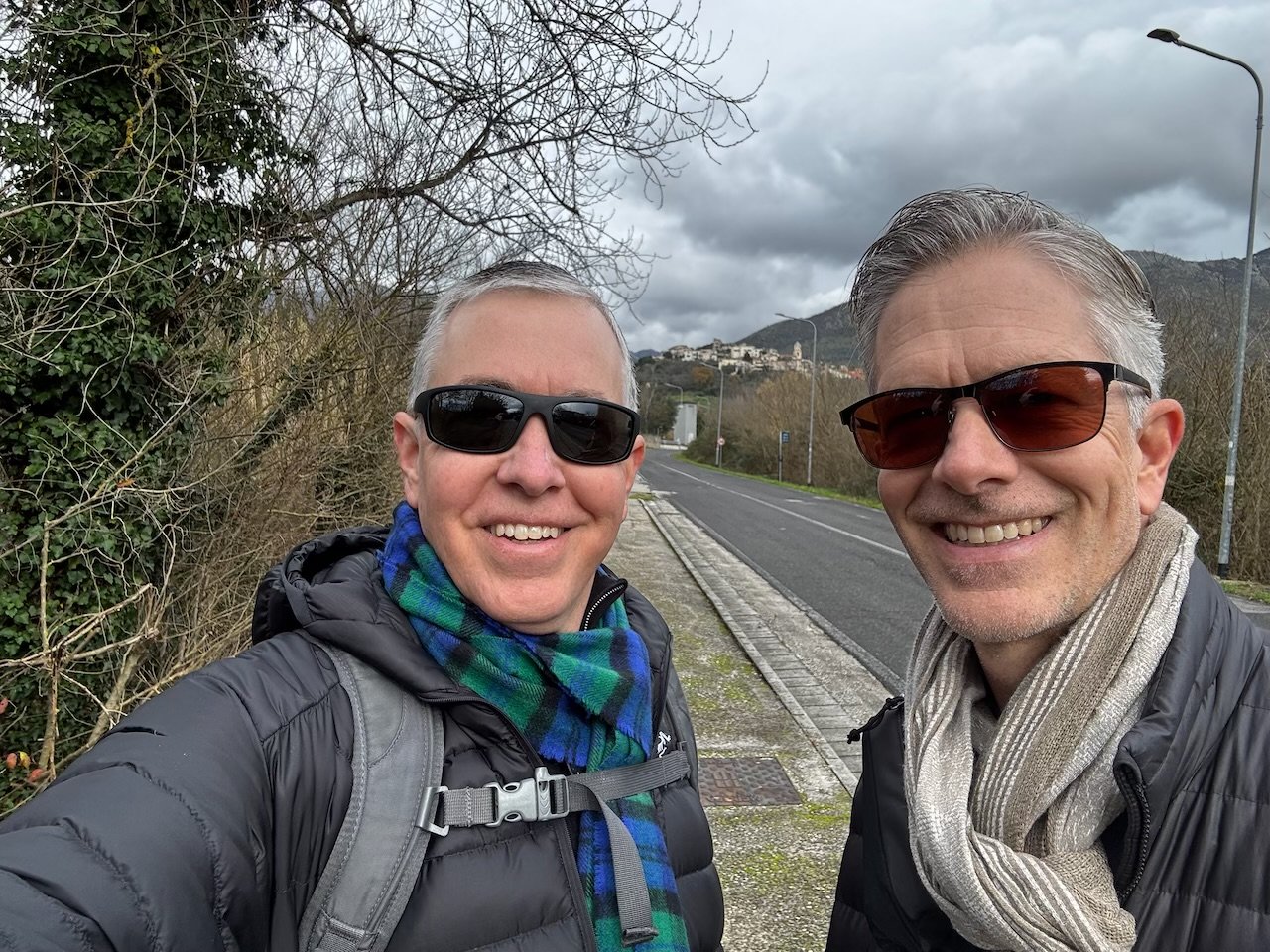
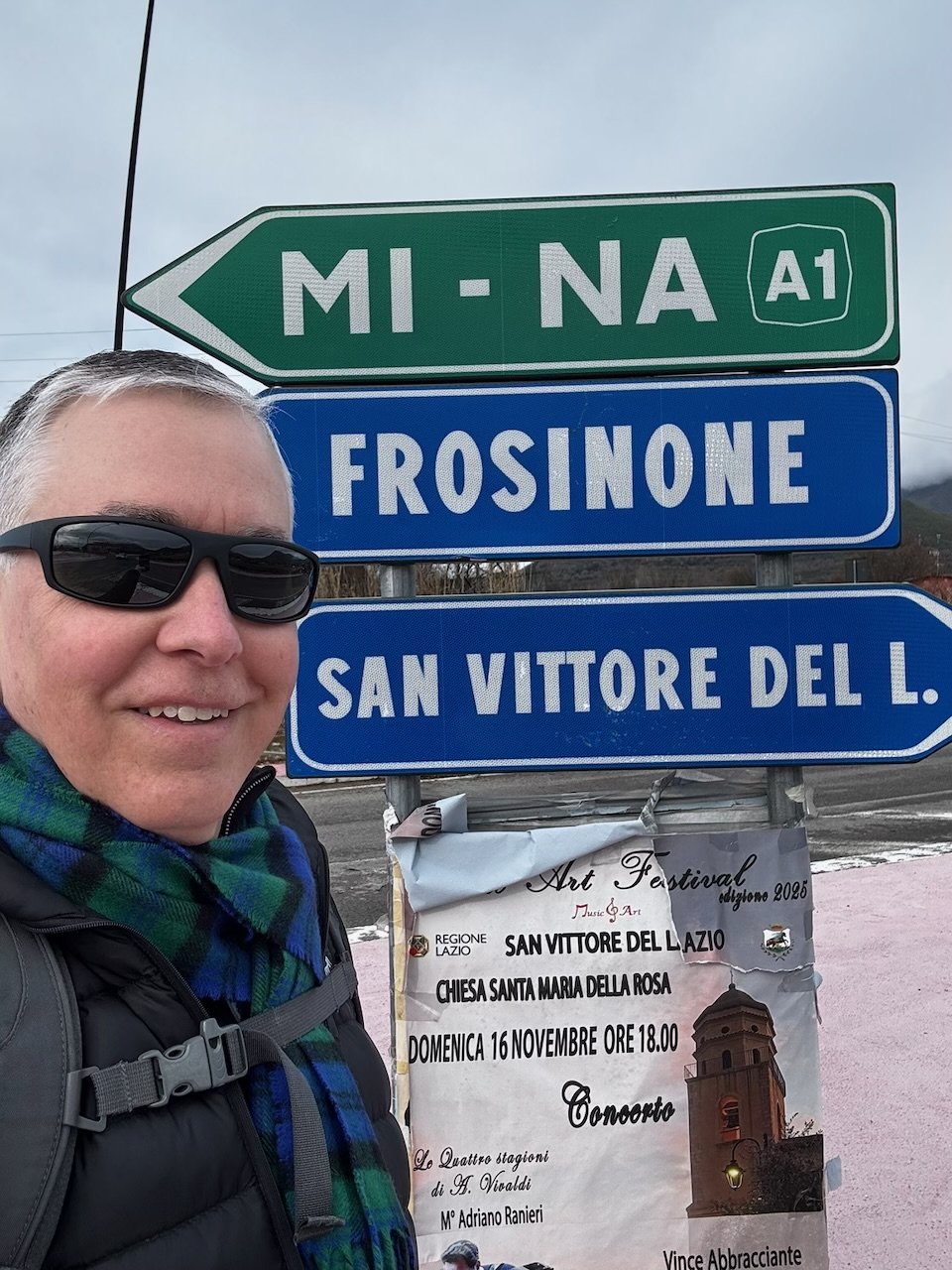
Unable to figure out a satisfactory bus route, Carolina decided to drive us the 20-minutes to San Vittore del Lazio. This is looking out of the traffic circle—with the proper direction arrow—looking toward the town perched on the hill in the distance.
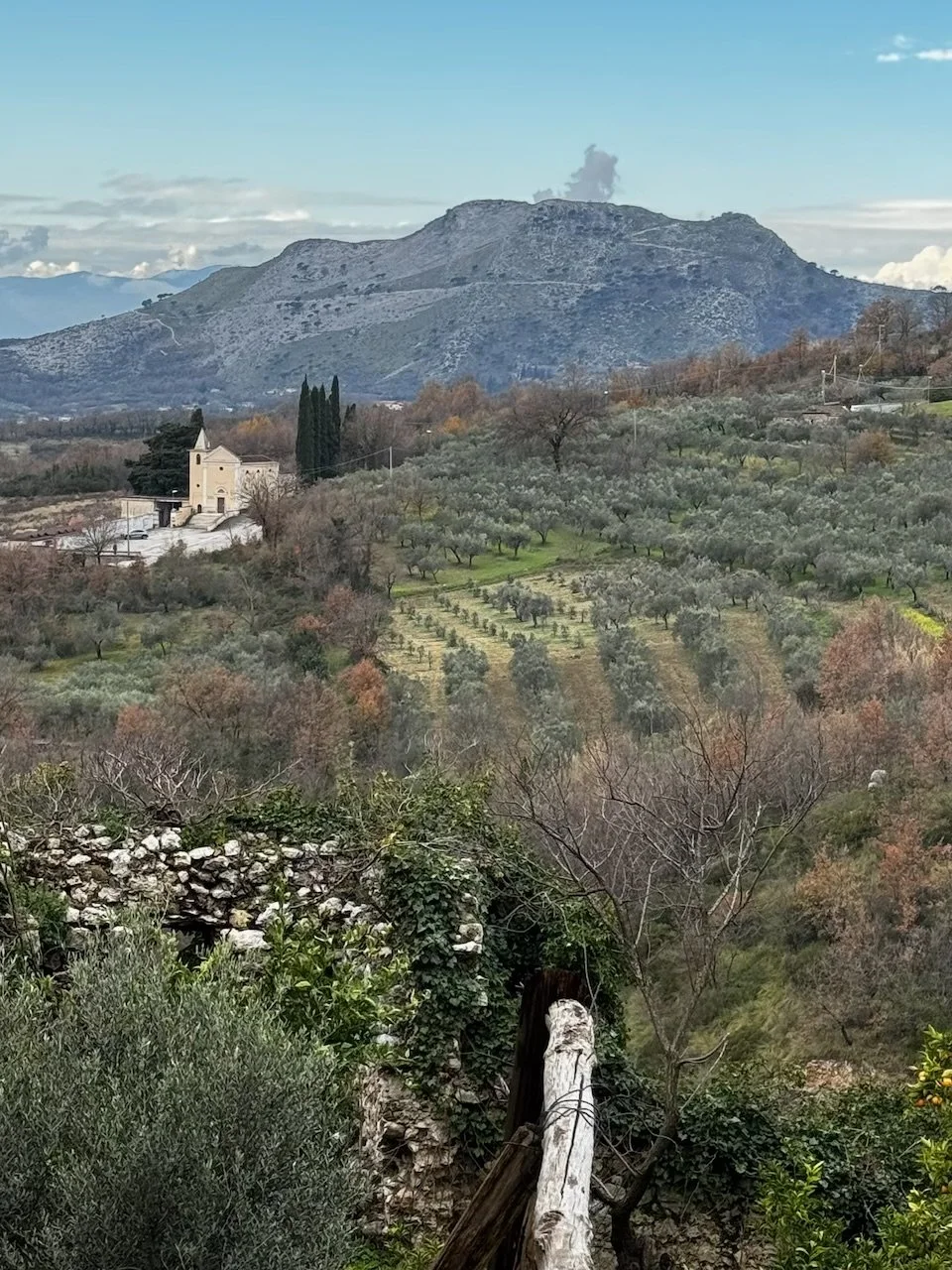
At our request, Carolina dropped us off at the town’s only church with an existing graveyard, which was labeled Church of Our Lady of Grace and the attached Cemetery of Saint Victor. Both are seen here from town. They are just outside town and connected by car over a winding road, or by an old footpath that was once likely the only link between the two.
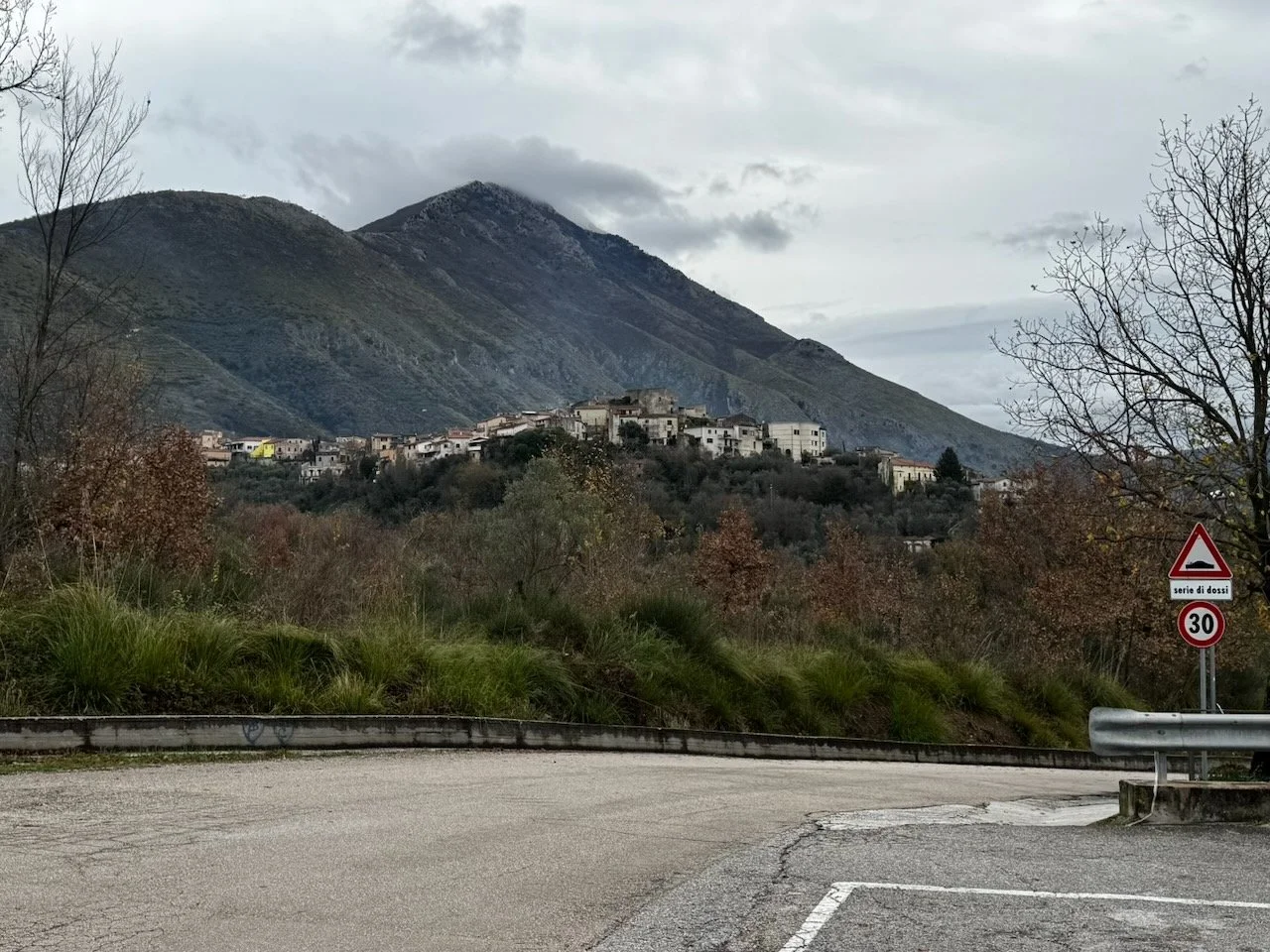
The view of San Vittore from the church and cemetery. From here it’s easy to imagine its historical hilltop position as a medieval walled city.
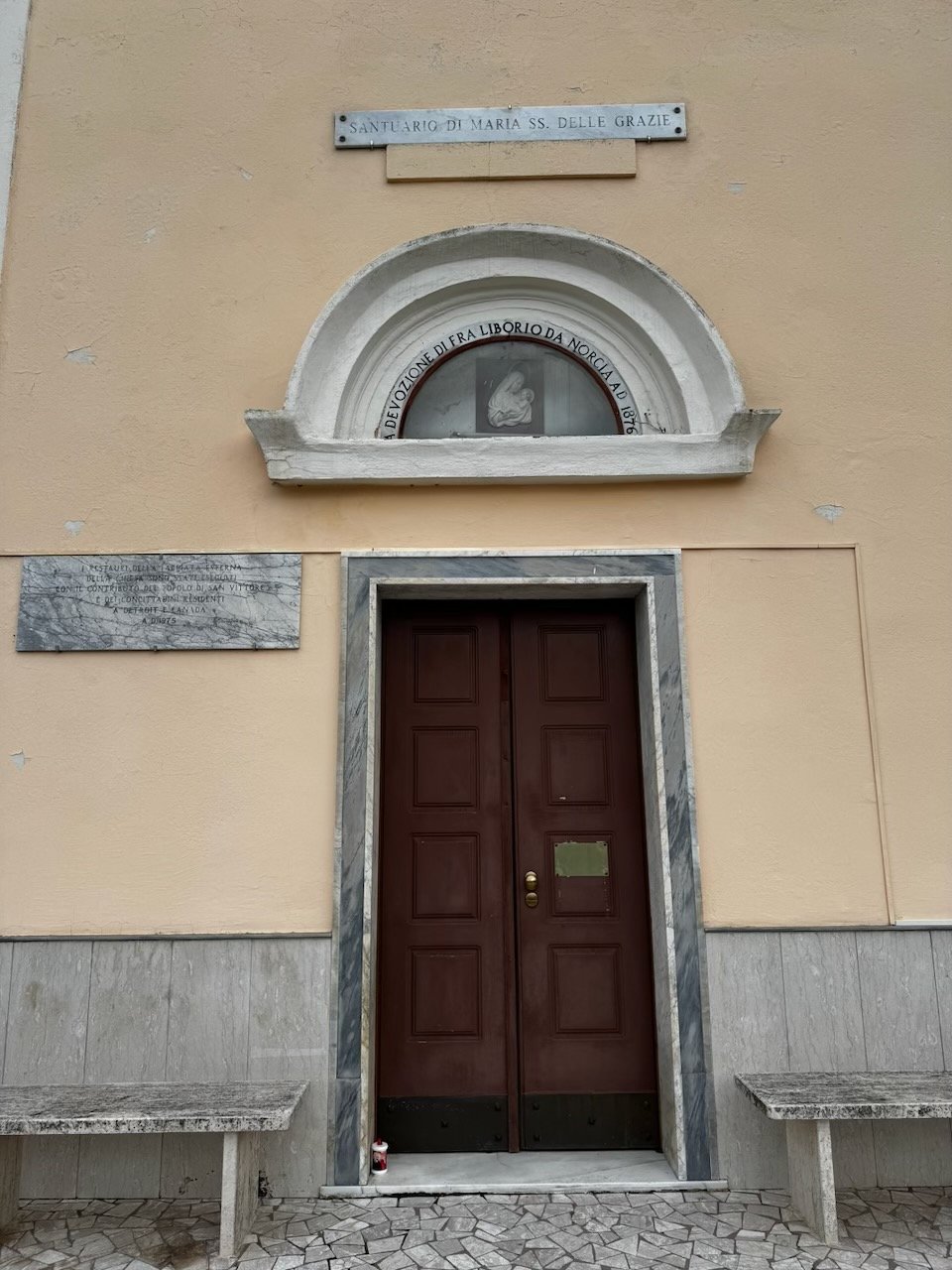
Caught between Nazis forces repelling Allied forces advancing from the south, parts of San Vittore, including the previous church and cemetery here, were destroyed during WWII. The plaque on the left says, “The restoration of the exterior façade of the church was carried out with the contribution of the people of San Vittore and fellow townspeople residing in Detroit and Canada. A.D. 1975.”
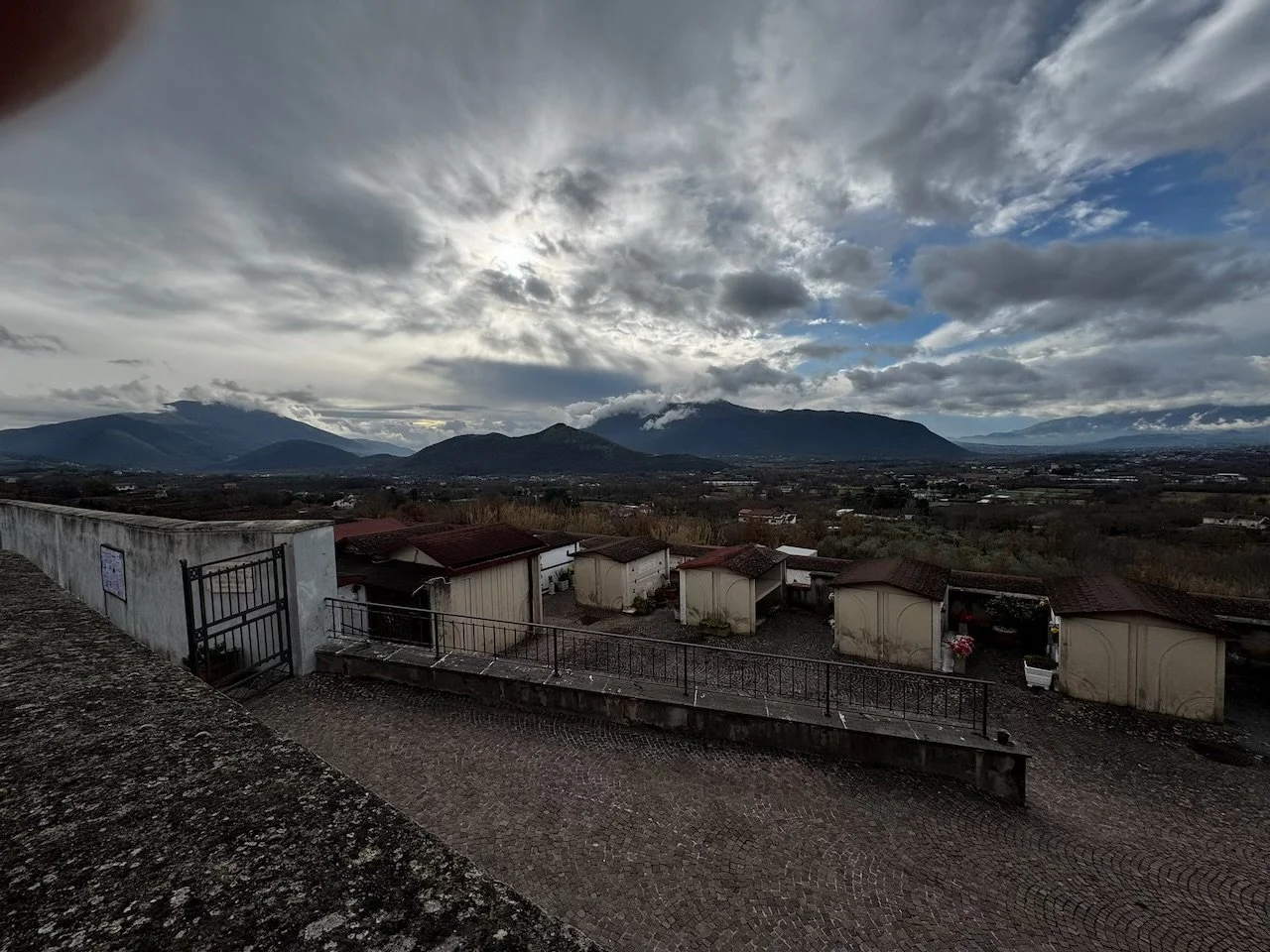
What became obvious rather quickly touring the graveyard was that all the dates on the graves were too recent. Relatives like Pat’s maternal grandmother Diodato Maliza were born around 1855; however, the oldest birth dates we found were from the turn of the century. A brochure for Chiesa di San Nicola (below) said there was once a graveyard at that church, but it no longer exists.
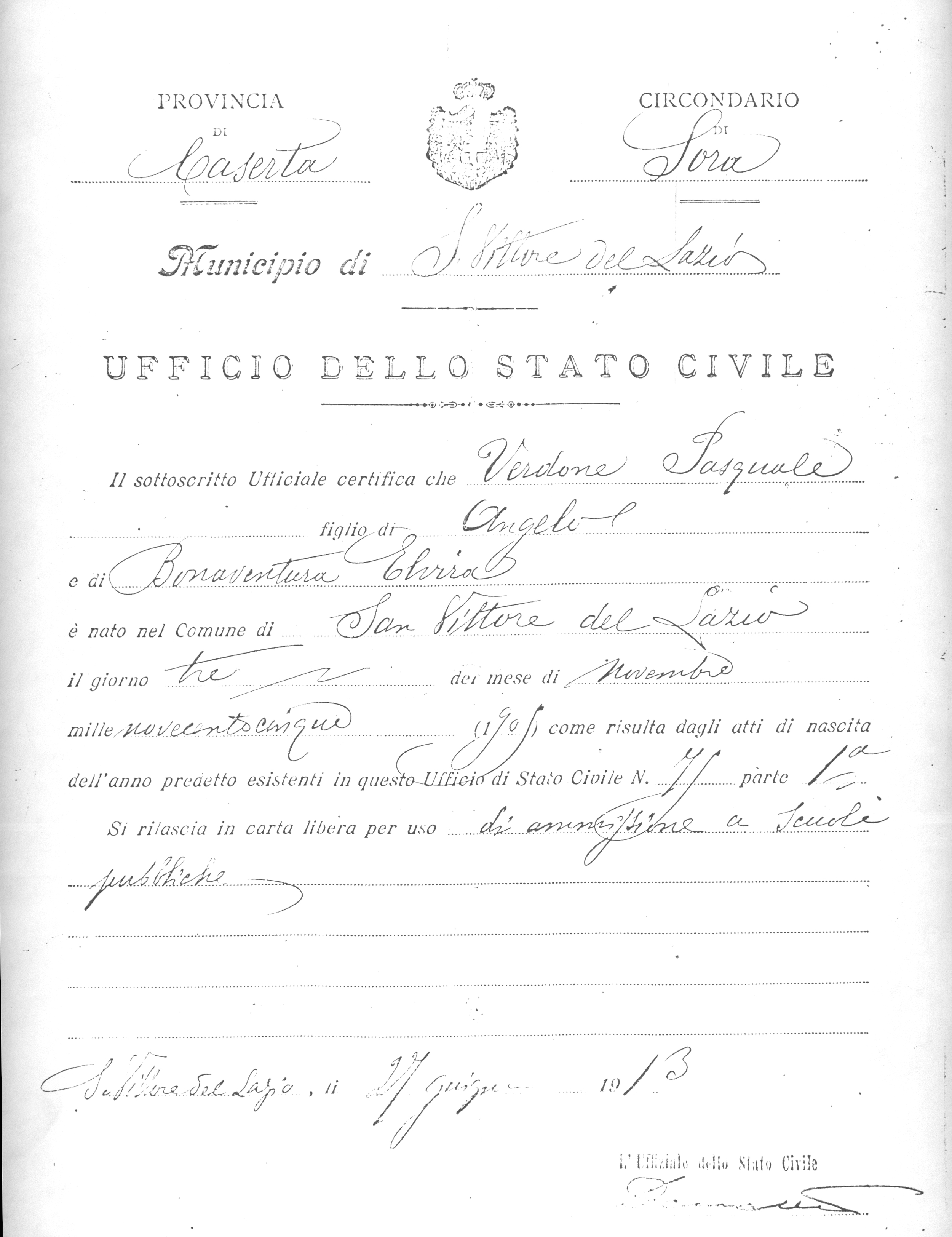
It was not until we discovered our grandfather’s given name at birth was Pasquale—not his adopted Anglicized name of Patrick—that we found his birth certificate. It was from this that we learned he was born in San Vittore del Lazio on November 3, 1905.
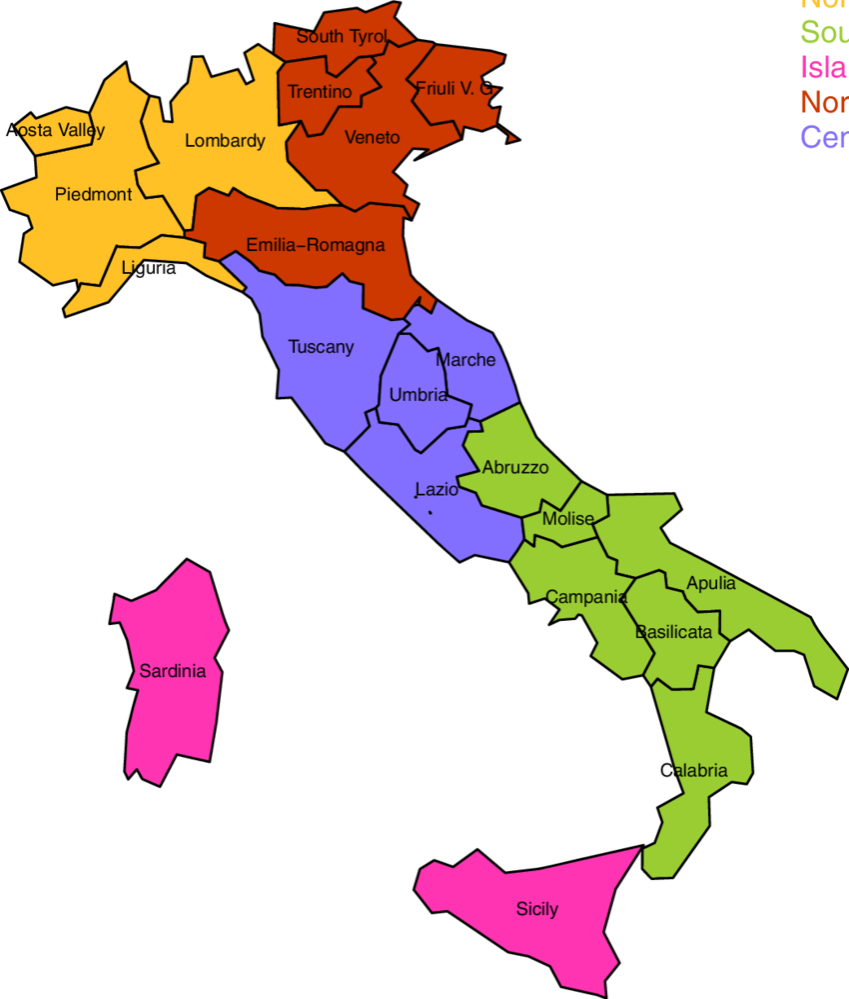
Italy is divided into five geographical areas: North-West, North-East, Centre, South, and Islands. Italy is further divided into 20 regions, with the Lazio Region being in Central Italy—thus San Vittore del Lazio. roughly translates as “Saint Victor of the Lazio Region.”
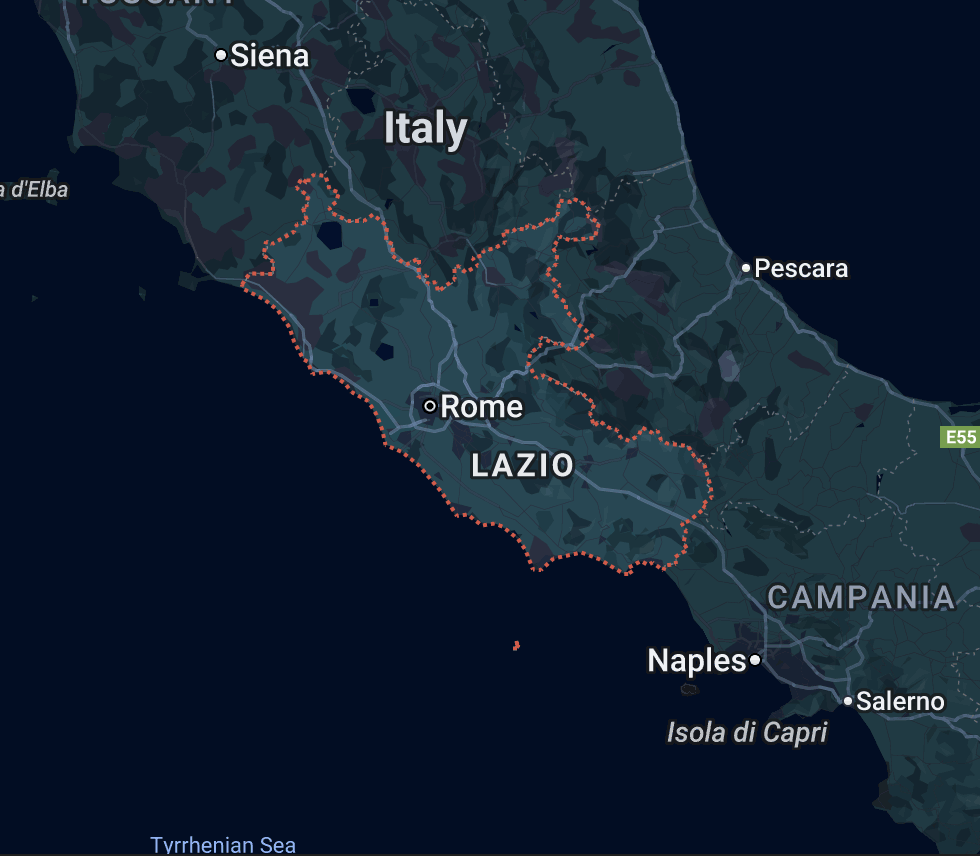
The Lazio Region currently has five provinces: Frosinone, Latina, Rieti, Viterbo, and the Metropolitan City of Rome Capital. However, the top of Pat’s birth certificate says Province of Caserta and the District of Sora. This is because in 1927 the town was transferred from the province of Caserta to the newly formed province of Frosinone under Fascist reforms, reflecting Italy's centralization efforts. This explains the change in province following Pat’s birth in 1905..
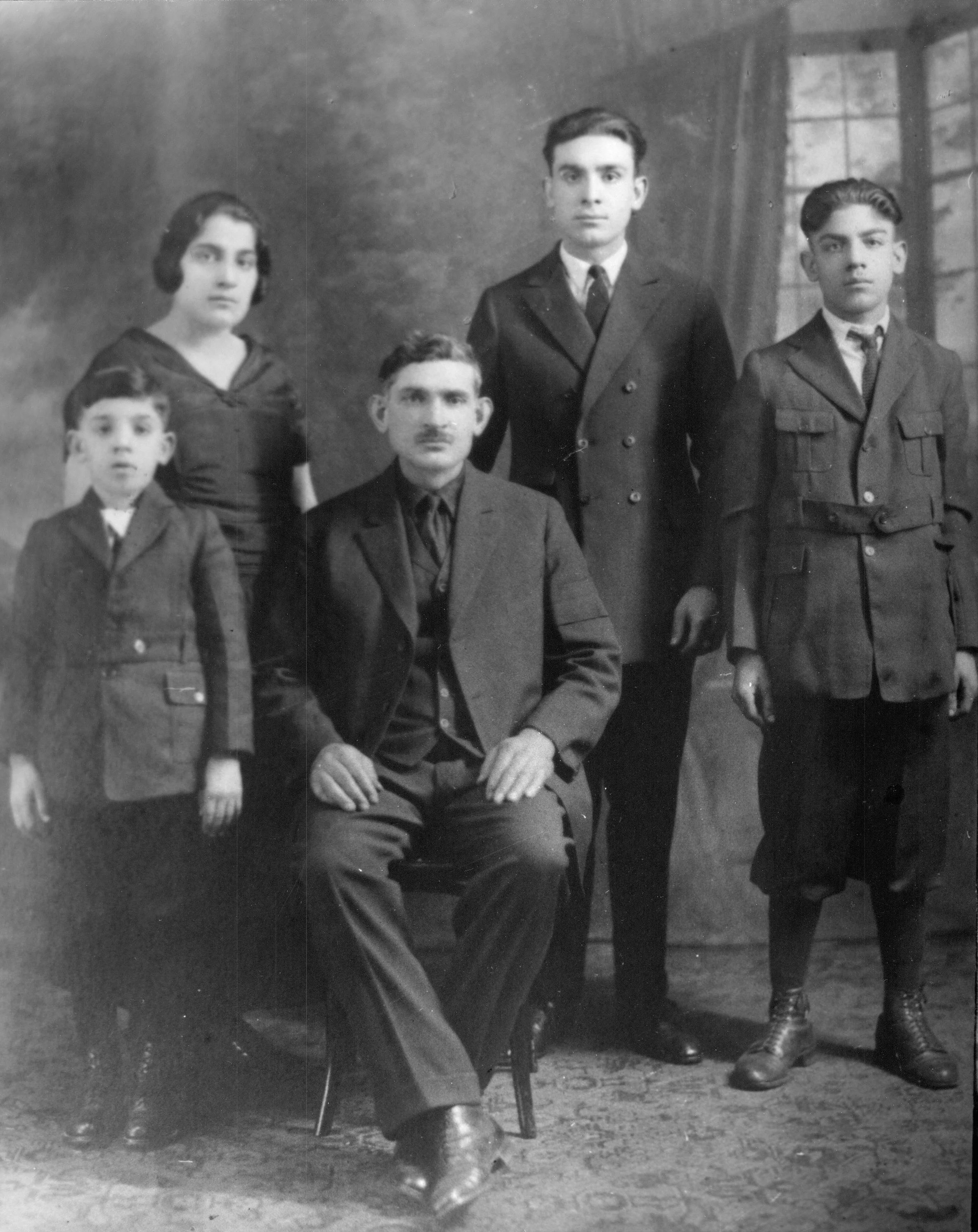
From the birth certificate we learned that Pat’s parents were Angelo Verdone and Elvira nee Bonaventura. Elvira died in America aged 49 in roughly 1922, and this may be a photo memorializing that sober occasion. If so, then Pat (Pasqule) is about 17 years old and Victoria (Vittoria) is about 15 years old. Pat is dressed as a “man,” while his younger brothers Eugene (Eugenio) (13) and Frank (Franco?) (6-7) are dressed as “boys.”
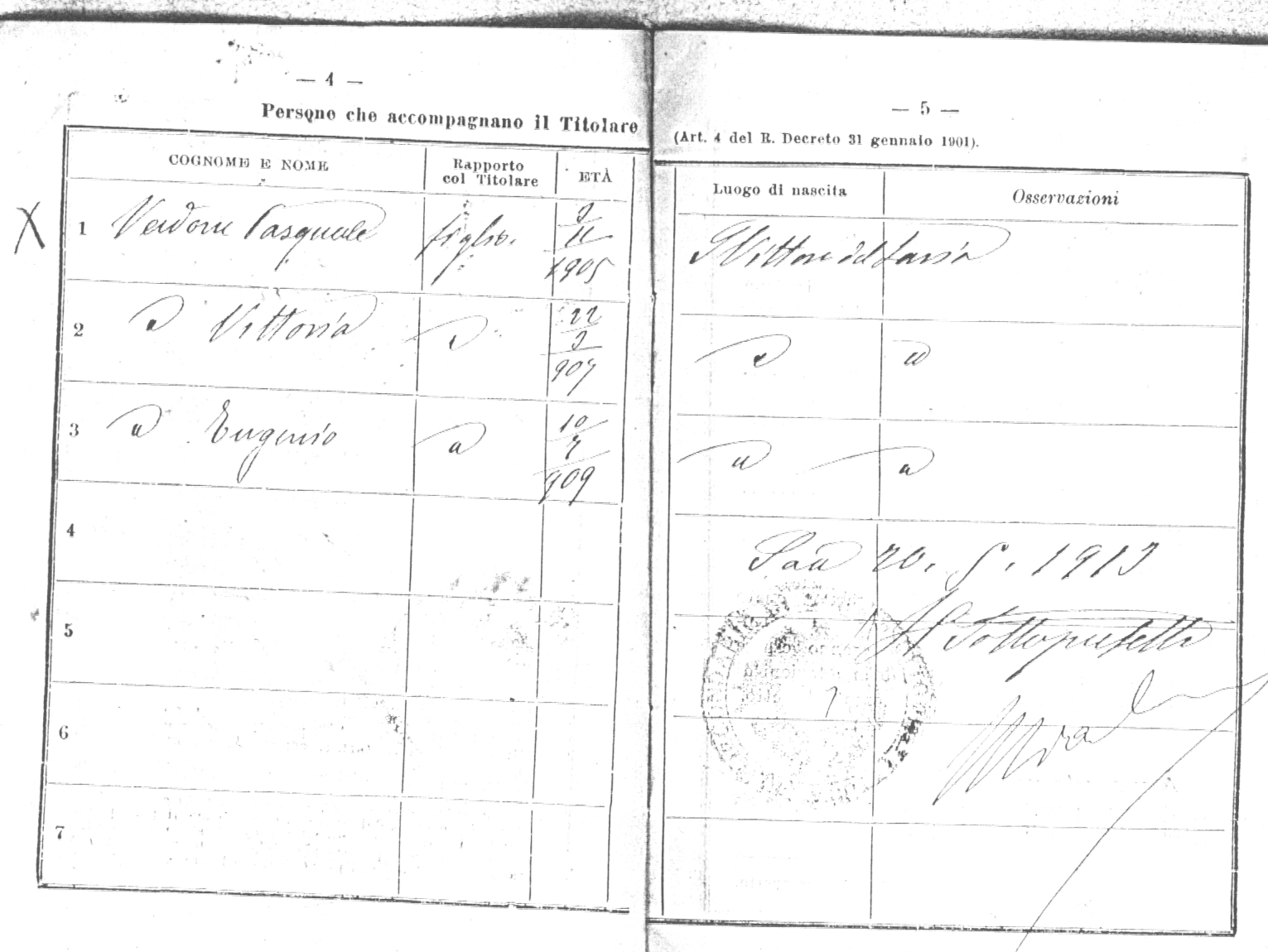
As was often the case, Angelo moved to America first to establish financial security. Elvira followed with the three oldest children in tow, each occupying an entry on Elvira’s passport, their places of birth all listed as San Vittore del Lazio. The arrival date stamped upon entry is September 20, 1913. Frank was born in the US on January 1, 1916.
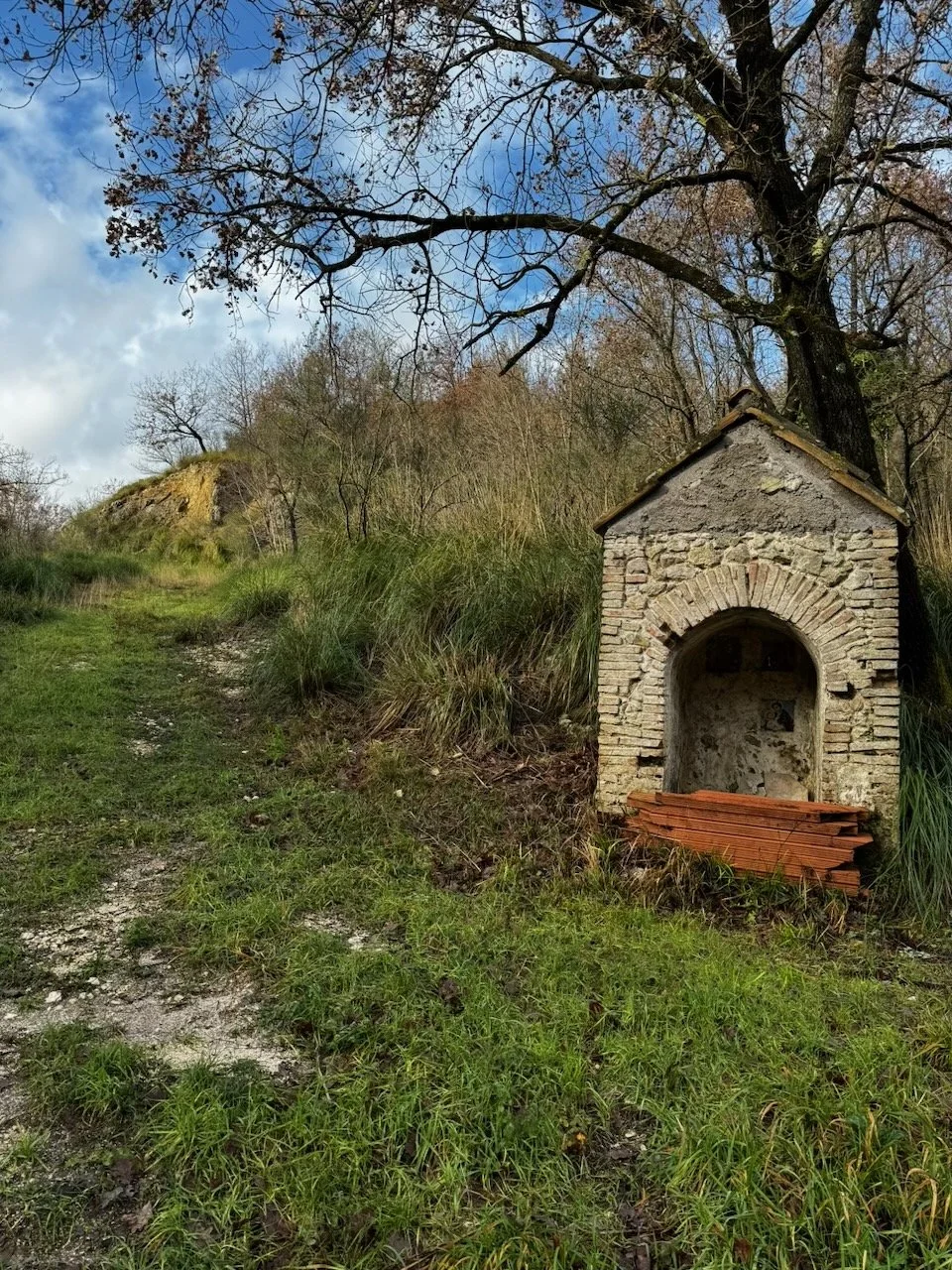
We did find one grave for an Elvira Bonaventura. While Pat’s mother died in America, it may have been a relative. This photo is on the footpath back to the city (looking back toward the graveyard). The stone enclosure was built to house a Madonna.
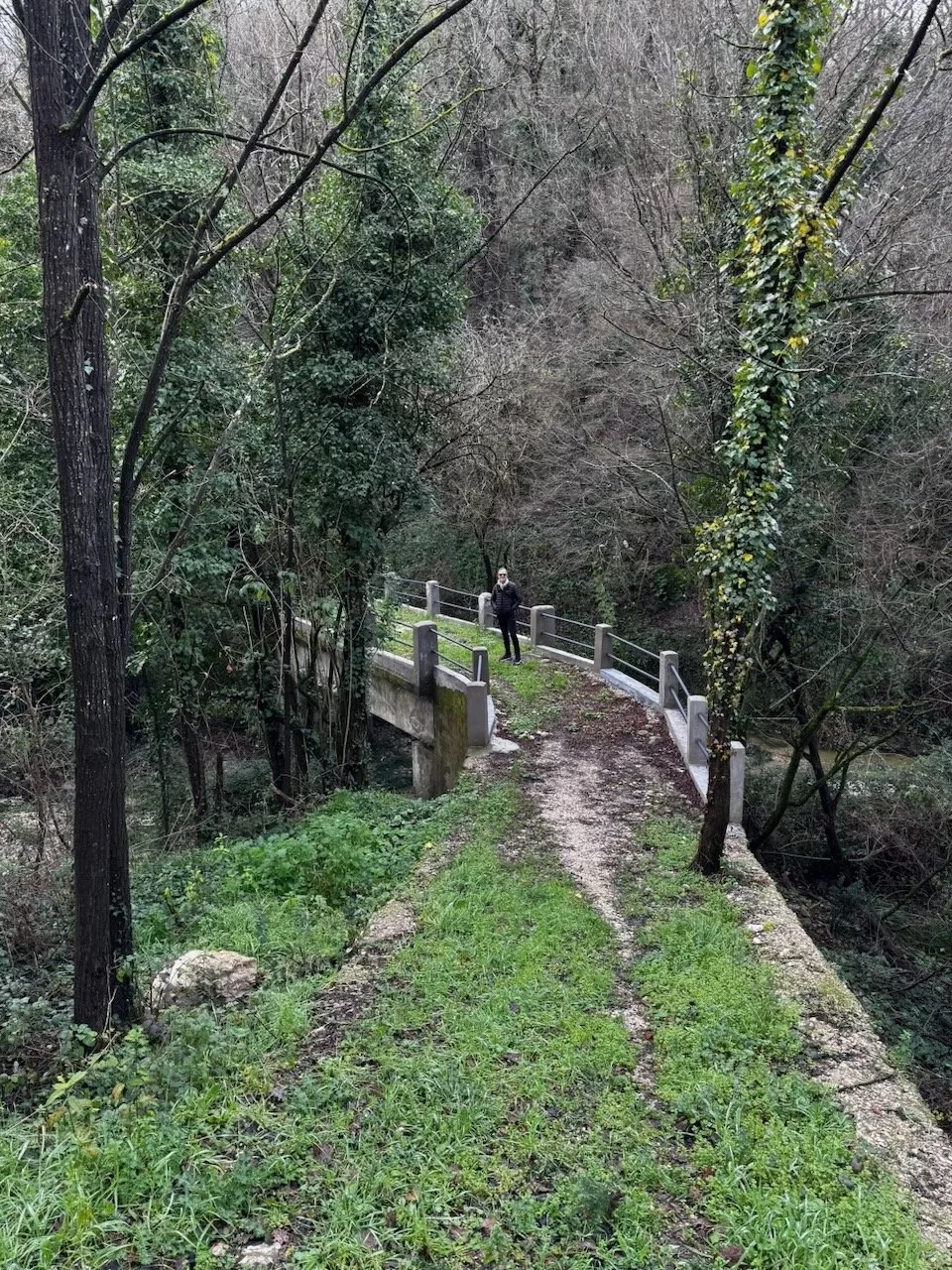
Dave on a clearly more modern bridge that crosses the ravine before climbing up into San Vittore.
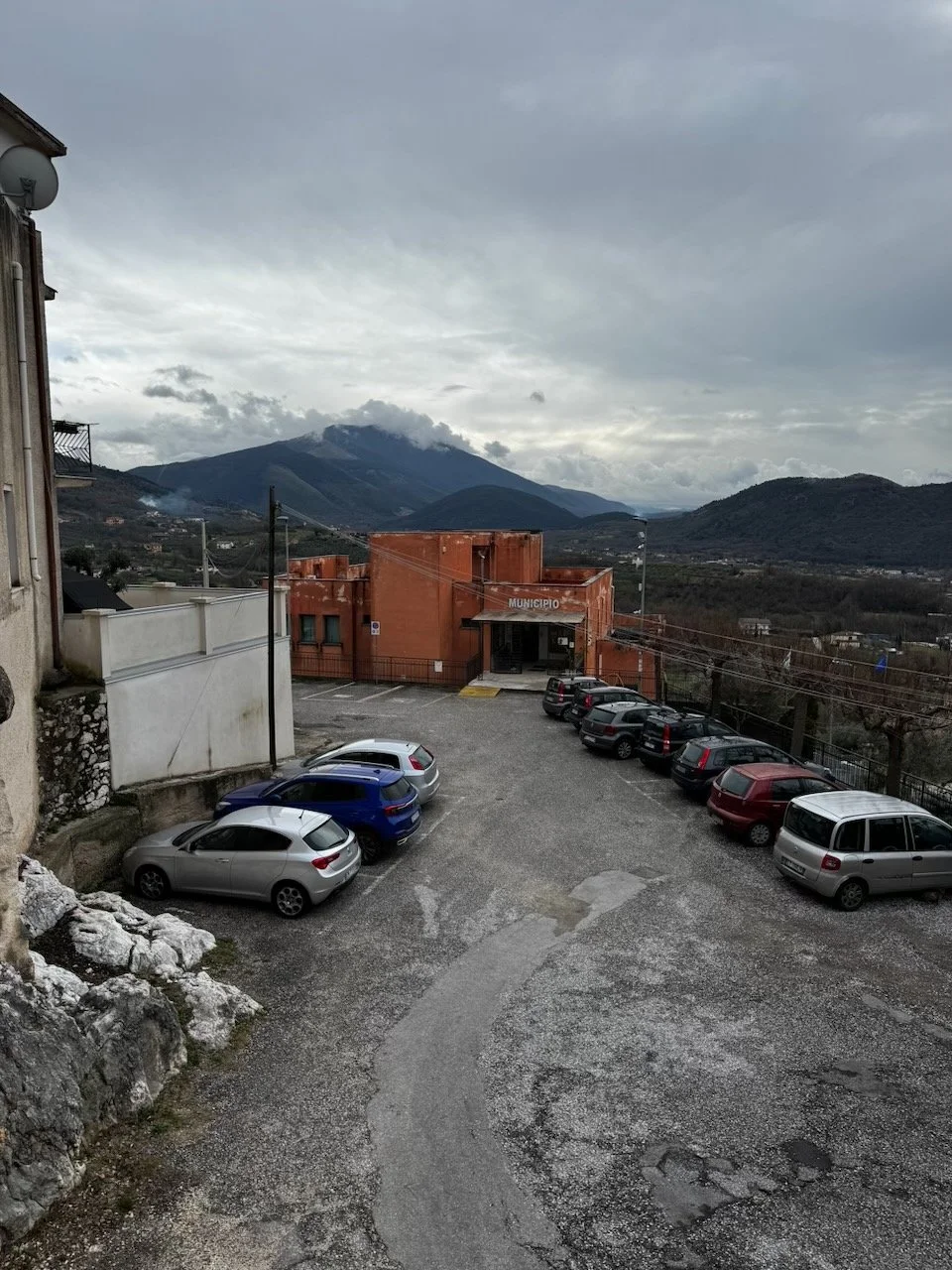
This was the town hall where we apparently had missed the record keeper who had left earlier in the morning. Dave continues to work with them online attempting to secure familial records. Although we were not able to gather the records we had hoped, we did learn that the name Verdone was definitely not from San Vittore, but Bonaventura (Pat’s mother’s maiden name) most decidedly was!
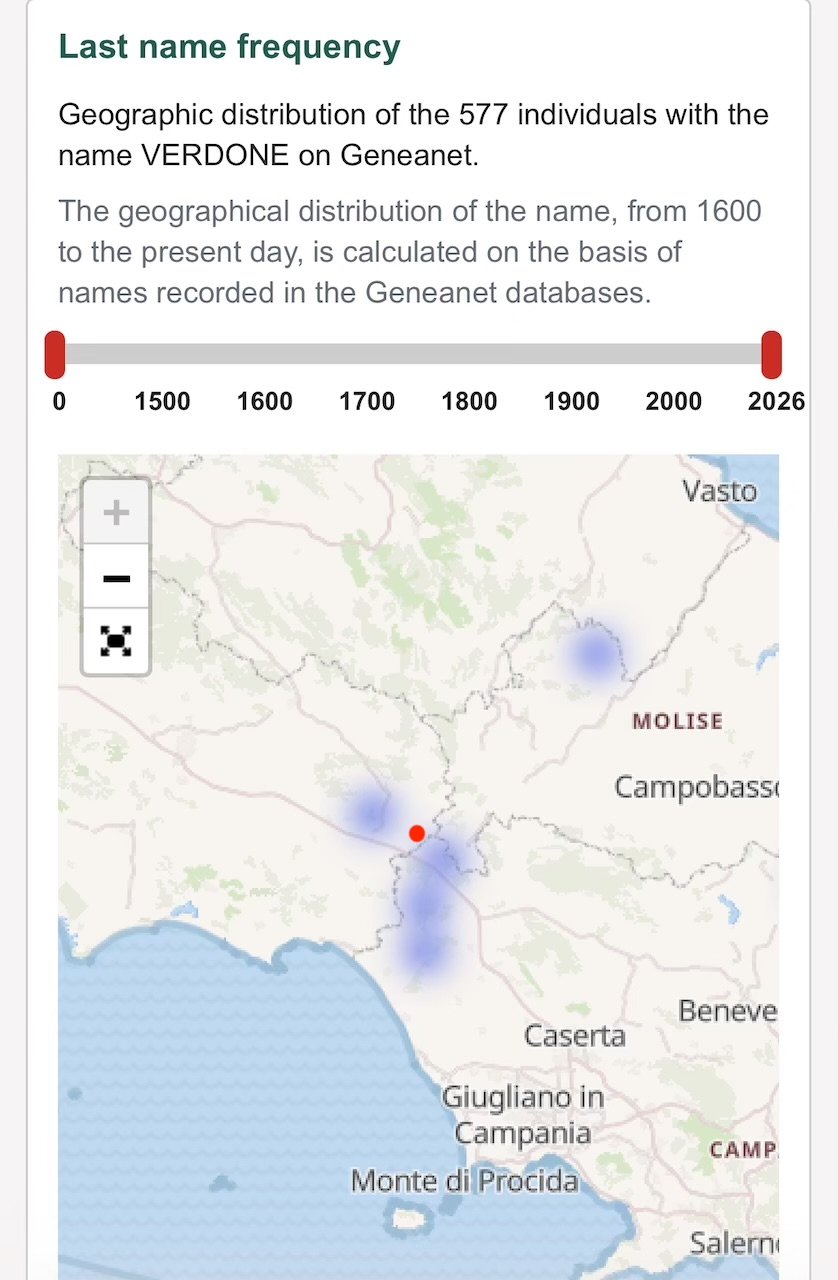
The blue clouds show clusters of the name Verdone in relation to the town of San Vittore del Lazio, shown as a red dot. From this it seems likely Angelo Verdone was a neighbor to Elvira Bonaventura, who lived in San Vittore del Lazio.
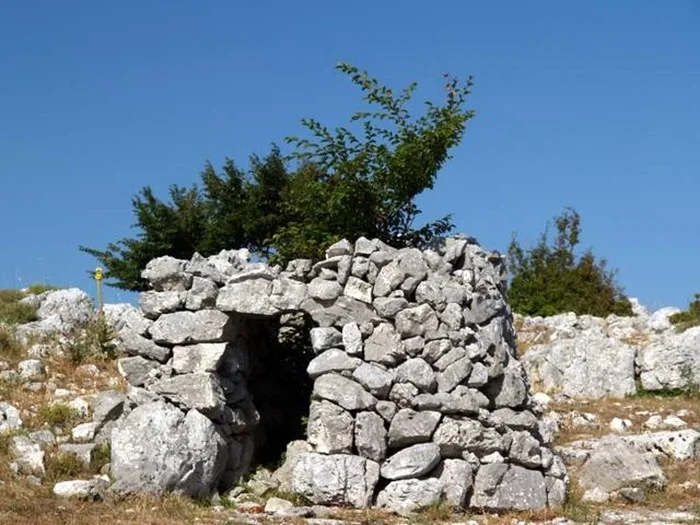
On a historical note: an important fortified city preceded San Vittore. High on the first peak northeast of town are the remains of a mighty defensive system formed by gigantic boulders surrounding the first two ridges of the mountain. This is believed to be ancient Aquilonia, a Samnite city destroyed by the Romans in 293 BCE.
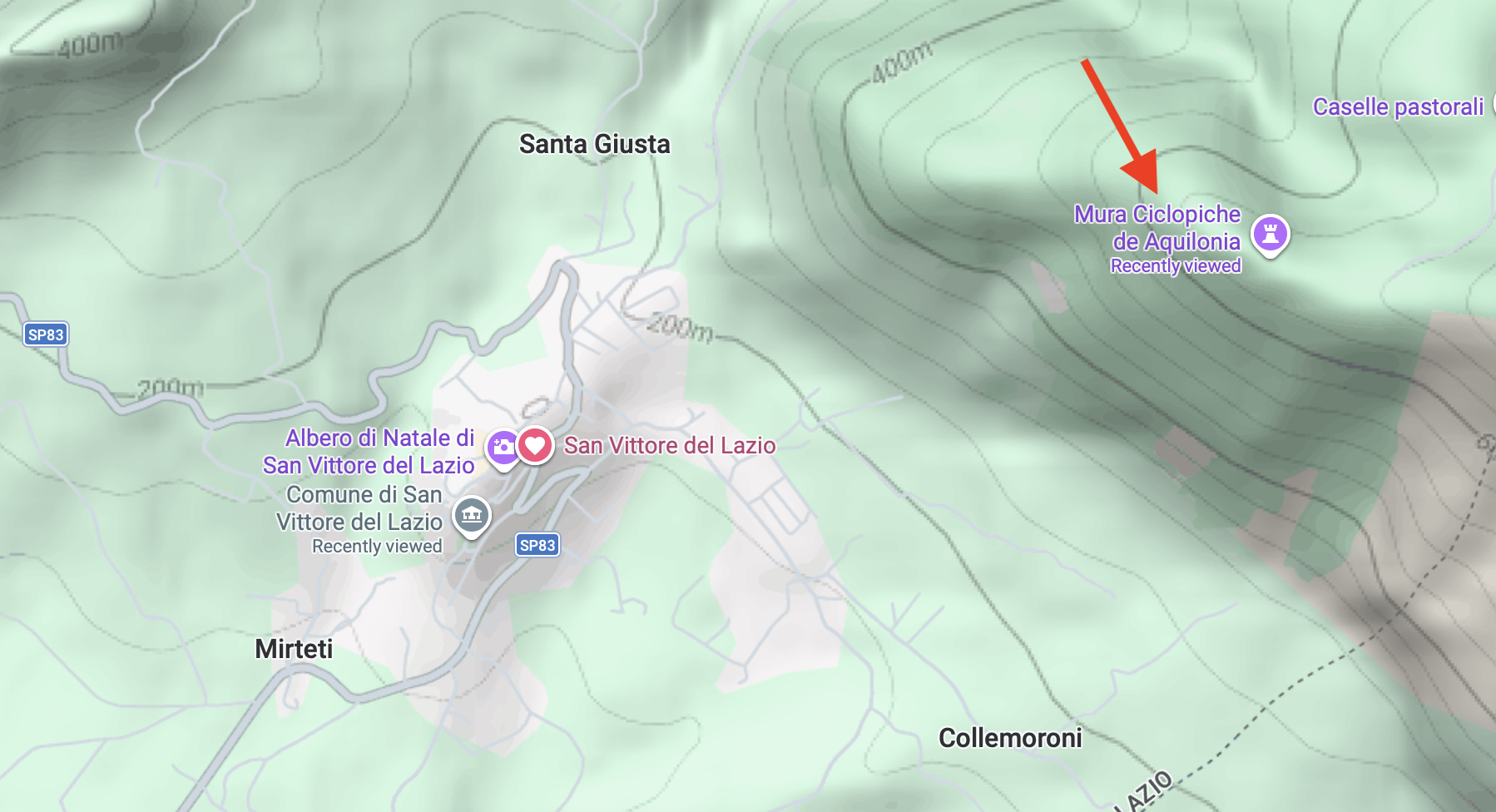
The red arrow marks the hilltop position of the ancient city of Aquilonia above San Vittore del Lazio.
The ruined walls of the ancient city of Aquilonia still crown the hilltop above San Vittore (right). After Aquilonia’s destruction, in the early medieval period, a monastic cell dedicated to San Vittore (St Victor) was established on this lower hilltop. By the tenth century, repeated Saracen raids prompted the cell’s fortification, and it gradually evolved into a defensive stronghold—shaping the medieval street plan that remains visible in parts of San Vittore today.
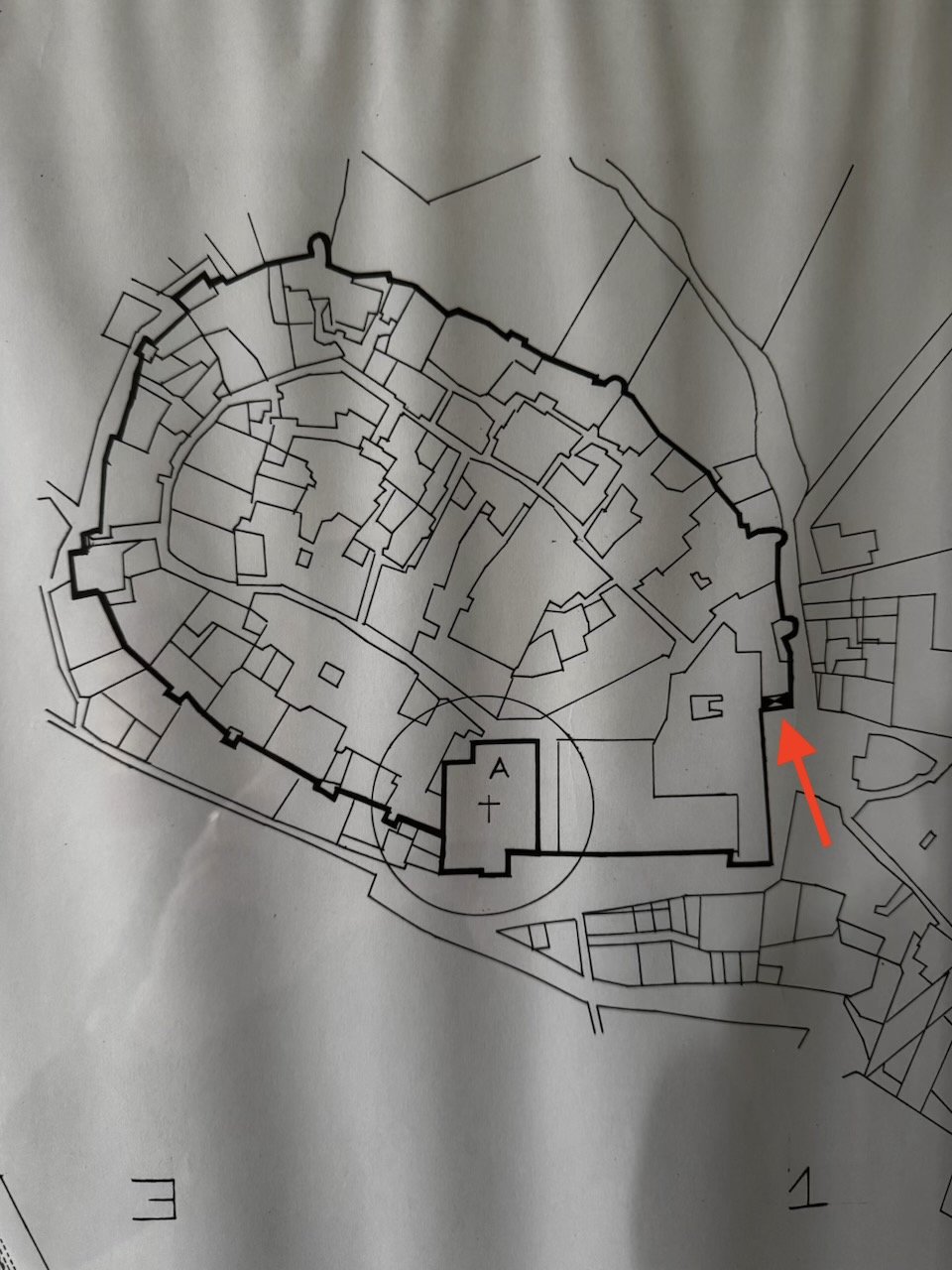
Situated near the Via Latina—a major Roman consular road linking Rome with Campania (including Pompeii and Naples)—the existing fortifications were subsequently consolidated into the “castle” of San Vittore del Lazio, known locally as the “castle with twenty-three towers.” The formal fortification was first documented in a 1057 charter. Remnants of its once formidable walls and towers remain visible throughout the village and are illustrated on this map displayed inside the town hall. Notes on the church (“A”) and gate (red arrow) follow.
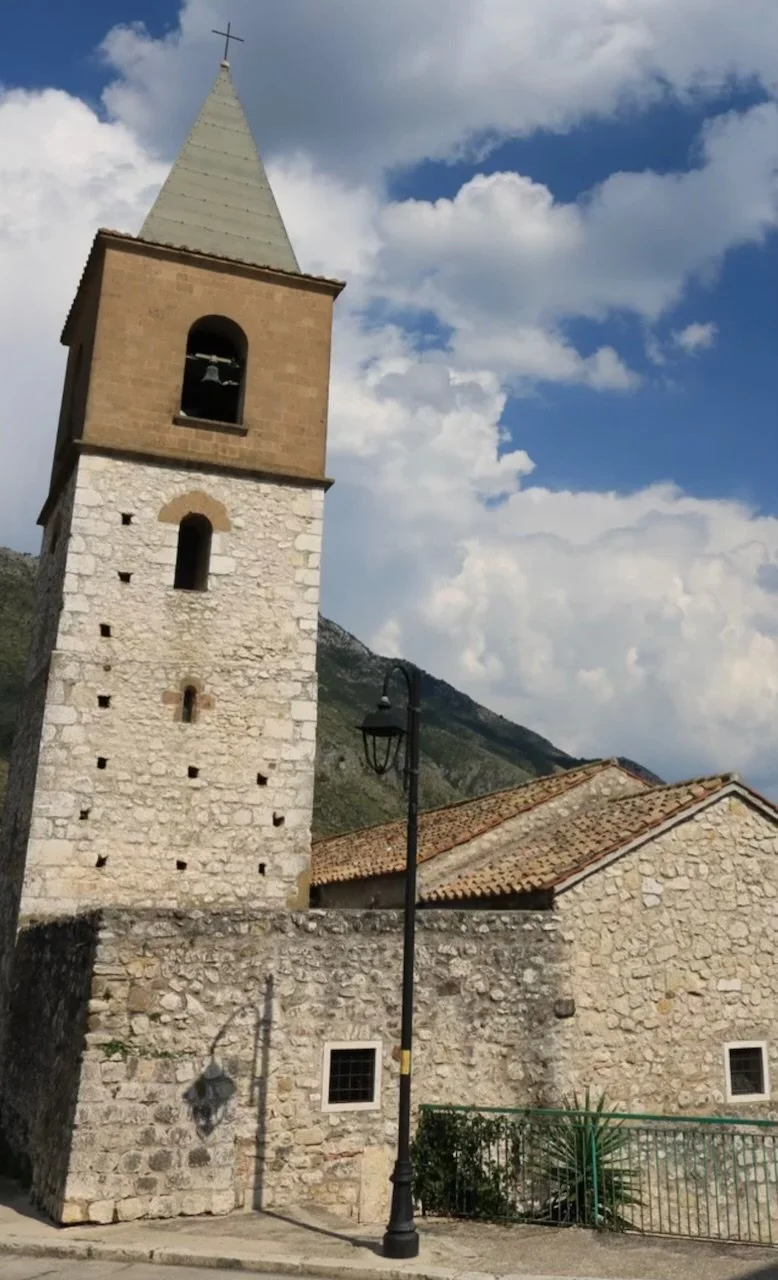
Two of the original churches in town are still extant. This is Chiesa di San Nicola (Church of St Nicholas) and one option of where Pasquale may have been baptized. The distinctive two-tone belfry is seen in later photos. Allegedly there was once a Church of San Croce (Holy Cross), but I can find no evidence of it.
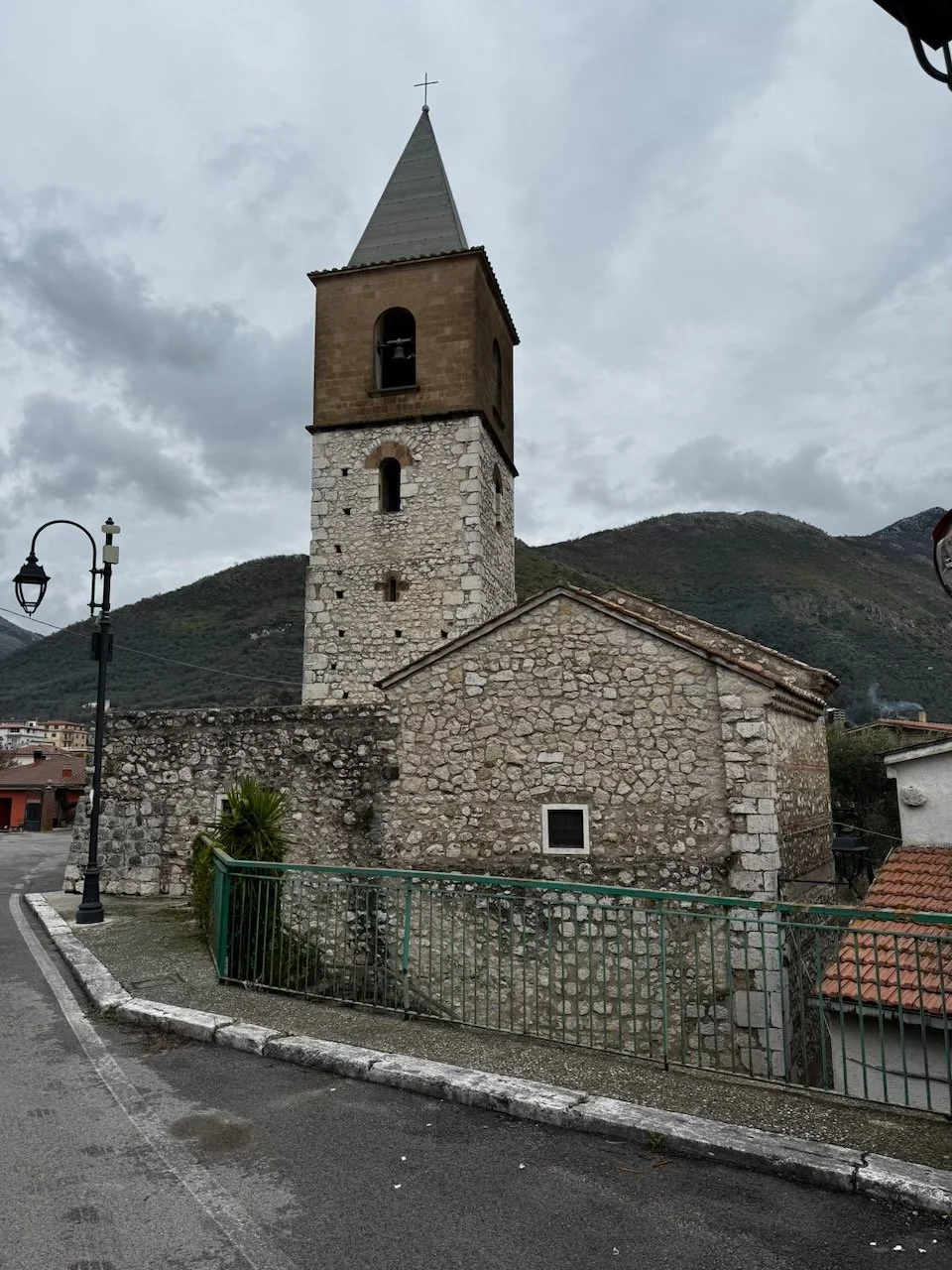
The 10th-century church stands in the place formally known as the “Greek Village,” which was outside the walls of the castrum (fortified Roman fortress). It was probably built to support a large colony of Greeks who settled near the Abbey of Montecasino.
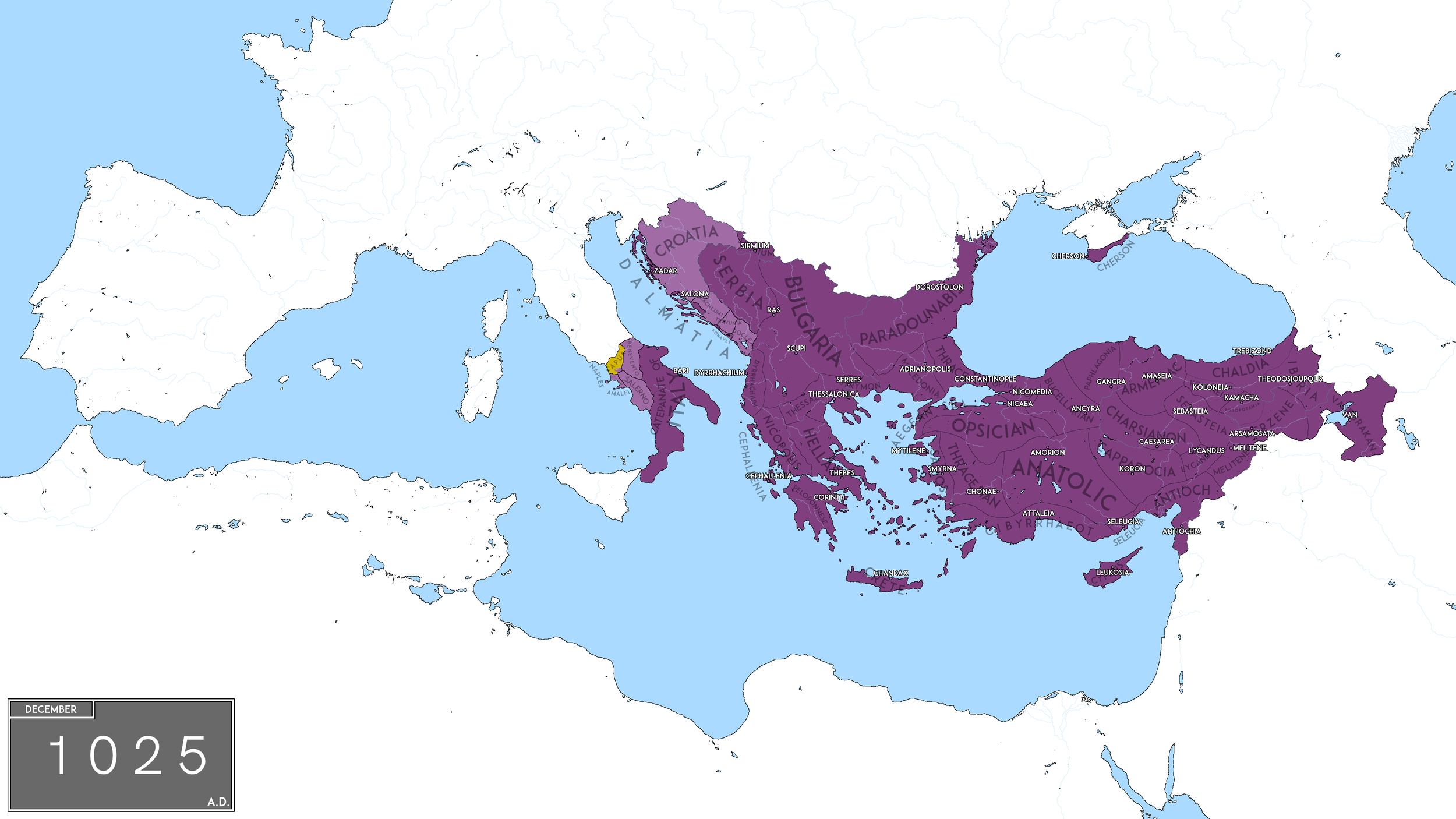
I found it helpful to understand that Rome may have conquered Greece in the 2nd century BCE, but when Emperor Constantine moved the capital east to Constantinople in 330 CE, he placed Roman political power in a Greek-speaking world. Thus, the Byzantines were the medieval continuation of Greek civilization, living under the name and political framework of Rome. In fact, Byzantine is a relatively modern term. At the time the church was built, the people would have called themselves Romans—though in daily life, religion, education, and art, they were unmistakably Greek.
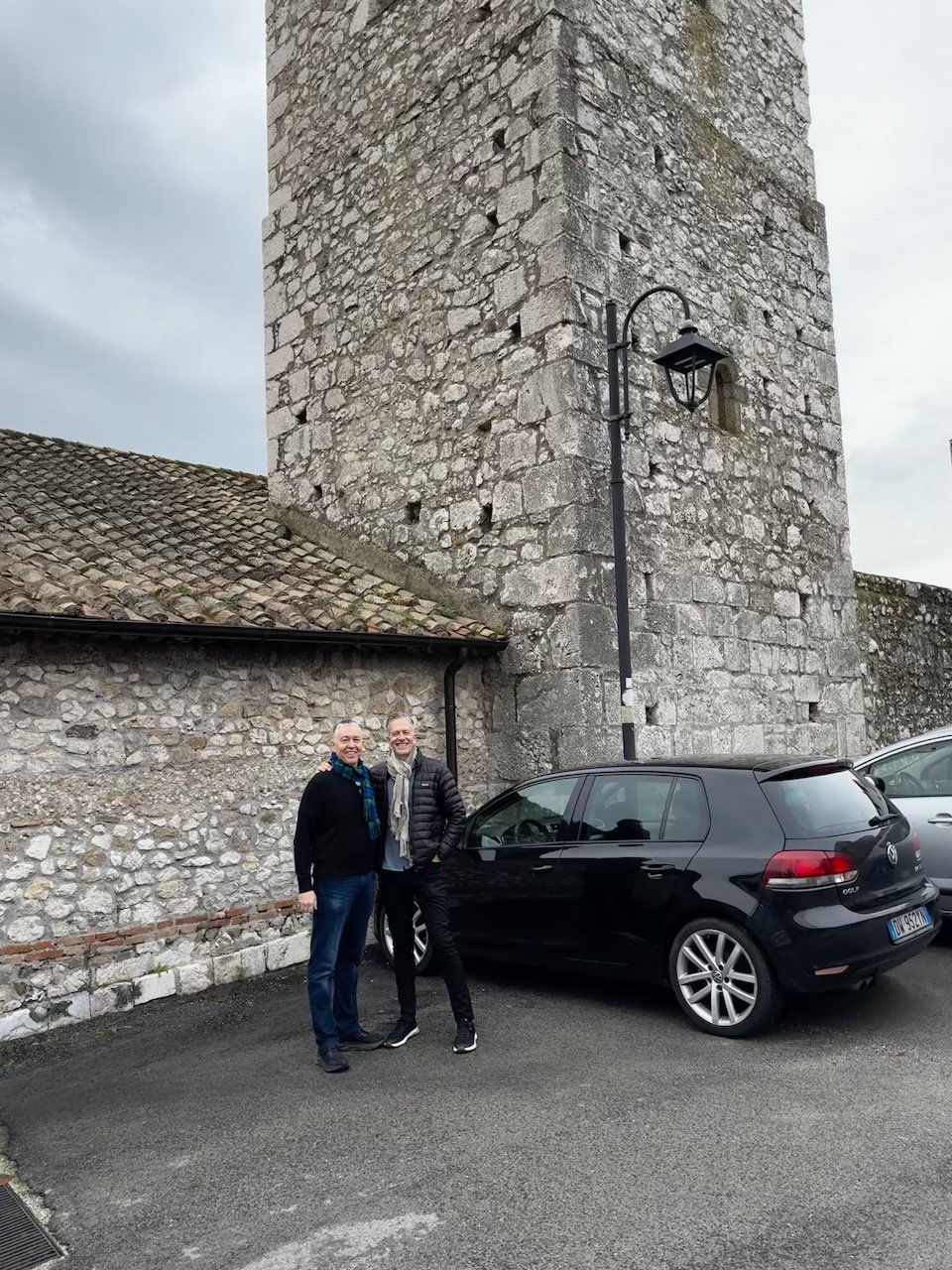
Dave and I standing outside Chiesa di St Nicola (Church of St Nicholas).
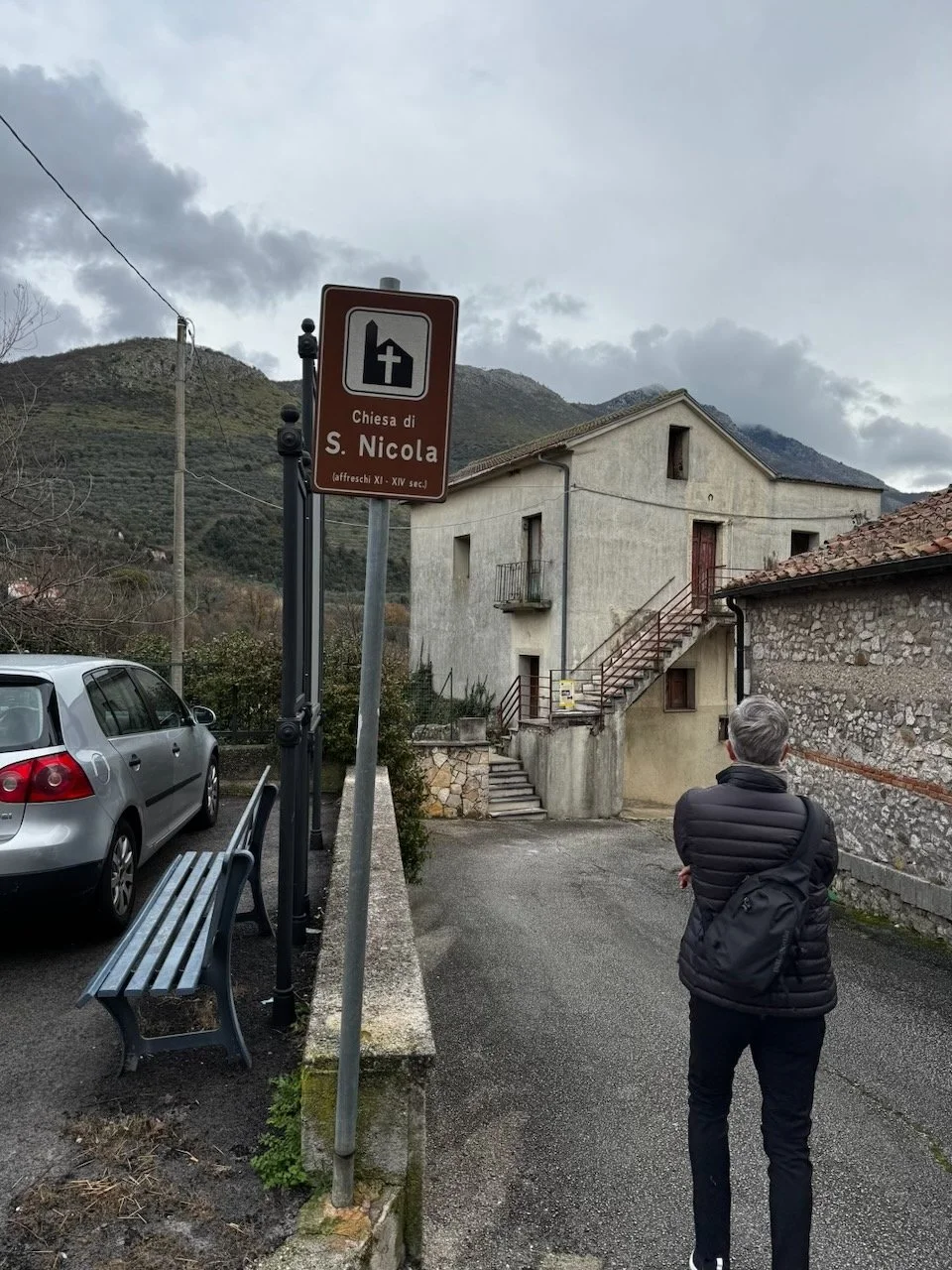
Dave surveying the exterior of the north side of the church. Nicholas of Myra (c. 270–343 CE), also called Nicholas of Bari after his relics were buried there in 1089, was Bishop of Myra, a city in Lycia (modern-day Demre, Turkey). He operated fully within Greek Christian culture, further evidence of the church’s Greek origins.
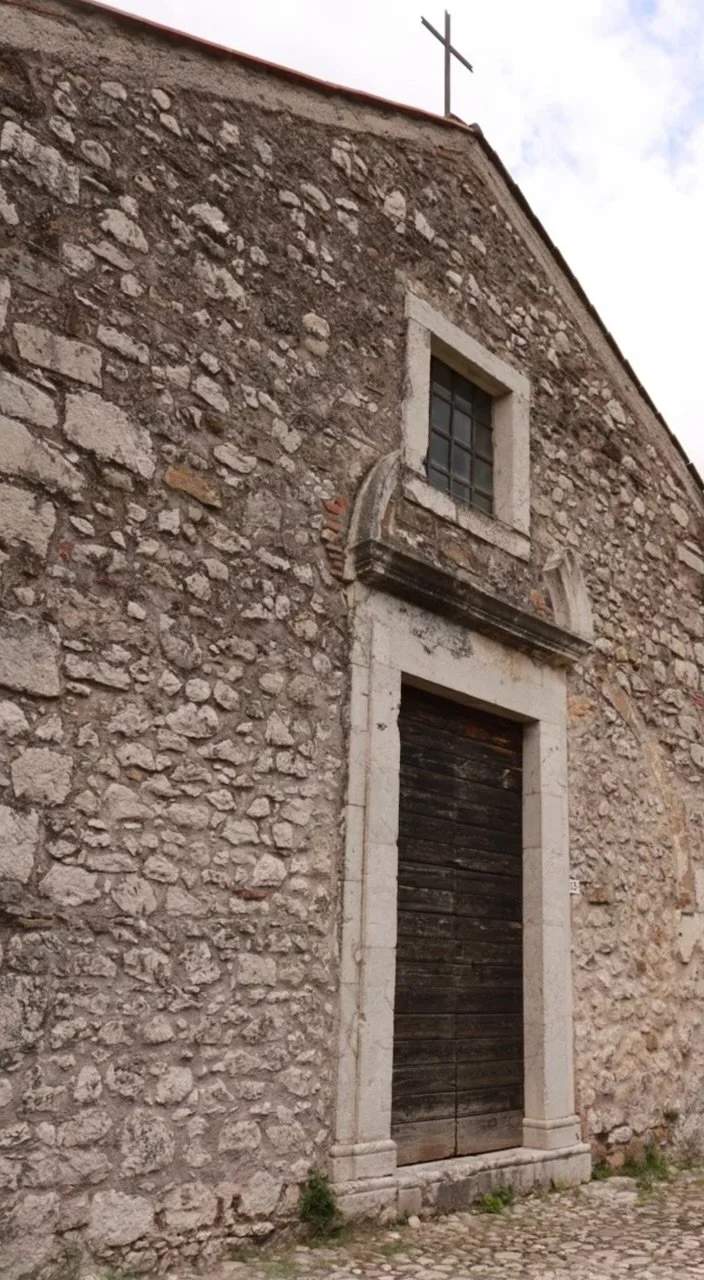
The original entrance had an atrium that has now disappeared.
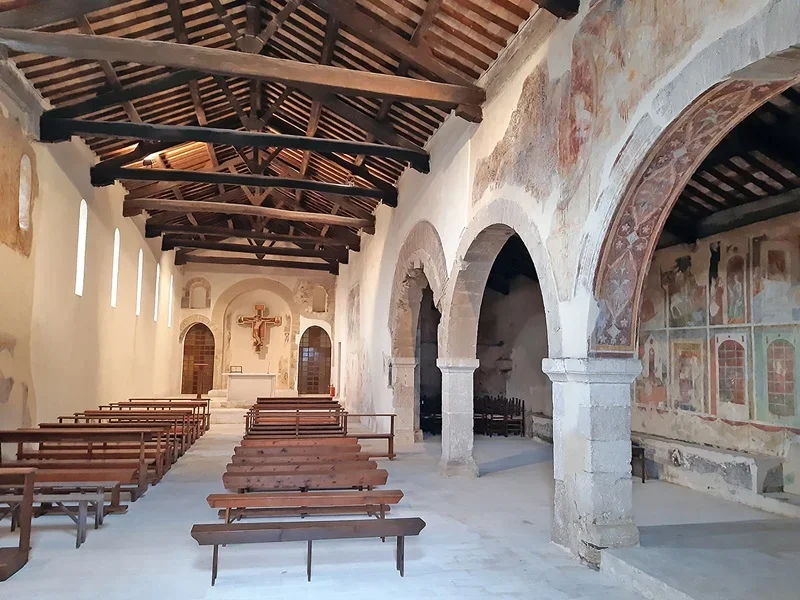
The original structure consisted of a single nave, with the right (north) aisle added in the 13th century. Adjacent to the church was once a cemetery, presumably to the left (south).
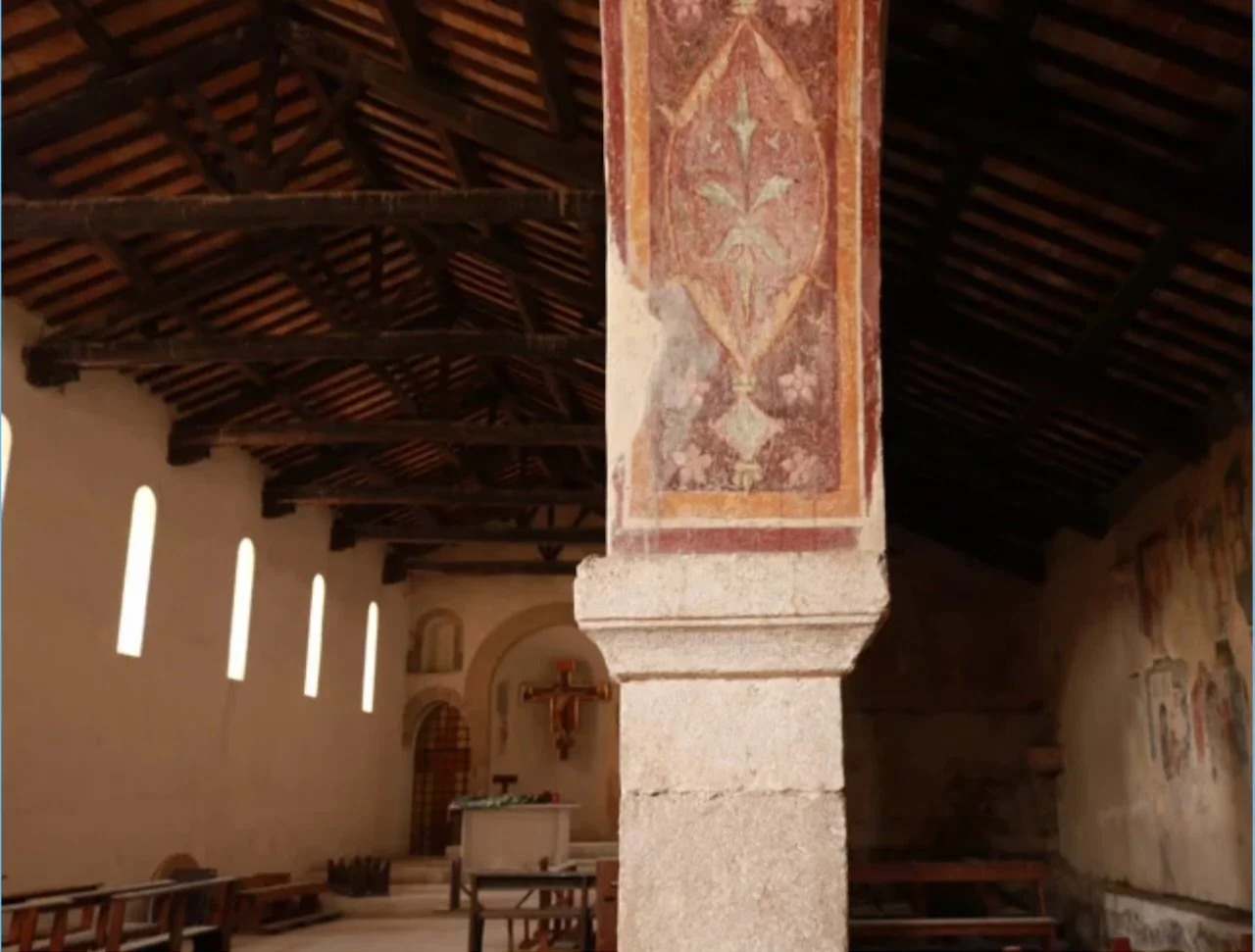
The right (north) aisle remains and contains many beautiful frescoes. Evidence suggests there was once a left (south) aisle that must have been reached by a door; however, neither the aisle nor the door are traceable.
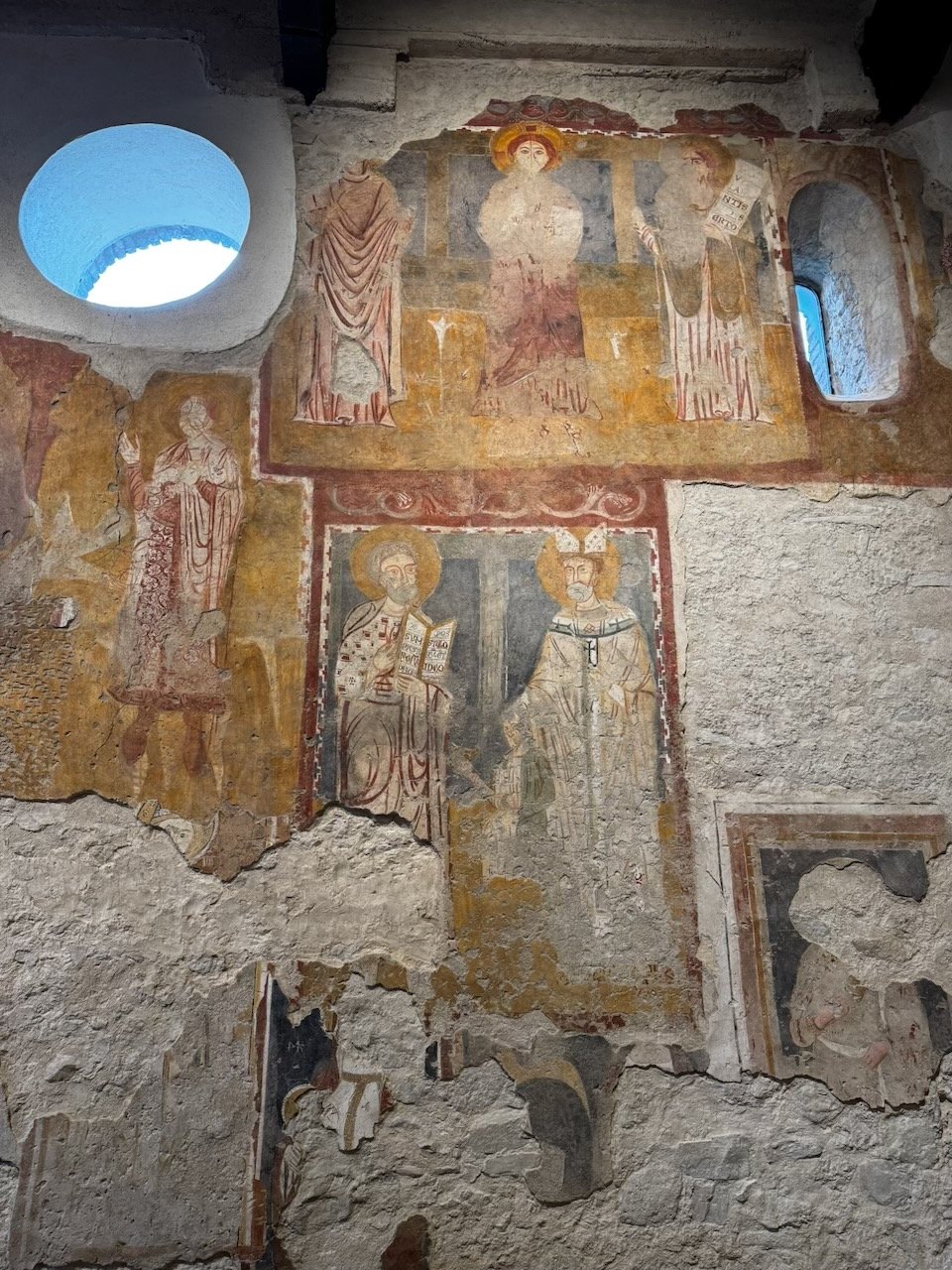
The left (south) wall of the nave included the figures of St Peter and St Nicholas. An Orsini family crest dated 1360 means these frescos likely predate the application of the crest, speaking to the rich history of the church.
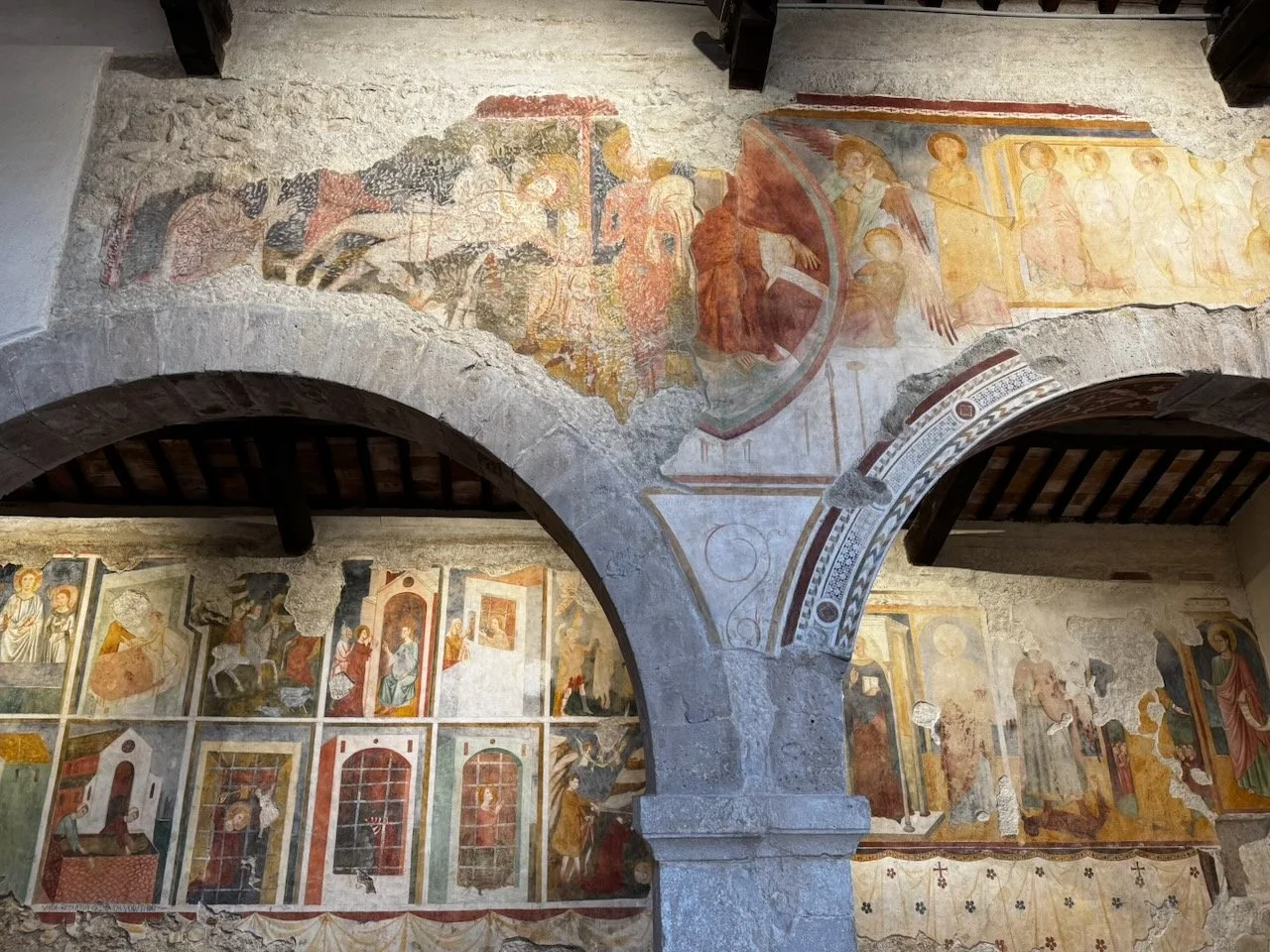
The church contains frescos from the Middle Ages (5th to the late 15th centuries) and the Renaissance (14th-17th centuries). This is looking into the expanded right side aisle that contains the 16-panel paintings of St Margaret (left).
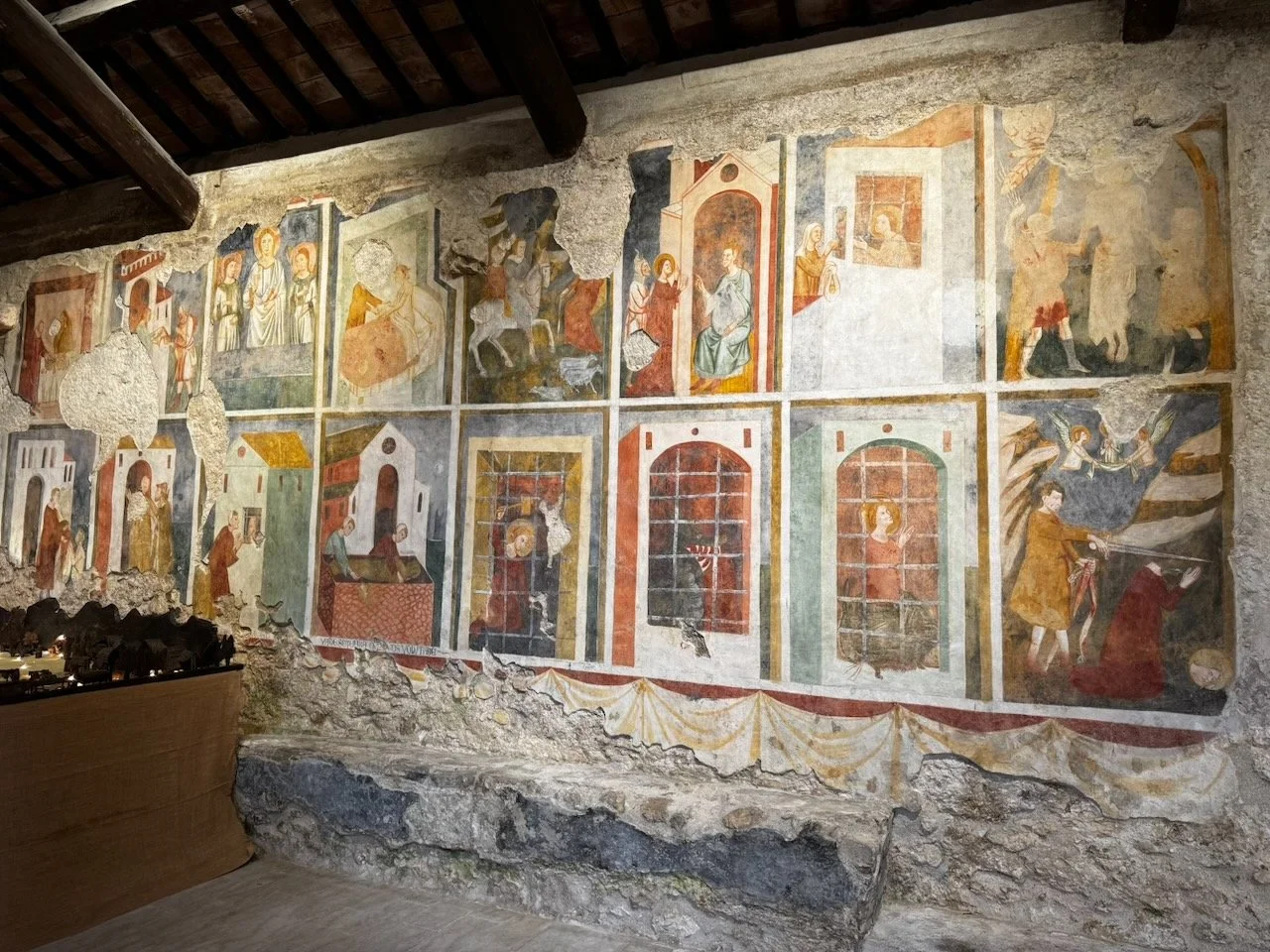
The full 16 panels depicting the life and martyrdom of St Margaret of Antioch, attributed to the disciples of the Roman painter Pietro Cavallini (c. 1240-1330). Margaret was a young Christian woman who refused to renounce her faith or marry the Roman official Olybrius (Ollario). Enraged by her refusal, he had her imprisoned and tortured. She was then swallowed by a dragon, but emerged alive when the sign of the cross caused the dragon to burst. When she still would not submit, Olybrius ordered her execution.
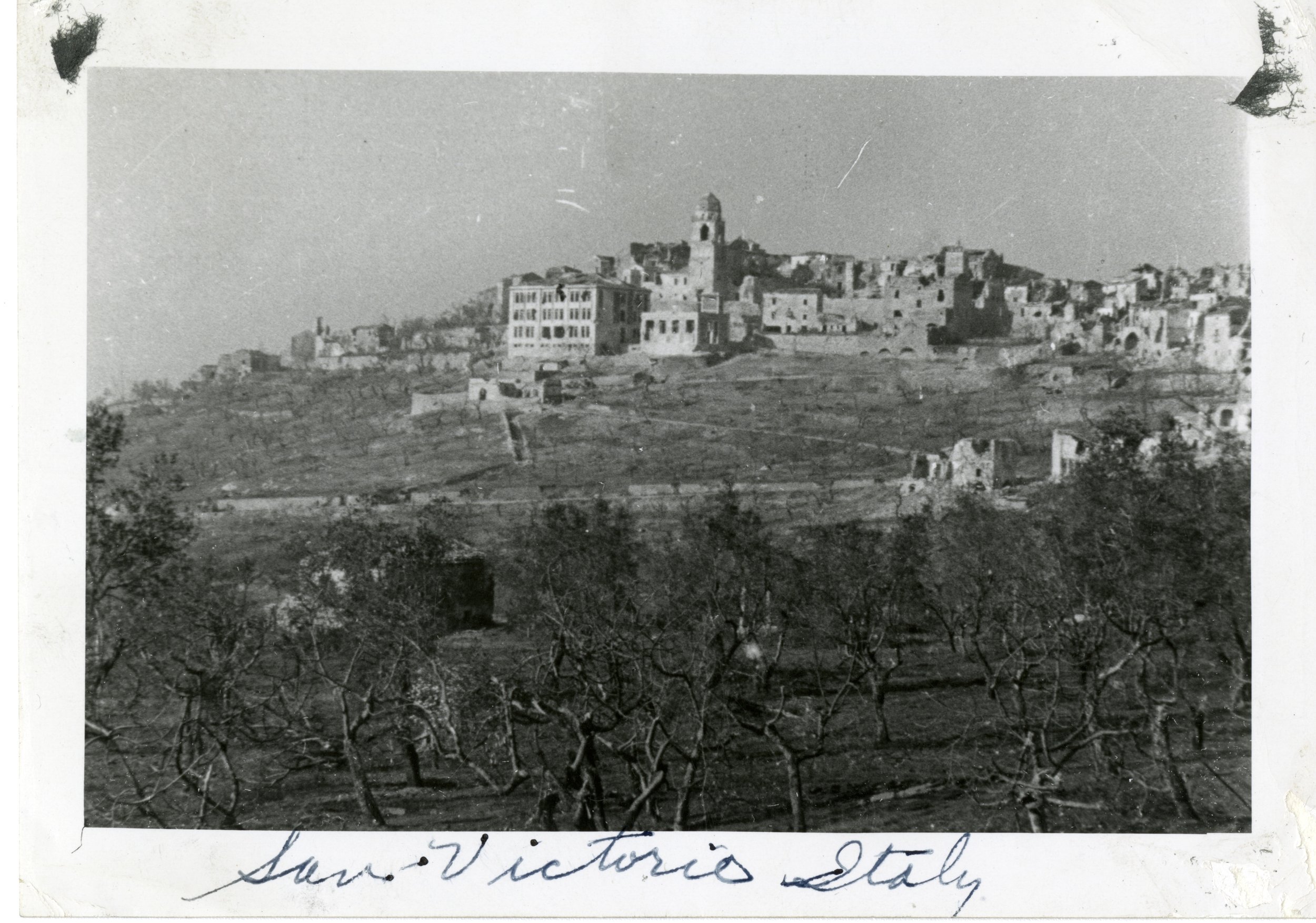
WWII profoundly impacted San Vittore del Lazio due to its position on the Gustav Line, a key German defensive front near Cassino. From late 1943, the area endured intense fighting as part of the broader, brutal Battle for Cassino, with San Vittore serving as a critical, heavily damaged outpost before the main abbey battle in February.
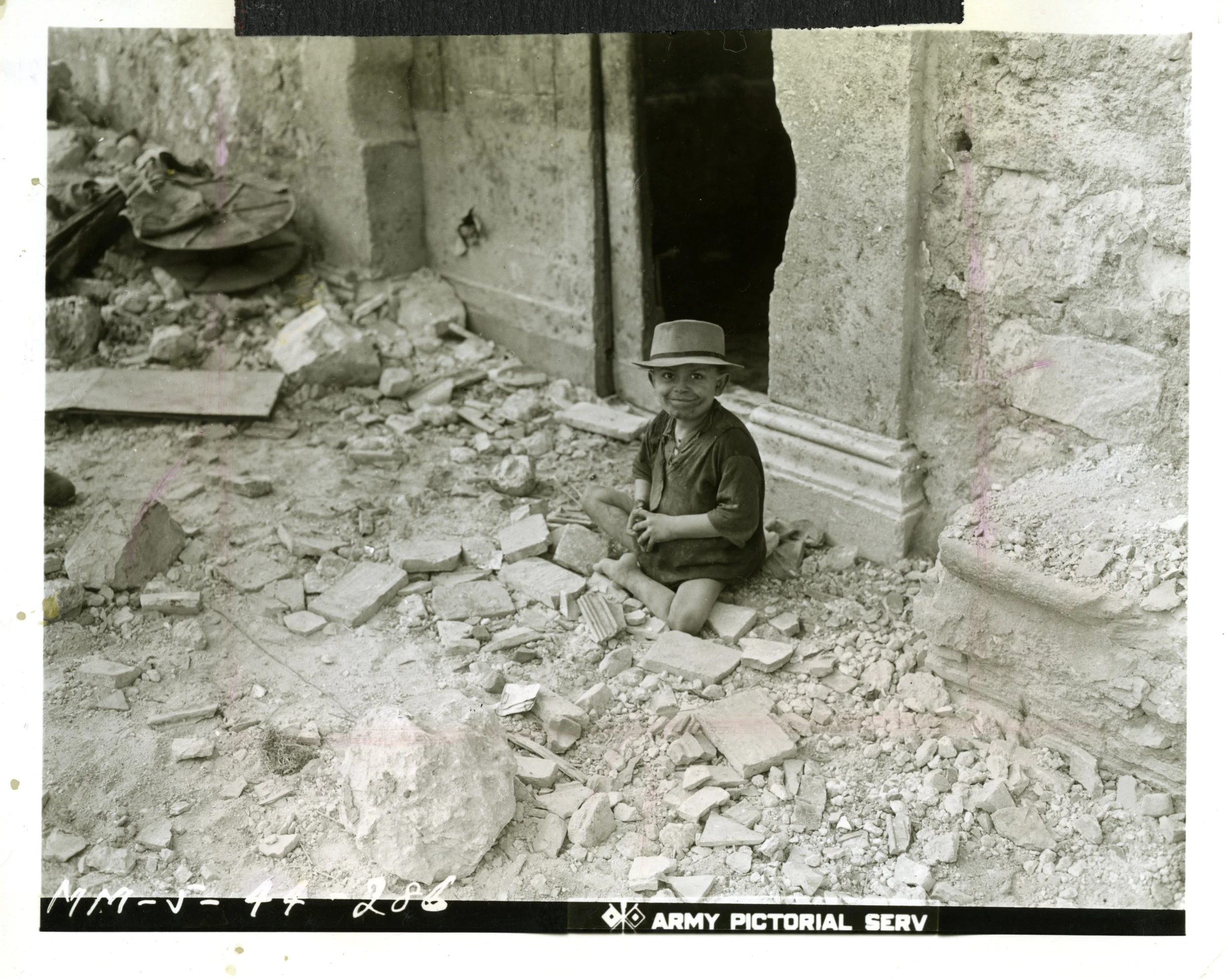
Allied forces, including the US 135th Infantry Regiment, advanced toward the town in early January 1944. Heavy Allied bombings and fierce house-to-house combat to dislodge German forces lead to high civilian casualties and the town’s near-total ruin—roughly 91% of buildings were destroyed. Here a child plays with debris on a San Vittore street.
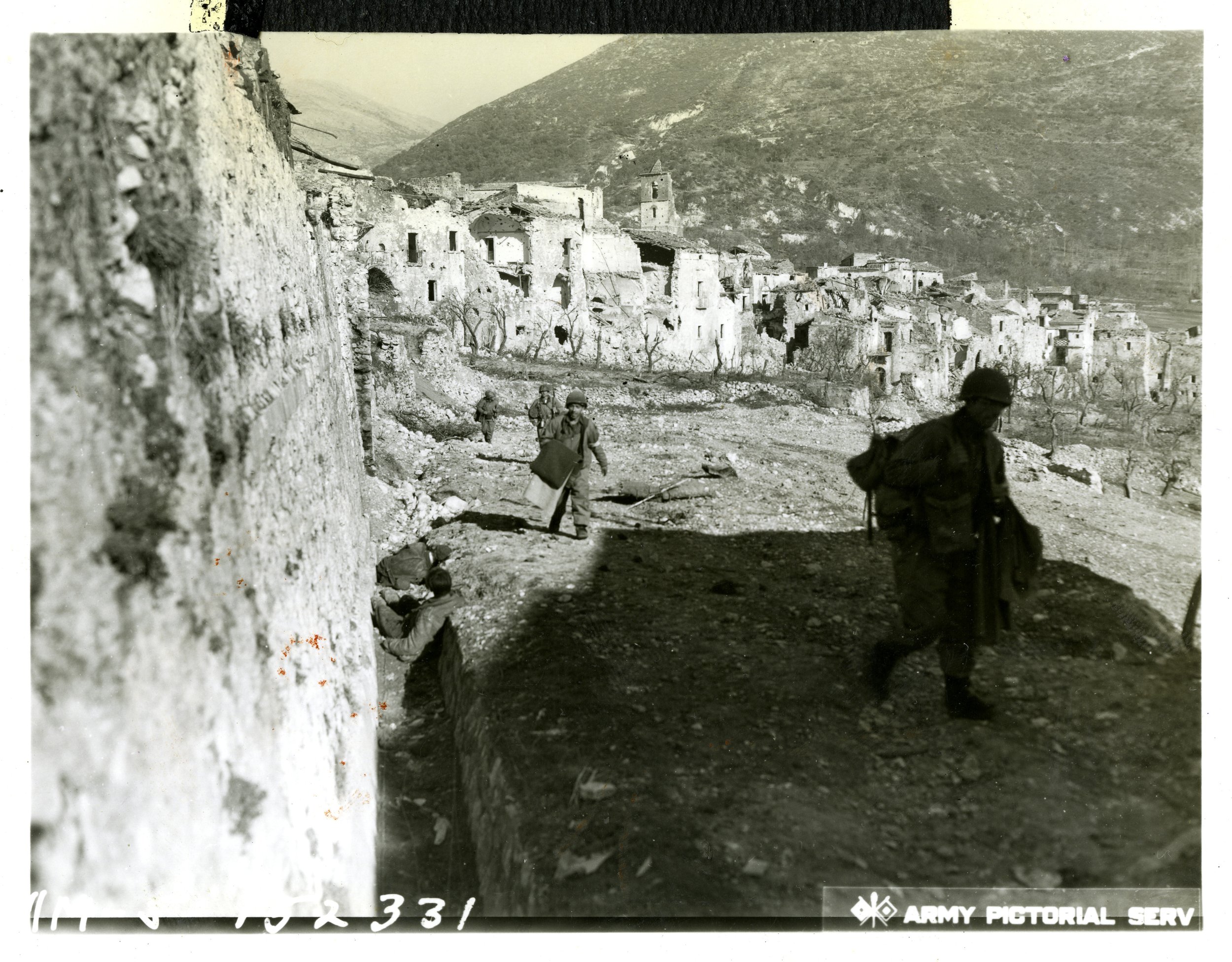
San Vittore was liberated on January 6. Here, on January 9, weary American infantrymen enter San Vittore, now quiet with desolation and death after three nightmarish days of ceaseless shelling and bombing preceding its capture. The two-tone spire of Chiesa di San Nicola is visible in the distance. For its wartime ordeal, San Vittore received the Silver Medal for Civil Valor in 2004.
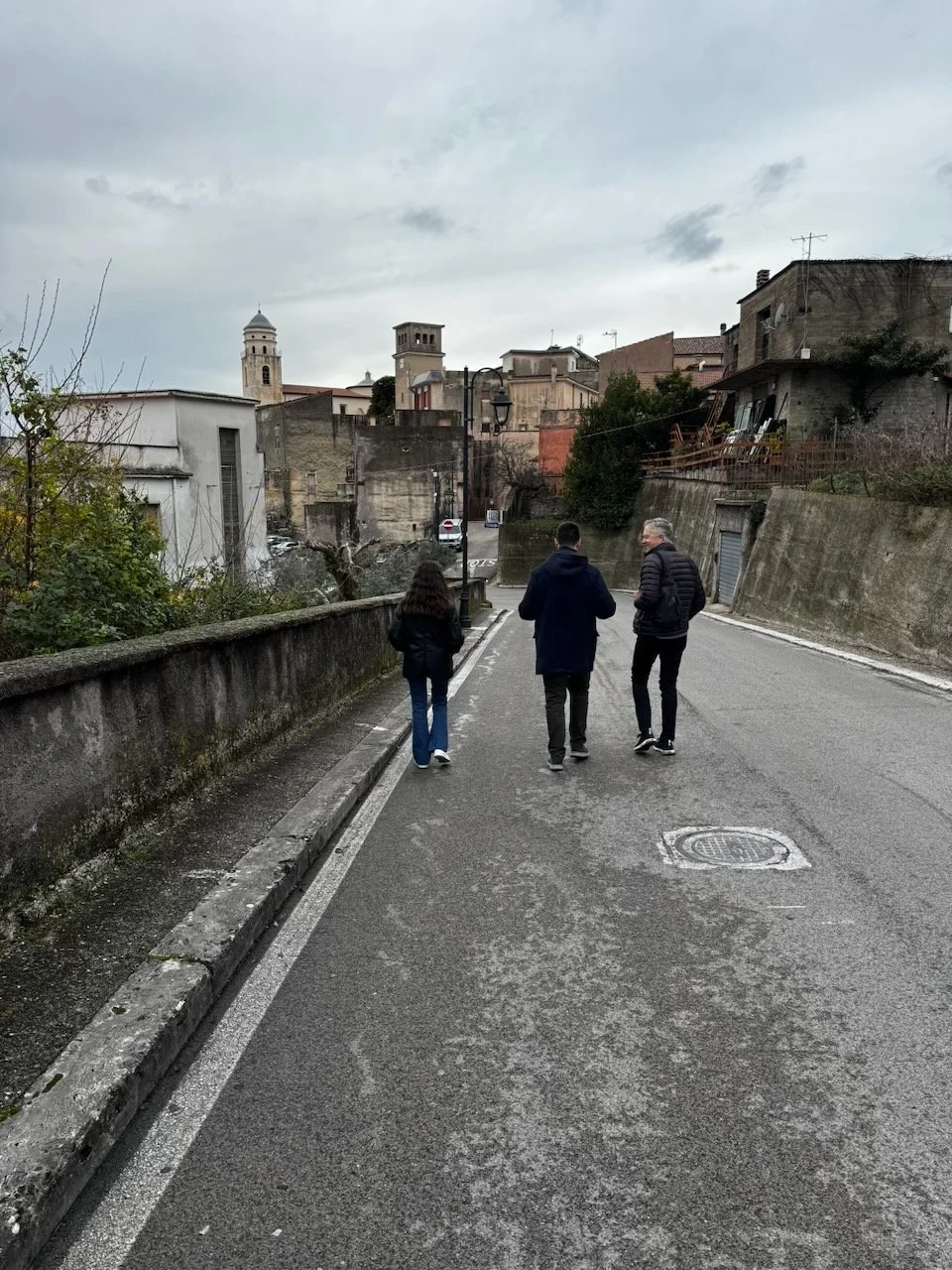
Dave and the two town hall personnel who accompanied us to Chiesa di San Nicola, walking back toward the center of town. The St Mary of the Rose Church belfry is in the distance.
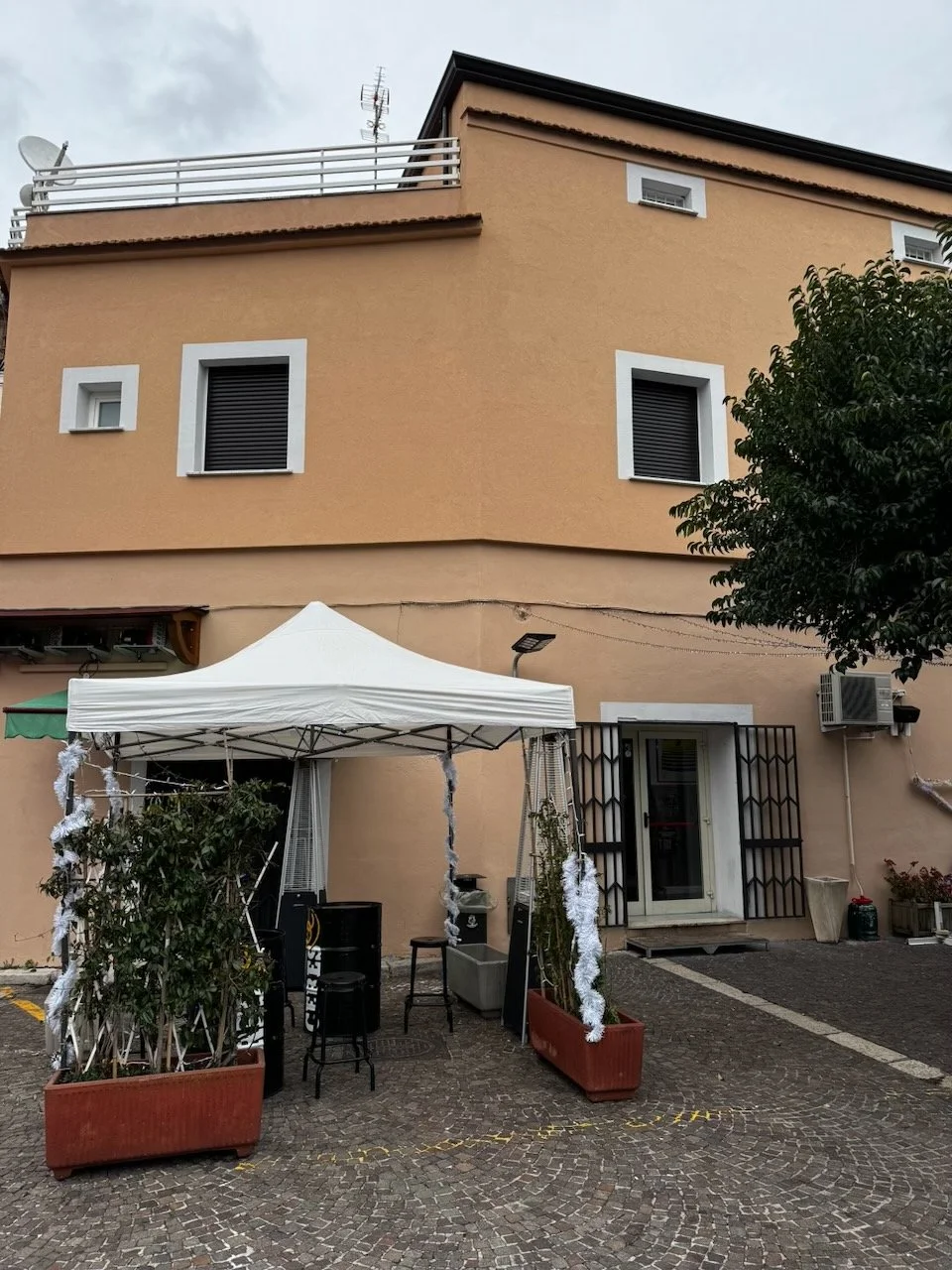
We grabbed some snacks at an unnamed bar through the white doors located on the small Court of the Saints piazza adjacent to St Mary of the Rose Church.
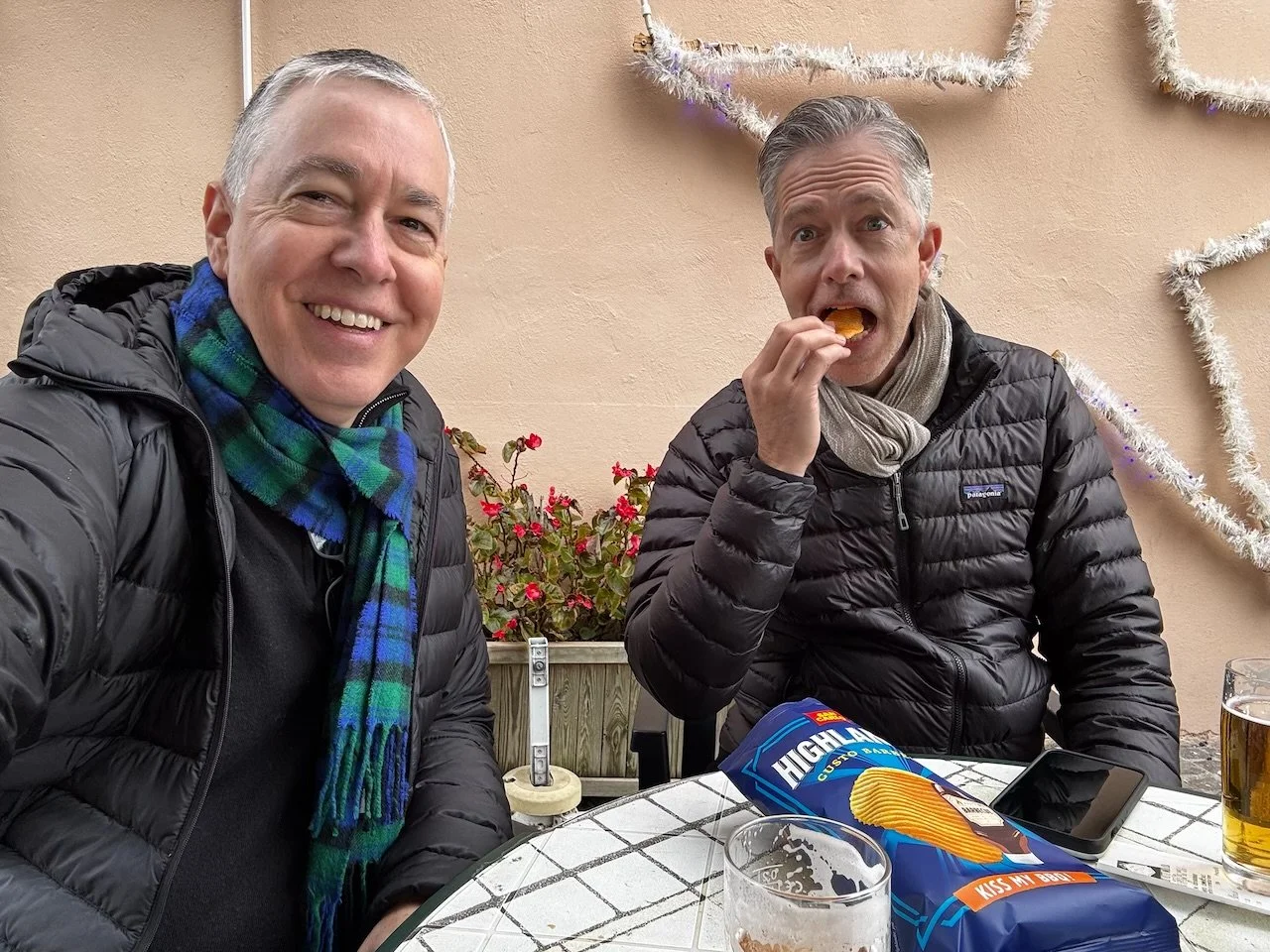
Enjoying our snacks.
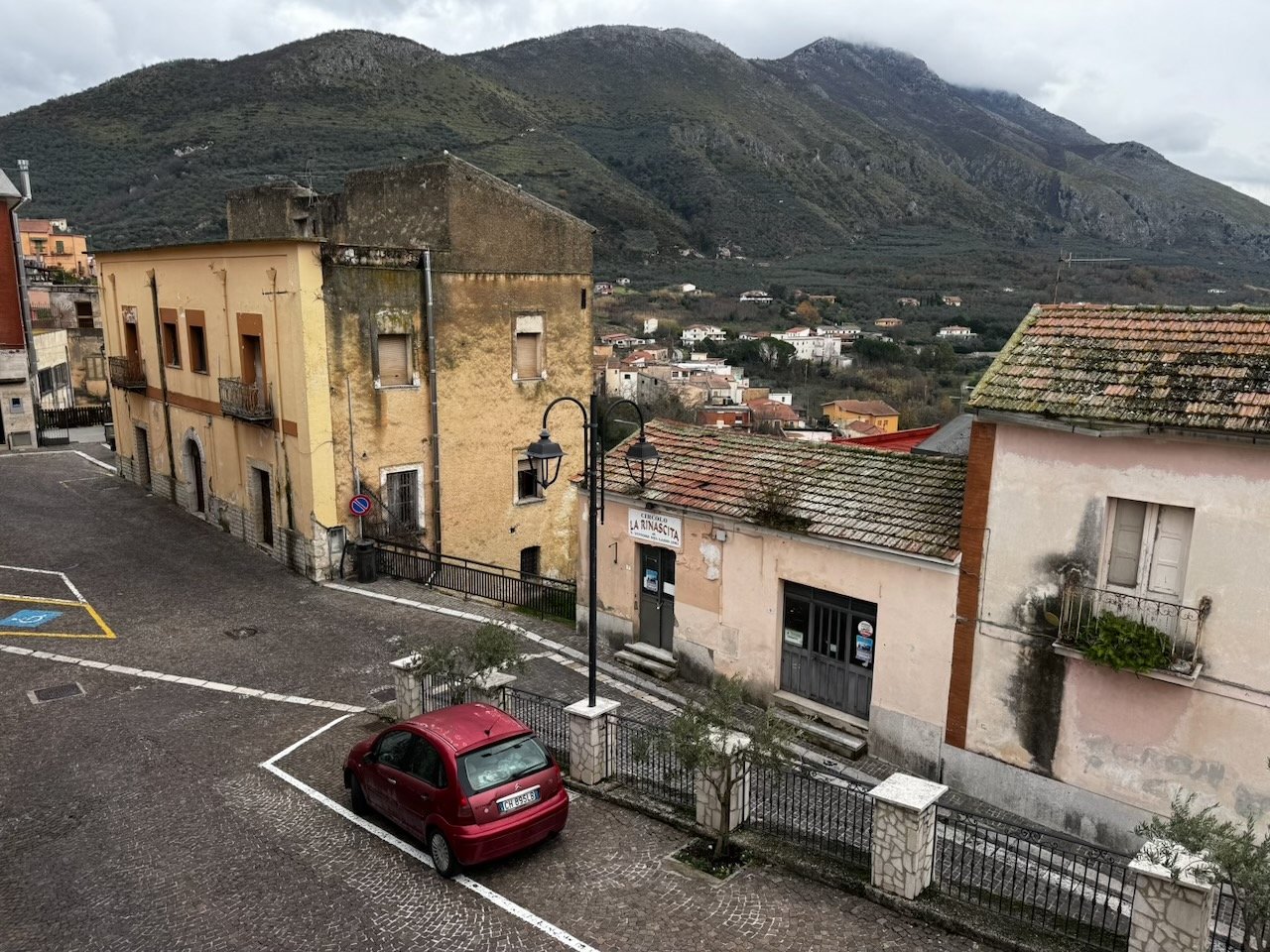
Looking southeast from the Court of the Saints piazza between the bar and St Mary of the Rose Church. I can’t help but imagine these buildings remain very much the same as when Pat and his family lived here (albeit probably repaired following WWII).
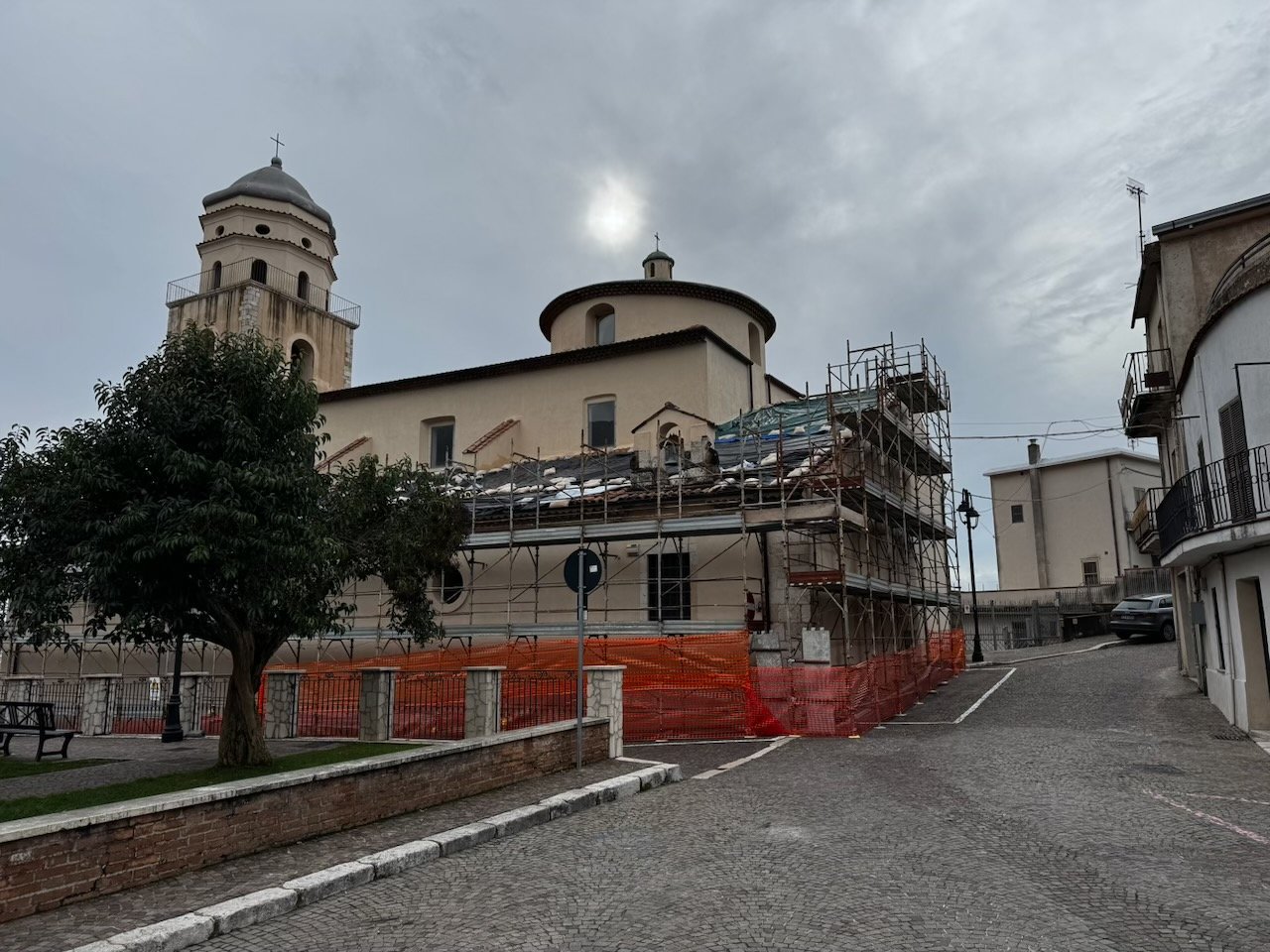
The town’s second church, St Mary of the Rose Church. If you scroll back to the top and find the map of the town, this church was marked as “A” and the belfry end once formed the wall of the Castle of San Vittore del Lazio during its medieval period. It was also possible that Pat was baptized in this church.
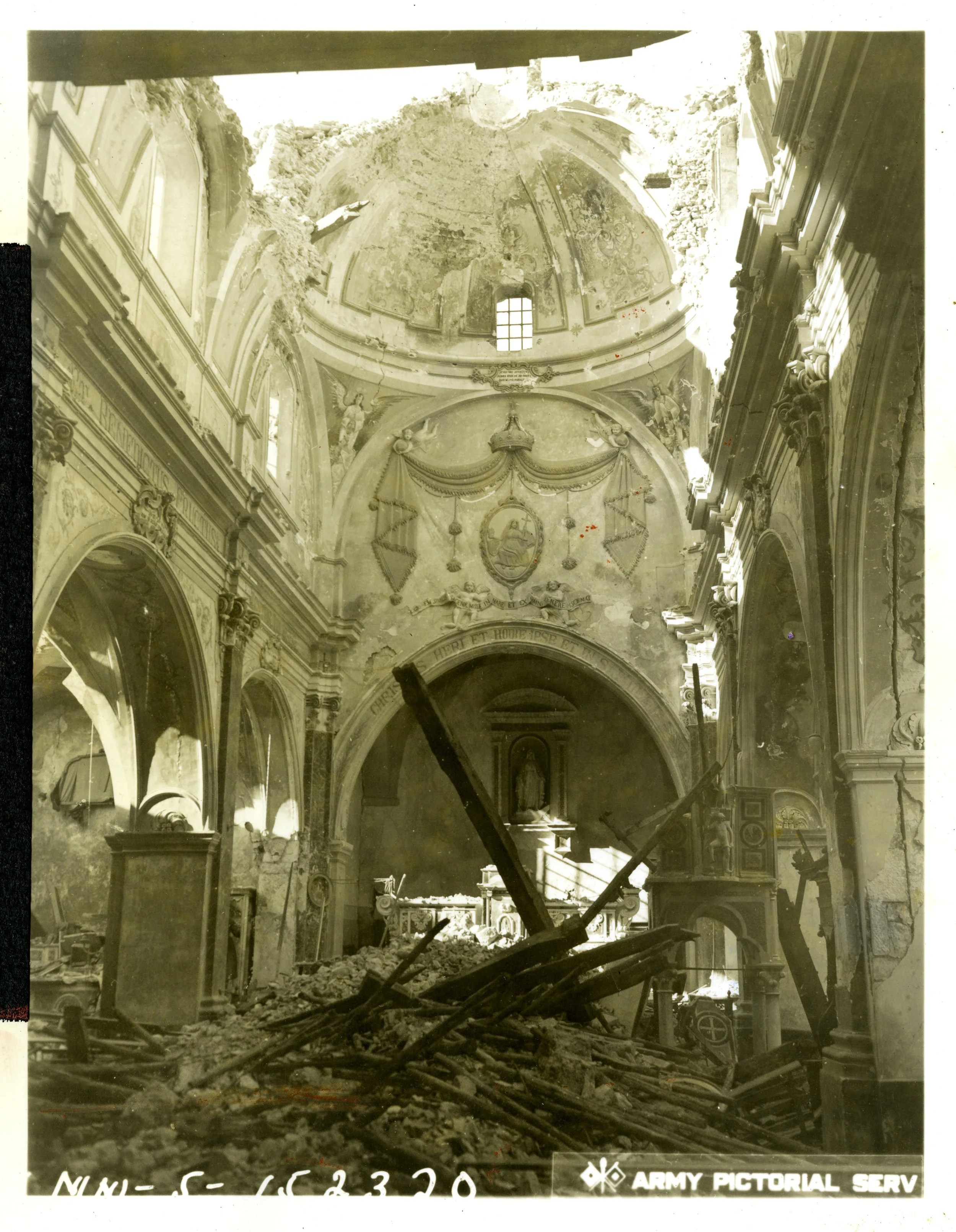
WWII damage to St Mary of the Rose Church.
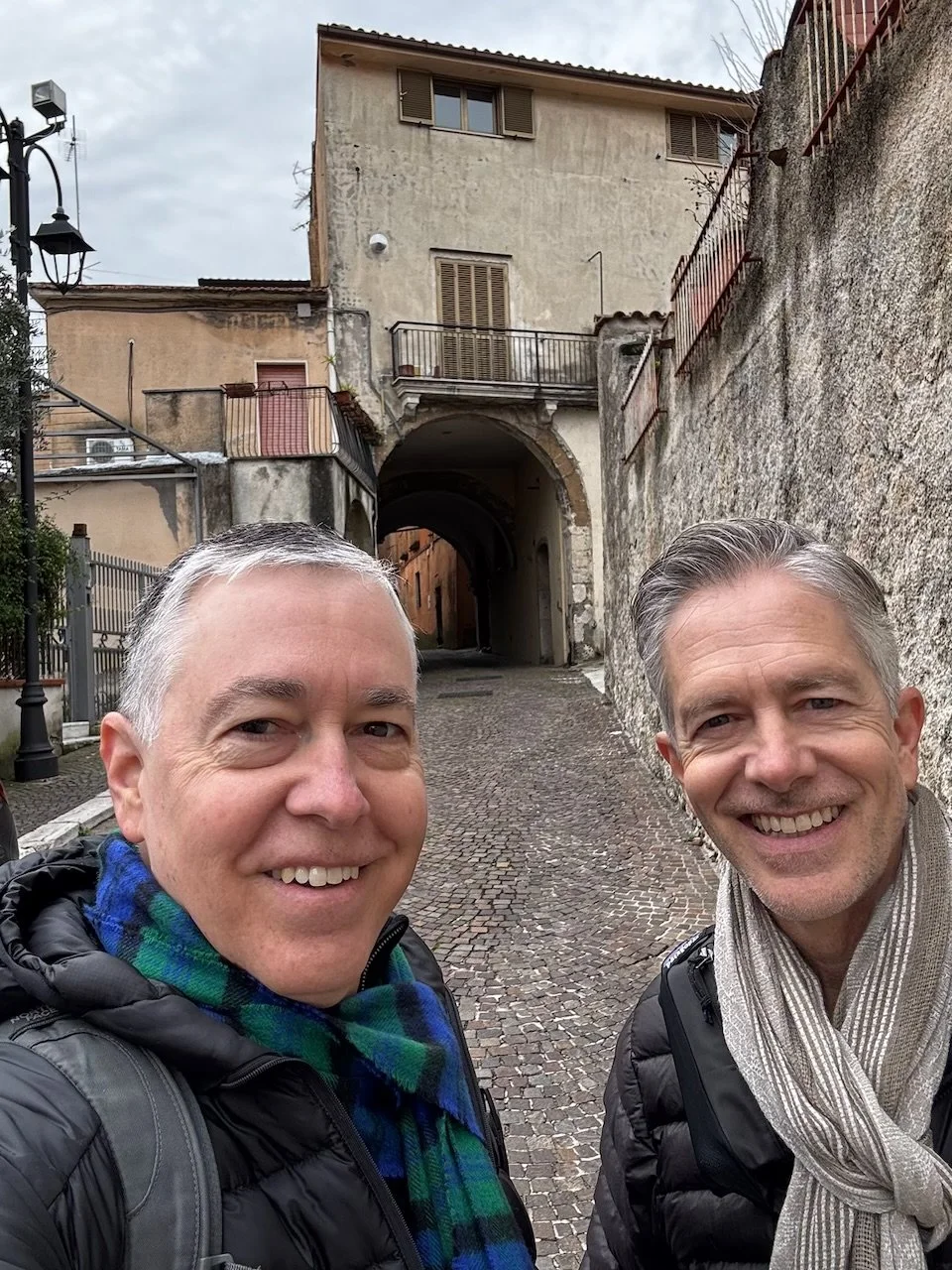
Following the cobbled streets that were once inside the medieval walled portion of San Vittore del Lazio.
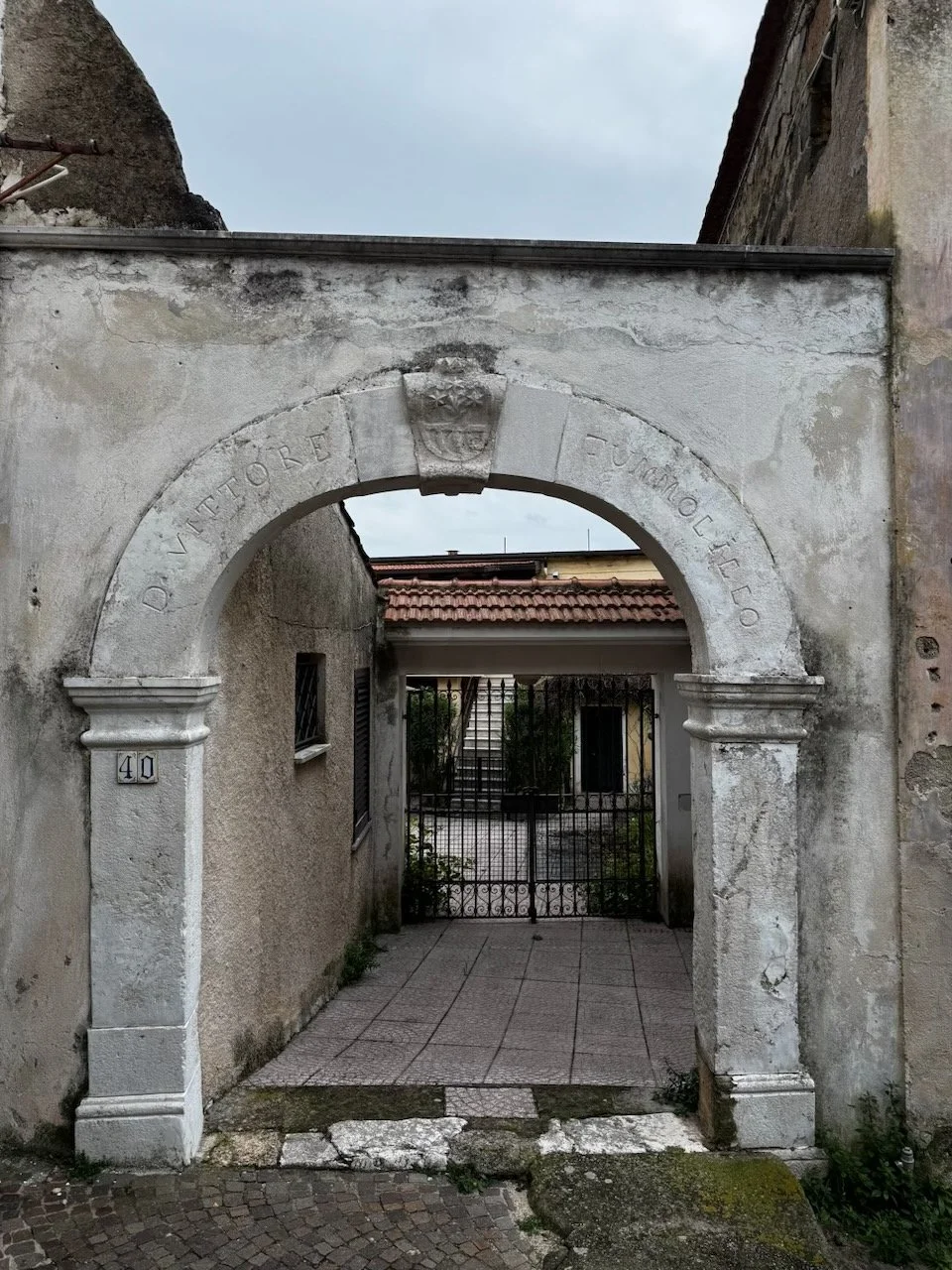
Likely a prominent family in the town’s history. I can’t quite decipher the inscriptions.
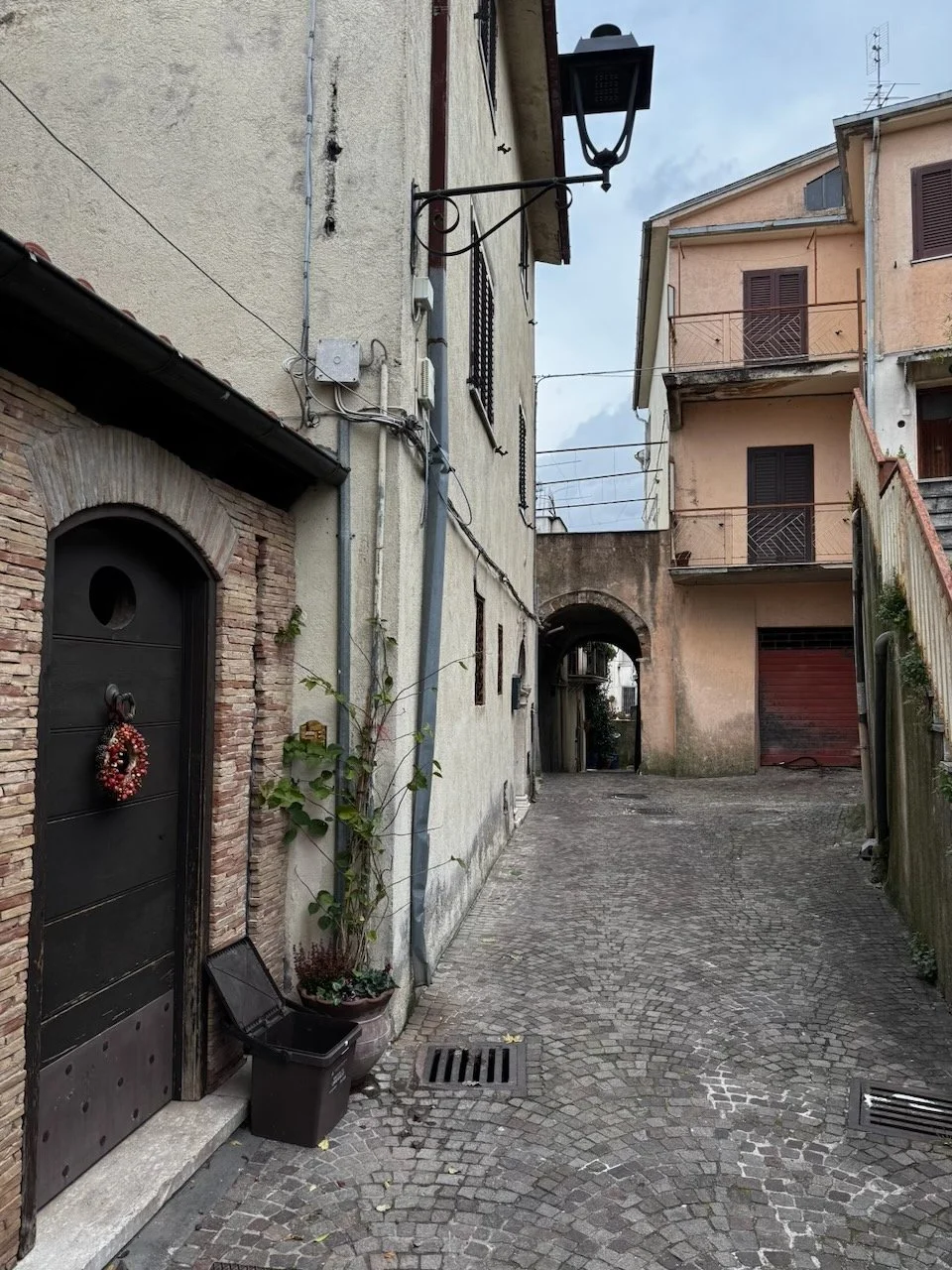
The streets inside what was once the walled city.
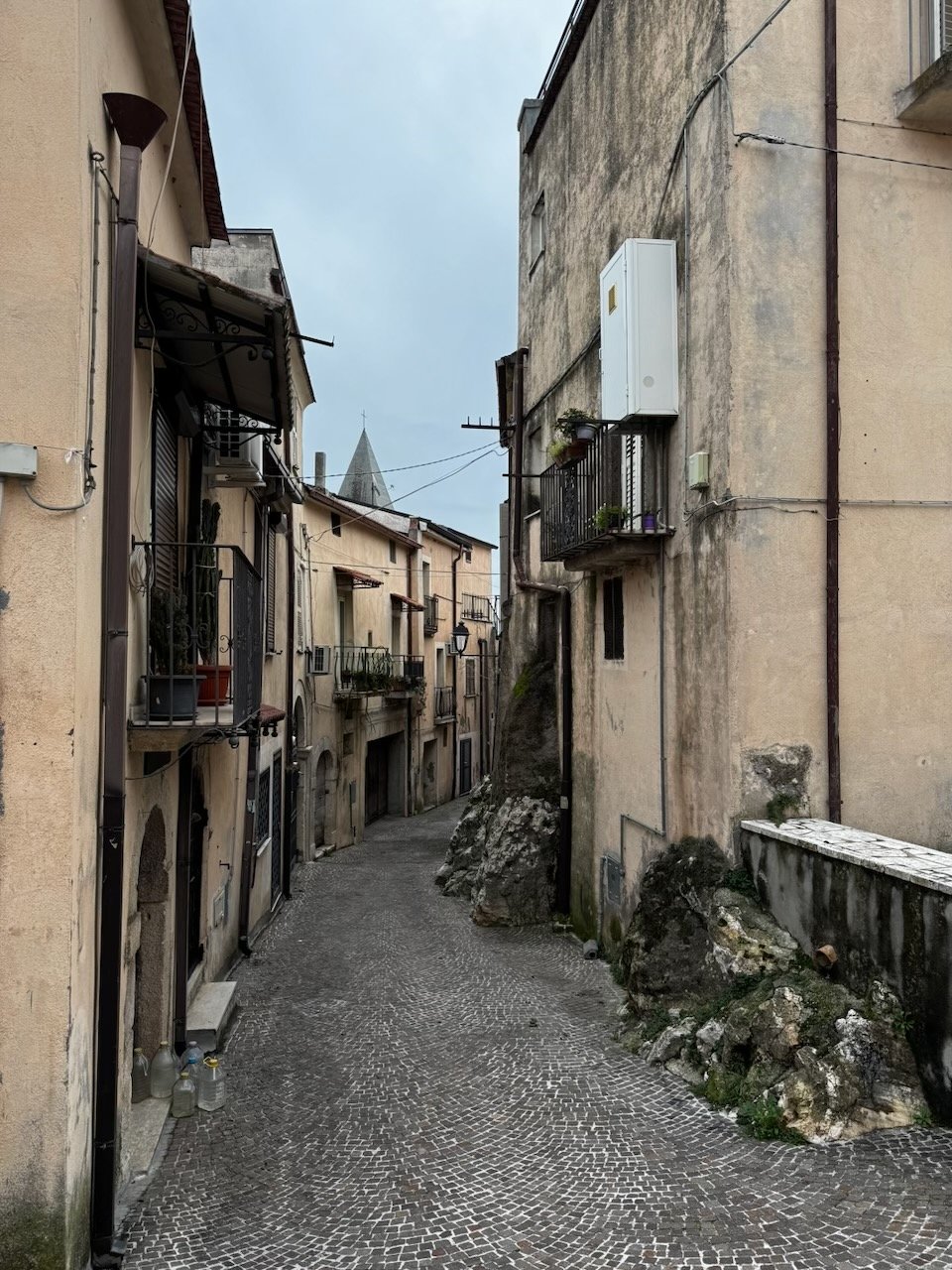
Walking the old town streets.
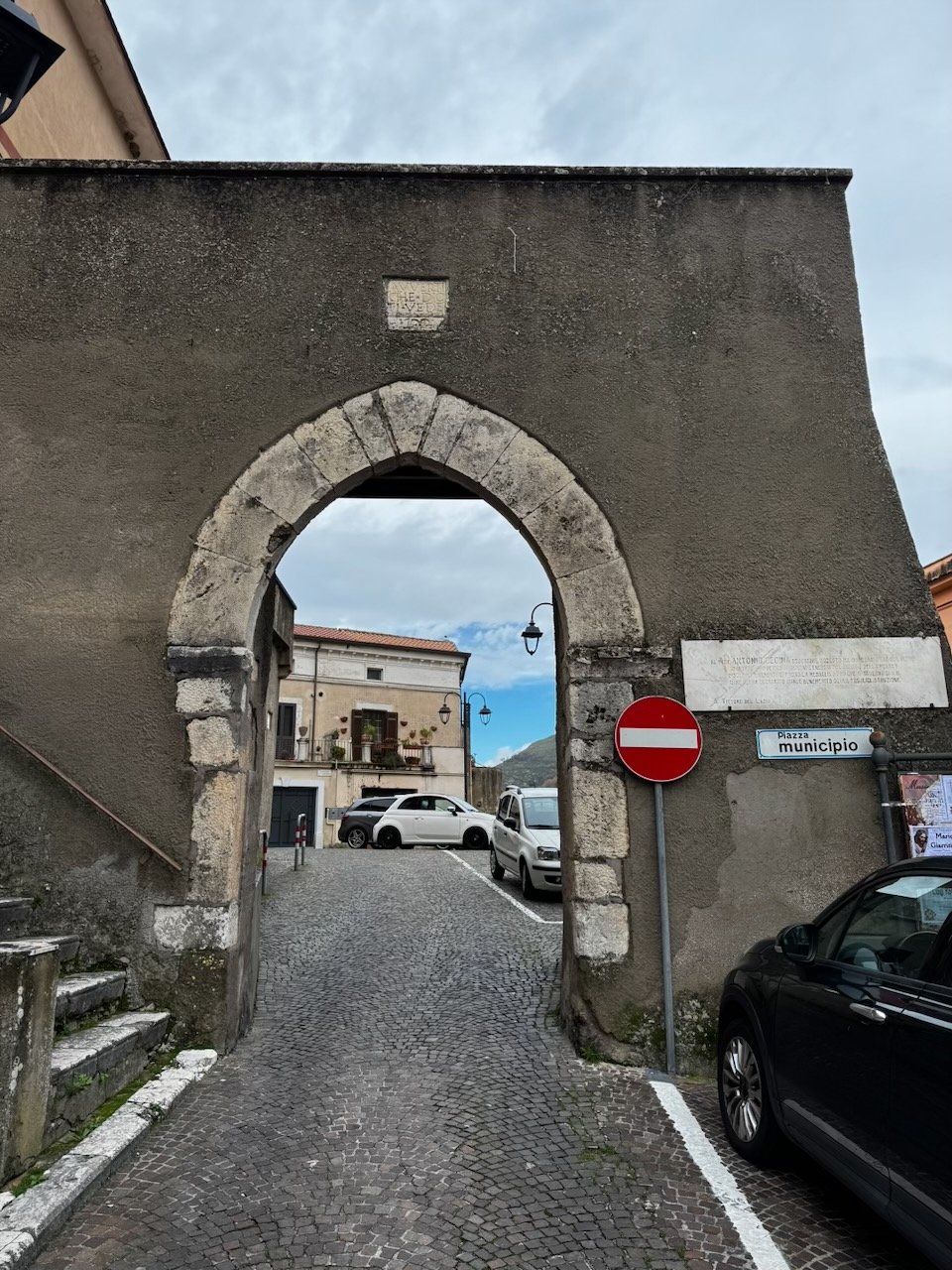
The only remaining gateway from the old walled city (the red arrow from the map above).
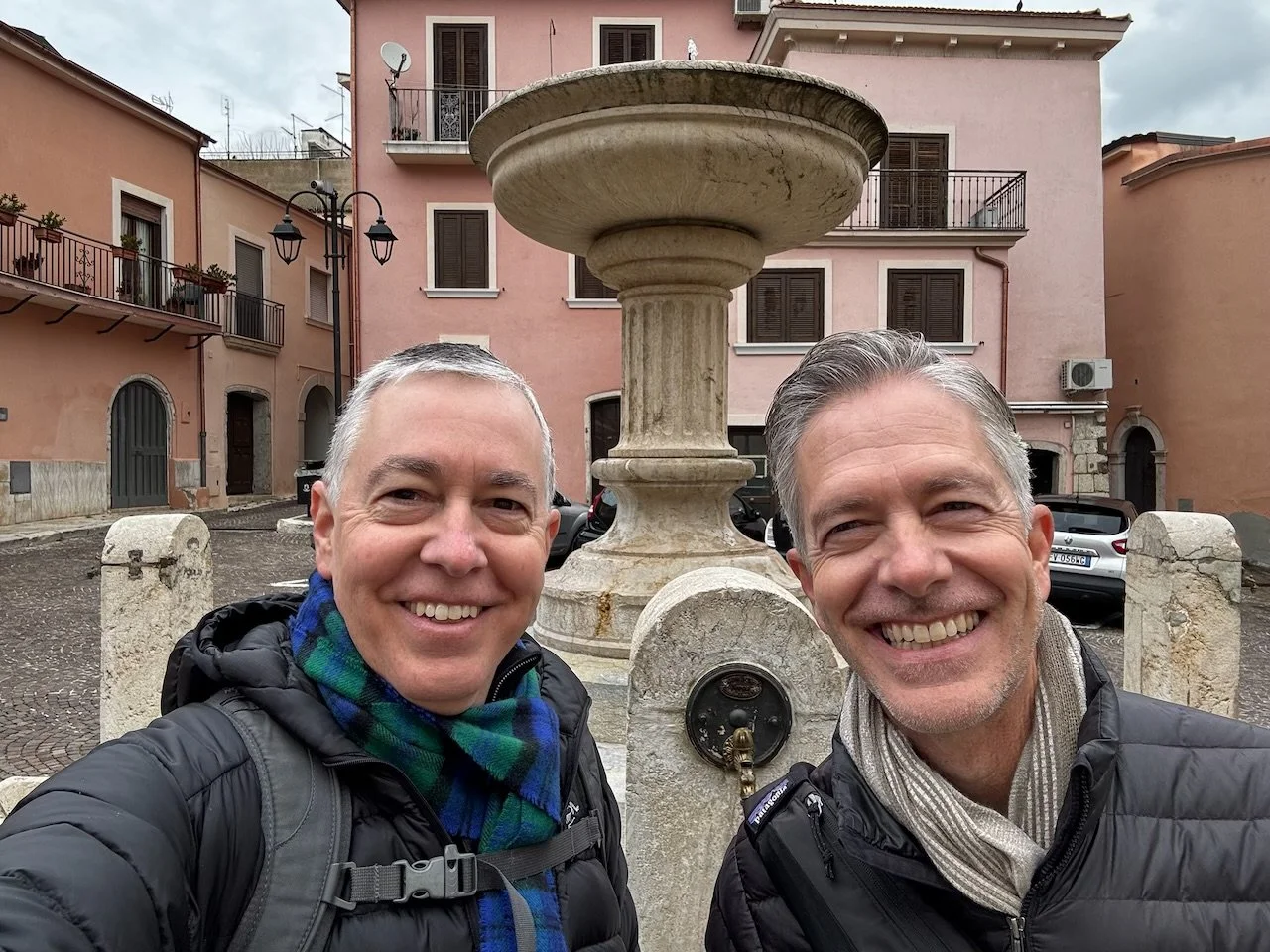
In front of the municipal water fountain in Town Hall Square.
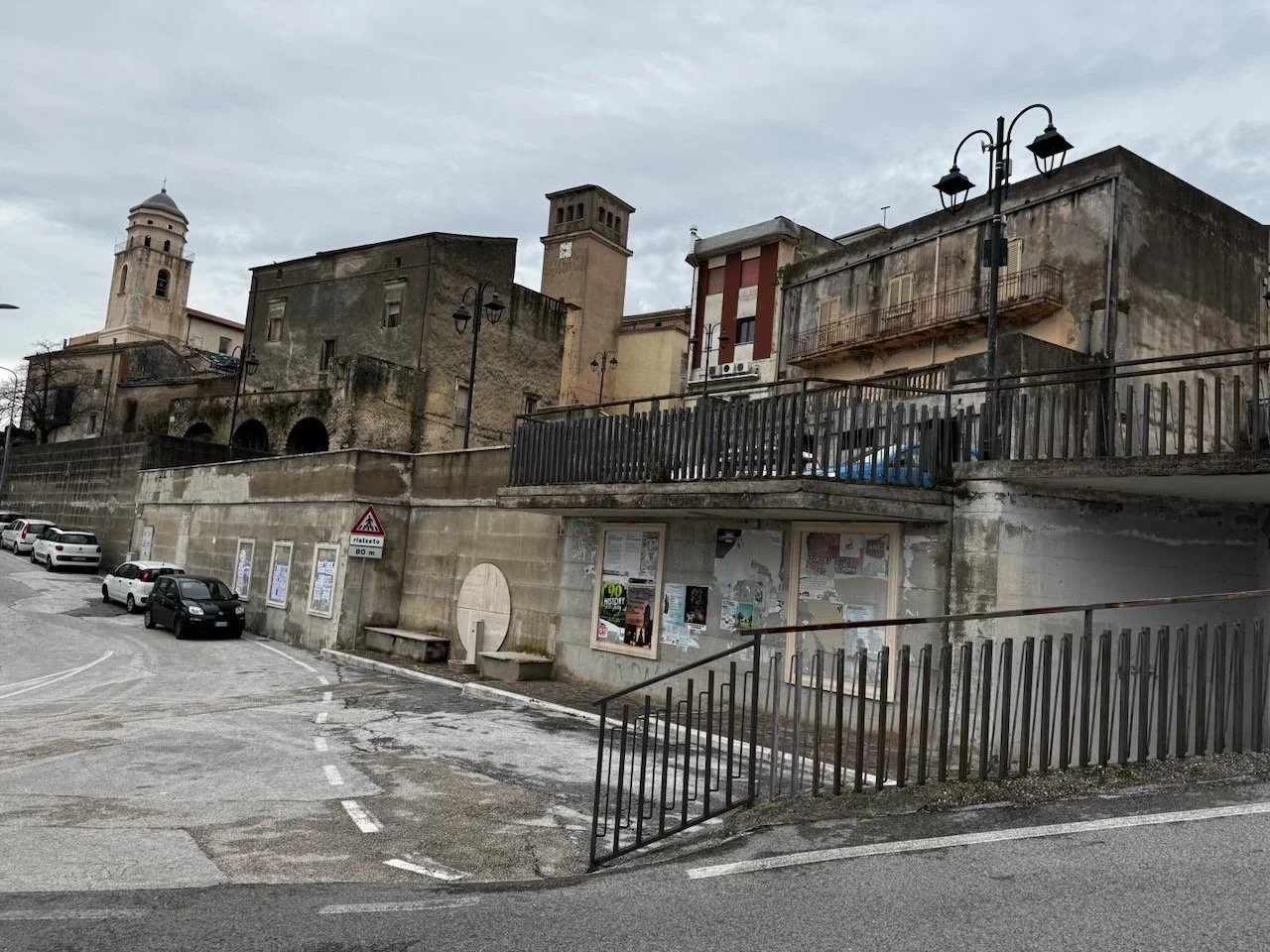
As we depart town on foot, looking back at the belfry on St Mary of the Rose Church and a second unnamed square belfry near Town Hall Square.
Looking back on San Vittore.
It was a tremendous privilege to visit this significant place of family history; farewell San Vittore del Lazio! We hope to learn more once we access the town records.
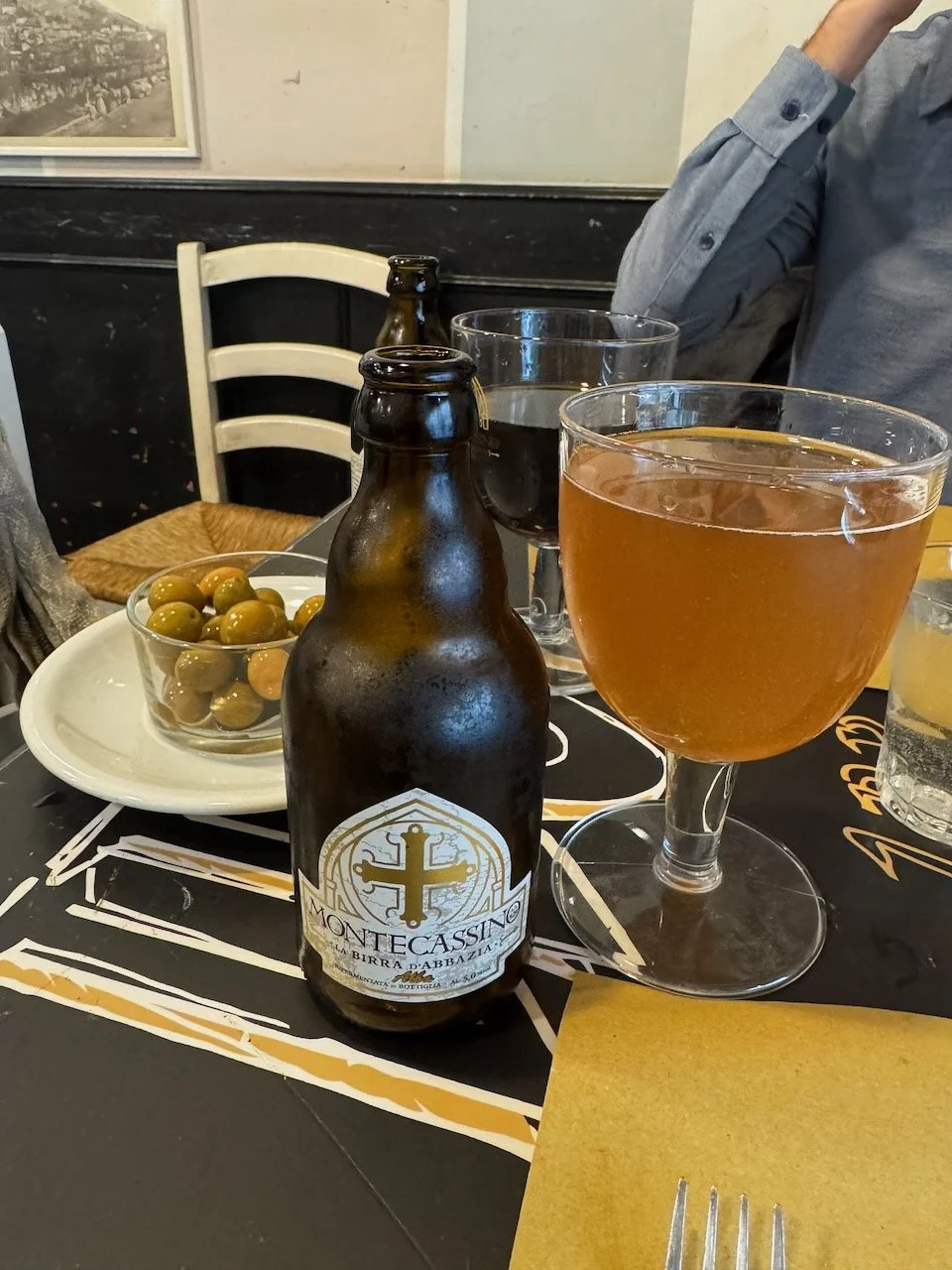
We successfully boarded a Cotral (Compagnia Trasporti Lazio) bus from the traffic circle below San Vittore del Lazio and rode it back into Cassino, where we ate an early dinner at Trattoria Locanda D’amore del 2011 (Inn/Restaurant of Love, Since 2011). We started with red wine (Dave), an Abbey of Montecassino golden ale (alba) beer (Steve), acqua frizzante (fizzy water), and fresh olives.
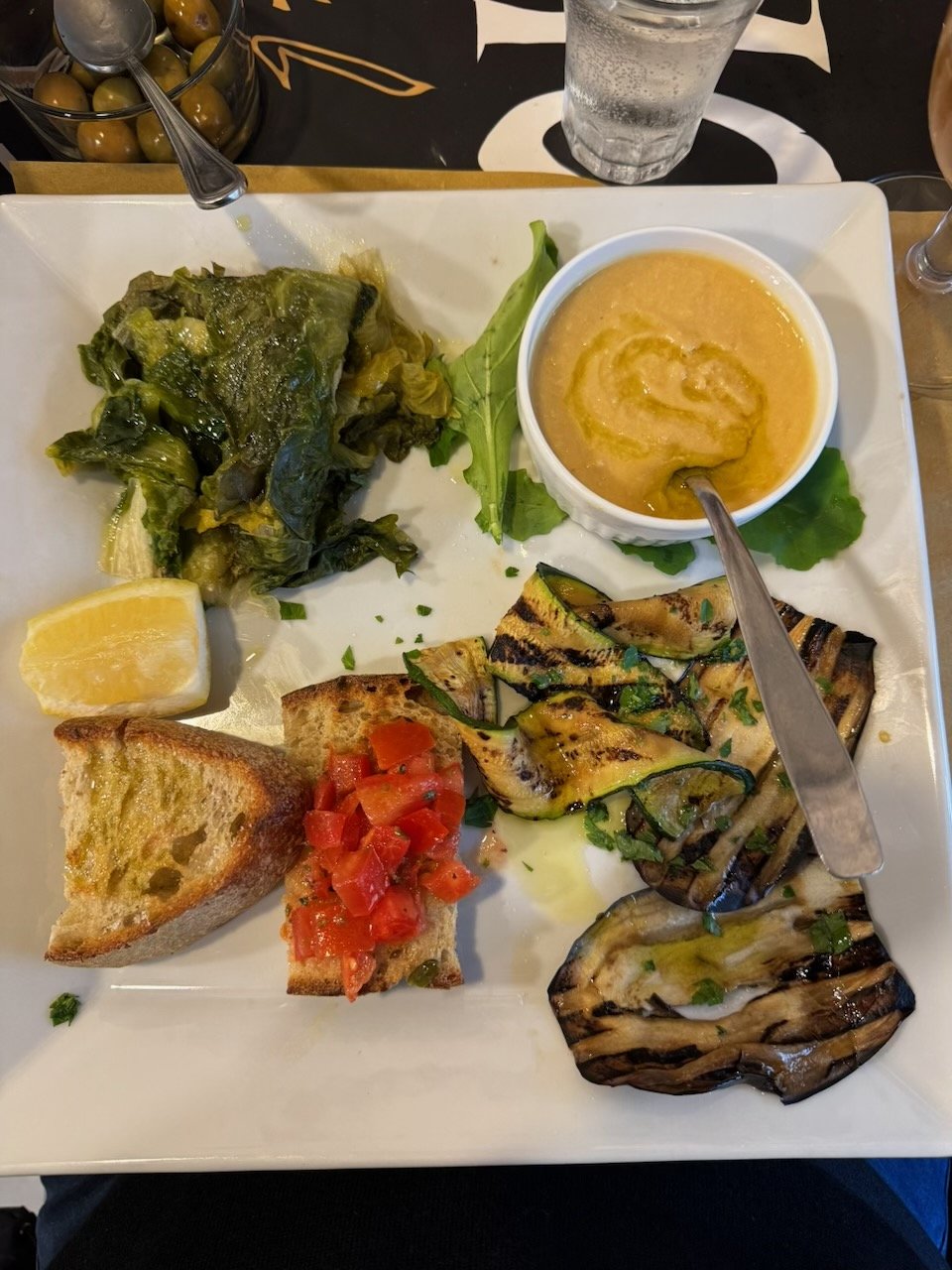
For dinner I had cime di rape (turnip greens), hummus, bread with olive oil, bruschetta, and grilled zucchini.
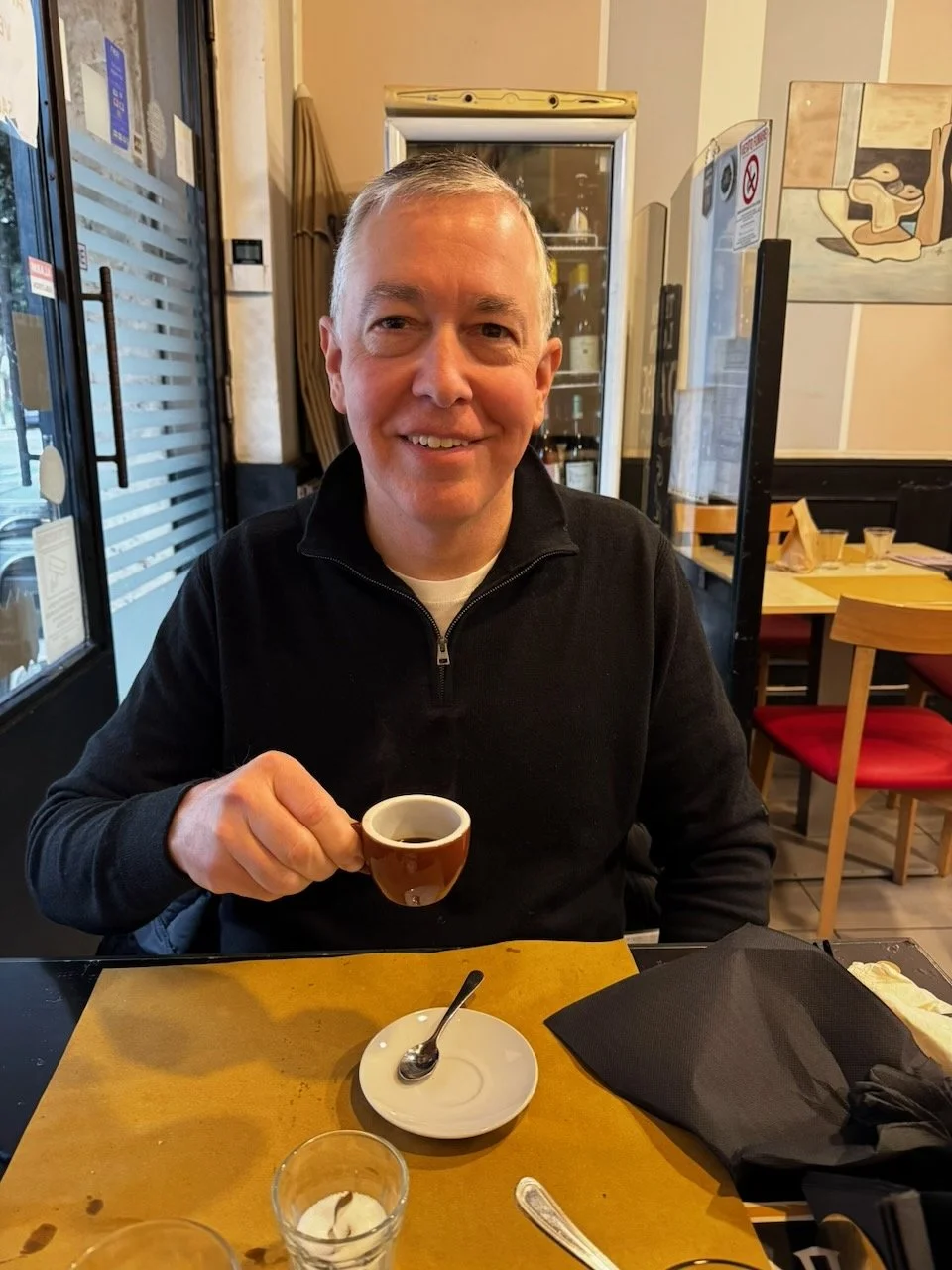
After dinner we had an espresso, which—at 3:20 pm—was a regrettable choice for me!
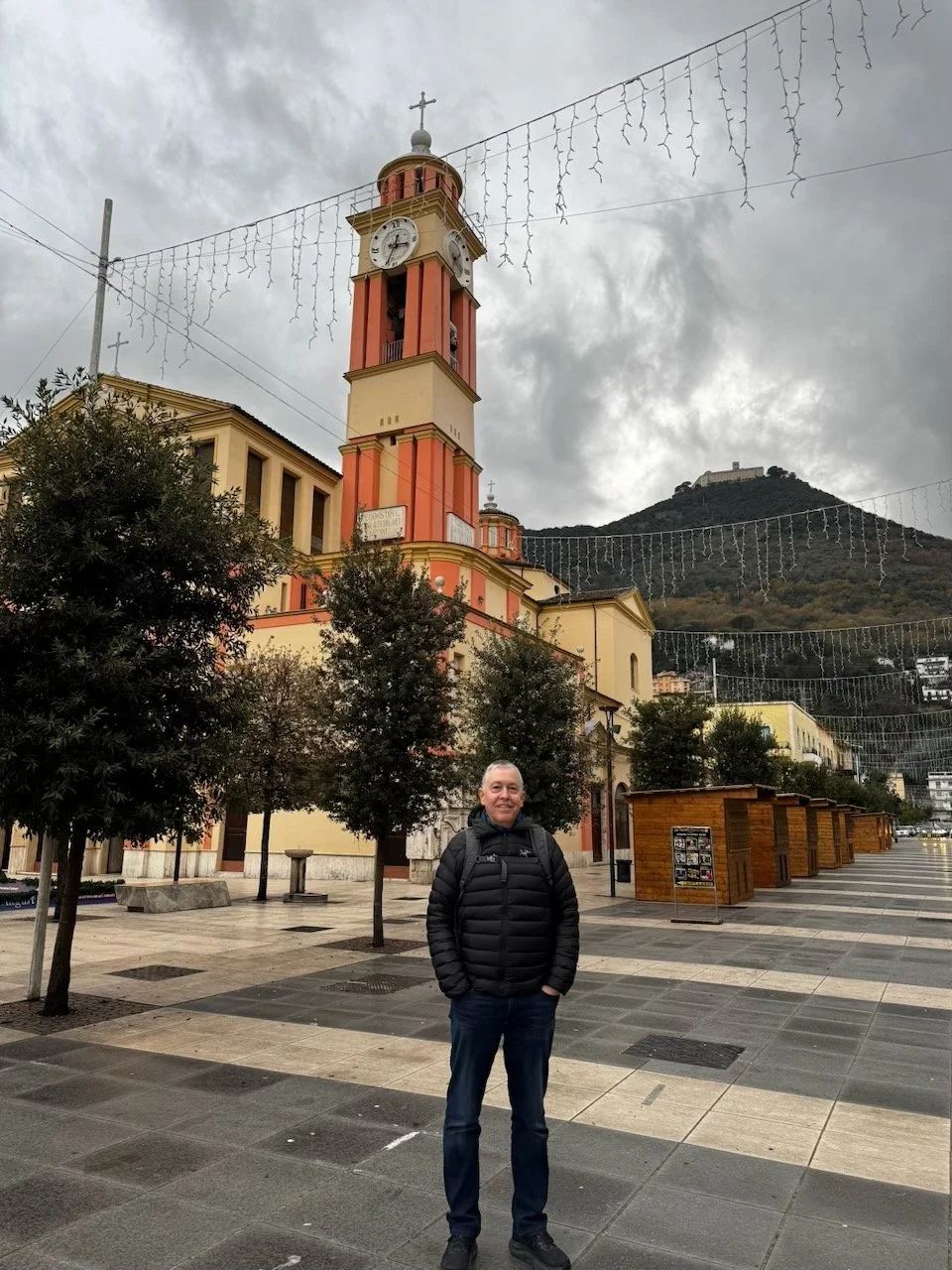
Walking back through downtown Cassino we caught a glimpse of the Abbey of Montecassio on the hilltop and Carolina’s peach condominium complex just visible on the hillside.
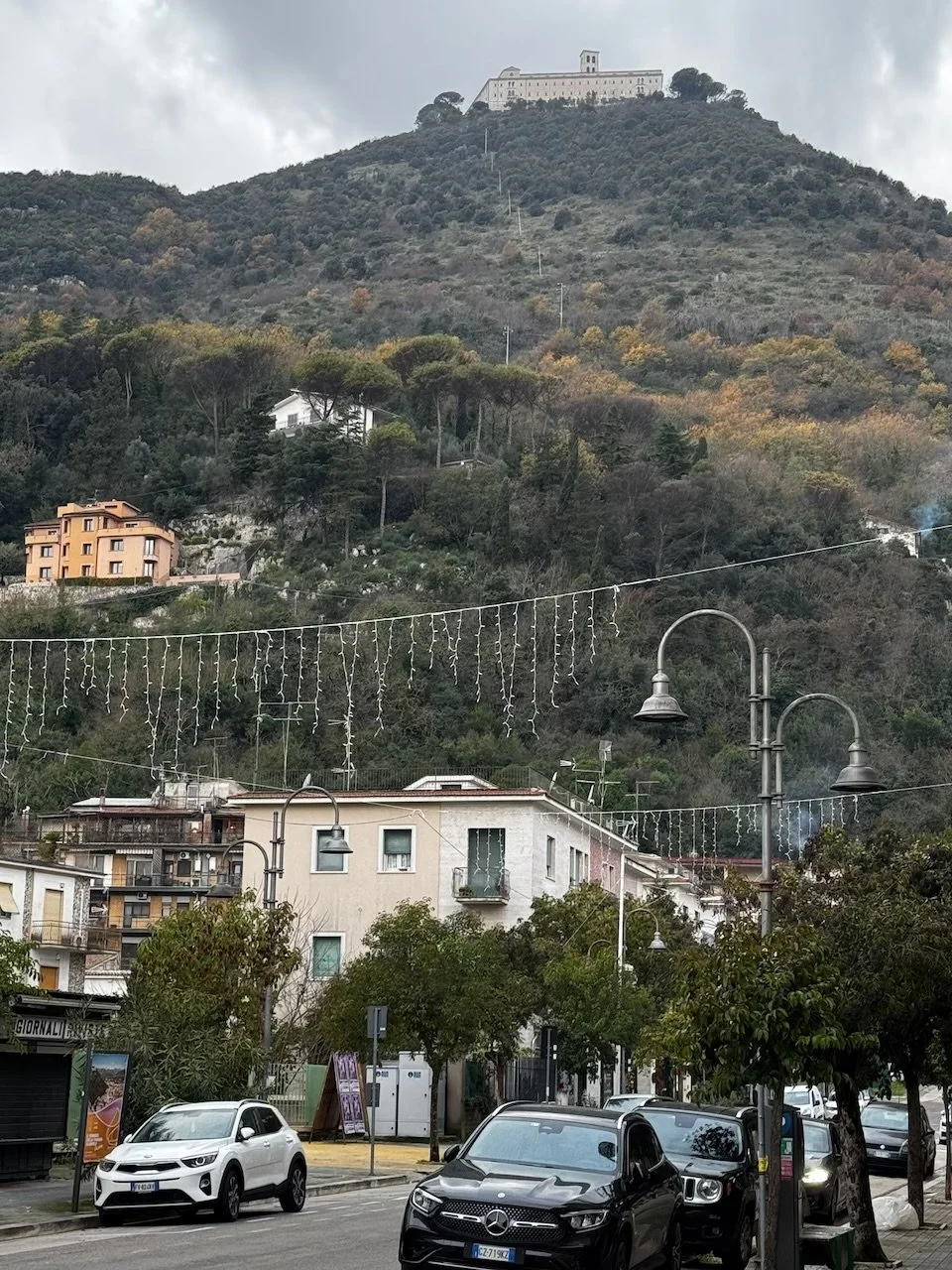
A closer look at the Abbey of Montecassio and Carolina’s home. What an absolutely amazing day and one we shall cherish forever!